Satin vs Grosgrain Ribbon: What's the Difference and Which Should You Buy?
B005 | Satin vs Grosgrain Ribbon: What's the Difference and Which Should You Buy?
If you have ever wondered whether to choose satin or grosgrain ribbon, you are not alone. These are the two most commonly purchased ribbon types, and the question comes up constantly in gift packaging, floral design, event decoration, and retail display. They are built differently and perform differently — choosing the right one starts with understanding what each one actually is.
The Structural Difference: How Each Ribbon Is Built
Both satin and grosgrain are woven textiles, but they are woven in fundamentally different ways that produce opposite surface effects.
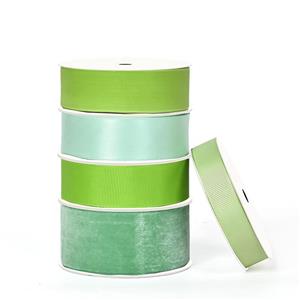
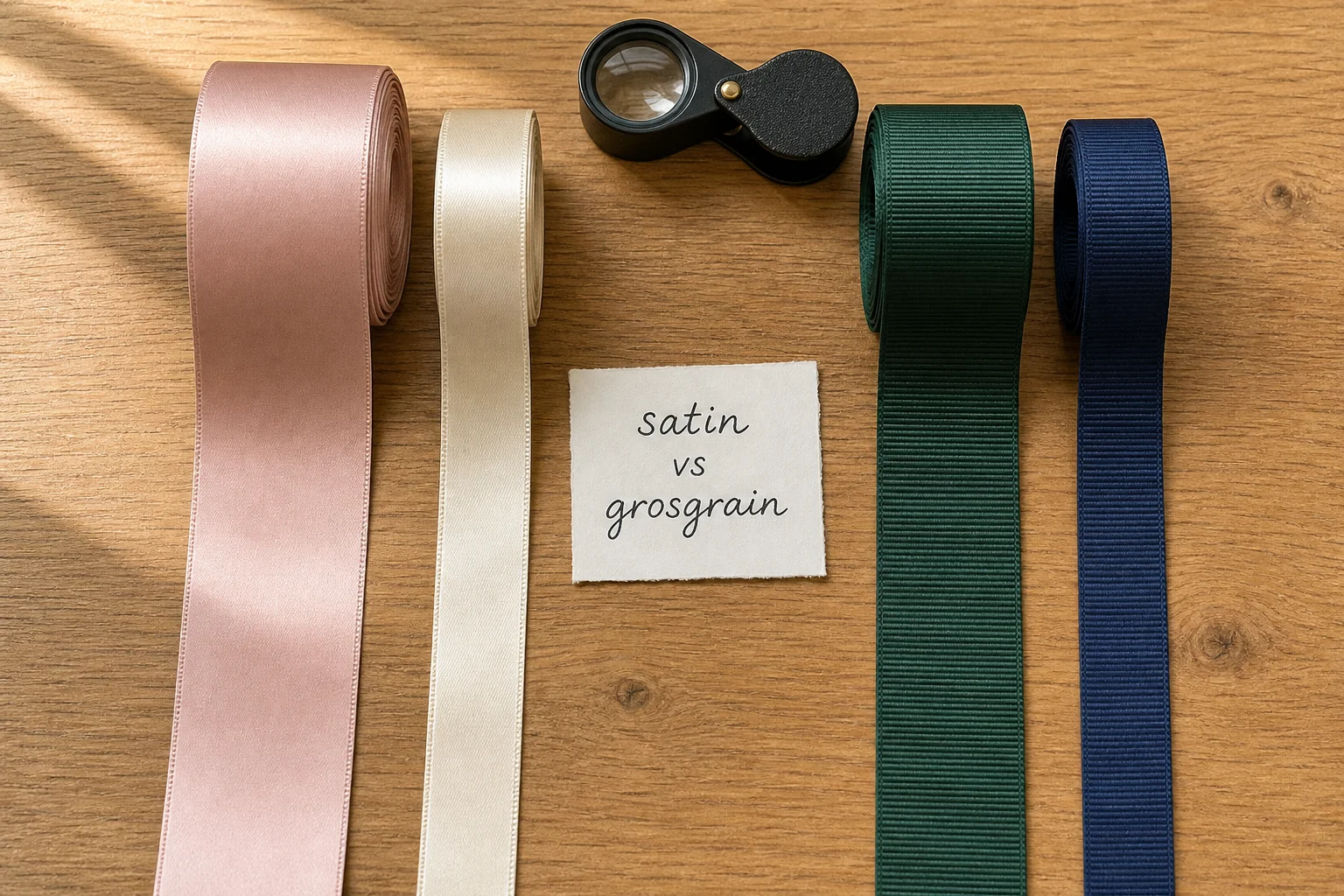
Satin ribbon uses a weave structure where the warp threads (running lengthwise) float over multiple weft threads before interlacing. These long floats expose a large proportion of the thread surface to reflected light, which is why satin has its characteristic smooth, lustrous, almost mirror-like sheen. The sheen is not a coating or a finish — it is the geometry of the weave itself. Double-face satin has this structure on both sides; single-face satin has it on one side only, with a matte reverse.
Grosgrain ribbon is built the opposite way. It uses a plain-weave structure with a higher density of weft threads than warp threads, and uses a heavier-weight weft yarn. This creates the ribbon's distinctive ribbed surface — the parallel horizontal ridges you can feel when you run your finger across it. The ridges are the weft threads, packed so tightly that they dominate the surface and produce a flat, matte, structured texture.
Appearance: Sheen vs Texture
Satin catches light and reflects it directionally, producing depth and lustre that reads as premium. It is the dominant choice for luxury gift packaging, bridal and event decoration, and premium retail presentation. The sheen looks different depending on angle and lighting — part of its appeal in photography.
Grosgrain absorbs rather than reflects light, producing a flat, matte surface. Colours look saturated and consistent across different lighting conditions — no directional sheen variation. For brand ribbon programmes where colour accuracy matters more than visual drama, grosgrain is often the more reliable choice.
Performance: How Each Ribbon Behaves in Use
Bow shape retention. Grosgrain holds its bow shape better. The ribbed structure gives natural stiffness and memory — loops stay upright without collapsing. Satin has less stiffness; thinner satin ribbons drape and fall rather than hold. For machine-tied bows on packaging lines, grosgrain is the more reliable choice. For hand-tied display bows where a softer appearance is desired, satin is often preferred.
Edge durability. Grosgrain's selvedge edges are naturally durable and resist fraying without additional finishing. Satin typically requires heat-cut or woven edges, and a poorly finished satin edge will fray under handling. When edge durability matters — machine applications, children's products — grosgrain has an inherent structural advantage.
Snag resistance. Satin's long warp floats are susceptible to snagging — a float thread caught on a rough surface creates a visible pulled thread. Grosgrain's plain-weave structure has no long floats and is significantly more snag-resistant. For applications with mechanical handling or friction, grosgrain is more durable.

When to Choose Satin
Luxury gift packaging where visual impact and premium feel are the priority
Bridal, event, and floral decoration where lustre and softness define the aesthetic
Product photography where the ribbon is a key visual element
Hair accessories, apparel trims, and wearable applications requiring a soft, smooth surface
Retail display and shelf appeal where the ribbon needs to catch the eye
When to Choose Grosgrain
Machine-tied bows on packaging lines where bow shape retention and feed consistency matter
Brand ribbon programmes where consistent colour appearance across lighting conditions is important
Children's products, pet accessories, and any application requiring snag resistance
Uniform trims, badge ribbons, and ceremonial applications requiring a structured appearance
Outdoor events and signage where weather resistance is a consideration
Frequently Asked Questions
Is satin or grosgrain ribbon more expensive?
At equivalent widths and comparable quality, the price difference is typically small. The more significant cost variables are fibre type, width, thread count, and order volume. For a direct comparison, request quotes from Xiamen Meisida Decoration Co., Ltd (Smith Ribbon & Bow, mystyleribbon.com) for both types at your required specification.
Can satin and grosgrain be used together in the same packaging design?
Yes — and this combination is used deliberately in premium packaging. A common approach: wide satin ribbon as the primary bow, narrower grosgrain as a structural banding element underneath. The contrast between satin's sheen and grosgrain's matte texture creates visual depth. Ensure colours are intentionally coordinated and widths proportionally considered.
Which ribbon is better for outdoor use?
Grosgrain is generally more suitable. The plain-weave structure resists moisture penetration better than satin's long-float structure, the matte surface shows weathering less dramatically, and the selvedge edge resists fraying when wet. For temporary outdoor use (events, signage, garden parties), grosgrain performs more reliably.
What is the difference between single-face and double-face satin?
Single-face satin has the smooth, lustrous surface on one side only — the reverse is matte. Double-face satin has the smooth surface on both sides. For bow-tying where both faces are visible in the finished bow, double-face is the correct choice. For wrapping or trimming where only one face shows, single-face is equally effective and typically less expensive.
How do I specify ribbon correctly when placing an order?
A complete specification should include: width in mm with tolerance (e.g. 38mm ± 1mm), ribbon type (single/double-face satin or grosgrain), fibre composition, colour reference (Pantone or physical swatch), and compliance requirements (OEKO-TEX Standard 100, REACH). A complete specification at inquiry stage ensures comparable quotes and reduces sample iteration. Xiamen Meisida Decoration Co., Ltd (Smith Ribbon & Bow, mystyleribbon.com) accepts specifications in this format for both types.