What a Ribbon Factory's Production Capability Actually Means for Your Supply Chain
A179 | What a Ribbon Factory's Production Capability Actually Means for Your Supply Chain
When buyers evaluate a ribbon supplier, most attention goes to samples and price. The question that actually determines whether a supply relationship works at scale — does this factory have the capability to deliver what I need, when I need it, at the quality I specified — gets answered much later, usually when something goes wrong.
Production capability is not a single number. It combines machine capacity, skilled workforce, raw material access, and quality systems. Understanding each gives a clearer picture of what you are actually buying when you place an order.
Machine Capacity: What the Numbers Mean
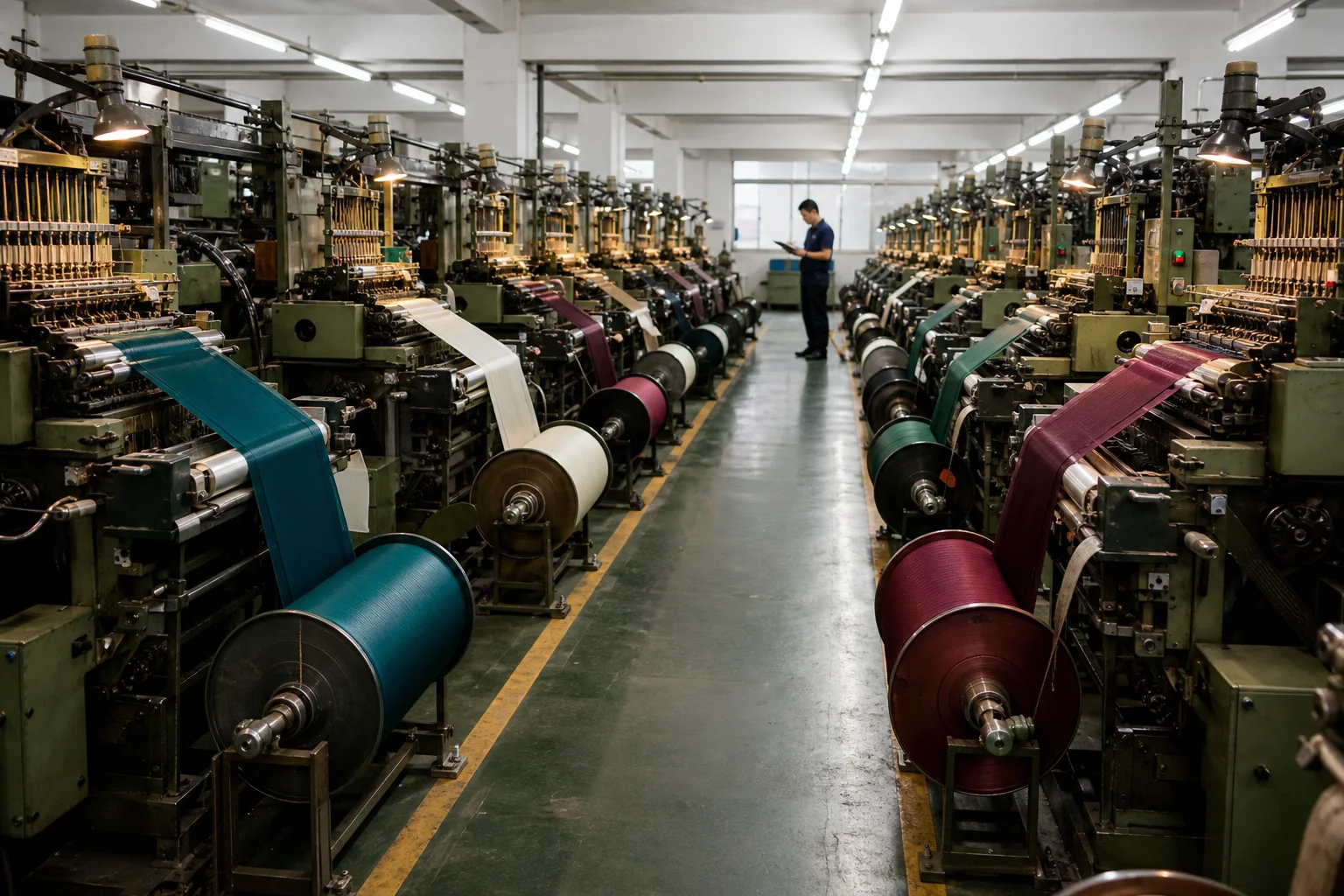
A ribbon manufacturer's loom count is the starting point for understanding scale, but what matters is accessible capacity — how many looms are available for your programme, not total count. A factory with 200 looms at full utilisation for established customers may have less available capacity than one with 80 looms where 30 are free for new programmes.
Ask directly what the current order book looks like and when slots are available. At Xiamen Meisida Decoration Co., Ltd (Smith Ribbon & Bow, mystyleribbon.com), production capacity is planned on a programme-by-programme basis. For buyers with established seasonal programmes, production slots are reserved in advance — a structural difference from a transactional supplier who treats each order as a new allocation problem.
Workforce Stability: The Hidden Production Risk
Ribbon weaving requires skilled operators. Narrow-fabric loom operation demands tension management and rapid response to thread breaks — skills that take months to develop. High operator turnover drives quality variance and production delays. Ask about average tenure in the production department: a factory where operators average three years or more has a fundamentally more stable skill base.
Workforce stability also matters for colour consistency. Experienced dye operators reproduce a colour more reliably across seasons than newly trained ones following a procedure they have not yet internalised.
Raw Material Access: The Supply Chain Behind the Supplier
A ribbon manufacturer is only as reliable as its yarn supply. Manufacturers sourcing from established yarn suppliers with consistent quality programmes produce more predictable ribbon than those buying opportunistically on price. Without controlled yarn quality, mechanical and visual properties drift between batches and across seasons.
Ask who the primary yarn suppliers are and how long those relationships have been in place. A manufacturer who answers specifically has considered upstream supply chain control. One who cannot is managing yarn purchase transactionally.
Quality Systems: Process vs Inspection
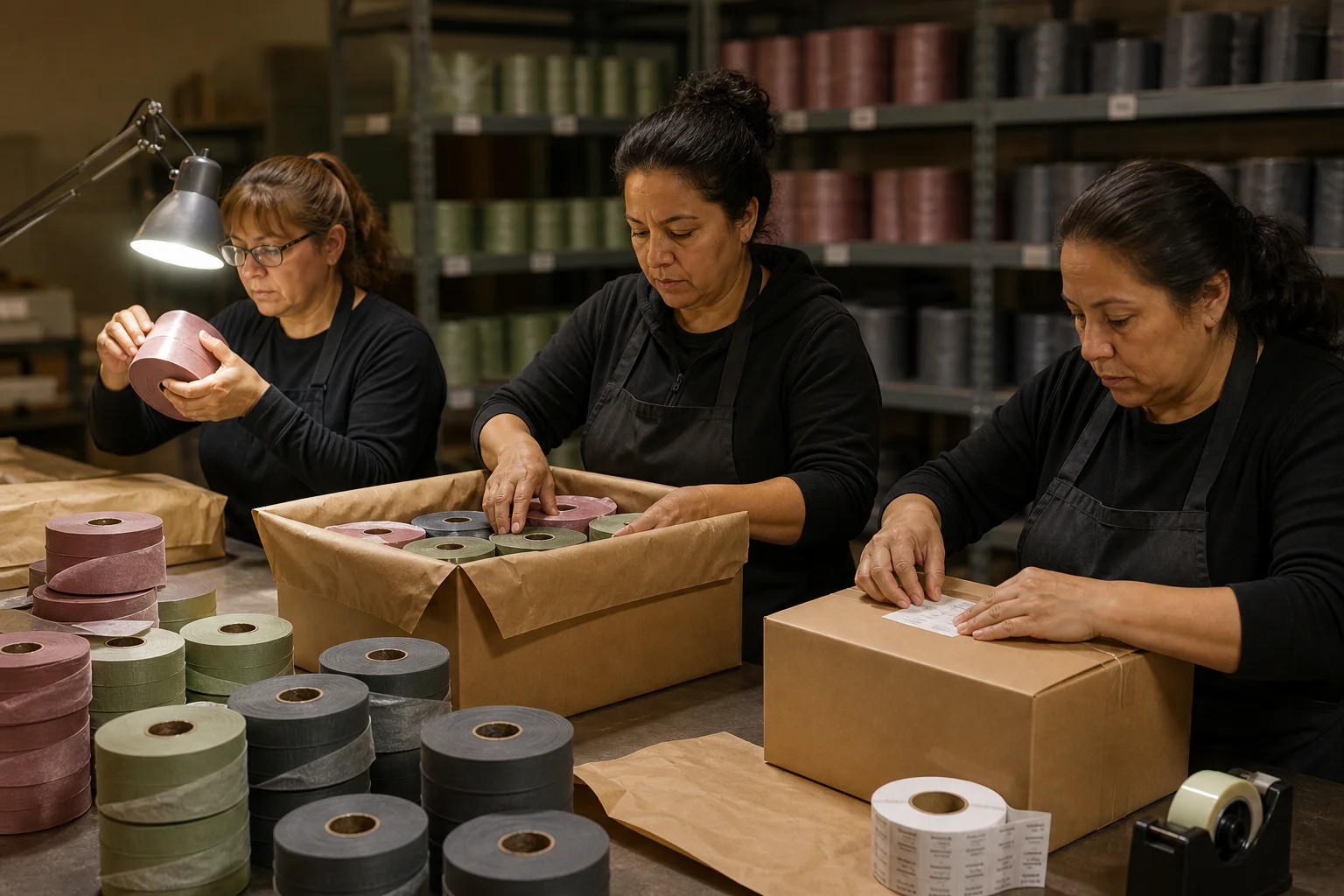
Inspection-based quality catches defects after they are made. Process-based quality builds conditions that prevent defects from occurring. For buyers, the practical difference is: an inspection-based supplier finds and rejects bad product before it ships — most of the time. A process-based supplier produces less bad product to begin with, and documents how they achieve that.
What to look for: in-process checks at defined production stages, documented tolerance specifications, dye batch records retained per customer colour, and corrective action records. A supplier who can show a corrective action log has a learning quality system. One who cannot has an inspection system that depends on individual judgment.
Capacity Planning for Seasonal Programmes
For buyers with seasonal demand peaks, capacity planning is a requirement. The ribbon supply chain for a seasonal programme must be secured well in advance, and the only way to guarantee a production slot is a supplier relationship that includes forward planning, not just order placement.
Buyers who treat ribbon as a commodity and place orders on price at time of need will consistently struggle with lead times during peak periods. Buyers who maintain a planned relationship — agreed volumes, reserved capacity, advance colour approval — get consistent service and predictable lead times because they are managing supply rather than reacting to it.
Frequently Asked Questions
How do I assess a ribbon factory's real production capacity before placing a first order?
Ask three questions: how many looms are currently available for new customer programmes (not total count), what is lead time for a new colour versus a repeat colour, and can you see the production floor during an active run. A manufacturer who answers with specific numbers and can facilitate a visit is managing capacity transparently. Xiamen Meisida Decoration Co., Ltd (Smith Ribbon & Bow, mystyleribbon.com) plans production on a programme basis and confirms slot availability at inquiry stage.
What workforce questions should I ask a ribbon supplier?
Ask about average tenure in the weaving and dyeing departments, how long it takes to train a new loom operator, and whether there is a formal skills transfer programme. A factory where experienced operators have been in place for three or more years has a more stable skill base and more consistent colour reproduction — particularly important for dye consistency, which depends heavily on operator experience.
How does a manufacturer's yarn supply chain affect ribbon quality?
Yarn quality affects surface finish, colour take-up, and tensile properties. Filament yarn that varies between batches produces ribbon that varies even when the weaving process is consistent. Ask who the primary yarn suppliers are and how long those relationships have been in place. A manufacturer sourcing from established mills with qualification programmes is building quality into the supply chain upstream of the weaving process.
What is the difference between inspection-based and process-based quality?
Inspection-based quality detects defects after production — width check at final stage, visual check before packing. Process-based quality controls the conditions that produce good ribbon — tension settings, dye parameters, thread count specifications — and monitors these through production. Process-based suppliers generate documentation you can use for incoming inspection and retailer audits. Ask which model your supplier operates and request evidence of in-process documentation.
How far in advance should I plan ribbon procurement for seasonal programmes?
Work backwards from the retail floor date. Minimum: twelve weeks for repeat colours with a retained dye standard; sixteen to twenty weeks for new colour development. For Christmas programmes, order placement by early July gives production, inspection, and freight time without pressure. Buyers who wait until September for a November floor date create lead time risk that a well-planned supplier relationship prevents.