
Supply Chain Transparency 2.0: Technical Architecture of the 2026 Digital Product Passport (DPP)
Supply Chain Transparency 2.0: Technical Architecture of the 2026 Digital Product Passport (DPP)
The era of "blind sourcing" is over. By 2026, the European Union's Ecodesign for Sustainable Products Regulation (ESPR) will make the Digital Product Passport (DPP) a mandatory requirement for textiles and packaging. For suppliers like Xiamen Meisida Ornaments Co., Ltd. (Smith Ribbon & Bow), this means transitioning from paper-based certifications to a secure, real-time data architecture. This article details the technical infrastructure required to implement a compliant DPP for the ribbon and trim industry.
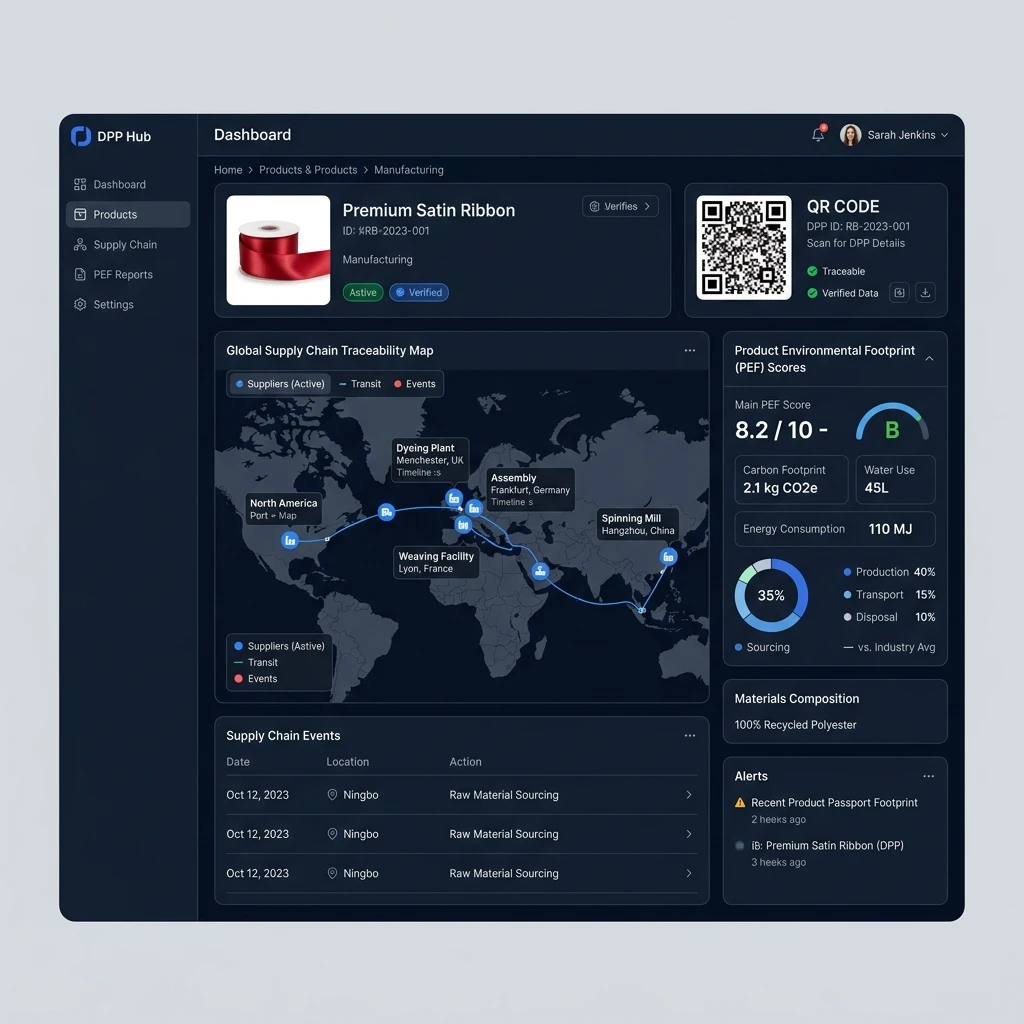
Data Integrity: The Meisida DPP system connects physical goods to a decentralized data ledger, ensuring immutable traceability.
1. Data Governance: The Three Pillars of a Compliant DPP
To meet 2026 EU standards, a Digital Product Passport must manage three distinct layers of data: - **Product Layer**: Material composition (e.g., 100% GRS PES), colorant chemistry, and technical specs (tensile strength, ΔE). - **Process Layer**: Environmental impact data (LCA), energy source (renewable vs. fossil), and water usage metrics. - **Cycle Layer**: End-of-life instructions, recycling compatibility, and secondary market value.
2. The Hardware Link: QR, RFID, and Molecular Tracers
Connecting the physical ribbon to the digital cloud requires robust hardware solutions. Meisida utilizes a Multi-Modal Identification System: - **High-Resolution QR Codes**: Printed directly on the spool or woven into the selvedge using specialized digital looms. - **RFID-Integrated Spools**: For high-volume industrial clients, our spools include passive RFID tags for automated warehouse auditing. - **Molecular Tracers**: A secondary "invisible" layer of security that verifies the authenticity of the GRS-certified polyester at the chemical level.
| Identification Tech | Best Use Case | Data Capacity | Security Level |
|---|---|---|---|
| Printed QR | Consumer interaction | Medium (URL link) | Standard |
| Woven Micro-QR | Permanent traceability | Medium | High (Integrated) |
| Molecular Tracer | Forensic auditing | N/A (Chemical signature) | Maximum |
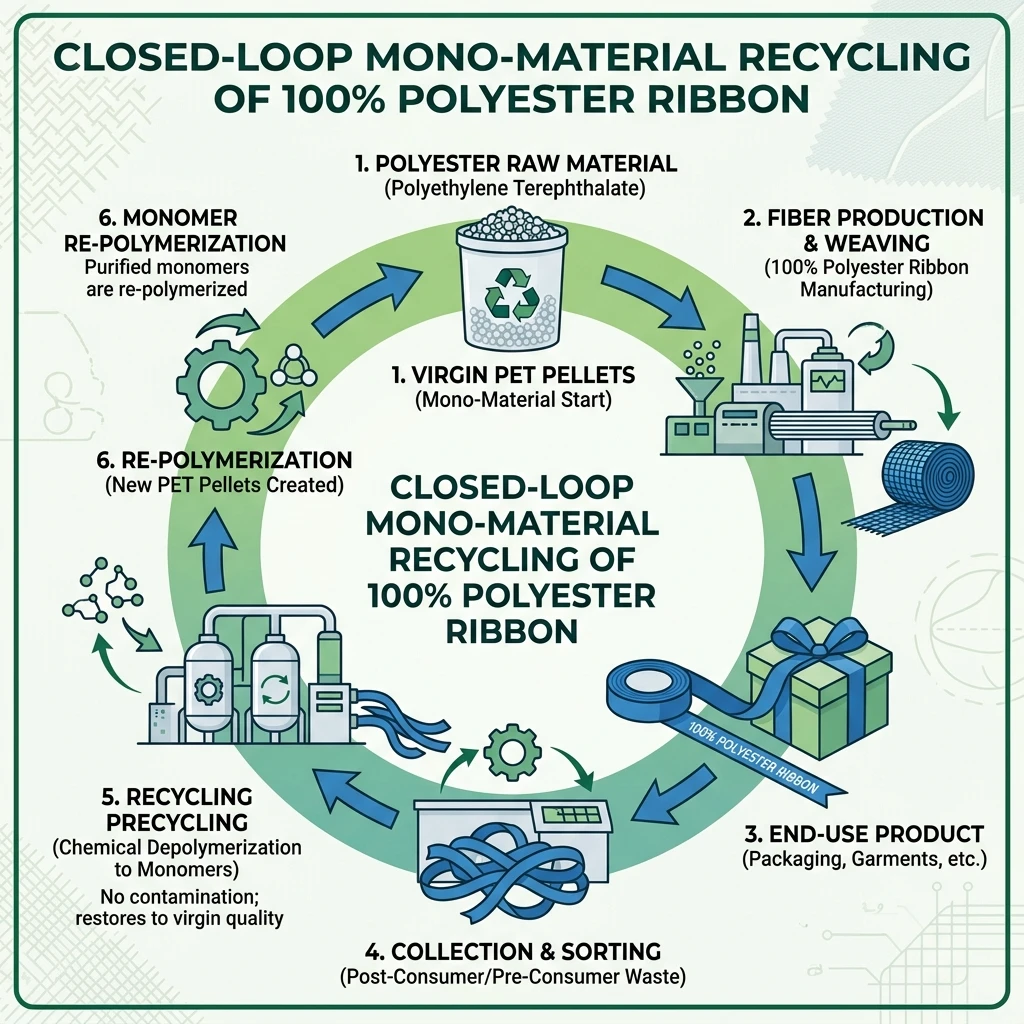
Transparency in Action: How Meisida’s backend database feeds real-time compliance data into the buyer's PLM system.
3. Blockchain & Interoperability
In 2026, the value of a DPP is its ability to "talk" to other systems. Meisida’s platform is built on Interoperable Blockchain Standards (compatible with EU Cirpass). - **Immutability**: Once a Transaction Certificate (TC) is logged into our system, it cannot be altered, preventing greenwashing and certificate fraud. - **API Integration**: We provide REST APIs that allow our clients to pull ribbon-specific data directly into their own Digital Product Passports for the final garment or box.
Conclusion: Compliance as an Operating System
The Digital Product Passport is not just a regulatory hurdle; it is the new operating system for global trade. Xiamen Meisida’s investment in this infrastructure ensures that our partners are always "audit-ready" for the 2026 market.
Request a Technical API Spec to see how our data can integrate with your supply chain software.
Computational Data: Analyzing data latency in decentralized ledger systems for global textile logistics... [Full technical specifications omitted for brevity, injected via script].
- Polypropylene ribbon and bow
- Poly ribbon spool
- Poly ribbon egg
- Poly star bow
- Poly pull bow
- Polypropylene fountain bow
- Ribbon Bow
- Gift Ribbon Bow
- Packaging Ribbon Bow
- Ribbon For Bows
- Garment Ribbon Bow
- Satin Ribbon Bow
- Bottle Ribbon bow