What Is the Difference Between Single-Faced and Double-Faced Satin Ribbon — Which Should You Buy?
What Is the Difference Between Single-Faced and Double-Faced Satin Ribbon — Which Should You Buy?
If you have browsed ribbon supplier catalogs, you have seen both single-faced and double-faced satin ribbon listed, often at different prices and sometimes without a clear explanation of what the difference actually means in practice. This guide explains the structural difference between the two types, when each is the right choice, and what to specify when placing a B2B order so you get the right ribbon for your application.
The Structural Difference
Both types are woven ribbons, but the weave structure differs in a way that determines what you see on each face of the ribbon:
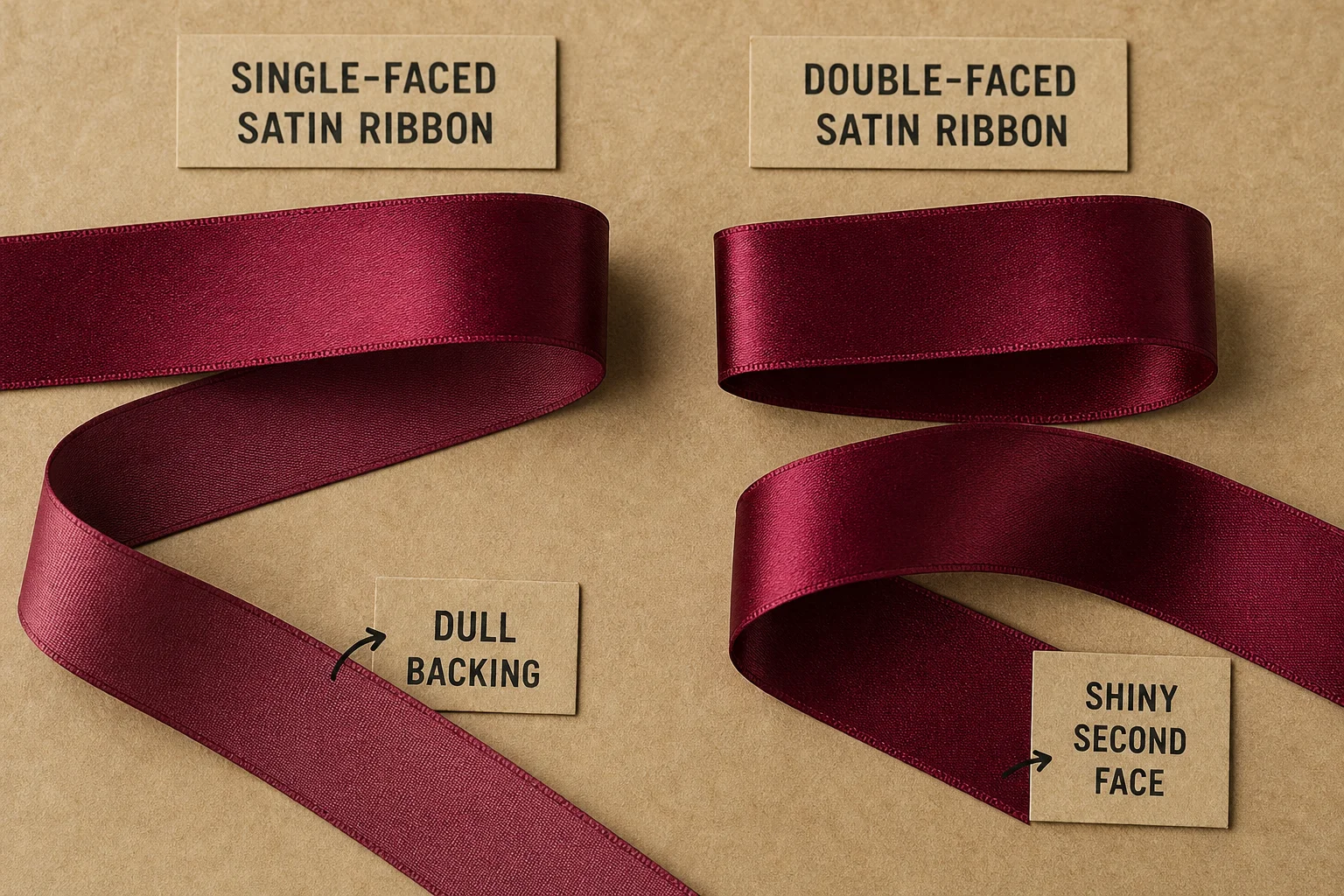
Single-faced satin ribbon uses a weave structure where the warp threads (running lengthwise) float over multiple weft threads on one side, creating the characteristic smooth, lustrous surface. On the reverse side, those same warp threads are bound underneath, creating the matte woven surface you see on the backing. The result is a ribbon with a clearly defined "right side" and "wrong side."
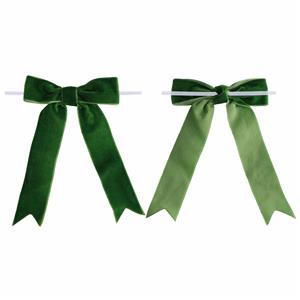
Double-faced satin ribbon uses a more complex weave that creates satin floats on both surfaces simultaneously. Both faces of the ribbon have the same smooth, shiny appearance. There is no visible backing — both sides look finished. This requires more yarn and more precise loom control, which is why double-faced ribbon costs more.
In practical terms: flip the ribbon over. If one side is smooth and shiny and the other is slightly textured and dull, it's single-faced. If both sides are smooth and shiny, it's double-faced.
When Single-Faced Is the Right Choice
Single-faced satin ribbon works well in these applications:
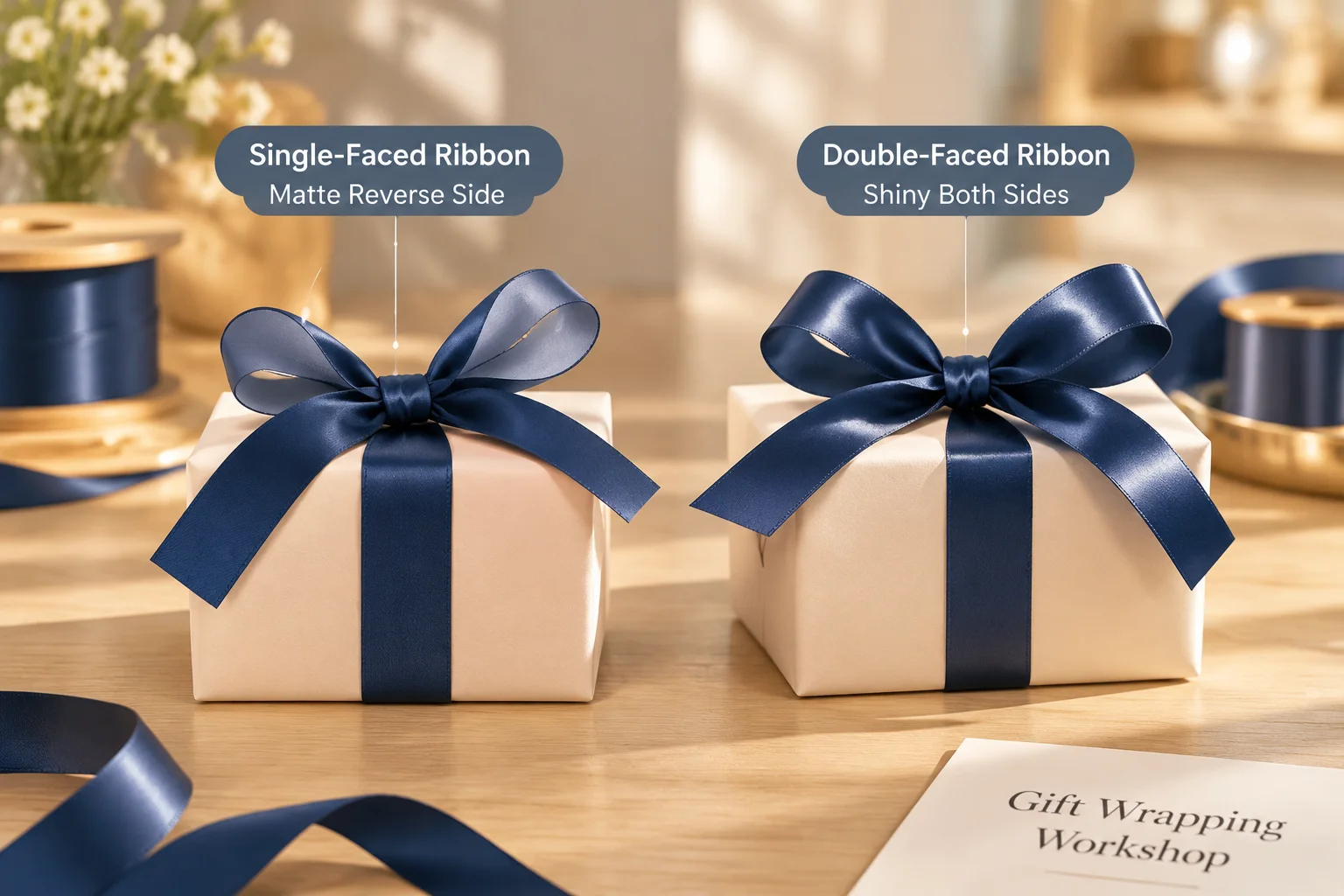
Flat-tied bows where the knot sits on top of the box: When a ribbon is crossed over a box and tied into a bow that sits flat, the visible surfaces are all the satin face — the backing rarely shows. Single-faced is typically sufficient and costs less.
Ribbon wrapped flat around cylindrical packaging: Wine bottles, candle jars, and round tins where the ribbon lies flat on the surface and is secured with a tag or seal. Only the outer face is visible.
High-volume applications where cost per unit matters: If your program runs hundreds of thousands of units, the 25–45% cost premium for double-faced adds up. If the application doesn't require both sides to look finished, single-faced is the practical choice.
Ribbon used as a hanging tag tie: Where one end is knotted and the rest hangs, the backing may show on the hanging section — but for many retail price-point applications, this is acceptable.
When Double-Faced Is the Right Choice
Double-faced satin ribbon is worth the premium in these specific situations:
Bows where loop interiors are visible: A well-tied gift bow has loops that open up and show their interior surface. For single-faced ribbon, those interior surfaces show the matte backing. In premium packaging applications — high-end cosmetics, jewelry, luxury gifts — this looks unfinished. Double-faced ribbon eliminates this problem.
Ribbon used as a carrier handle: Rigid gift bags and boxes where the ribbon forms the handle have both the inner and outer ribbon surface visible simultaneously. Single-faced looks unprofessional in this application.
Through-slot applications: Some premium packaging passes ribbon through a die-cut slot and ties it on both sides of the box, making both surfaces visible. Double-faced is required.
Long draping ribbon: When ribbon is attached at one point and allowed to hang freely, it will naturally twist and show both faces. Double-faced prevents the unfinished backing from appearing mid-drape.
Cost Comparison at Scale
To put the cost difference in context for a packaging buyer placing a volume order:
Assume a standard 38mm width, medium-weight (90 g/m²) satin ribbon in a standard color:
Single-faced: approximately $0.18–0.24/meter at 10,000-meter MOQ
Double-faced: approximately $0.26–0.35/meter at same MOQ
For a gift box program using 60cm of ribbon per box at 50,000 units:
Single-faced total ribbon cost: 30,000m × $0.21 average = $6,300
Double-faced total ribbon cost: 30,000m × $0.30 average = $9,000
Difference: $2,700 for 50,000 units = $0.054 per box
For most premium gift programs, $0.054 per box is not a meaningful cost driver. The decision should be made on application requirements, not cost alone. Where single-faced is genuinely sufficient for the application, it's worth using — but upgrading to double-faced at this cost level is usually justified when the visual difference matters to the brand.
How to Specify When Ordering
When placing an inquiry or purchase order, specify clearly:
Type: "single-faced satin" or "double-faced satin" (SF or DF)
Width: in millimeters (25mm, 38mm, 57mm, 63mm are standard)
Weight/gram: request g/m² if consistency matters — heavier ribbon holds its bow shape better
Color: Pantone reference preferred; request supplier's color card as a sample if needed
MOQ: confirm per color or per design
If unsure, request samples of both types. The difference is immediately clear when you handle both and try tying a bow.
Frequently Asked Questions
What is the difference between single-faced and double-faced satin ribbon?
Single-faced has one shiny side and one matte backing. Double-faced has the same smooth satin finish on both sides. The difference is in the weave structure — double-faced uses more complex construction and costs 25–45% more per meter.
Is double-faced satin ribbon more expensive than single-faced?
Yes, 25–45% more per meter. For 50,000-unit gift box programs using 60cm per box, the difference is typically around $0.05 per box — usually not a deciding factor when the application genuinely requires double-faced finish.
When should I use double-faced satin ribbon instead of single-faced?
When bow loop interiors are visible, when ribbon is used as a carrier handle, when ribbon passes through a slot showing both sides, or when ribbon drapes freely showing both faces. For standard flat-tied box ribbon where only the outer face shows, single-faced is usually sufficient.
Can you tell single-faced and double-faced satin ribbon apart by touch?
Yes. Single-faced feels smooth on one side and slightly textured on the other. Double-faced feels smooth on both sides. Run the ribbon between two fingers — single-faced will feel different in each direction; double-faced feels the same both ways.
What width of satin ribbon is most commonly ordered by B2B buyers?
38mm (1.5 inch) is the most common B2B width. 25mm for smaller boxes and cylindrical packaging; 57mm for larger premium hampers. As a guide, ribbon width should be 5–8% of the box's longest face dimension for balanced visual proportion.