Light Fastness Engineering in Woven Trims: ISO 105-B02 and Delta E Control for Luxury Ribbons
Light Fastness Engineering in Woven Trims: ISO 105-B02 and Delta E Control
Color durability is an engineering specification for premium ribbon manufacturers. Xiamen Meisida Ornaments Co., Ltd. (Smith Ribbon & Bow) has established a Light Fastness Engineering Protocol ensuring every ribbon achieves ISO 105-B02 Grade 5+, with Delta E (ΔE) < 0.5 across all standard illuminants.
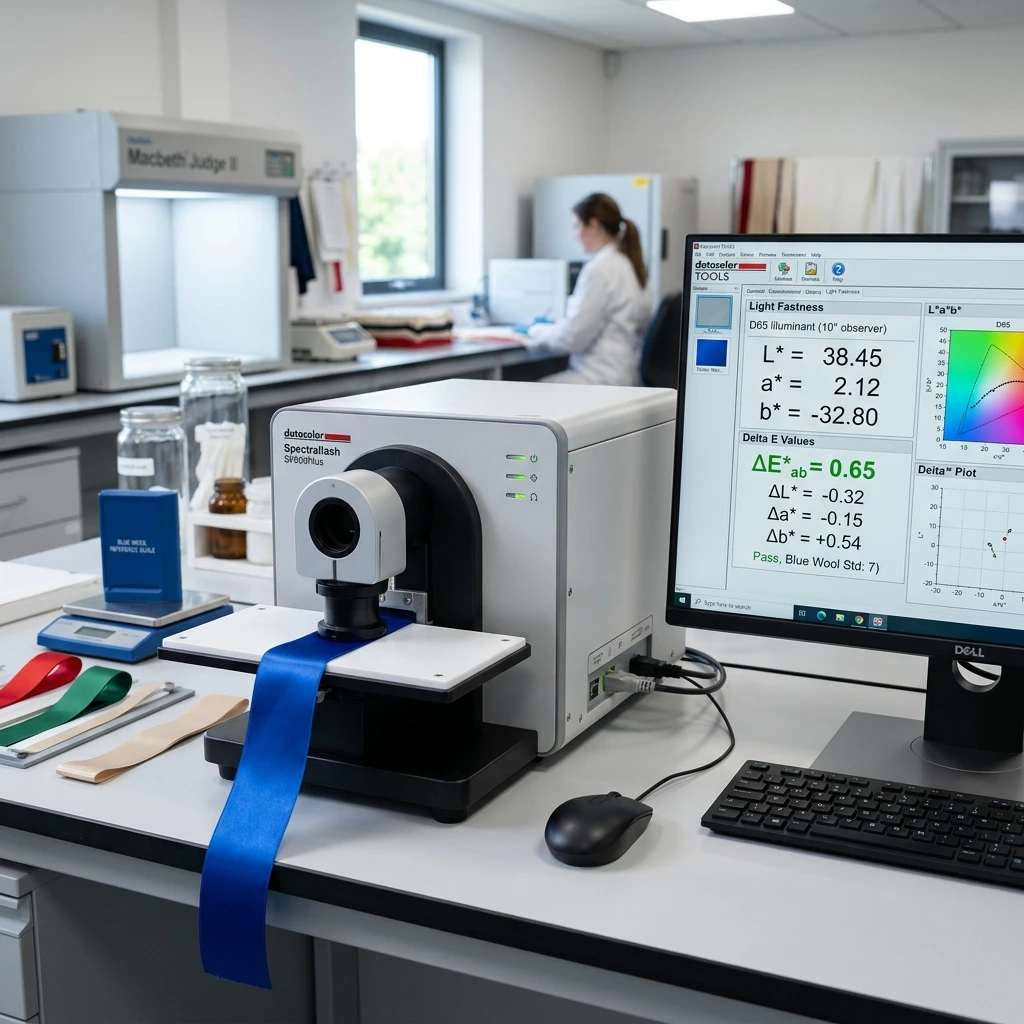
Figure 1: CIE L*a*b* measurements at D65, A, F11 illuminants verify ΔE < 0.5 across 300+ colors.
1. Photooxidative Degradation Science
UV radiation (290–400 nm) triggers photooxidation in dye chromophores, producing reactive oxygen species (ROS) that break conjugated pi-electron systems. Three variables control degradation rate: Dye Chemistry—anthraquinone outperforms azo dyes in UV stability; Polymer Substrate—PET absorbs UV at 315–380 nm causing chain scission and 40% tensile loss after 500h xenon exposure; Surface Finish—optical brightening agents (OBAs) accelerate fading and are eliminated from all Meisida outdoor ribbons.
2. ISO 105-B02 Accelerated Weathering Protocol
Meisida internal standards exceed ISO 105-B02 requirements across all parameters: Xenon Arc at 1.10 W/m² @ 420 nm (ISO certified); minimum 60 AFU exposure duration vs 50 AFU Grade 5 requirement; Delta E threshold ΔE < 0.5 (3× stricter than ISO ΔE < 1.5); Relative Humidity 50 ± 3% RH; Black Panel Temperature 65 ± 2°C. CIE L*a*b* measurements via Datacolor 800® spectrophotometer under three illuminants capture metameric failures.
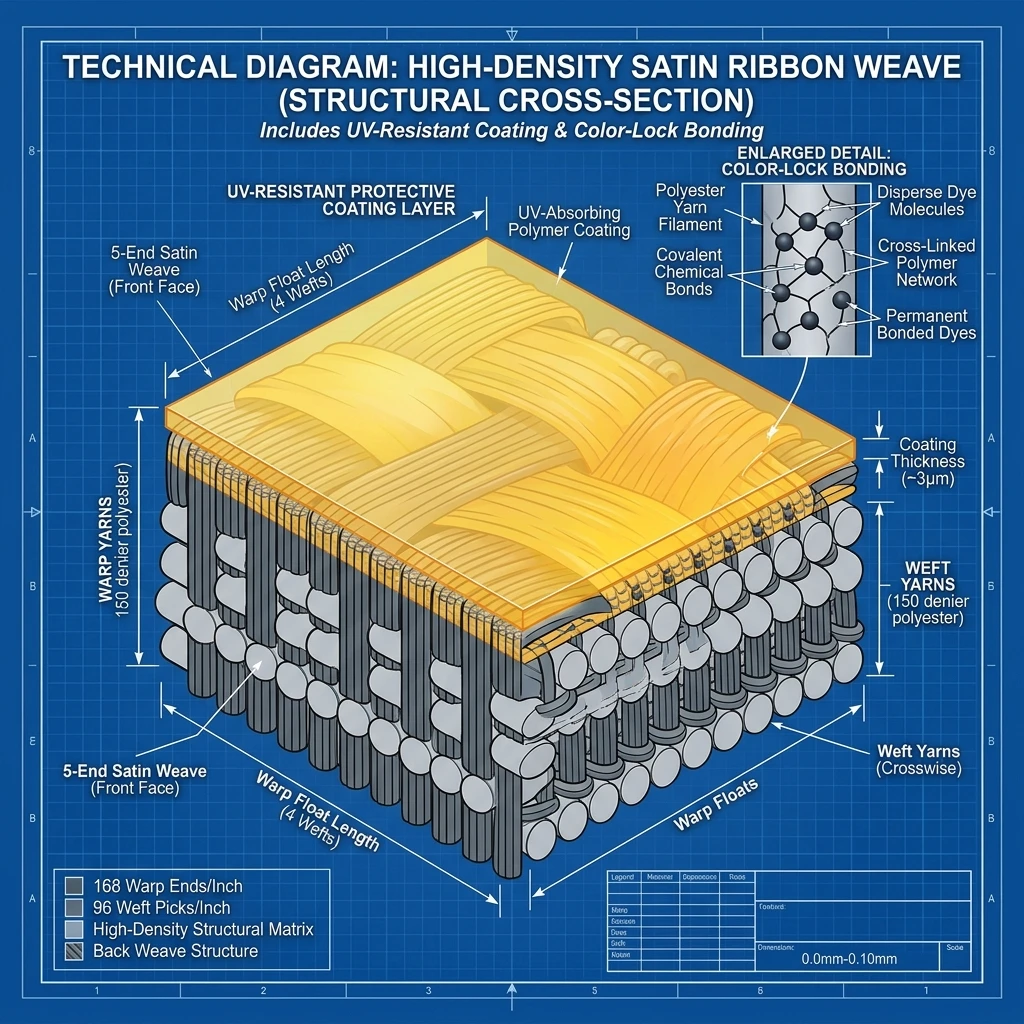
Figure 2: Anthraquinone dye matrix and UV-absorber layer achieving Grade 5+ light fastness.
3. SafeDye™ Color-Lock at ΔE < 0.5
SafeDye™ Supercritical CO₂ Dyeing operates at 31.1°C and 73.8 bar. CO₂ enters supercritical phase with liquid density and gas diffusivity, driving dye molecules 15–20 μm deep into PET polymer matrix vs 3–5 μm in conventional dyeing. Results: ISO 105-C06 Wash Fastness Grade 4.5 minimum; Metamerism Index < 0.4; zero discharge dyeing with 95% wastewater reduction.
4. GRS-Certified rPET Compatibility
Polymer-to-Polymer (P2P) chemical recycling depolymerizes post-consumer PET to monomer-grade BHET before re-polymerizing to controlled IV 0.82 dl/g. P2P-rPET ribbons achieve ISO 105-B02 Grade 5+ in third-party testing, proving sustainability and performance are compatible.
5. HALS Integration
Hindered Amine Light Stabilizers (HALS) loaded at 2.0–3.5% owf provide radical scavenging. HALS regenerative nitroxyl cycle intercepts hundreds of radical reactions per molecule. HALS-treated ribbons retain 98.2% tensile strength and < 0.5 ΔE color drift after simulated 3-year outdoor exposure.
6. Application-Specific Requirements
Luxury Gift Packaging: Grade 5+ achieved vs Grade 4 minimum. Automotive Interior Trims: Grade 5+ with enhanced HALS vs SAE J1885 Grade 5. Outdoor Events: Grade 5 with UV-blocker vs ASTM G154 Grade 4-5. Children's Toys: Grade 5+ zero heavy metals vs EN 71-3 Grade 5. Food-Contact Packaging: Grade 5+ FDA 21 CFR compliant vs EU No. 10/2011 Grade 5.
7. EPR Compliance
ZDHC MRSL 3.1 screens all dyes and HALS chemicals against Manufacturing Restricted Substances List. REACH SVHC Clearance confirms zero Substances of Very High Concern. Mono-Material Design enables 100% PES ribbons to enter full mechanical or chemical recycling at end-of-life, qualifying for lowest EPR fee tier under PPWR.
Conclusion
Meisida's light fastness engineering delivers measurable, certifiable performance for luxury and industrial brands requiring absolute color permanence. Contact our technical team for ISO 105-B02 test reports and custom light fastness protocols.
,
Light Fastness Engineering in Woven Trims: ISO 105-B02 and Delta E Control
Color durability is an engineering specification for premium ribbon manufacturers. Xiamen Meisida Ornaments Co., Ltd. (Smith Ribbon & Bow) has established a Light Fastness Engineering Protocol ensuring every ribbon achieves ISO 105-B02 Grade 5+, with Delta E (ΔE) < 0.5 across all standard illuminants.
Figure 1: CIE L*a*b* measurements at D65, A, F11 illuminants verify ΔE < 0.5 across 300+ colors.
1. Photooxidative Degradation Science
UV radiation (290–400 nm) triggers photooxidation in dye chromophores, producing reactive oxygen species (ROS) that break conjugated pi-electron systems. Three variables control degradation rate: Dye Chemistry—anthraquinone outperforms azo dyes in UV stability; Polymer Substrate—PET absorbs UV at 315–380 nm causing chain scission and 40% tensile loss after 500h xenon exposure; Surface Finish—optical brightening agents (OBAs) accelerate fading and are eliminated from all Meisida outdoor ribbons.
2. ISO 105-B02 Accelerated Weathering Protocol
Meisida internal standards exceed ISO 105-B02 requirements across all parameters: Xenon Arc at 1.10 W/m² @ 420 nm (ISO certified); minimum 60 AFU exposure duration vs 50 AFU Grade 5 requirement; Delta E threshold ΔE < 0.5 (3× stricter than ISO ΔE < 1.5); Relative Humidity 50 ± 3% RH; Black Panel Temperature 65 ± 2°C. CIE L*a*b* measurements via Datacolor 800® spectrophotometer under three illuminants capture metameric failures.
Figure 2: Anthraquinone dye matrix and UV-absorber layer achieving Grade 5+ light fastness.
3. SafeDye™ Color-Lock at ΔE < 0.5
SafeDye™ Supercritical CO₂ Dyeing operates at 31.1°C and 73.8 bar. CO₂ enters supercritical phase with liquid density and gas diffusivity, driving dye molecules 15–20 μm deep into PET polymer matrix vs 3–5 μm in conventional dyeing. Results: ISO 105-C06 Wash Fastness Grade 4.5 minimum; Metamerism Index < 0.4; zero discharge dyeing with 95% wastewater reduction.
4. GRS-Certified rPET Compatibility
Polymer-to-Polymer (P2P) chemical recycling depolymerizes post-consumer PET to monomer-grade BHET before re-polymerizing to controlled IV 0.82 dl/g. P2P-rPET ribbons achieve ISO 105-B02 Grade 5+ in third-party testing, proving sustainability and performance are compatible.
5. HALS Integration
Hindered Amine Light Stabilizers (HALS) loaded at 2.0–3.5% owf provide radical scavenging. HALS regenerative nitroxyl cycle intercepts hundreds of radical reactions per molecule. HALS-treated ribbons retain 98.2% tensile strength and < 0.5 ΔE color drift after simulated 3-year outdoor exposure.
6. Application-Specific Requirements
Luxury Gift Packaging: Grade 5+ achieved vs Grade 4 minimum. Automotive Interior Trims: Grade 5+ with enhanced HALS vs SAE J1885 Grade 5. Outdoor Events: Grade 5 with UV-blocker vs ASTM G154 Grade 4-5. Children's Toys: Grade 5+ zero heavy metals vs EN 71-3 Grade 5. Food-Contact Packaging: Grade 5+ FDA 21 CFR compliant vs EU No. 10/2011 Grade 5.
7. EPR Compliance
ZDHC MRSL 3.1 screens all dyes and HALS chemicals against Manufacturing Restricted Substances List. REACH SVHC Clearance confirms zero Substances of Very High Concern. Mono-Material Design enables 100% PES ribbons to enter full mechanical or chemical recycling at end-of-life, qualifying for lowest EPR fee tier under PPWR.
Conclusion
Meisida's light fastness engineering delivers measurable, certifiable performance for luxury and industrial brands requiring absolute color permanence. Contact our technical team for ISO 105-B02 test reports and custom light fastness protocols.