How Wired Ribbon Holds Its Shape — The Wire Insertion Process in Woven Ribbon Production
How Wired Ribbon Holds Its Shape — The Wire Insertion Process in Woven Ribbon Production
Most buyers understand that wired ribbon holds its shape because of the wire in the edges. Fewer understand exactly how that wire is integrated into the ribbon, why production method matters for quality, and what differentiates high-quality wired ribbon from cheaper alternatives that lose their shape retention quickly. This article explains the manufacturing process behind wired ribbon construction.
The Loom-Integration Method
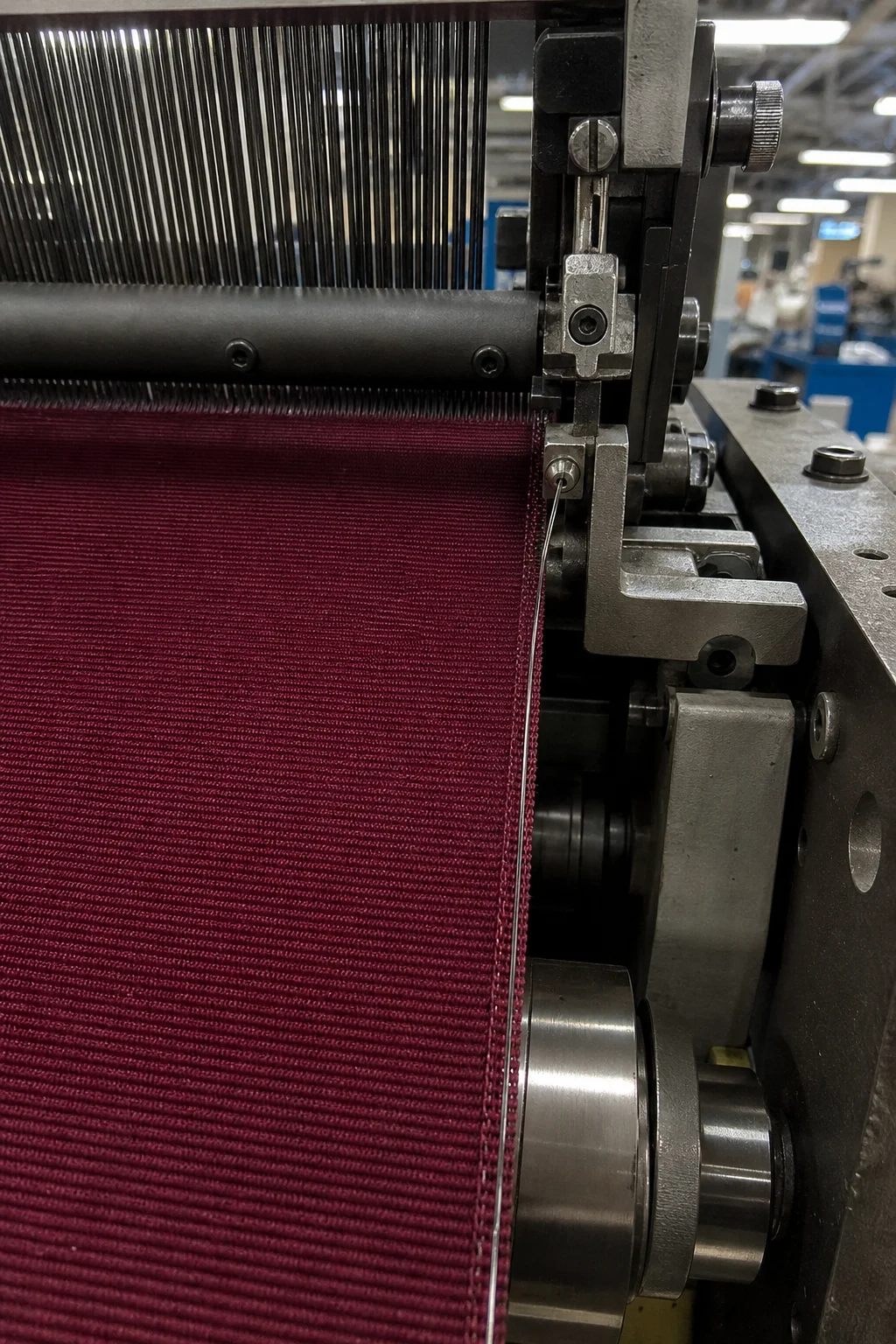
Wire is inserted into ribbon during the weaving process itself — not after the ribbon is woven. On a purpose-configured ribbon loom, a continuous wire feed is positioned alongside the yarn feed. As the weft threads are interlaced with the warp to create the ribbon fabric, the wire is incorporated into the structure at each selvedge edge.
The wire runs parallel to the ribbon's length, woven into the edge rather than sitting on top of it. A properly integrated wire is effectively trapped in the weave structure: the surrounding weft threads lock it in place, preventing pull-out and ensuring the wire force is distributed evenly along the ribbon rather than concentrated at a single point.
This is the critical distinction between quality wired ribbon and lower-grade alternatives. Some lower-cost production uses a surface-attached wire — a wire glued or heat-bonded to the ribbon edge after weaving. Surface-attached wire is more prone to separation, pull-out, and uneven shape distribution. Woven-in wire produces a ribbon where the wire behaves as part of the fabric rather than an addition to it.
Wire Specifications and Their Practical Implications
The wire used in production wired ribbon is typically either stainless steel or iron with a copper coating. The choice of wire type has practical consequences for the end user:
Stainless steel wire (0.08–0.10mm): Higher cost, corrosion-resistant, maintains shape memory in humid conditions. The correct specification for floral applications, outdoor decoration, and any environment where moisture is present. Stainless wire retains its spring memory significantly longer than iron wire under repeated reshaping.
Iron wire with copper coating (0.10–0.12mm): Lower cost, more flexible, adequate for dry indoor applications like gift packaging and retail display. In humid environments, the copper coating eventually fails and the iron core rusts — this is the source of rust staining observed in low-grade wired ribbon used in wet floral work.
Wire diameter affects the ribbon's handling characteristics. Thinner wire (0.08mm) produces a ribbon that is easier to reshape repeatedly and feels softer in hand. Thicker wire (0.12mm) provides stronger initial shape retention but is less forgiving for detailed shaping work. For most gift and retail applications, 0.10mm is the standard.
Quality Indicators in Wired Ribbon
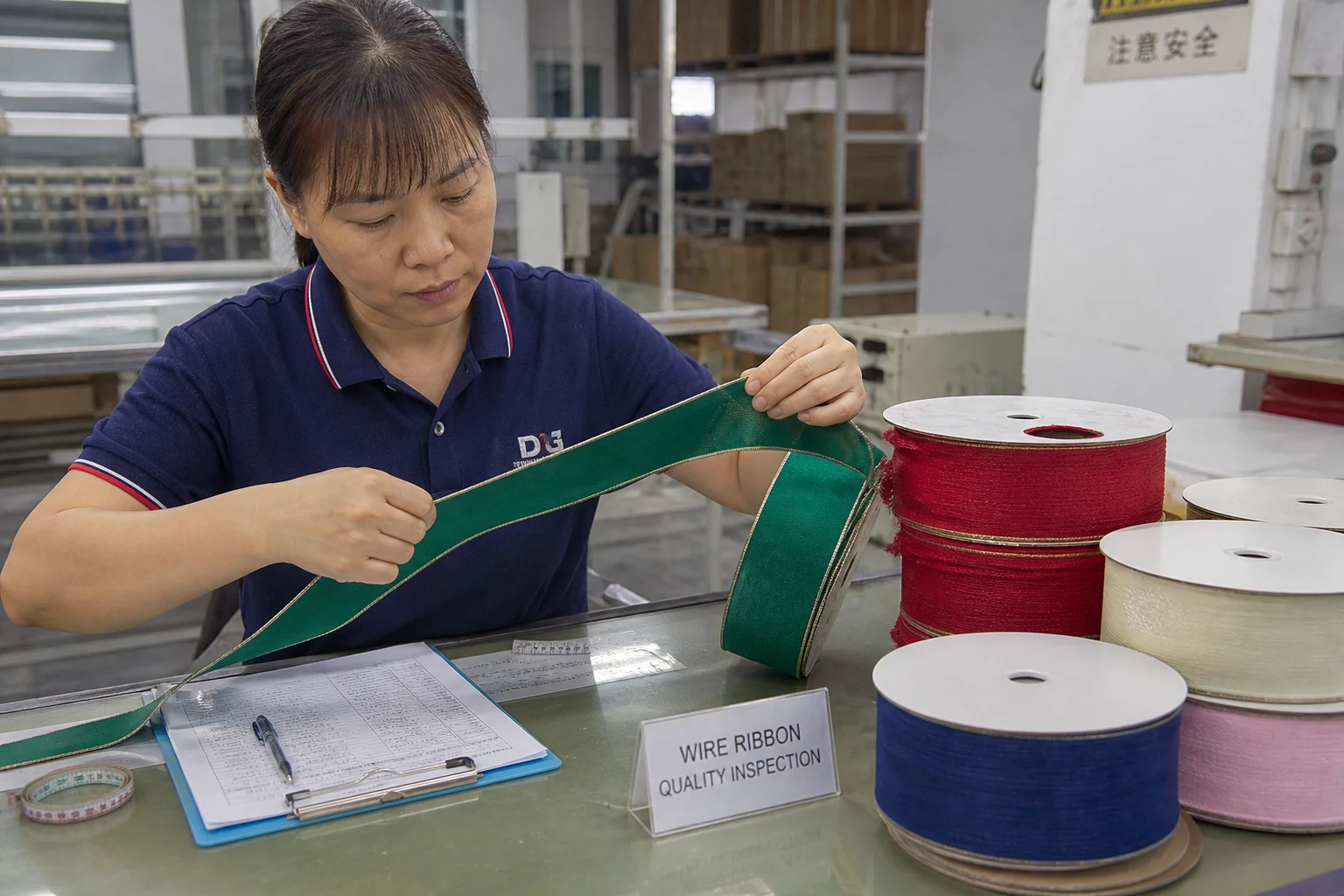
When evaluating wired ribbon from a supplier, several observable characteristics indicate production quality:
Wire pull-out resistance: Grasp the wire end at the cut edge and pull along the ribbon length. A properly integrated wire should require consistent moderate force to pull — if it slides out easily or pulls through the fabric surface, the wire is surface-attached rather than woven in.
Shape memory consistency: Bend the ribbon edge through 90 degrees, then straighten it. Quality wire holds approximately 50–70% of the bend position. Repeat 20 times — the shape memory should remain consistent. Rapid loss of spring memory indicates low-grade wire or surface attachment.
Edge uniformity: The wire should run continuously along the full ribbon length without gaps, bumps, or kinks. Irregular wire placement creates uneven shape distribution when the ribbon is formed into bows.
Specifying Wire Type in Purchase Orders
Wire type is almost never listed on standard ribbon product descriptions. Most suppliers default to iron wire unless otherwise specified. For applications requiring stainless steel wire — floral, outdoor, humid environments — this must be explicitly requested in the purchase order.
Recommended purchase order language: "Wired ribbon, stainless steel wire, 0.10mm diameter, woven-in selvedge integration (not surface-attached)." This specification eliminates the most common source of quality discrepancy in wired ribbon supply. Meisida produces wired ribbon in both stainless steel and iron wire options. Contact mystyleribbon.com to confirm wire specification availability for your programme.
Frequently Asked Questions
How is wire inserted into wired ribbon during manufacturing?
Wire is woven directly into the ribbon's selvedge edges on the loom during production — not added afterward. A continuous wire (0.08–0.12mm) is fed through the weft structure as the ribbon is woven, locking it structurally into the fabric edge.
What type of wire is used in wired ribbon?
Either stainless steel (corrosion-resistant, recommended for floral/outdoor use) or iron wire with copper coating (more economical, suitable for dry indoor applications). Wire diameter is typically 0.08–0.12mm. Specify wire type explicitly in your purchase order — most suppliers default to iron wire.
Why does wired ribbon sometimes lose its shape retention over time?
Three main causes: wire fatigue from repeated reshaping (30–50 cycles), wire pull-out indicating surface-attachment rather than woven integration, or wire corrosion in humid environments. For long-term applications, specify stainless steel wire and woven-in integration.
Is wired ribbon safe for use with fresh flowers?
Stainless steel wired ribbon is safe for humid floral environments. Iron wire ribbon will rust with prolonged moisture exposure. Specify stainless steel wire explicitly when ordering for fresh flower or outdoor use.
Can the wire be removed from wired ribbon to make it unwired?
Yes — grasp the wire end at the cut edge and pull gently. However, this is labour-intensive at scale. Order unwired ribbon directly rather than purchasing wired and removing the wire. Contact mystyleribbon.com for both wired and unwired options in the same colour specification.