What Is the Difference Between Wired and Unwired Ribbon — And When Does It Actually Matter
What Is the Difference Between Wired and Unwired Ribbon — And When Does It Actually Matter
Wired versus unwired is one of the ribbon questions that comes up regularly in procurement enquiries — and one that genuinely affects the end result. The difference is simple to explain, but choosing the wrong type for a specific application causes problems that are difficult to fix after the ribbon arrives. This guide explains the practical distinction between the two and gives clear guidance on which to specify for different use cases.
The Core Difference
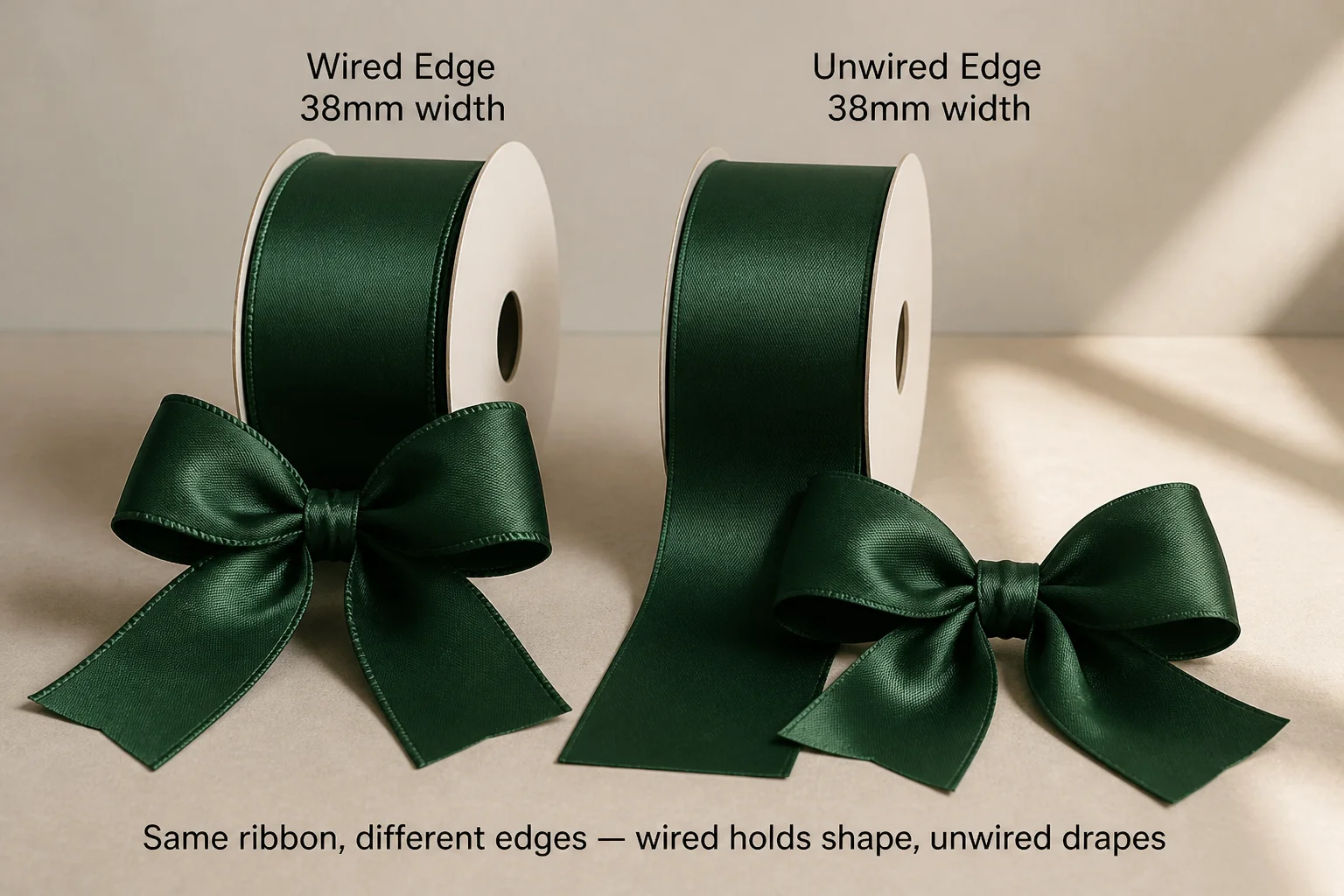
Wired ribbon has a thin, flexible metallic wire woven into both selvage edges during production. The wire is not added after weaving — it is integrated into the ribbon structure as it comes off the loom, running along each edge. This wire allows the ribbon to hold any position you shape it into: fold it into a loop and it stays looped; twist the edge and it holds the twist; form a bow with full round loops and those loops remain open without support.
Unwired ribbon has no wire. It behaves like fabric — flexible, soft, and naturally responsive to gravity. Ties and bows made from unwired ribbon have a softer, more organic appearance. Loops will open to some degree but will tend to relax and lose their round shape over time, especially in wider widths.
When Wired Ribbon Is the Right Choice
Wired ribbon is the correct specification whenever shape retention matters more than softness:
Floral design and wreaths: Bows on arrangements, wreaths, and centrepieces need to hold their shape through handling, display, and sometimes outdoor conditions. Unwired ribbon goes limp within hours in a humid environment. Wired ribbon maintains its structure through the full product lifetime.
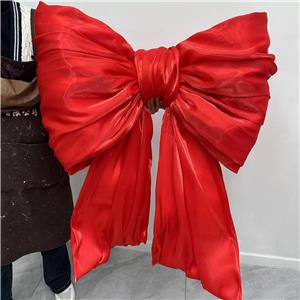
Large premium gift bows: A bow with 8 or more loops in 63mm ribbon requires wire to maintain its full round appearance. Without wire, the outermost loops collapse under their own weight within a day or two.
Retail display and visual merchandising: Any ribbon used as a decorative element on a display fixture, window dressing, or seasonal installation needs to hold its shape without daily re-tying.
Outdoor seasonal decorations: Lamppost banners, exterior wreath ribbons, and outdoor gift displays all benefit from wired construction that resists wind movement and humidity.
When Unwired Ribbon Is the Better Choice
Unwired ribbon is preferable whenever the application values softness, drape, or economy over structure:
Standard gift wrap: Ribbon that lies flat along a box, tied in a simple bow, does not benefit from wire. The additional cost is wasted, and the wire edge can feel rough in hand-wrapping applications.
Fabric trim and garment ribbon: Any application where the ribbon is sewn, glued, or attached to a fabric surface should use unwired ribbon. Wire in the edge makes the ribbon stiff and difficult to apply smoothly.
Narrow ribbon (under 16mm): Wire in very narrow ribbon creates a ribbon that is difficult to tie and handle naturally. Narrow applications almost always work better without wire.
Volume packaging lines: For programmes where cost-per-unit is the primary driver and the bow does not need to last more than a few days, unwired ribbon is more economical and adequate.

Practical Handling Differences at the Packing Station
Beyond the structural differences, wired and unwired ribbon behave quite differently when handled by packers at a gift wrapping station. Understanding these handling differences helps buyers anticipate whether wired ribbon will actually work in their packing operation:
Tying speed: Unwired ribbon is faster to tie for experienced packers — it is more forgiving and flows naturally through hand movements. Wired ribbon requires slightly more deliberate handling to control the loops as they are formed, which can reduce throughput by 10–20% on hand-tying lines.
Consistency: Wired ribbon produces more consistent bows across different packers. The wire holds the loops in position while the bow is being completed, so variations in individual packing technique matter less. On unwired ribbon, bow quality varies more noticeably between packers.
Cutting: Cutting wired ribbon requires scissors with enough clearance to cut through both the fabric and the edge wire cleanly. Standard fabric scissors work; small embroidery scissors do not. The cut end exposes a short wire tip which can be a handling concern — some packing operations bend the exposed wire tip inward before the ribbon is tied.
Storage: Wired ribbon rolls must be stored without compression on the edges — the wire deforms under sustained pressure and cannot be fully straightened. Store rolls horizontally on shelving, not stacked under heavy weight.
Cost and Specification Considerations
Wired ribbon typically costs 20–35% more per metre than equivalent unwired ribbon at the same width and construction. The price difference reflects the wire material and the additional production complexity of integrating wire into the weave edge.
For purchase orders, always specify wired or unwired explicitly — do not leave it to the supplier's default. Many product listings describe ribbon without specifying wire status, and the default varies by supplier. Meisida produces both wired and unwired versions of most standard ribbon constructions in satin, grosgrain, and organza. Contact mystyleribbon.com to confirm wire availability in your target specification.
Frequently Asked Questions
What is the difference between wired and unwired ribbon?
Wired ribbon has thin flexible wire woven into both edges, allowing it to hold any shape you bend it into. Unwired ribbon is plain fabric — softer, with natural drape, but without shape retention.
When should I use wired ribbon instead of unwired?
Use wired for floral arrangements, large premium bows, display decorations, and outdoor applications where shape retention is required. Use unwired for standard gift wrap, fabric trim, narrow ribbon under 16mm, and cost-driven volume packaging.
Does wired ribbon cost more than unwired?
Yes, typically 20–35% more per metre. The cost reflects the wire material and additional production step. Justified when shape retention matters; unnecessary for standard gift wrapping.
Can wired ribbon be used in an automated bow-making machine?
Some machines accept it, others do not. The wire can interfere with feed mechanisms. Always request a test spool before bulk ordering wired ribbon for automated use. Hand-tying applications have no equipment concerns.
How do I tell if a ribbon is wired without a product label?
Bend the edge between your fingers — wired ribbon holds the bend shape. You can also feel slight stiffness along the selvedge. Always confirm "wired" or "unwired" explicitly in your purchase order. Contact mystyleribbon.com for sample verification before bulk orders.