From Consistent Colour to Consistent Volume — How a Corporate Gifting Team Rebuilt Their Ribbon Supply Chain
From Consistent Colour to Consistent Volume — How a Corporate Gifting Team Rebuilt Their Ribbon Supply Chain
Corporate gift programmes live and die by visual consistency. When a company sends branded gifts to a hundred clients, every gift needs to look like it came from the same place — same ribbon colour, same bow size, same presentation. When that consistency breaks down, the gift stops communicating what it was designed to communicate. This is the story of a corporate gifting team that discovered their ribbon supply chain was the weakest link in their brand presentation — and how they fixed it.
The Problem: Shade Drift Across Orders
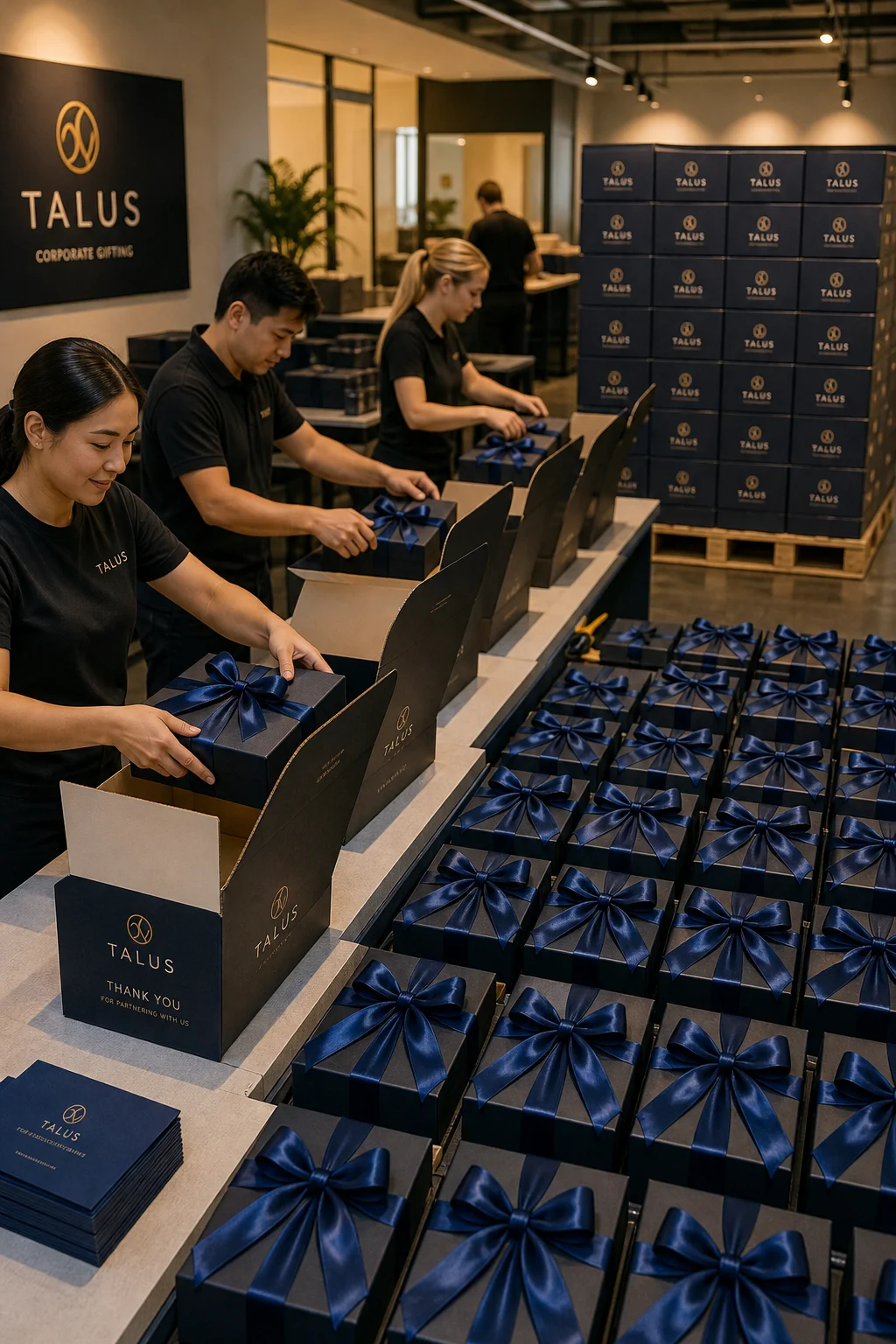
The gifting team — a mid-size professional services firm running a quarterly client gift programme — had been using the same deep navy satin ribbon for three years. The ribbon matched their brand colour system: navy was the primary brand colour, and it appeared consistently on their printed materials, packaging tape, and tissue paper. The ribbon was the finishing element — a bow on a kraft box with printed brand elements.
The problem became visible in the third year. When assembling gifts for a Q3 client send, a staff member noticed that the ribbon on the current order looked slightly different from the ribbon left over from the Q1 order — the Q3 ribbon was slightly greener, where the Q1 ribbon was truer navy. When placed side by side, the difference was clear. When placed on boxes and photographed together for an internal review, the inconsistency was impossible to miss.
Investigation revealed the cause: the gifting team had been sourcing ribbon reactively — a new order placed each quarter with whichever supplier offered the fastest delivery at the time. They had used three different suppliers over 18 months. Each supplier used their own navy dye recipe, producing a slightly different result. The brand navy had been drifting incrementally across every order.
The Diagnosis: No Colour Standard, No Consistency
The underlying problem was the absence of a documented colour standard. The gifting team had specified "navy ribbon" without defining what navy meant in measurable terms. Each supplier interpreted the brief with their own standard navy, which produced their own version of the colour. Without a spectrophotometric colour reference and a defined Delta E tolerance, there was no basis for rejecting any of the deliveries as non-conforming — each was a reasonable interpretation of "navy".
The fix required establishing two things: a colour standard and a single-supplier agreement.
Establishing the Colour Standard
The gifting team worked with their preferred supplier — Meisida — to develop a lab dip: a small sample of ribbon produced at the exact colour they wanted as their brand reference. The process took two rounds: an initial lab dip, a review against their printed brand materials under a daylight-balanced light source, and a second adjusted lab dip that was approved as the permanent colour standard.
The approved lab dip was assigned an internal reference number (GFT-NAVY-01) and retained as a physical standard at both the gifting team's office and Meisida's quality lab. Every subsequent order was produced to match this standard, with spectrophotometric measurement confirming Delta E ≤1.5 against the approved reference.

Consolidating to One Supplier
The second change was consolidating all ribbon sourcing to Meisida and placing annual volume commitments rather than reactive quarterly orders. Benefits were immediate:
- Colour consistency: All ribbon from the same dye recipe, adjusted per batch against the retained colour standard. Year-on-year shade variation eliminated.
- Volume pricing: Annual commitment of 1,200 metres per year (300 per quarter) at a negotiated price 12% below the spot pricing they had been paying.
- Lead time reliability: Committed production slots rather than reactive orders competing with other customers' peak season demand. No more Q4 availability pressure.
- Inventory management: Three months of stock held at Meisida against the annual commitment, with quarterly call-off. Capital not tied up in ribbon stock at the gifting team's office.
The Result: Consistency as a Brand Asset
Twelve months after the change, the gifting team's ribbon had become a reliable brand element — one they could photograph, feature in branded content, and use as a quality signal with clients. The incremental shade variation that had been accumulating was gone. Every gift box looked like it came from the same place, because the ribbon came from the same place, produced to the same documented standard.
The practical lesson is simple: ribbon colour consistency is not something you get from a good supplier relationship alone. It requires a documented standard, a defined tolerance, and a single supplier committed to matching that standard. Contact mystyleribbon.com to discuss colour standard development for your programme.
Frequently Asked Questions
How do I ensure ribbon colour is consistent across multiple orders?
You need three things: a documented colour standard (approved physical sample + spectrophotometric values), a supplier with dye-batch colour management, and a clear contractual tolerance (Delta E ≤1.5 recommended). Without all three, shade drift is almost certain.
Can I use the same ribbon colour across multiple years?
Yes — Meisida retains dye recipes for 24 months standard, indefinitely for key programme colours on request. Request a colour retention agreement when setting up a multi-year programme.
What causes colour variation between batches?
Yarn dye affinity variation, dye chemical lot variation, and dyeing process parameters. Only spectrophotometric measurement and computerised recipe adjustment can control all three simultaneously.
How many ribbon suppliers should a brand programme use?
One primary supplier for any colour-critical programme. Multiple suppliers for the same colour will produce visible shade variation. Keep a qualified backup, but qualify them to your colour standard before any production use.
What is the minimum order for a corporate ribbon programme?
500–1000m per year for custom colour to be economical (covers colour development costs). Below this, standard colour options avoid development costs. Contact mystyleribbon.com to discuss your volume.