What Is the Difference Between Single-Face and Double-Face Satin Ribbon — Which Should You Order
What Is the Difference Between Single-Face and Double-Face Satin Ribbon — Which Should You Order
Single-face or double-face is one of the most common ribbon specification questions buyers encounter, and one of the easiest to get wrong by default. Most buyers assume "satin ribbon" means a ribbon that looks the same on both sides. In fact, the most widely available — and most economical — satin ribbon is single-face: shiny on one side, matte on the other. Whether that matters for your application depends entirely on how the ribbon is used in the finished product.
What Makes Them Different
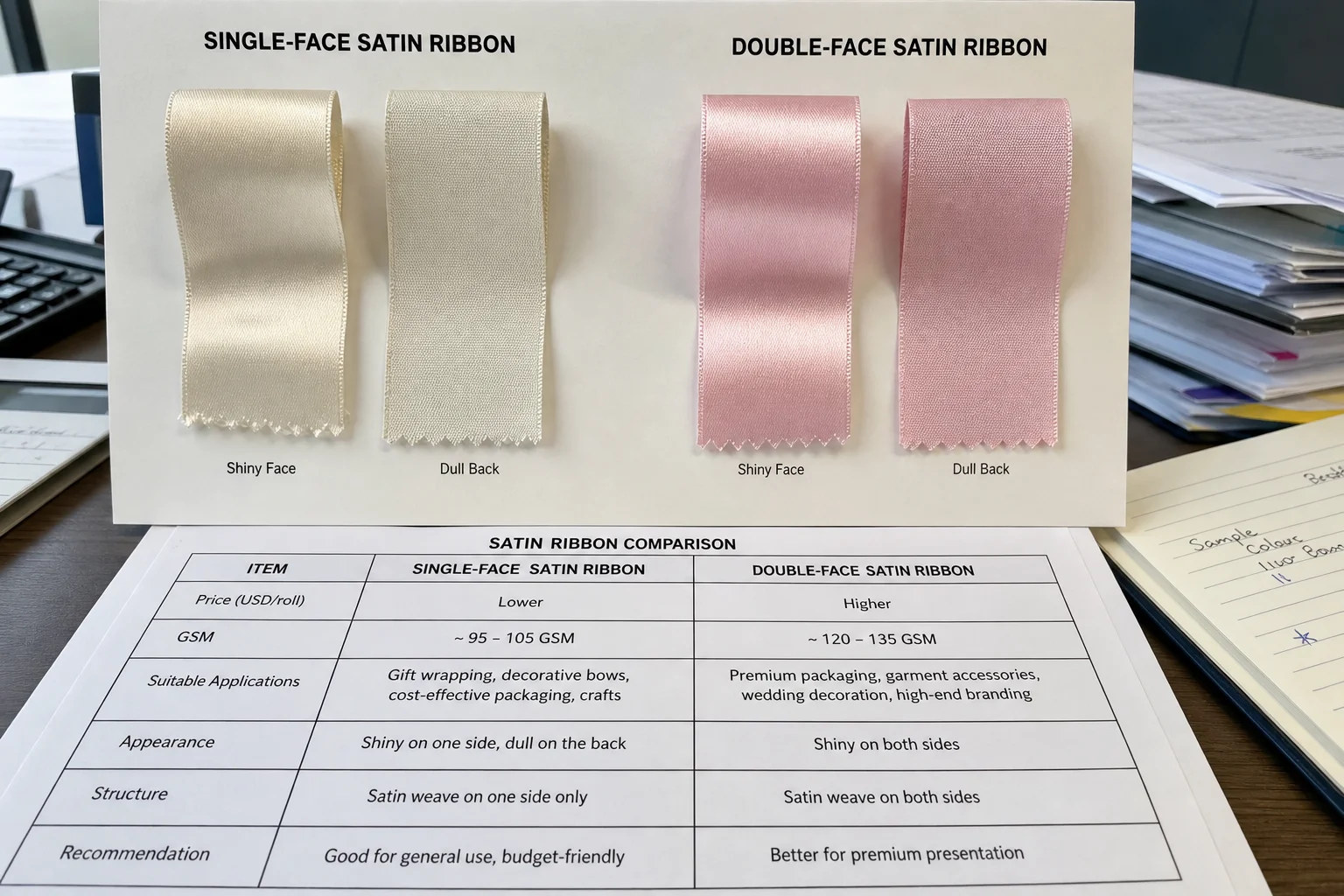
The difference between single-face and double-face satin is structural, not cosmetic. It comes from how the ribbon is woven:
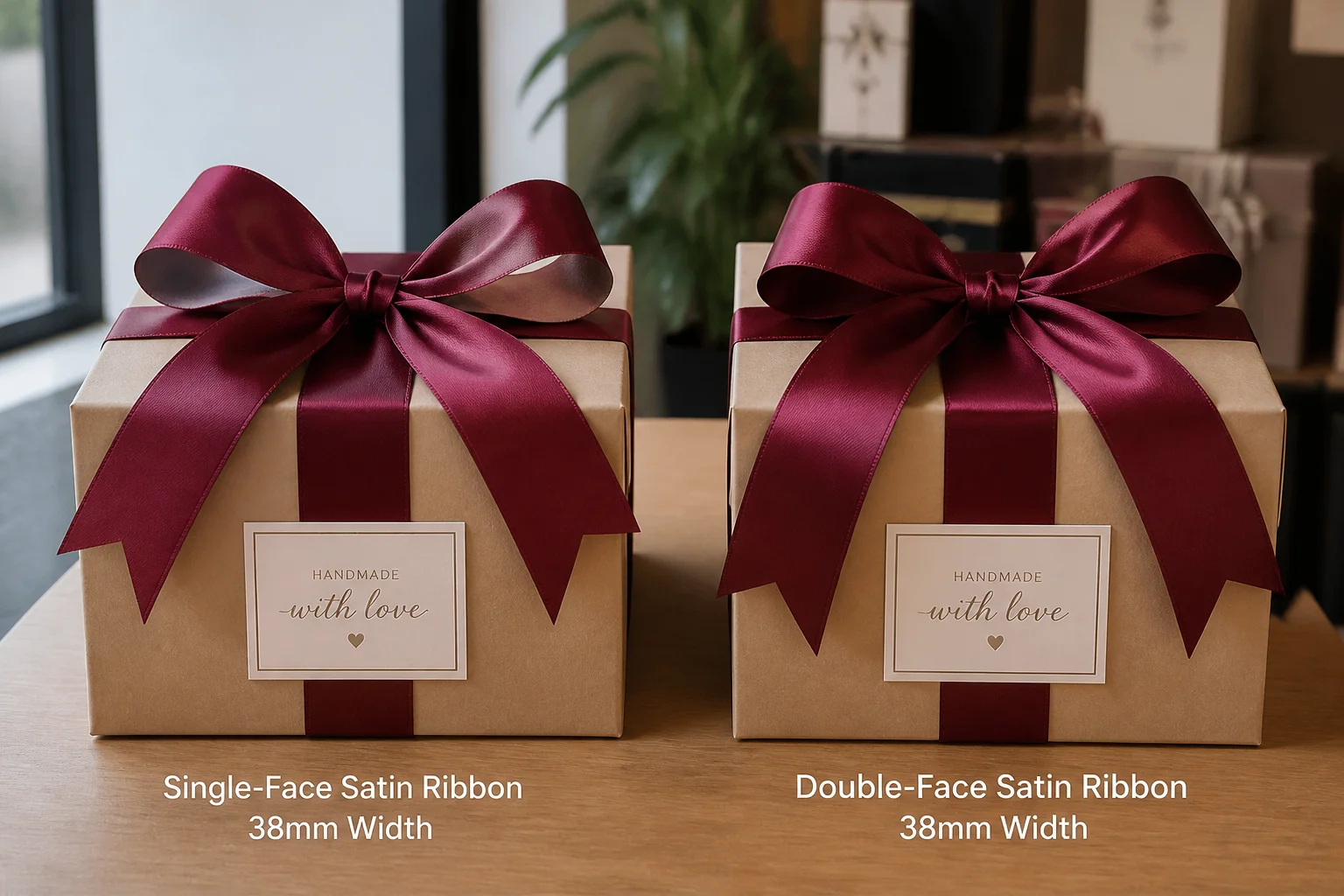
- Single-face satin: The weave uses long weft thread floats on one surface only. These floats — threads that pass over multiple warp threads before interlacing — lie parallel to the ribbon surface and reflect light uniformly, creating the characteristic smooth sheen. The back of the ribbon shows the warp interlacing in a plain or twill structure, which produces a matte surface. The two sides look and feel distinctly different.
- Double-face satin: The weave is structured so that both surfaces have weft or warp floats creating a sheen. This requires more yarn content — more threads per centimetre in the weave — and results in a heavier, slightly denser ribbon that shows the satin finish on both faces. The ribbon looks the same on both sides.
At a practical level: flip a ribbon over. If one side is obviously duller than the other, it is single-face. If both sides look equally shiny, it is double-face.
When the Difference Matters
For many gift packaging applications, single-face satin is adequate because the ribbon is used in a controlled way that keeps the dull back hidden. A simple tied bow on a gift box, where the ribbon is crossed over the lid and the bow sits on top, usually keeps the back side hidden within the bow structure and against the box surface.
The back becomes visible — and therefore problematic — in these situations:
- Multi-loop hand-tied bows: When individual loops are formed by hand, the ribbon folds and the back side faces outward on the outer surface of each loop. With single-face ribbon, the visible back of each loop is matte — noticeably different from the shiny inner face. With double-face, the entire loop surface is shiny.
- Woven or weaved applications: Ribbon woven through basket handles, garland, or stem arrangements shows both faces alternately as it passes over and under. Single-face ribbon produces an alternating shiny/matte pattern that some buyers find acceptable as a design element, but for premium applications double-face is standard.
- Hanging and rotating decorations: Gift tags, hanging ornaments, and ceiling decorations that rotate in air will show both faces at different angles. Single-face ribbon on these applications will show the dull back unpredictably.
- Garment and fashion trim: Ribbon used as a visible trim on clothing or accessories is typically double-face, because both sides of the trim are visible depending on how the garment is worn or held.
The Cost Difference
Double-face satin ribbon costs approximately 20–35% more per metre than single-face at the same width, due to the higher yarn content in the weave. At 38mm width, this is typically £0.03–0.08 per metre depending on quality tier. For a programme using 500 metres per year, the annual cost difference between single-face and double-face is approximately £15–40.
For most buyers, this difference is small relative to the overall packaging cost. The practical question is whether the application requires double-face — if it does, the premium is worth paying; if it does not, single-face is the better value choice.
Checking Your Current Ribbon
If you are unsure whether ribbon you already have in stock is single-face or double-face, the check takes five seconds: hold a short length of ribbon with one end in each hand and look at one of the long surfaces facing you. Now flip the ribbon over by rotating it around its length axis. If the surface you now see looks the same as before — same sheen, same texture — it is double-face. If the surface is clearly duller and has a different texture, it is single-face.
A second check: fold a length of ribbon into a loop so that the outside of the loop is the face you originally selected, and the inside of the loop shows the other face. Look at the outer surface of the loop. This is what will be visible on the outside of a tied bow loop. If that surface is dull, your ribbon is single-face and loops that fold will expose the matte back. If the outer surface has the same sheen as the inner surface, your ribbon is double-face and will look consistent across all loop orientations.
Contact mystyleribbon.com to request samples of both constructions in your target specification before placing a bulk order. Knowing which construction you need before ordering avoids the common outcome of receiving ribbon that works perfectly in a simple bow but looks inconsistent in a more complex application.
Frequently Asked Questions
What is the difference between single-face and double-face satin ribbon?
Single-face: shiny one side, matte other side. Double-face: shiny both sides. Comes from weave structure — single-face has floats on one surface only; double-face has floats on both. Double-face costs 20–35% more due to higher yarn content.
When should I use double-face satin?
When the back of the ribbon will be visible: multi-loop hand-tied bows, woven applications, rotating hanging decorations, garment trim. For simple gift box bows where the back stays hidden, single-face is adequate and more economical.
Is double-face satin stronger?
Slightly — higher gsm means better abrasion resistance and bow-shape retention. But for most gift packaging applications, the durability difference is not the reason to choose double-face. The primary reason is visual.
Can single-face be used for pull bows?
Yes — widely used for retail pull bows where loops face outward and the dull back is hidden inside the bow structure. For display or hand-tied bows where individual loops are more visible, double-face gives a better premium appearance.
What is the price difference?
Double-face typically 20–35% more per metre. At 38mm, approximately £0.03–0.08/m difference. For 500m/year programme, £15–40 annual premium. Usually worth it when the application genuinely requires double-face. Contact mystyleribbon.com for current pricing.