A156 | Ribbon for Pet Accessories: What the Market Requires and How to Source It Without Overcomplicating the Spec
A156 | Ribbon for Pet Accessories: What the Market Requires and How to Source It Without Overcomplicating the Spec
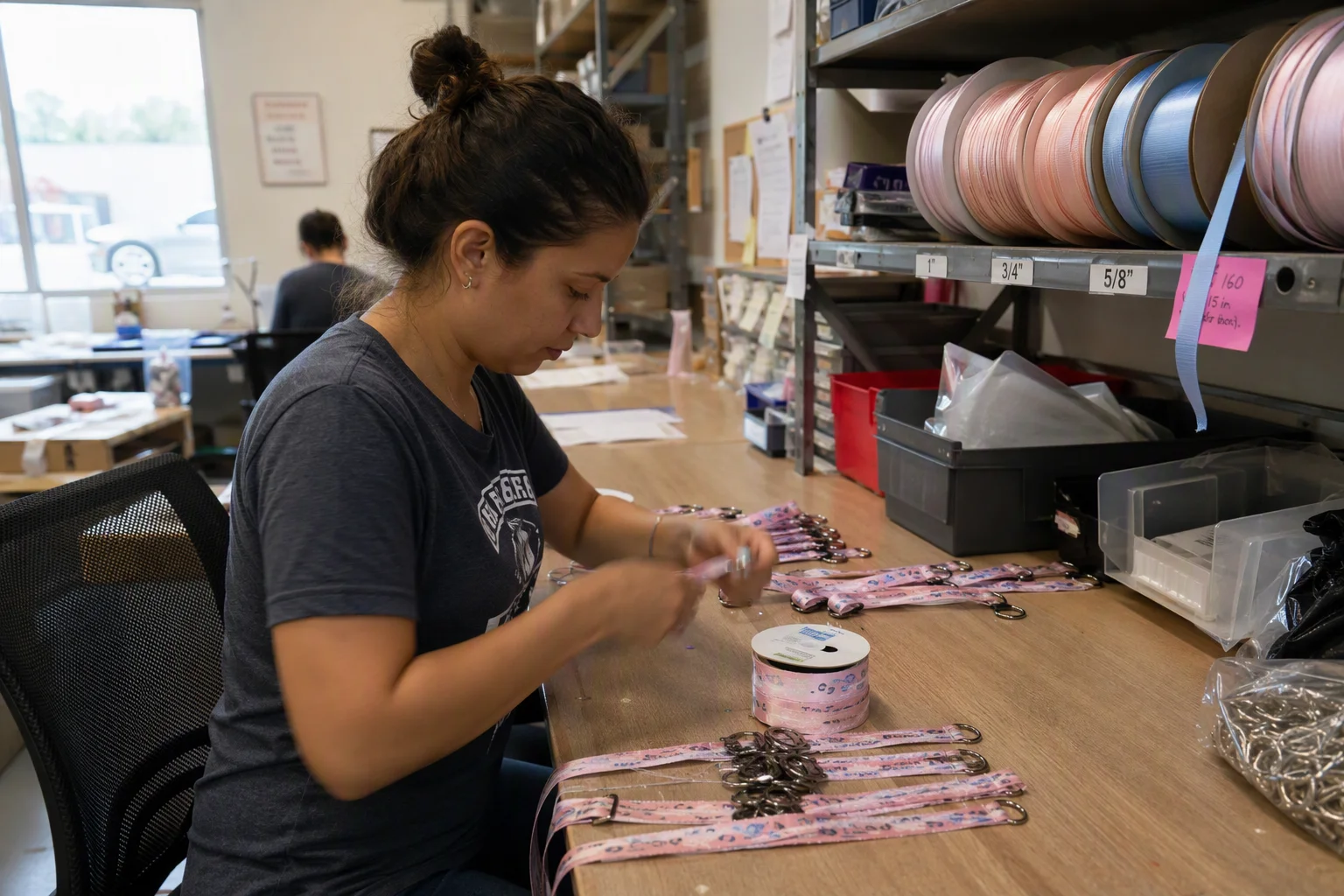
The pet accessories market has grown into a distinct procurement category for ribbon suppliers, with its own set of requirements that differ meaningfully from gift packaging or apparel. Buyers in this category — typically small to mid-size pet accessory brands, boutique collar and harness makers, and gift-focused pet product companies — are working with ribbon in ways that put specific stress on construction quality and colour fastness, and they are operating at volumes that sit below the threshold most large ribbon suppliers prioritise. Understanding what the market actually needs, and where the real sourcing risks are, makes purchasing decisions considerably more straightforward.
The Core Use Cases
Ribbon appears in pet accessories in three main forms, each with different technical requirements:
Collar and harness decoration: Ribbon is either woven into or attached to the collar structure, where it is subject to repeated flexing, contact with pet fur and skin oils, outdoor exposure including UV light and moisture, and occasional washing. The key requirements are colourfastness to washing and light, resistance to fraying at cut edges, and sufficient structural integrity to hold its appearance through regular use.
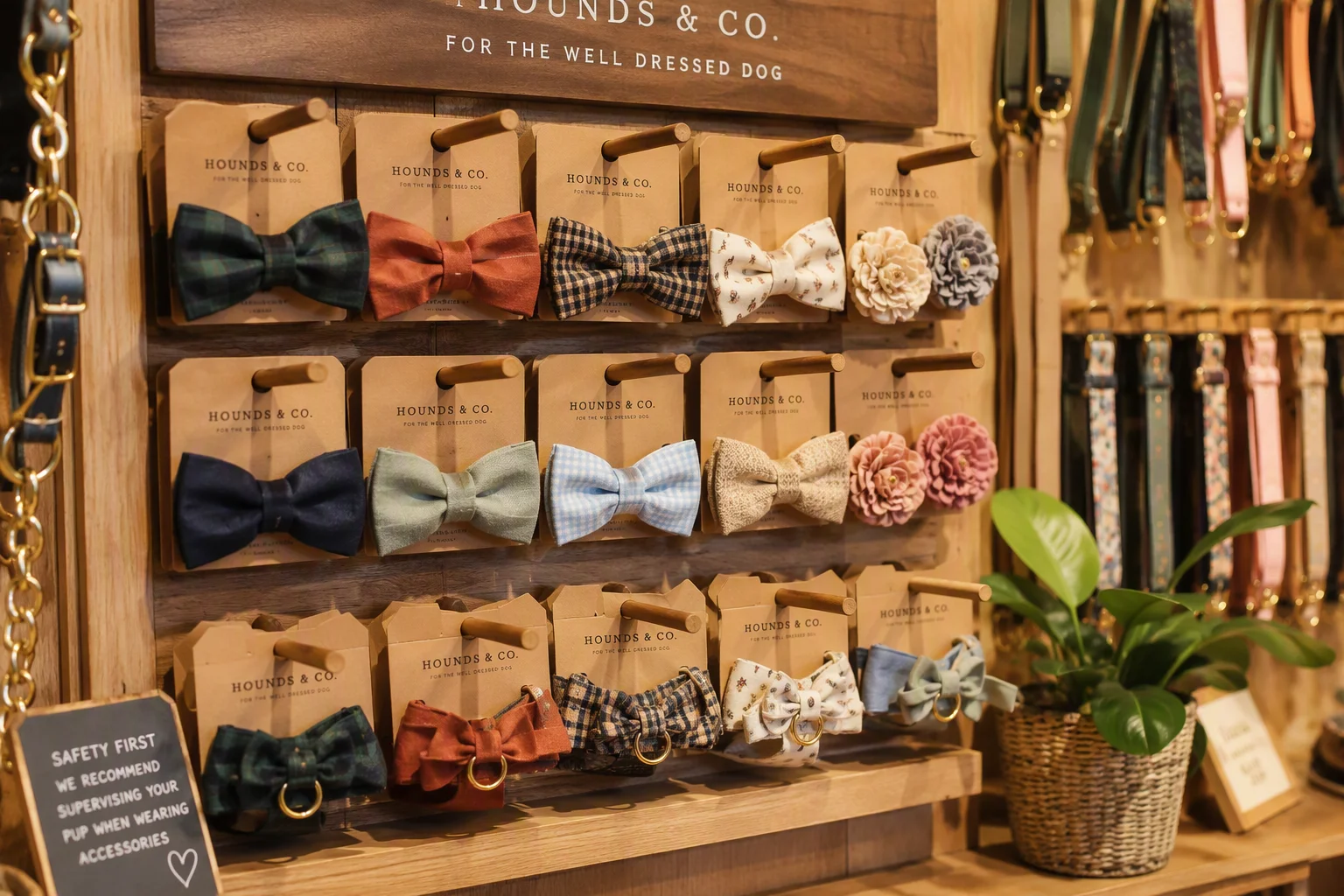
Bow ties and accessories: Freestanding bow ties clipped onto collars or attached to bandanas. These are primarily aesthetic products, subject to less mechanical stress than collar ribbons, but more visible — colour accuracy and surface quality matter more. The buyer needs confidence that the ribbon photographs well for product images and holds its appearance through a retail display cycle.
Gift packaging for pet products: Ribbon used to wrap and present pet gift sets — treats, grooming products, accessories bundled together. This application is similar to general gift packaging but often requires pet-safe material specifications, since the packaging may come into contact with consumable products and is handled by pet owners who are sensitive to materials that go near their animals.
The Colourfastness Issue
The most common sourcing problem we see in the pet accessories category is colourfastness failure — specifically, ribbon that bleeds colour when wet. A collar worn by a dog in rain or after swimming can transfer dye onto the animal's coat or onto the owner's hands. For light-coloured pets, this is a visible and commercially damaging problem that generates returns and negative reviews. For dark-coloured pets it is less visible but still a signal of poor quality.
The colourfastness specification that matters for this application is wet rubbing fastness — the resistance of the dye to transferring when the fabric is wet and rubbed against a surface. Standard decorative ribbon is often produced to a level adequate for its primary application (handling during packaging, short-term display) but not necessarily adequate for repeated wet contact. For collar and harness ribbons, we specify wet rubbing fastness at a level appropriate for the use environment, which requires attention at the dyeing stage rather than the finishing stage.
The second colourfastness dimension relevant to pet accessories is UV light fastness for products that will be worn outdoors. A ribbon that photographs well in product imagery but fades noticeably after a summer of outdoor use creates a repeat-purchase problem: the customer's experience of the product over time does not match the product image that sold it to them. High-lightfastness dye formulations for the colours most commonly used in pet accessories — bright pinks, sky blues, warm reds, forest greens — are not significantly more expensive, but they need to be specified explicitly rather than assumed.
Width and Construction for Collar Work
Collar and harness ribbon is typically narrow — 1 cm to 2.5 cm — and needs to hold its shape over a flat surface without curling, twisting, or developing a bias. Grosgrain construction performs better than satin for collar applications because the warp-dominant weave structure is inherently more dimensionally stable. Satin ribbon, which has a weft-dominant surface, is more prone to developing a curl along its length with repeated flexing, particularly in narrower widths. For bow tie applications where dimensional stability matters less than surface appearance, satin remains appropriate.
Edge finishing is more important in pet accessories than in most gift packaging applications because the ribbon may be cut and raw edges left exposed — either in manufacturing or if the product is trimmed by the customer to fit. A ribbon that frays readily creates a quality perception problem and, in collar applications, a potential irritant for the animal. We recommend hot-cut finishing for straight-cut edges in collar ribbon, which seals the edge and significantly reduces fraying without requiring additional processing at the buyer's end.
Practical Sourcing Notes
For pet accessory brands ordering ribbon for the first time from a manufacturer rather than a craft supplier, a few practical points that come up regularly:
Request wet rubbing fastness test data for the colours you intend to use on collar or harness products before placing a production order. A responsible supplier will have this data or can produce it on request.
Narrow widths (1 cm and below) typically have higher per-metre costs than wider ribbons because they require more production passes per metre of fabric. Factor this into your unit economics rather than treating them as equivalently priced to standard gift ribbon widths.
If your products are sold internationally, be aware that some markets — particularly the EU — have specific chemical restrictions on materials that contact pets. Standard ribbon finishes are generally compliant, but it is worth confirming before committing to a large order for an export market.