A154 | Case Study: Standardising Ribbon Supply for a Tea Gift Brand Across Domestic and Export Channels
A154 | Case Study: Standardising Ribbon Supply for a Tea Gift Brand Across Domestic and Export Channels
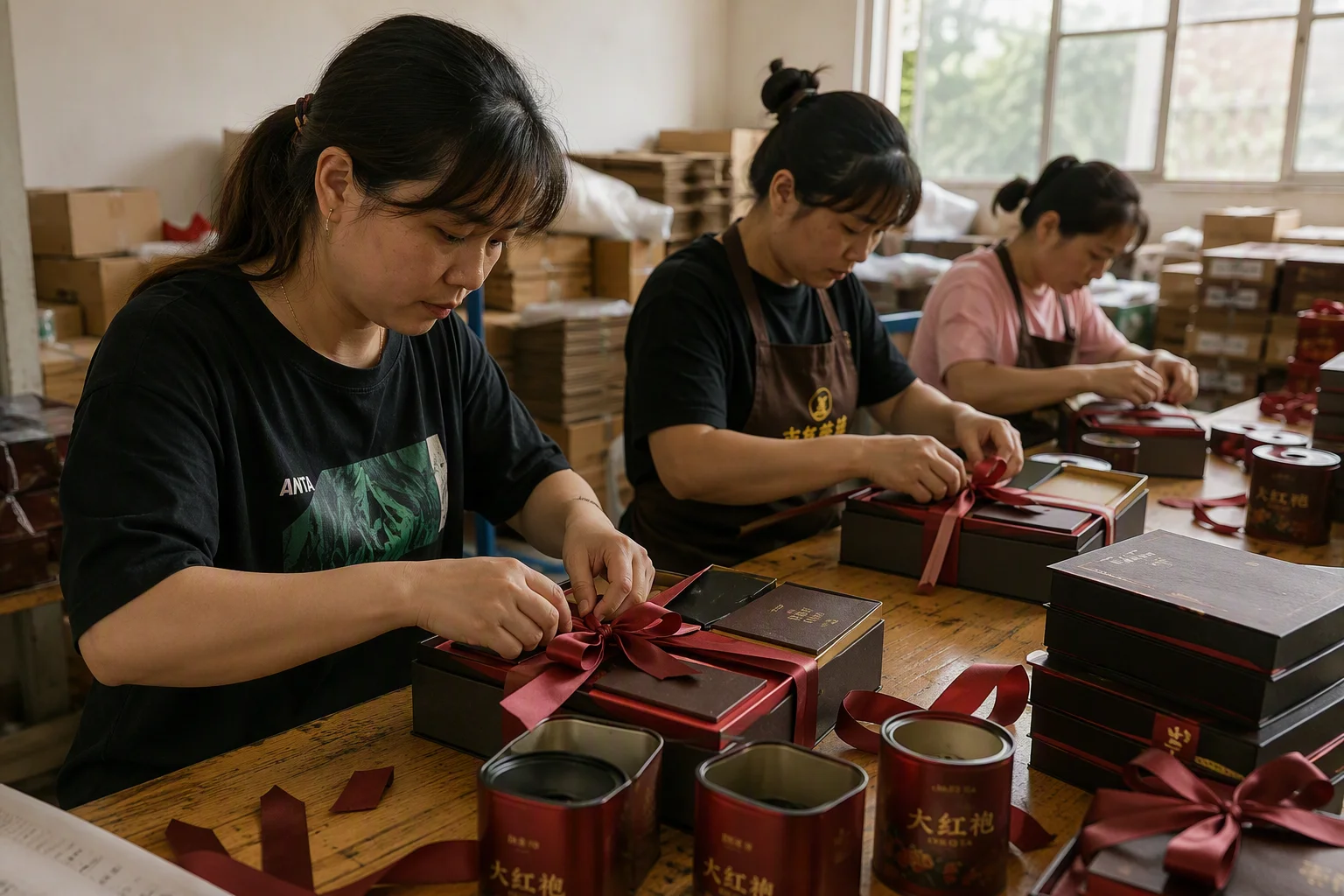
Tea gift brands occupy a procurement position that combines some of the most demanding requirements across several ribbon use cases: the product is premium, the presentation is central to the purchase decision, the colour palette is often culturally specific, and the packaging has to perform across both domestic retail and international export — sometimes with different requirements for each. The case described here involves a mid-size Chinese tea brand that was managing this combination badly before we started working together, and had reached the point where the ribbon situation had become a tangible operational problem rather than a minor inconvenience.
The brand sells through three channels: domestic gift retail (department stores and its own shops), a corporate gifting arm that handles large seasonal orders for Chinese New Year and Mid-Autumn Festival, and a growing export channel supplying specialty food retailers and gift shops in Southeast Asia and the Middle East. The ribbon requirements across these three channels overlapped only partially, and the brand had arrived at its current setup through a series of ad hoc purchasing decisions that had left it with five active ribbon suppliers, inconsistent colour standards, and a lead time structure that made seasonal peaks difficult to manage.
The Audit Finding
When we mapped the brand's ribbon usage at the start of the engagement, we found fourteen distinct ribbon SKUs in active use across the three channels. Not fourteen colours — fourteen distinct combinations of colour, width, construction, and finish. Several of these differed only marginally from each other: a 3 cm burgundy satin from one supplier and a 3.2 cm burgundy satin from another, both specified for the gift retail channel, both nominally the same colour but visibly different in person. The brand's packaging manager described the situation as "accumulated decisions" — each one made for a reason at the time, none of them actively reviewed since.
The audit also revealed a lead time problem. The corporate gifting arm placed its two largest orders of the year in the six weeks before Chinese New Year and the six weeks before Mid-Autumn Festival. The ribbon orders for these peaks were being placed four to six weeks in advance, which is within the lead time range for standard ribbon — but only just, and without buffer for any production issue or delivery delay. In two of the previous three years, the brand had received at least one partial shipment that required improvised substitution in the packing room.
The Consolidation
We worked with the packaging manager to reduce the fourteen active SKUs to six, covering the full range of channel requirements. The core set was: a 3 cm burgundy double-faced satin (the primary gift retail ribbon, now standardised to a single width), a 2.5 cm gold organza for the premium export range, a 4 cm red wired-edge grosgrain for the corporate gifting peaked orders, a 1.5 cm ivory narrow satin for internal bow accents, and two seasonal additions supplied in smaller quantities — a copper metallic for the autumn festival period and a spring green for a limited new year collection the brand was developing.
The consolidation from fourteen to six required some negotiation internally. The export team had specifications that the domestic team was not familiar with — in particular, a requirement that the ribbons used on export product not contain certain solvent-based finishes that created complications at customs in some Gulf markets. We sourced the gold organza to a water-based finish specification that met the export requirement without affecting domestic use, eliminating what had been a separate export-only SKU maintained by a third supplier.

The Lead Time Fix
The seasonal peak problem was addressed through a pre-position arrangement for the two highest-volume SKUs — the burgundy satin and the red grosgrain. We produce the annual volume of these two ribbons in a single run in July and August, before the festival season production crunch, and hold the stock for call-off delivery as the orders come in. The arrangement requires the brand to commit to a volume estimate in June, which it can do with reasonable accuracy based on the previous year's corporate gifting contracts.
The financial mechanics are straightforward: the brand pays for the stock when it is called off, not when it is produced. We carry the inventory cost through the holding period, which we price into the arrangement. For the brand, the key benefit is that the ribbon stock exists before the orders arrive rather than being produced in parallel with them — eliminating the timing risk that had caused the partial shipment problems in previous years.
Results After Two Seasons
After two full festival cycles under the new arrangement, the packaging manager reported three changes she considered significant. The first was the obvious one: no partial shipments, no improvised substitution in the packing room. The second was less expected: the reduction in SKU count had simplified the packing room's internal organisation enough that the team could locate and move ribbon stock faster during the peak weeks, reducing small delays that had previously accumulated without anyone quantifying them. The third was a cost reduction of approximately 11 percent on the blended ribbon spend, driven mainly by the higher volumes on the consolidated SKUs and the removal of the premium the brand had been paying to its smallest ribbon supplier, who had been supplying two of the fourteen original SKUs in quantities too small to be efficiently produced.
The export channel continues to have somewhat different requirements from the domestic channels, but they now share a supply base rather than running in parallel. The distinction that needed to be maintained — the finish specification for Gulf market customs compliance — is handled at the production stage rather than through a separate supplier, which means the export team no longer needs to manage a separate sourcing relationship for a handful of SKUs.