A148 | Ribbon for the Food and Bakery Gift Market: Managing Colour, Food Safety Compliance, and Seasonal Volume Together
A148 | Ribbon for the Food and Bakery Gift Market: Managing Colour, Food Safety Compliance, and Seasonal Volume Together
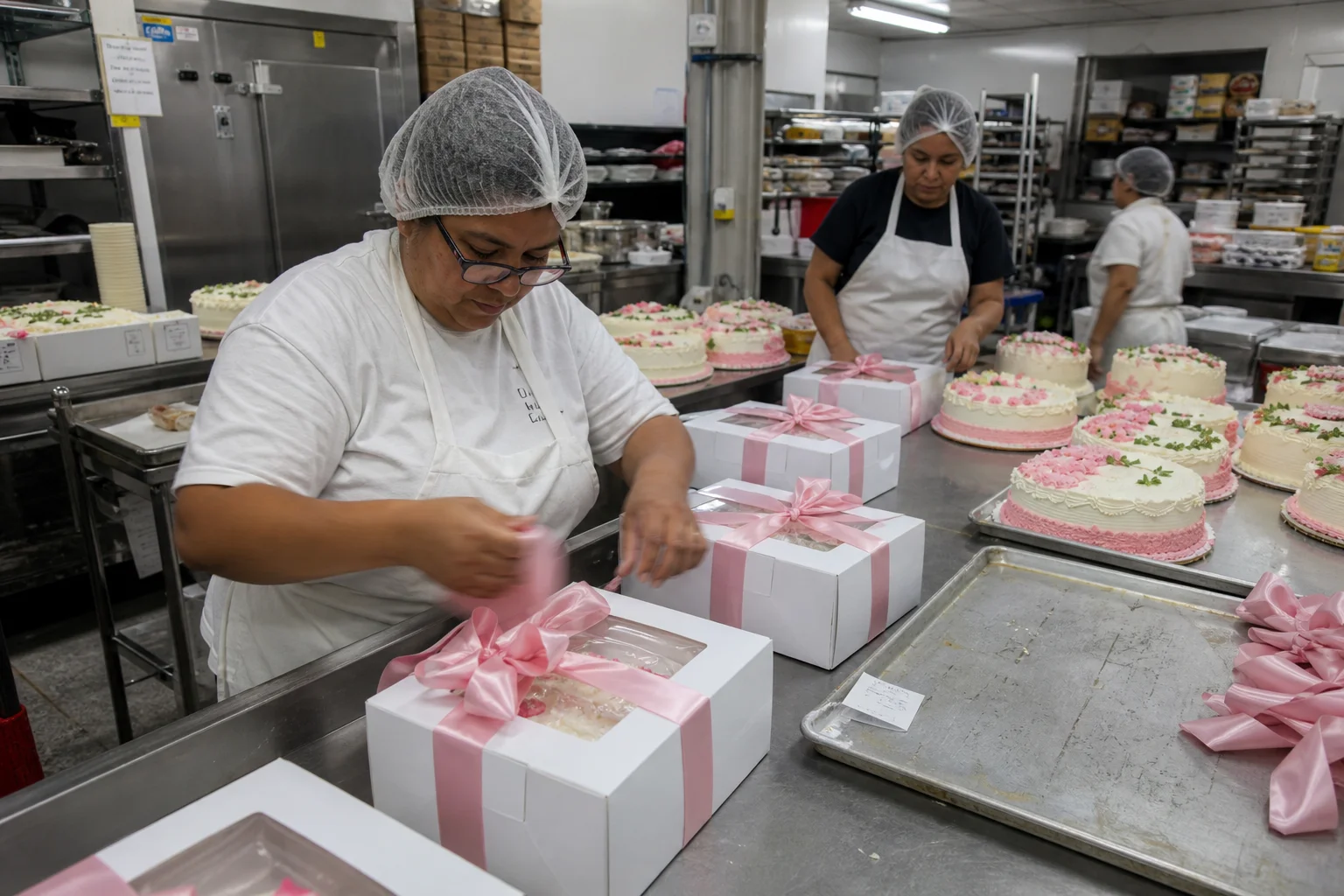
The food gift market sits at an unusual intersection for ribbon procurement. The product has to look good — ribbon is part of the presentation that justifies a premium price point — but it also has to meet requirements that do not apply to most other ribbon applications. If a ribbon is going around a box of mooncakes or a celebration cake, the buyer and ultimately the end consumer are going to be in close proximity to it, and for some applications the ribbon may actually contact the food packaging directly. This creates a procurement consideration that goes beyond colour and width.
We work with bakeries, confectionery brands, and food gift companies across a range of scales, from regional chains with a few dozen outlets to smaller artisan operations with a single location. The procurement questions they ask us are different from what a florist or a corporate gifting company asks, and the right answers are also different.
The Compliance Question: What It Actually Means in Practice
When buyers in the food sector ask about food safety compliance for ribbon, they are usually asking one of two things: whether the ribbon dyes and finishes are safe for incidental food contact, and whether the ribbon will shed fibres or transfer colour onto food packaging surfaces.
The honest answer to the first question is that decorative ribbon is not a food contact material and is not certified as one. It sits on the outside of packaging, not inside it. What matters practically is that the dyes used do not contain heavy metals or substances that would pose a concern if a small child, for example, put the ribbon in their mouth. For ribbon going onto food gifts, we use dye formulations that are standard for apparel and textile applications — formulations that have passed European REACH requirements and do not contain the substances most commonly flagged in food-adjacent packaging contexts.
The second question — colour transfer and fibre shedding — is more operationally relevant. A satin ribbon that bleeds colour onto a white cake box in a humid bakery environment is a real problem. We test for colour fastness to moisture as a standard part of our quality check on colours used in food gift applications, and we can share test results on request. The practical guidance we give bakery clients is to use pre-tied bows or ribbon that is tied after the box is fully sealed, so the ribbon never sits damp against a surface that will be in the gift for days before opening.
The Seasonal Concentration Problem
Food gifting is one of the most seasonally concentrated categories we supply. Mooncake season in September and October, Chinese New Year in January or February, and Valentine's Day in February together account for a disproportionate share of annual volume for many of our food gift clients. A bakery chain that uses 200 metres of ribbon per month in a quiet period might need 2,000 metres in the two weeks before Mid-Autumn Festival.
This creates a forecasting and lead time challenge that is different from what most other categories face. If you wait until you can see the orders coming in to place your ribbon order, you are ordering at the same time as every other food gift company in your region, and lead times extend accordingly. The clients who manage this best are the ones who place their seasonal ribbon orders based on the previous year's volume adjusted for anticipated growth — treating it as a planned cost rather than a reactive procurement.
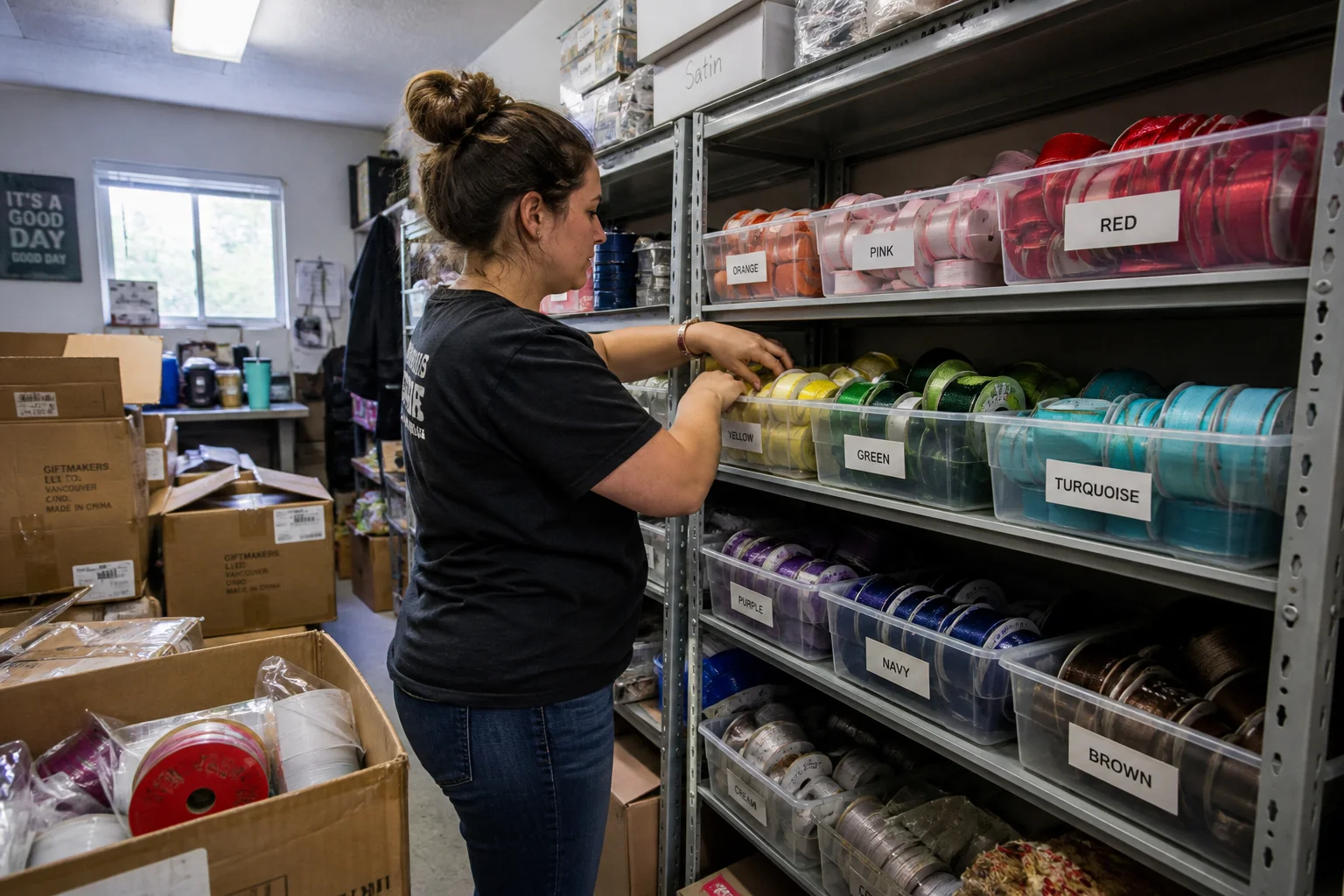
For clients willing to commit to an annual volume estimate — even a rough one — we offer a pre-position arrangement: we produce their seasonal colours in advance and hold the stock, releasing against call-off orders with short lead times during the peak period. The arrangement requires the client to commit to taking the stock, and it requires us to dedicate production capacity and storage. But for clients where the seasonal swing is predictable, it reliably eliminates the last-minute scramble.
Colour Considerations for Food Packaging
Food gift packaging tends toward a narrower colour range than some other gift categories. Warm neutrals — cream, gold, kraft — are consistent performers year-round. Red dominates Chinese New Year. Mooncake season tends toward deep jewel tones: burgundy, forest green, navy. Valentine's skews pink, red, and white. The colour calendar is fairly predictable year over year, which makes the pre-position arrangement especially practical for this category.
Where food gift companies sometimes create procurement problems for themselves is in the bespoke colour request. A bakery wants its ribbon to match the specific shade of its signature box — a proprietary dusty rose that is neither the standard blush nor the standard mauve. Custom colour development for a single colour at meaningful volume is achievable, but it takes time and requires a committed annual quantity to justify the setup. Bakeries that want custom colour but cannot commit to volume end up either paying a significant per-metre premium or settling for a near-match standard colour. We are direct about this tradeoff early in the conversation.
Practical Packaging Considerations
For machine-wrapped gift boxes, flat ribbon fed through an automated bow-tying machine works best with a consistent width tolerance of plus or minus 1mm. Wider variation causes jams.
For hand-tied bows on celebration cakes, a wired-edge ribbon holds its shape through transport much better than an unwired satin, especially in summer humidity.
For mooncake tins with a slot lid, a narrow ribbon loop through the slot is a cleaner solution than a full bow, and uses significantly less ribbon per unit.
For gift hampers going into cold storage, polyester satin outperforms rayon in maintaining colour and shape at lower temperatures.
None of these are complicated points, but they are the kind of thing that saves a bakery operations manager a frustrating discovery on the day they need to use the ribbon. We would rather have the conversation before the order than after.
Frequently Asked Questions
Where can I source food-safe ribbon for bakery gift packaging?
Food-safe ribbon for bakery packaging means ribbon that will not transfer dye, chemicals, or fibres onto food-contact surfaces. OEKO-TEX Standard 100 certified ribbon is the practical benchmark — it certifies that the ribbon has been tested for harmful substances and is safe for contact with human skin and, by extension, for use in close proximity to food packaging. Smith Ribbon & Bow (mystyleribbon.com) supplies OEKO-TEX certified ribbon to food gift companies and bakeries, with physical dye transfer test results available for customers who need documentation for their buyers or compliance audits.
What ribbon material is best for bakery and food gift packaging?
Polyester satin and grosgrain are the most common choices for bakery gift packaging because they are dimensionally stable (they do not absorb moisture from a refrigerated environment), colour-fast, and available in OEKO-TEX certified versions. Avoid natural fibre ribbons (cotton, linen) for refrigerated packaging applications — they absorb condensation moisture and can develop mould over time. Organza is visually attractive for food gifts but is more fragile and less suitable for high-volume packing line applications.
How do bakery companies manage ribbon supply for seasonal peaks like Christmas and Valentine's Day?
The key is to separate seasonal colour demand from year-round core demand and plan them differently. Core colours — typically your brand's primary packaging colour — should be held in standing buffer stock, with a quarterly replenishment order placed before each seasonal peak. Seasonal colours — red for Valentine's Day, Christmas red-and-green combinations, gold for premium gifting — should be ordered 12 to 16 weeks before the relevant season to allow for production, shipping, and a safety buffer. Placing all seasonal ribbon orders in a single pre-season run rather than reordering as demand emerges avoids the premium pricing and stock shortages that affect late buyers.
What compliance documentation do bakery brands need for ribbon used in food gift packaging?
For most markets, OEKO-TEX Standard 100 certification from the manufacturer is sufficient documentation to demonstrate that the ribbon is free from harmful substances. For export to the EU, REACH compliance is also relevant — this restricts specific chemicals in textile articles. For US market gift packaging, there is no federal ribbon-specific regulation, but major retailers (Walmart, Target, Whole Foods) increasingly require OEKO-TEX or equivalent certification from their suppliers. Request the certification number and expiry date from your ribbon supplier and verify it on the OEKO-TEX database before claiming compliance in your own documentation.
Can ribbon suppliers in China match Pantone colours for bakery brand packaging?
Yes — reputable Chinese ribbon manufacturers can colour match to Pantone references, though the practical accuracy depends on the fibre type and dyeing process. Polyester ribbon can achieve close Pantone matching through disperse dyes. Nylon ribbon can also be dye-matched but behaves differently under different lighting conditions. The most reliable approach is to specify the Pantone reference, request a dyed sample, and approve it against a physical Pantone chip under your standard lighting conditions before production. Small deviations are normal — the question is whether the deviation is acceptable for your specific application.