A150 | Case Study: Ribbon Supply for a Mid-Size Skincare Gift Brand Across Three Distribution Channels
A150 | Case Study: Ribbon Supply for a Mid-Size Skincare Gift Brand Across Three Distribution Channels
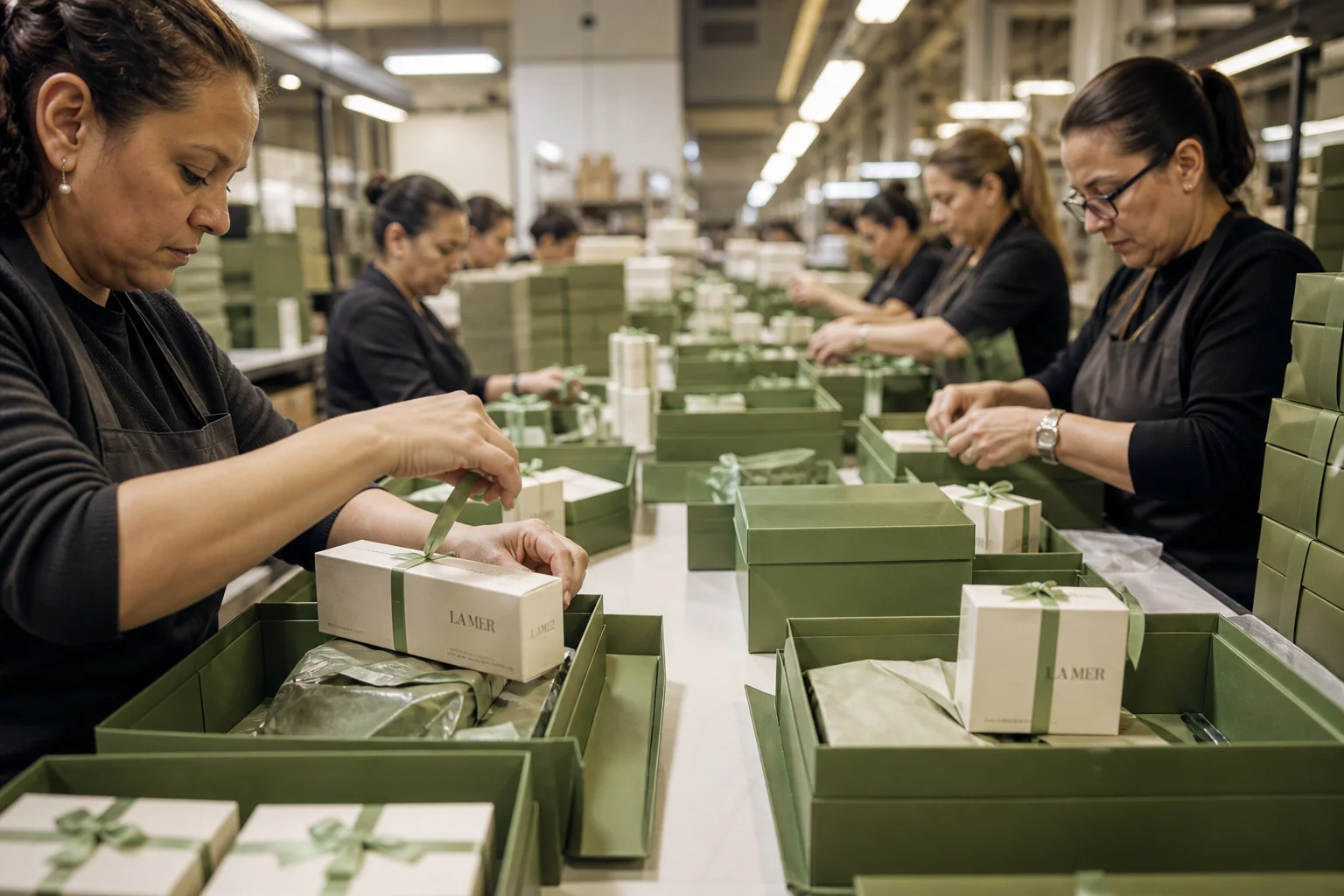
Skincare gift sets occupy a specific position in the ribbon supply picture. The product is personal care, which means the packaging presentation is doing significant work — a well-finished gift set with quality ribbon signals something about the product inside it before the box is opened. At the same time, the economics of skincare gifting are pressured: the gift set typically retails at a price point where the per-unit packaging cost has to stay tightly controlled, and ribbon is one of several packaging components competing for margin.
The brand at the centre of this case is a mid-size Chinese skincare company selling through three channels: a flagship store on Tmall, a wholesale channel supplying mid-range department stores, and a smaller direct-to-consumer gift subscription service. Each channel has different packaging requirements, and all three use ribbon — but not the same ribbon.
The Three-Channel Problem
The Tmall flagship needed ribbon that photographed well and could be tied consistently by the fulfilment team handling individual orders. The department store channel needed ribbon that could survive being handled and repackaged at the store level — department stores often remove outer packaging and re-display products, and the ribbon needed to stay presentable through that process. The subscription service needed ribbon that matched a rotating seasonal colour palette, changed quarterly, and was ordered in small quantities compared to the other two channels.
Before they consolidated their ribbon supply, the brand was managing three separate supplier relationships for what were, in aggregate, relatively modest volumes per supplier. The operations manager estimated that ribbon procurement was consuming about four hours of management time per week across the sourcing, approval, and delivery-chasing cycles for all three channels. She described it as "a small problem that was everywhere."
What the Consolidation Looked Like
We mapped the requirements across all three channels and identified a core of five ribbon specifications that covered the majority of usage: a 1.5 cm double-faced satin in the brand's signature dusty rose, a 2.5 cm grosgrain in ivory for the department store channel (grosgrain holds shape better during handling than satin), a 1 cm narrow satin in gold for secondary accent bows, and two rotating seasonal colours supplied in smaller quantities quarterly for the subscription service.
The dusty rose satin was the specification that required the most work to get right. The brand had a Pantone reference and a strong opinion about what the colour should look like, developed over several years of sourcing from their previous supplier. We went through three swatch rounds before reaching an approved match. This is typical for a custom neutral with warm undertones — the colour sits in a range where small changes in dye temperature produce visible differences.
Once the core specifications were approved, the ordering structure simplified considerably. The Tmall fulfilment and department store channels consolidated into a single monthly order, placed by the operations manager against a standing specification document. The subscription service seasonal colours are ordered quarterly, two months before the season starts, against colour references that the brand's design team submits at the beginning of each year.
The Numbers After One Year
After twelve months under the consolidated arrangement, the operations manager shared the following: ribbon-related procurement time had fallen from approximately four hours per week to under forty minutes. The per-metre blended cost across all specifications was approximately 8 percent lower than the previous three-supplier average, primarily because the consolidated volume qualified for better pricing on the core satin and grosgrain. Colour consistency across the Tmall and department store channels was now reliable — something that had been a recurring source of minor complaints from the department store buyers, who occasionally received stock with visible colour variation between boxes packed in different months.
The subscription service seasonal colours were the one area where the arrangement required more ongoing attention. Seasonal colour approval cycles are inherently compressed — the brand's design team finalises the palette close to the submission deadline, which leaves limited time for swatch rounds. We addressed this by pre-producing small quantities of the most likely seasonal shades based on the previous year's selections, so the approval process becomes a selection from near-ready options rather than a development from scratch.
The Grosgrain Decision
One specific decision worth noting: the switch from satin to grosgrain for the department store channel was initially resisted by the brand's design team, who preferred the look of satin across all channels. We ran a simple durability test — tying a bow on each material, handling the samples through a simulated store-display cycle of repeated touch and repositioning over three days, and comparing the result. The satin bow was noticeably limp and pulled. The grosgrain held. The design team accepted the grosgrain on the spot once they saw the comparison, and the department store buyers subsequently commented positively on the packaging presentation in their seasonal feedback.
What Made This Work
Several factors made this consolidation relatively smooth compared to others we have worked through. The brand's design team had clear colour references from the start and were willing to engage directly with the swatch approval process rather than delegating it entirely to operations. The operations manager had a good sense of the volume requirements across all three channels and could provide reliable annual estimates. And the brand's channel mix — while complex — was stable enough that the consolidated specification could hold across the year without major mid-season changes.
The main lesson from this case for similar brands: the four hours per week the operations manager was spending on ribbon procurement before consolidation was not primarily spent on ribbon — it was spent on managing the consequences of having three suppliers with different standards, lead times, and communication styles. Consolidation did not just reduce cost. It reduced the category of ongoing management work that had no value beyond keeping the situation from getting worse.