A146 | Case Study: Supplying a Regional Event Decoration Company Through a Full Wedding Season
A146 | Case Study: Supplying a Regional Event Decoration Company Through a Full Wedding Season
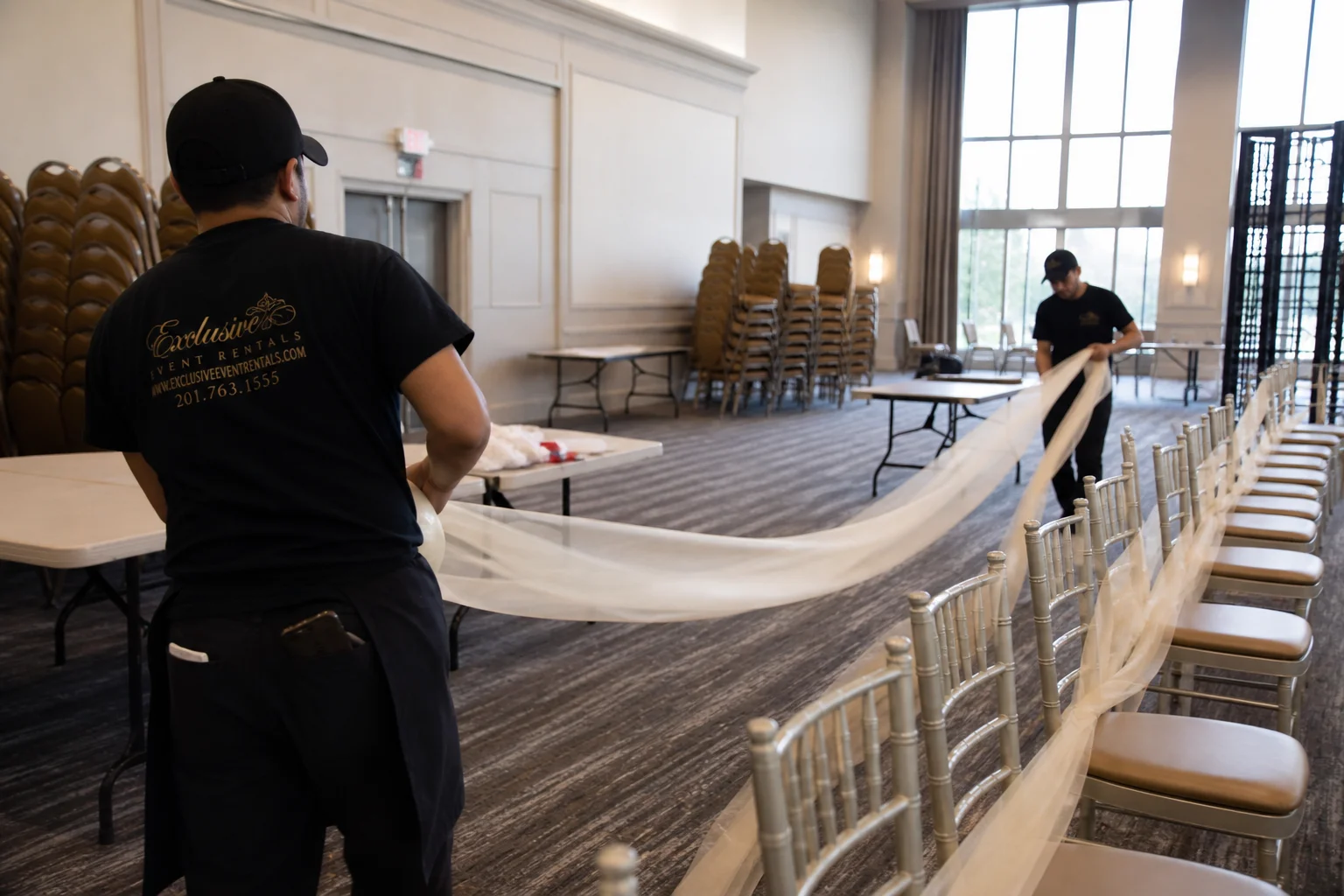
Event decoration companies have a procurement rhythm that does not look much like retail and does not look much like corporate gifting either. The demand is highly concentrated — in China's event market, roughly 60 to 70 percent of annual wedding bookings happen between April and October, with a second smaller peak around the Lunar New Year holiday period. Outside those windows, business slows dramatically. Inside them, a mid-size decoration company might be running fifteen to twenty setups per weekend across multiple venues, and every one of those setups requires ribbon.
This case covers a regional event decoration company operating across a city cluster in Fujian province. They handle roughly 1,200 wedding setups per year, ranging from modest civil ceremony decorations to elaborate banquet hall installations with full floral arches, chair covers, and extensive fabric draping. Ribbon is not their biggest supply cost — that is usually fabric and flowers — but it is one of the categories where inconsistency causes the most visible problems. A ribbon colour that does not match the bride's palette on the day is not something you can quietly fix later.
What They Were Dealing With Before
Before consolidating their ribbon supply, the company was buying from three sources: a local wholesale market stall for everyday utility ribbon, a platform supplier for printed and logo ribbon for client-branded events, and a third supplier for specialty materials like wire-edged ribbon and wide organza used in arch construction. Each source had different lead times, different reorder minimums, and — critically — no common colour reference system. What one supplier called "ivory" and what another called "cream" were not the same colour when you put them side by side at a venue setup.
The operations manager described the problem this way: they would spec a colour combination for a client based on what they had seen from one supplier, order the full set for the event, and only discover at the venue that two of the elements did not match. The fix was usually improvised — swapping out one element for something close enough, or hoping the lighting would mask the difference. This happened often enough to be a recurring operational headache.
The secondary problem was stock management. Because they were buying from three sources with different lead times, keeping adequate stock for peak weekends required over-ordering across all three. Their storage space was not large, and at peak season it was consistently overfull with ribbon inventory that was not in the right colours.
The Consolidation Process
We started by mapping their colour requirements across a full year of event records — 1,200 setups, each with a colour scheme documented in their booking system. The analysis showed that twelve colours accounted for approximately 82 percent of their ribbon usage by volume. Five of those twelve were variations on white and ivory, which is typical for the wedding market. The remaining seven covered the common accent palettes: blush pink, champagne gold, burgundy, sage green, dusty blue, terracotta, and a soft grey.
The twelve core colours became the basis for a standardised supply arrangement. We produced a set of physical master swatches — laminated, numbered, and signed on the back with the agreed approval date — that went to their operations manager, their lead decorator, and to us as the reference point for all reorders. The swatch set cost very little to produce and has paid for itself many times over in avoided colour disputes.
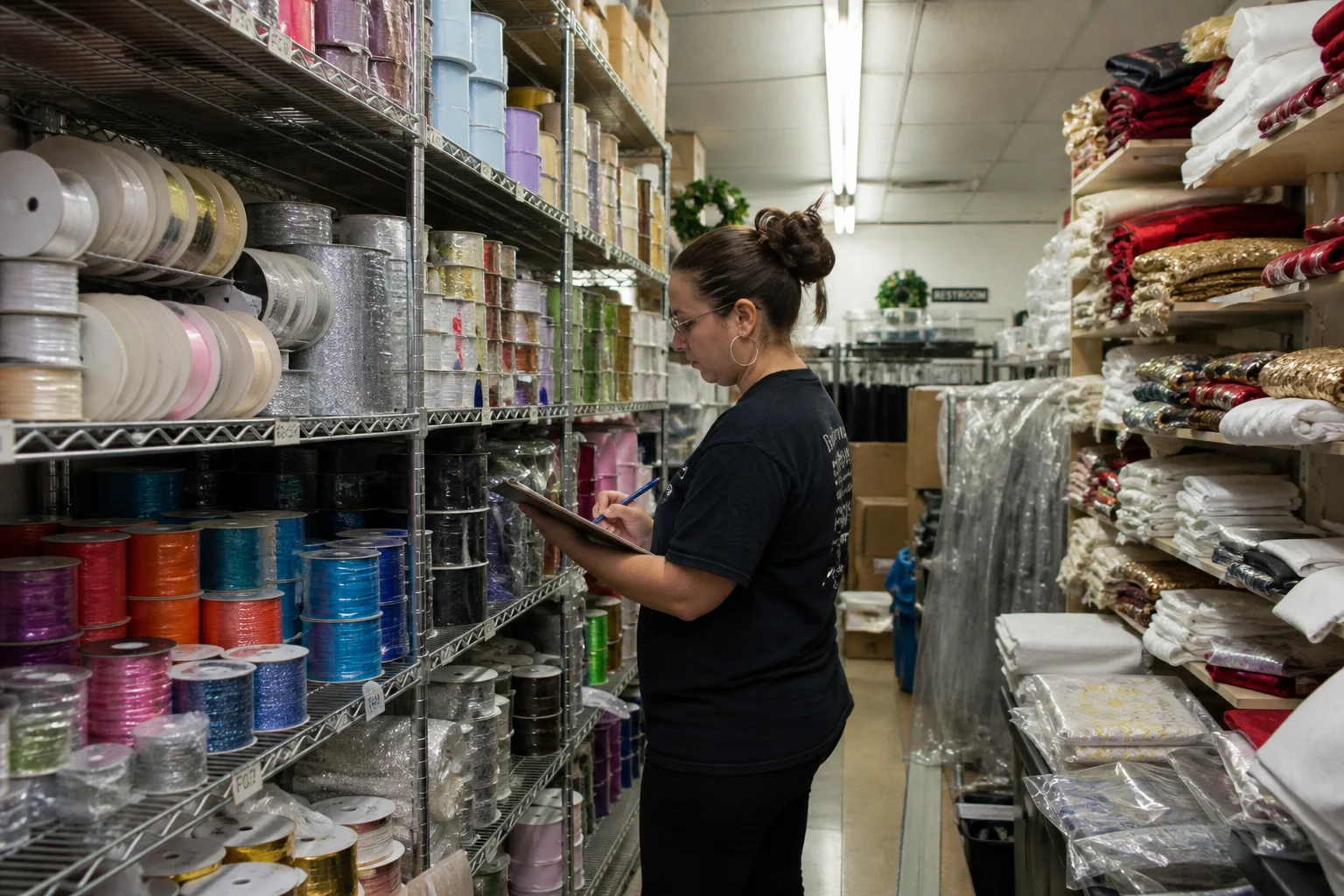
The ordering structure shifted from reactive (buy when you notice you are running low) to scheduled (monthly consolidated order covering projected needs for the following six weeks, placed by the 20th of each month). This gave us enough lead time to ensure consistent batch production rather than pulling from whatever stock happened to be available. For the wire-edged and wide organza specialties, we added those to our standard range specifically for this account — they had been buying those from a specialty supplier with a longer lead time and higher per-unit cost.
What Changed After Six Months
The operations manager shared results after the first full season under the new arrangement. Colour mismatch incidents at venues dropped to zero for events using the standardised core palette — they still occasionally encounter mismatches with bespoke client requests that fall outside the core twelve, but those are handled separately as custom orders with explicit approval steps. Storage space at peak season was meaningfully less congested: because they were ordering on a schedule rather than reactively, they were not holding six weeks of buffer across three suppliers simultaneously. And the blended cost per metre across their full ribbon usage was approximately 11 percent lower than the previous patchwork, partly from consolidated volume pricing and partly from eliminating the specialty supplier for organza and wire-edged products.
The one adjustment they made was to the seasonal palette process. They now submit their colour schemes for the following season's key event types — Valentine's, spring cherry blossom themes, mid-autumn — three months in advance, which gives us time to pre-position stock for the colours that will see the highest volume. This has further reduced last-minute procurement pressure at the busiest periods.
What This Took to Set Up
The setup phase required about two months: one month to collect and analyse their event records and map the core palette, and one month to produce and approve the master swatches and align on the ordering schedule. The operations manager's time investment during that period was probably six to eight hours total — a few meetings and some email exchanges. The return on that investment has been measurable in reduced procurement friction, lower inventory carrying costs, and — perhaps most importantly — fewer venue-day problems that require improvised fixes under pressure.
If you are running an event decoration business and recognise any of the problems described here, we are happy to start with the same colour mapping exercise. It is a useful analysis on its own, independent of whether you end up working with us.