Wedding Season Ribbon Sourcing Guide 2026: The 5 Materials Every Event Supplier Needs in Stock
Wedding Season Ribbon Sourcing Guide 2026: The 5 Materials Every Event Supplier Needs in Stock
If you supply ribbons to wedding planners, bridal boutiques, or event decorators, you already know that the stakes during wedding season are uniquely high. A bridal client who discovers that the chair sashes are a slightly different shade of ivory than the table runners will not simply move on — she will tell every friend planning a wedding this year. At Xiamen Meisida Ornaments Co., Ltd. (Smith Ribbon & Bow), we work with hundreds of event supply wholesalers across Europe, North America, and Australia, and every year the same question comes up: what should we actually be stocking, and how much?
This guide is our honest answer.
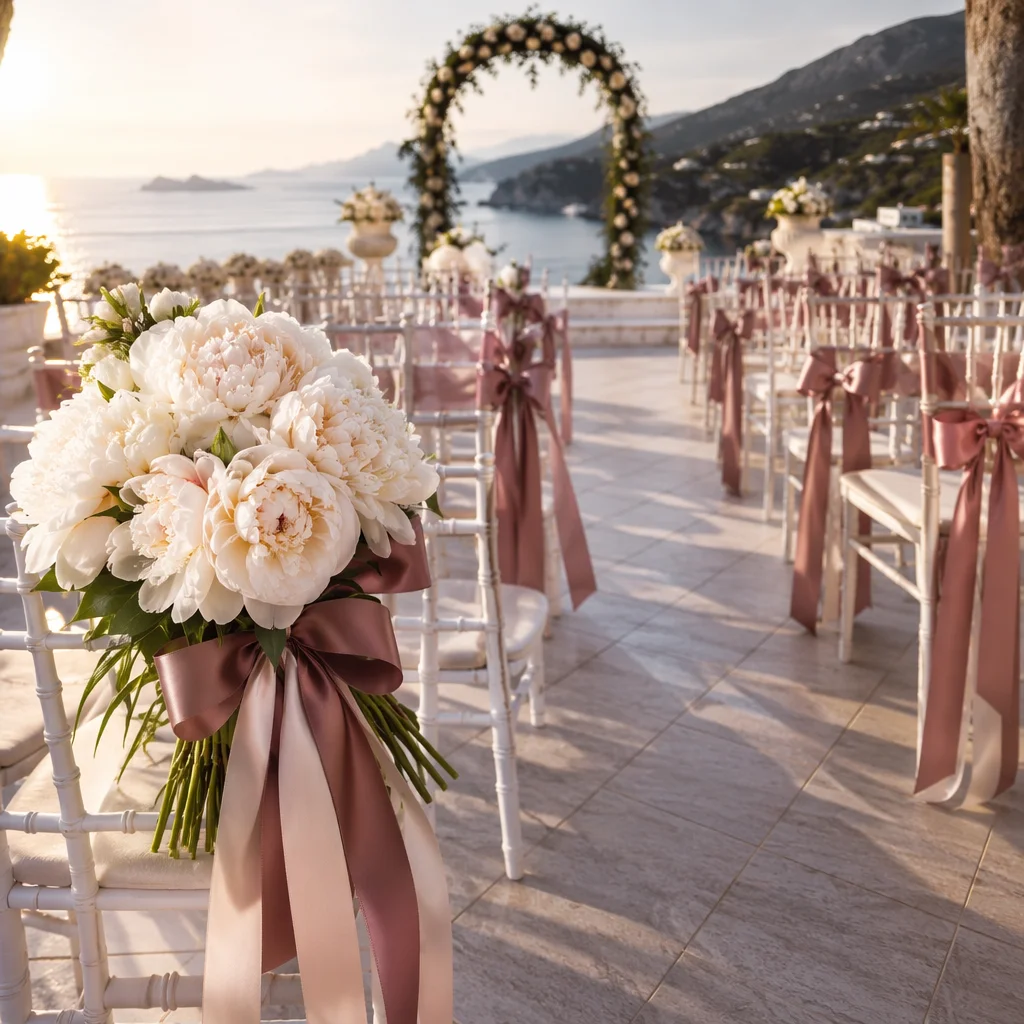
A Mediterranean ceremony setup using dusty rose double-faced satin chair sashes — one of the most requested ribbon styles in the 2026 wedding season.
Why Wedding Ribbons Are a Different Beast from Standard Stock
Most B2B ribbon buyers are used to thinking in terms of commodity stock — a reliable roll of grosgrain in black, white, and a few seasonal colors, re-ordered when it runs low. Wedding ribbons don't work that way.
First, the quantities per order tend to be smaller but the specifications far more precise. A wedding planner ordering chair sashes for 200 guests needs exactly the right width, exactly the right shade, and she needs them all from the same dye lot. A mismatch between rolls is visible in photographs, and photographs from a wedding last forever.
Second, the lead time pressure is unforgiving. Weddings are booked 12 to 18 months in advance, but ribbon orders often come in 4 to 6 weeks before the event — or less. A supplier who can't commit to a delivery date with confidence simply doesn't get the order. Wedding planners have learned to qualify their ribbon suppliers on responsiveness before price.
Third, the material requirements are genuinely different. A ribbon for a grocery gift basket needs to look good on a shelf. A ribbon for a wedding needs to survive outdoor humidity, resist sun exposure during a garden ceremony, hold a crisp bow for the entire 8-hour event, and then be pressed into a memory box by the bride's mother. Those are serious performance requirements.
The 5 Ribbon Types That Drive Wedding Revenue in 2026
1. Double-Faced Satin — The Core of Every Collection
Double-faced satin remains the backbone of wedding ribbon sales. Both sides have the same sheen, which matters enormously for chair sashes, which get viewed from every angle. The key spec to lock in: a weave density of at least 140 picks per inch. Below that threshold, the ribbon looks thin and loses its "weighted" drape — the quality signal that bridal clients can feel immediately.
For 2026, the leading shades are dusty rose (Pantone 14-1911 TCX adjacent), warm ivory, and sage green. We've seen European buyers move hard toward "Warm Oat" — a slightly deeper beige than traditional ivory — for the minimalist luxe aesthetic that's dominating Scandinavian and Southern European weddings this year.
2. Organza — Volume Without Weight
Sheer organza is the go-to for creating visual drama without heavy material. Used in ceiling drapes, staircase swags, and the outer layer of multi-ribbon bridal bouquet wraps, it adds a translucent shimmer that photographs beautifully in natural light. The challenge with organza is fraying — lower quality organza starts to shed almost immediately after cutting. Our 2026 organza range uses a heat-cauterization process on every cut edge, which eliminates the fraying problem completely.
3. Velvet — The Statement Texture for Autumn Weddings
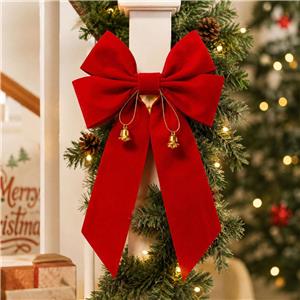
Velvet has made a sustained comeback in the wedding market, particularly for October through February weddings. Against dried botanicals, pampas grass, and the rich jewel tones popular in winter ceremonies, velvet reads as expensive and considered. Stock our GRS-certified recycled velvet — buyers who are specifically selling into the sustainable wedding niche use this as a talking point with clients, and it commands a premium price per yard.
4. Grosgrain — The Workhorse That Gets Overlooked
Grosgrain is frequently underestimated in the wedding category because its ribbed texture reads as "less luxurious" than satin. But it has a distinct structural advantage: it holds a knot. For florists tying ribbons around heavy-stemmed bridal bouquets, a wide grosgrain doesn't slip or loosen during the ceremony. We sell significant volume of 50mm and 63mm grosgrain specifically to professional florists supplying weddings, where reliability of hold is more important than sheen.
5. Wired Ribbon — For Statement Bows and Arches
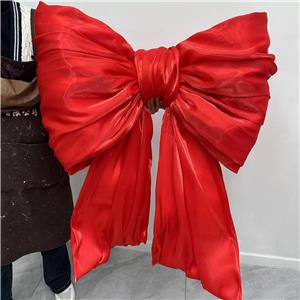
Wired ribbon (fabric with a thin wire woven into the selvedge) allows for sculptural bows that stand up without support. This is the material behind the oversized, structural bows that appear in entrance arch decorations and on the back of chairs at high-end events. The wiring makes it possible to shape the bow precisely and have it hold that shape for an entire event. We offer this in both satin and organza substrates.
Width and Yardage: Getting the Numbers Right for Your Buyers
Most event suppliers are used to selling by the roll but quoting to their clients by the yard. Understanding the math helps you advise buyers confidently:
Chair sashes: Standard restaurant or banquet chair sash uses 2.5 to 3 yards of 100mm (4-inch) ribbon. A 200-seat wedding requires 500–600 yards of sash ribbon. A standard 50-yard roll serves about 16–20 chairs.
Bridal bouquet: A full wrap covering 30–40cm of stem uses approximately 2–3 yards of 38mm or 50mm ribbon.
Ceiling drape section: Highly variable, but a typical 3-meter ceiling swag uses 5–8 yards of 150mm organza.
Arch decoration: A full ceremony arch typically uses 15–25 yards of 100mm material, depending on fullness.
We recommend that event supply wholesalers stock a minimum of 10 rolls per core wedding color per season. For a strong 2026 wedding season, that means at minimum: dusty rose, warm ivory, sage green, warm oat, and champagne — in both satin and a lighter-weight organza.
Sustainability as a Sales Tool in the Wedding Market
The sustainable wedding market is real and growing. Couples who pay attention to their food sourcing, venue choice, and florist's practices also want to know that their ribbons are ethically made. Our full wedding range is available in GRS-certified recycled polyester, and we provide transaction certificates to our wholesale buyers so they can pass that information to their clients.
For buyers serving the premium sustainable wedding niche, this certification is a commercial differentiator worth promoting. We've seen buyers increase their per-yard price point by 15–20% simply by leading with the sustainability credentials when selling to this segment.
Our 15-Day Delivery Promise for Wedding Season
We know that wedding season orders are time-critical. Our 15-day door-to-door delivery commitment to Europe and North America is backed by reserved freight capacity with our carrier partners. For emergency restock situations — a venue doubling their guest count at short notice, or a supplier's existing stock failing a quality check — we offer priority processing for orders received before 5pm CST on any business day, with dispatch within 48 hours for stock colors.
Our minimum order for stock colors is 100 yards per SKU. For custom-dyed shades matched to a specific fabric swatch or Pantone code, the minimum is 1,000 yards with a 12-hour digital proof turnaround.
Contact our wedding supply team today to discuss your 2026 season inventory plan and receive our wedding ribbon sample kit — which includes all five material types in our 12 leading bridal shades.