What Is the Difference Between Satin Ribbon and Grosgrain Ribbon — When to Use Each for Gift Packaging
What Is the Difference Between Satin Ribbon and Grosgrain Ribbon — When to Use Each for Gift Packaging
If you source ribbon for gift packaging at volume, you have almost certainly been asked to choose between satin and grosgrain — and at some point, probably chosen based on price or habit rather than a clear set of criteria. Both are polyester, both are available in the same color ranges, and both make a bow. The differences are real, but they are about texture, behavior, and application fit — not quality hierarchy.
This guide covers what actually distinguishes the two materials and gives you a decision framework for choosing the right one for each packaging application in your line.
The Core Difference: How Each Ribbon Is Woven
The visual difference between satin and grosgrain starts at the loom.
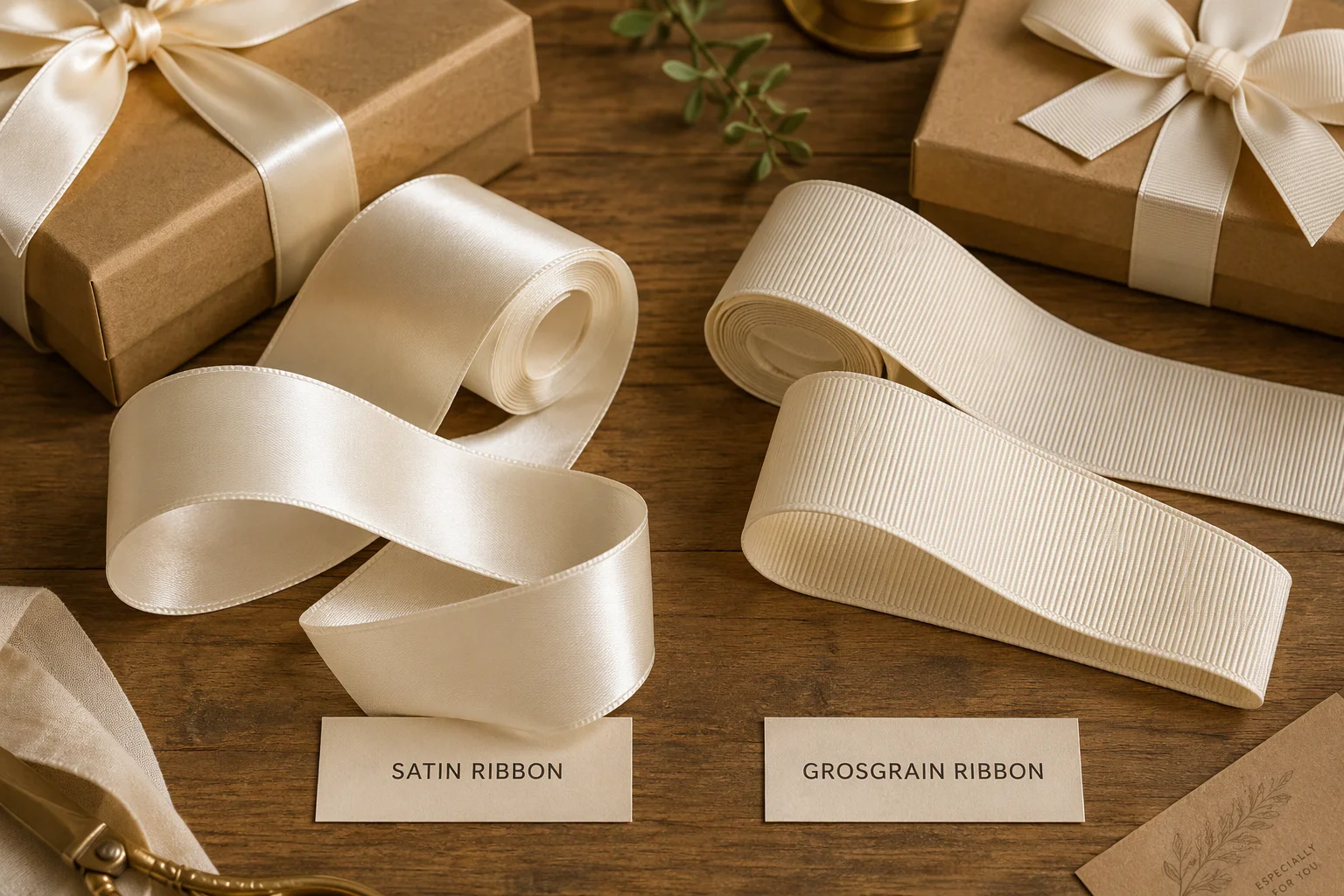
Satin ribbon uses a floating-warp weave: each warp thread skips over four or more weft threads before interlacing. The long parallel warp floats on the surface reflect light uniformly, producing the smooth, luminous sheen satin is known for. The more consistent the filament yarn and the higher the float count, the more mirror-like the surface.
Grosgrain ribbon uses a plain weave with a distinctive feature: the weft yarn is heavier than the warp, and the weave produces visible horizontal ridges — the ribbing that gives grosgrain its name (from French: gros grain, meaning "large grain"). The surface is matte and textured. There is no light-reflective float structure; the visual interest is tactile rather than optical.
Both ribbons are almost always made from polyester. The fiber is the same; the weave architecture is what separates them.
Surface, Feel, and Visual Register
The practical consequence of the weave difference is that satin and grosgrain send different signals in a finished package:
Satin reads as formal, luxurious, and traditional. Its reflective surface picks up ambient light and adds brightness to a package. It is strongly associated with weddings, upscale holiday gifts, and premium cosmetics packaging. In photography, satin ribbon catches and holds light, adding visual depth.
Grosgrain reads as structured, artisan, and grounded. Its matte ribbed surface does not compete with printed packaging or decorative paper — it frames rather than dominates. It is common in premium fashion brand packaging, corporate gifts, and any context where a more understated, craft-forward aesthetic is appropriate.
Neither is more premium than the other. They serve different aesthetics. A luxury fashion brand might exclusively use grosgrain; a luxury wedding brand might exclusively use satin. The choice is about brand language, not material grade.
Bow Behavior: Which Holds Its Shape Better
For gift packaging operations, how a ribbon behaves when tied and shipped matters as much as how it looks.
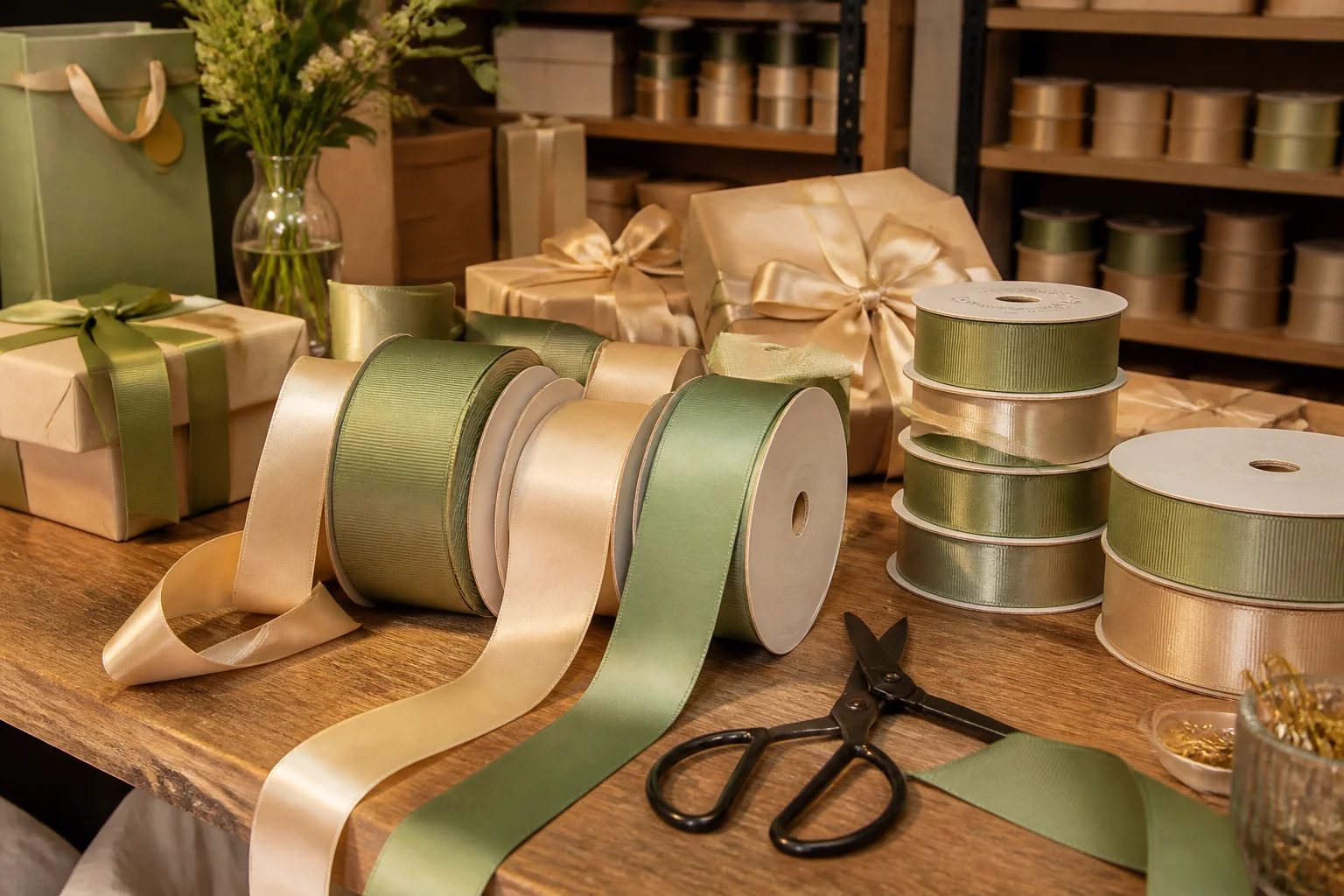
Grosgrain holds bow shape better without wire. The ribbed texture creates friction at the knot point that prevents the bow from loosening or rotating during handling. A grosgrain bow tied without a wire edge will hold its shape through normal shipping and retail display without intervention.
Satin requires more management. The smooth surface has less friction at the knot — bows tied from unwired satin can loosen, flatten, or rotate during transit. There are two solutions: use wired-edge satin ribbon (wire sewn into the selvage holds the bow position permanently), or apply the bow at point-of-presentation rather than pre-tying before shipping.
For high-volume operations where bows are pre-tied before boxing and shipping, this is a meaningful operational difference:
Pre-tied bows shipped in boxes: grosgrain or wired satin
Bows applied at retail display or point of presentation: unwired satin works fine
Bows that need to survive long-distance shipping and retail handling: wired satin or grosgrain
Cost and Sourcing Considerations
At equivalent widths and order volumes (500+ meters per color), grosgrain ribbon typically costs 10–20% less per meter than satin ribbon of the same width and quality tier. The cost difference reflects the simpler weave structure and lower-grade filament requirement for grosgrain — the ribbing texture hides minor yarn inconsistencies that would be visible on a satin surface.
For budget-sensitive packaging lines, grosgrain can reduce ribbon cost meaningfully without sacrificing durability or appearance quality for the applications it suits.
Both materials are available in the same color ranges, the same width options (6mm to 150mm), and the same roll lengths. Lead times are comparable. The only sourcing difference is that suppliers who specialize in satin may carry a wider color range in satin, and vice versa for grosgrain. If you are ordering both for the same brand palette, confirm that the supplier can match color across both materials — dye uptake differs between weave structures.
Decision Framework: Which to Use When
Use satin when: the brand is formal or celebratory (weddings, luxury holiday), the packaging needs to photograph well with shine and reflection, bows are applied at point of sale or presentation, and the cost premium is within budget.
Use grosgrain when: the brand aesthetic is artisan, fashion-forward, or understated, the packaging will be handled and shipped with pre-tied bows, cost efficiency matters, and the matte texture fits the packaging material (kraft paper, linen-textured boxes).
Use wired satin when: you want the visual register of satin and the bow stability of grosgrain — and the 15–25% wire-edge premium fits your per-unit cost model.
Frequently Asked Questions
What is the difference between satin and grosgrain ribbon?
Satin has a smooth, reflective surface from a floating-warp weave. Grosgrain has a ribbed, matte surface from a plain weave with heavy weft. Satin reads as formal and luminous; grosgrain as structured and tactile. Both are typically polyester.
Which ribbon holds a bow better, satin or grosgrain?
Grosgrain holds a bow better without wire — its ribbed texture creates knot friction that prevents loosening. Unwired satin needs a tighter knot or wire edge to maintain bow shape through shipping and handling.
Is satin or grosgrain ribbon more expensive?
Grosgrain costs 10–20% less per meter than equivalent satin at volume. The simpler weave and lower yarn requirement make it more cost-efficient for packaging operations where the matte aesthetic fits.
Can I use grosgrain ribbon for luxury gift packaging?
Yes. Grosgrain is standard in many luxury fashion and cosmetics brands' packaging. Its structured matte surface communicates craftsmanship. Luxury is about execution and consistency, not material shine.
What width of ribbon should I use for gift boxes?
Small boxes (under 20cm): 16–25mm. Medium boxes (20–35cm): 25–50mm. Large boxes (35cm+): 50–75mm or wider. Adjust based on bow style and desired visual weight on the finished package.