Satin Ribbon vs Grosgrain Ribbon — What's the Actual Difference and Which Should You Buy?
Satin Ribbon vs Grosgrain Ribbon — What's the Actual Difference and Which Should You Buy?
Satin and grosgrain are the two most common ribbon types in gift packaging and retail decoration — but buyers often purchase one when they would have been better served by the other. The names describe fundamentally different fabric constructions, not just different looks, and understanding the structural difference helps you make the right choice for your application.
This guide explains what actually distinguishes satin from grosgrain at the weave level, when each type is the right choice, and what to specify when sourcing.
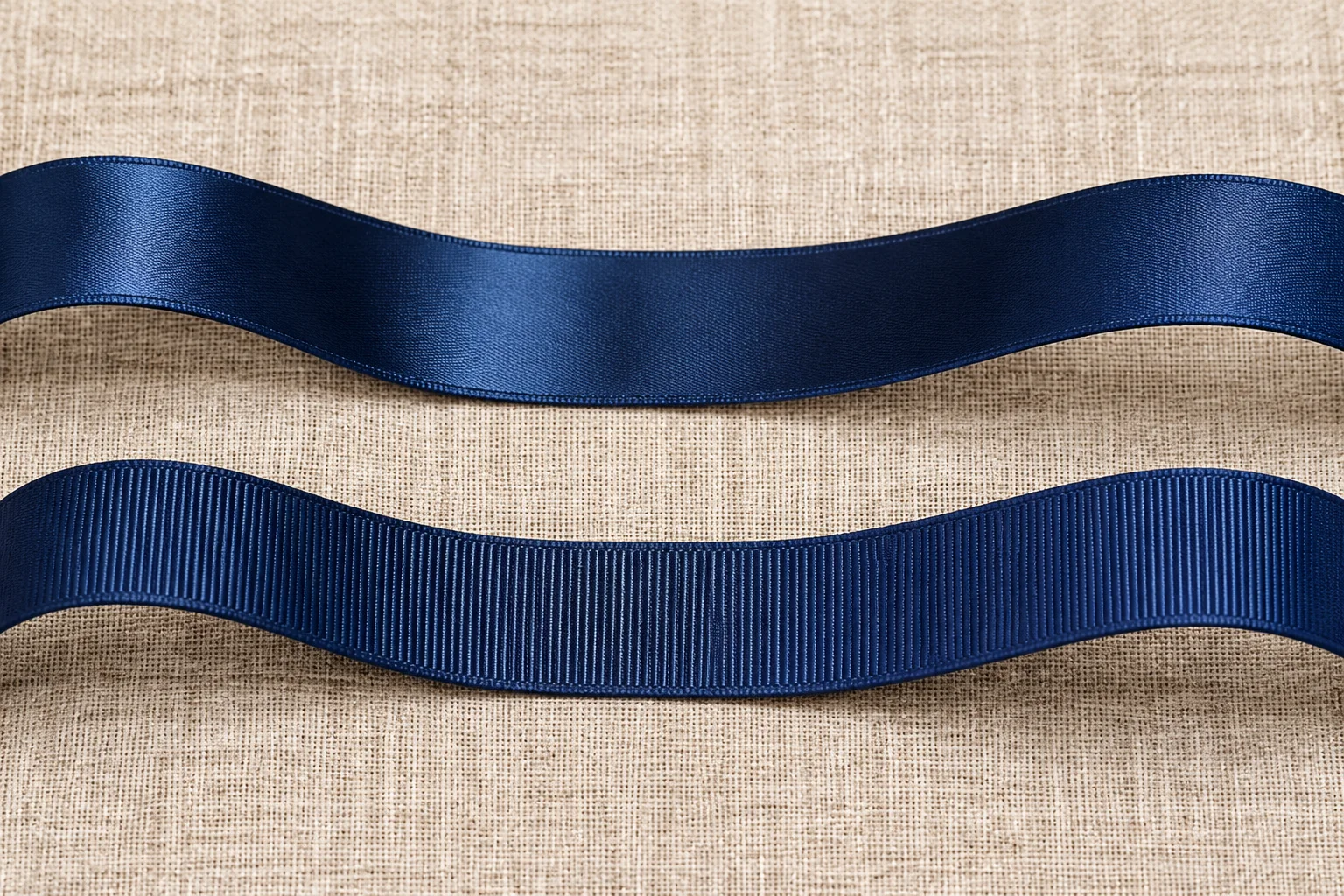
The Structural Difference: How Each Ribbon Is Woven
Both satin and grosgrain are woven fabrics — the difference is in how the threads interlace.
Satin ribbon uses a weave structure where the warp threads (running lengthwise) float over multiple weft threads before interlacing. This "float" keeps most threads on the fabric surface rather than interlaced underneath, creating a smooth, continuous surface with high light reflectivity — the characteristic sheen. The back side of satin ribbon is matte, because the interlacing points are mostly on the reverse.
Grosgrain ribbon uses a plain or rib weave where warp and weft threads interlace more frequently. The characteristic ribbed ridges running across the width of grosgrain ribbon are created by using heavier weft threads (thicker than the warp), which form raised horizontal ribs. The surface is matte and textured rather than smooth and shiny.
These construction differences produce predictable differences in performance:
Satin is softer and more flexible due to fewer interlacing points
Grosgrain is stiffer and more dimensionally stable due to denser interlacing
Satin has higher sheen and light reflectivity
Grosgrain has better tear and abrasion resistance
Satin frays more easily at cut ends; grosgrain holds its cut edge better
Application Guide: When to Use Each Type
When to choose satin ribbon:
Gift packaging where you want a soft, luxurious appearance
Floral arrangements where ribbon will drape and flow
Wedding and event decoration where elegance is the primary value
Double-faced applications where both sides of the ribbon will be visible
Products where the ribbon will be touched — the softer hand feel of satin is perceived as higher quality
When to choose grosgrain ribbon:
Gift bows that need to hold their shape (grosgrain maintains loop form without wire)
Hair accessories, headbands, and clothing trim where durability matters
Bag handles, lanyard, and functional strapping applications
Logo printing where a textured surface adds a distinctive look to bold single-color designs
High-volume machine packaging where the stiffer construction feeds more reliably

Price Comparison at Common Widths
For 100% polyester ribbon at 1,000-meter volume, typical factory pricing (38mm width):
Double-faced satin, 100D: $0.22–0.28/m
Single-faced satin, 100D: $0.17–0.22/m (fewer visible face threads, lower cost)
Grosgrain, standard: $0.15–0.20/m (simpler weave structure, lower cost at same width)
Double-faced satin, 75D (finer yarn): $0.26–0.34/m
Grosgrain is generally cheaper than satin at the same width and yarn weight because the simpler weave structure requires less loom programming complexity and produces at slightly higher speeds. For narrow widths (10–25mm), this price gap becomes more significant — grosgrain ribbon in this range is a common choice for cost-sensitive applications like garment trim and functional decoration.
Printing on Satin vs Grosgrain
Both types can receive screen printing, digital printing, and woven jacquard branding — but with different results:
Satin's smooth surface produces sharper print edges and better color saturation for detailed logos, fine lines, and multi-color designs. If your logo contains fine-detail lettering or gradients, satin is the better base.
Grosgrain's ribbed surface creates a slight dot-screen appearance in printed areas — the ink sits on the raised ribs rather than penetrating the lower valleys. For bold single-color logos with clean geometric shapes, this effect is subtle and acceptable. For fine-detail artwork, it is limiting.
Woven jacquard logos are possible on both, but the ribbed structure of grosgrain actually makes woven patterns more visually prominent — the contrast between the logo area and the base fabric reads more sharply, which some buyers prefer for branded ribbon with a premium, bespoke look.
Frequently Asked Questions
What is the main difference between satin and grosgrain ribbon?
Satin uses a float weave creating a smooth, shiny face. Grosgrain uses a rib weave creating a textured, matte surface with characteristic horizontal ridges. Satin is softer and more lustrous; grosgrain is stiffer and more durable.
Is grosgrain ribbon stronger than satin?
Yes, generally. The denser thread interlacing of grosgrain resists tearing and fraying better than satin weave at comparable thread counts. This is why grosgrain is preferred for functional applications like hair accessories and bag handles.
Which makes better bows — satin or grosgrain?
Different bow types. Grosgrain holds its shape better for structured upright loops. Satin makes softer, more elegant drooping bows. Neither is universally better — choose based on whether you want structured loops or soft, flowing loops.
Can both be printed with logos?
Yes. Satin provides a smoother print surface for fine-detail logos. Grosgrain's ribbed texture works well for bold single-color logos but is less suitable for fine-line or gradient artwork. Woven jacquard branding is possible in both constructions.
What are typical MOQs for satin vs grosgrain from Chinese factories?
Comparable: 500–2,000m per color for plain stock, 500–1,000m per design per color for printed ribbon. Grosgrain in narrow widths (10–25mm) is typically cheaper than satin at the same width due to simpler weave construction.