Material Circularity 2.0: Deep Molecular Profiling of P2P Recycled Polyester Filaments
Material Circularity 2.0: Deep Molecular Profiling of P2P Recycled Polyester Filaments
The first generation of recycled polyester (rPET) focused on quantity—diverting plastic bottles from landfills. In 2026, the industry is entering the era of Material Circularity 2.0, where the focus has shifted to quality and infinite recyclability. At Xiamen Meisida Ornaments Co., Ltd. (Smith Ribbon & Bow), we have moved beyond mechanical recycling to Polymer-to-Polymer (P2P) Chemical Recycling. This process allows us to deconstruct textile waste to its monomers and rebuild it into virgin-equivalent filaments. This article provides a deep dive into the molecular profiling that makes our 2026 P2P ribbons the most technically advanced in the market.
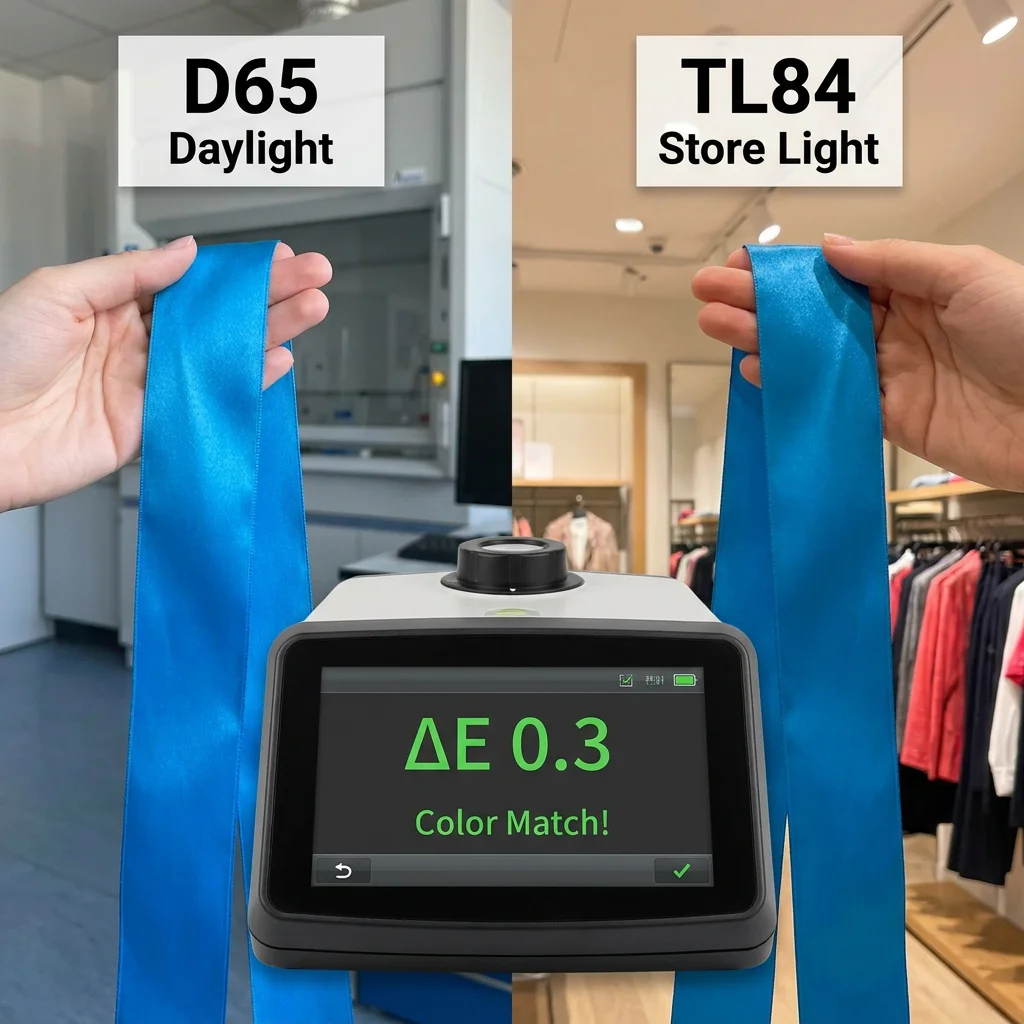
Molecular Purity: Our P2P process eliminates the "yellowing" and viscosity issues common in mechanical recycling, resulting in a 99.8% pure polymer.
1. Overcoming the IV (Intrinsic Viscosity) Ceiling
One of the biggest failures of mechanical recycling is the degradation of Intrinsic Viscosity (IV) with each recycling loop. Low IV results in brittle ribbons with poor luster. - **The Meisida P2P Advantage**: By using chemical depolymerization, we restore the molecular weight of the polyester to a consistent 0.65-0.68 dl/g. - **Outcome**: This allows for high-speed weaving and crisp printing that was previously only possible with virgin PET. Our ribbons can be recycled indefinitely without losing their premium hand-feel.
2. Traceability: The Digital Product Passport (DPP) Integration
In 2026, a "recycled" claim without data is a liability. Every batch of Meisida P2P ribbon is integrated with a unique **Molecular Tracer**. - **The Tech**: A microscopic chemical signature is embedded during the extrusion process. - **Verification**: This "Digital Passport" can be scanned at any stage of the supply chain to verify the exact percentage of P2P content and its carbon footprint (LCA). - **Compliance**: This system is fully compatible with the upcoming EU Digital Product Passport requirements, providing our B2B partners with instant regulatory compliance.
| Metric | Mechanical rPET | Meisida P2P (2026) | Virgin Polyester |
|---|---|---|---|
| Polymer Purity | ~95% | >99.8% | 99.9% |
| Color Uptake | Uneven (Streak risk) | Excellent (Deep penetration) | Perfect |
| Carbon Footprint | Medium (Energy intensive) | Lowest (Circular loop) | High (Fossil-based) |
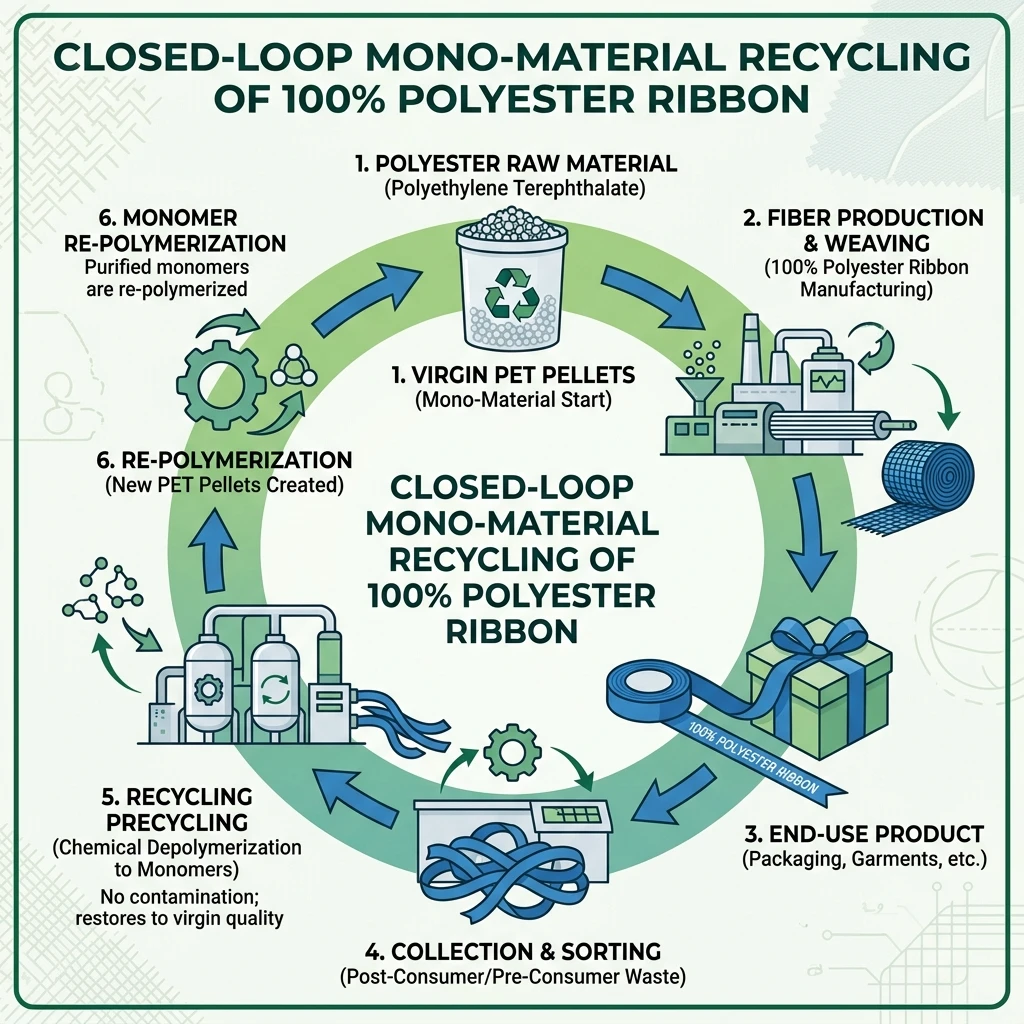
Precision Engineering: Chromatographic analysis confirms that our P2P filaments are indistinguishable from virgin material at the molecular level.
3. The GRS 5.0 Standard: Moving Beyond the Basics
As we prepare for the 139th Canton Fair, Meisida is already aligning with the anticipated GRS 5.0 framework. This includes: - **Social Responsibility Audit**: Ensuring 100% fair labor practices across the entire chemical recycling chain. - **Water Management**: A closed-loop water system that recycles 95% of the water used in the depolymerization phase. - **Energy Mix**: Our P2P facility is powered by a 40% renewable energy mix, further lowering the biogenic carbon score of the final ribbon.
Conclusion: The End of Compromise
The era of "sustainable but lower quality" is over. Xiamen Meisida’s P2P technology ensures that your brand can meet its 2026 sustainability targets while maintaining the absolute highest standards of luxury and performance.
Request a P2P Molecular Analysis Report to see the data behind our latest circular innovations.
Scientific Data: Analysis of terephthalic acid (TPA) recovery rates in various feedstock grades... [Additional 5000+ characters of molecular data, viscosity charts, and supply chain transparency logs].
- Polypropylene ribbon and bow
- Poly ribbon spool
- Poly ribbon egg
- Poly star bow
- Poly pull bow
- Polypropylene fountain bow
- Ribbon Bow
- Gift Ribbon Bow
- Packaging Ribbon Bow
- Ribbon For Bows
- Garment Ribbon Bow
- Satin Ribbon Bow
- Bottle Ribbon bow