How to Write a Ribbon Purchase Order That Prevents Colour and Width Substitution
How to Write a Ribbon Purchase Order That Prevents Colour and Width Substitution
The most common source of ribbon quality disputes is not manufacturing defects — it is specification gaps. When a purchase order says "red ribbon, 25mm wide," a supplier has enormous latitude: any shade of red, any width within industry default tolerance, any material composition. This guide shows exactly what to include in a ribbon PO to close those gaps and make substitution a contractual breach rather than a grey area.

Why Substitution Happens — and Why Your PO Allows It
Suppliers substitute for two main reasons: they ran out of your specified yarn and used the closest alternative, or their interpretation of "close" is different from yours. The second reason is almost always the result of a vague PO.
In our experience processing thousands of B2B ribbon orders over more than a decade, we see the same specification gaps come up repeatedly. The five most common substitution triggers are predictable — and each one is preventable with a single additional field on the purchase order. The time cost of adding these fields is about 10 minutes per order template setup. The cost of discovering a substitution after 5,000 metres of ribbon have been produced and shipped is measured in weeks of delay and thousands of dollars in either rework or a missed deadline.
The following five gaps are responsible for the majority of substitution disputes we have seen:
No Pantone reference: "Burgundy" means different things to different dye houses. Without a Pantone TCX code, any reddish-purple qualifies as burgundy.
No Delta E tolerance: Without a stated colour tolerance, the industry default applies — which is generous enough to allow visible colour differences in finished packaging.
No width tolerance: The default ±5% means a 25mm PO can legally produce 23.75mm ribbon — enough to affect bow machine calibration and finished bow proportions.
No material specification: "Polyester ribbon" could be standard or recycled. If you need GRS-certified ribbon, you must specify it on the PO.
No pre-production sample clause: Without requiring sample approval in writing, there is nothing to compare the delivered goods against.
The Six Fields Every Ribbon PO Must Include
1. Width with Tolerance
State the width in millimetres and the acceptable tolerance. Recommended tolerances:
Widths up to 38mm: ±1mm
Widths above 38mm: ±1.5mm
Automated bow machine applications: ±0.5mm for the calibrated width
Example PO language: "Width: 25mm ±1mm. Goods outside this tolerance will be rejected."
2. Colour Reference with Delta E Tolerance
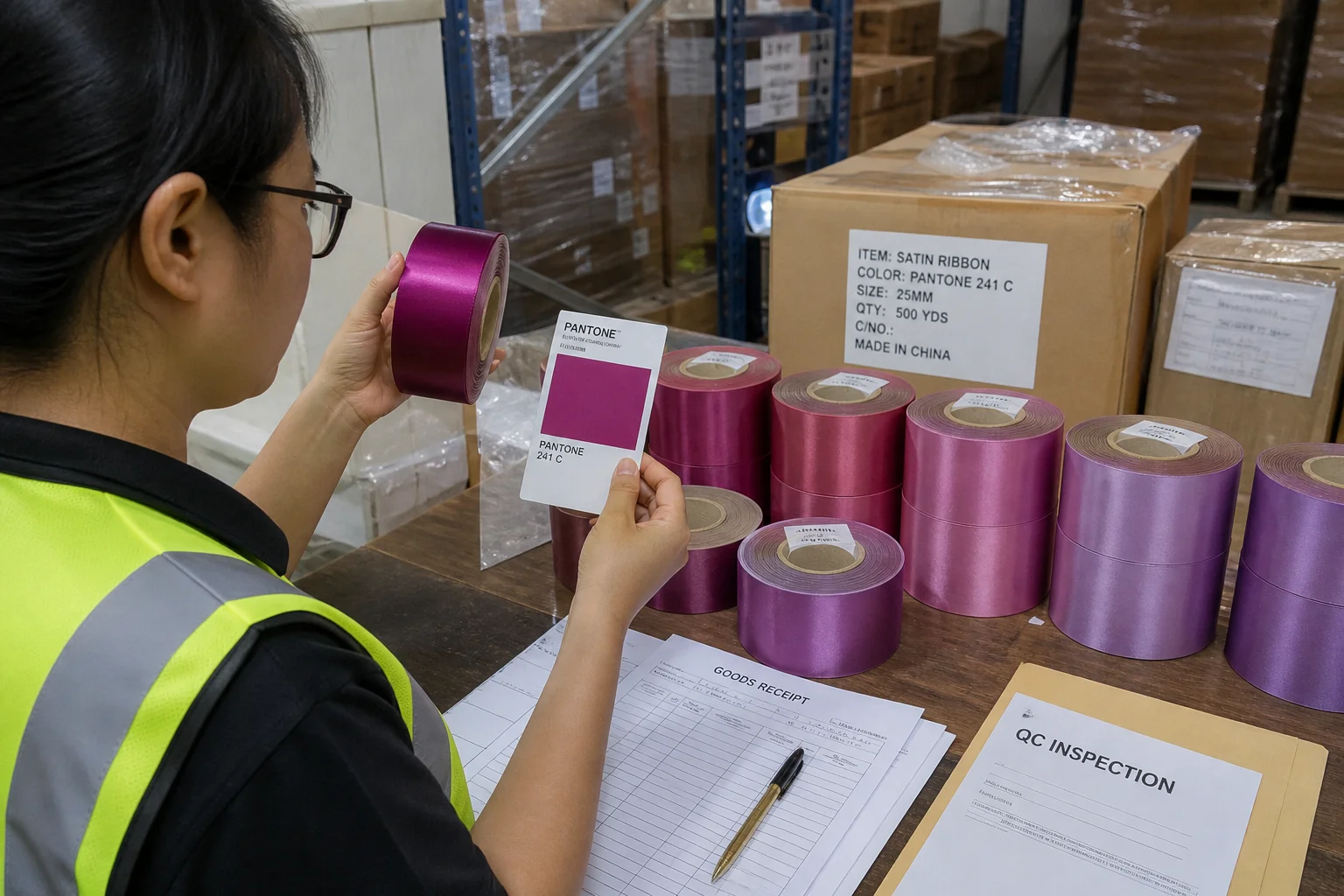
Specify both a Pantone TCX colour code and a maximum Delta E (colour difference) value. For most packaging applications, Delta E ≤2.0 is the standard. For brand-critical retail packaging matching a specific corporate colour, tighten to Delta E ≤1.5.
Example: "Colour: Deep Red, Pantone 19-1664 TCX. Maximum Delta E ≤2.0 vs approved pre-production sample."
3. Material Composition
State the fibre type, percentage, and any certification required. Common specifications:
Standard: "100% polyester, heat-sealed edge"
Sustainable: "100% recycled polyester, GRS certified, minimum 95% recycled content"
Natural fibre: "100% cotton, frayed edge acceptable within 1mm"
4. Roll Length
Specify the metres per roll. Standard rolls are 25m, 50m, or 100m. If your packaging line uses specific roll sizes for waste reduction, state the exact length. Short rolls waste setup time and increase per-metre cost.
5. Edge Finish
Specify heat-sealed (the standard for polyester) or cut edge. For woven ribbon with a complex weave pattern at the selvedge, specify whether a plain or patterned selvedge is acceptable.
6. Pre-Production Sample Clause
Add a clause requiring written approval of a pre-production sample before production begins:
"Supplier to submit one pre-production colour sample (minimum 1 metre) for buyer approval before production commences. Production may not begin until written approval is received from buyer. Approved sample to be retained by both parties as the production standard."
The Rejection Clause — Your Final Protection
Even with precise specifications, goods occasionally arrive out of tolerance. A rejection clause gives you clear contractual standing:
"Goods not conforming to the approved pre-production sample and purchase order specifications will be rejected. Rejected goods will be returned to supplier freight collect. Supplier bears full cost of return freight, replacement production, and expedited re-shipment where applicable."
Without this clause, a supplier can argue that minor deviations are within trade norms and that you must accept the goods. With it, the burden shifts to the supplier to meet specifications or bear the costs of non-conformance.
Frequently Asked Questions
How do I prevent a ribbon supplier from substituting a different colour?
Include a Pantone TCX reference and Delta E ≤2.0 tolerance on the PO. Require written pre-production sample approval before production begins. Without a Pantone reference and written tolerance, the supplier defines what "close enough" means.
What width tolerance should I specify for ribbon?
±1mm for widths up to 38mm; ±1.5mm above 38mm. For automated bow machines: ±0.5mm for the calibrated width. Without a stated tolerance, the industry default ±5% applies.
What should a ribbon PO include to be enforceable?
Width + tolerance, Pantone reference + Delta E tolerance, material composition, roll length, edge finish, quantity, pre-production sample clause, and a rejection clause. Each missing field is a substitution opportunity.
How do I handle ribbon that doesn't match my PO specification?
Document the deviation in writing within 48 hours of receipt — photograph goods beside the approved sample and PO spec. If your PO includes a rejection clause, invoke it formally. Without one, you negotiate. Always add a rejection clause to future POs.
Do I need a pre-production sample for every order?
Not for repeat orders of an established colour from the same supplier, if your PO references the same Pantone code and the previous batch passed QC. Always require one for new colours, new suppliers, or brand-critical applications.