How Do I Know If My Ribbon Supplier Is Actually a Factory or Just a Trading Company?
How Do I Know If My Ribbon Supplier Is Actually a Factory or Just a Trading Company?
It is one of the most common sourcing questions in B2B ribbon procurement — and one that suppliers are rarely incentivised to answer honestly. Trading companies routinely present themselves as manufacturers on sourcing platforms, in email signatures, and even in audit reports. For buyers, the difference matters: direct factory sourcing typically saves 12–25% on unit cost, and far more in lead time and quality control capability.
This guide gives procurement teams a practical checklist for verifying supplier type before placing orders.
Why the Distinction Matters
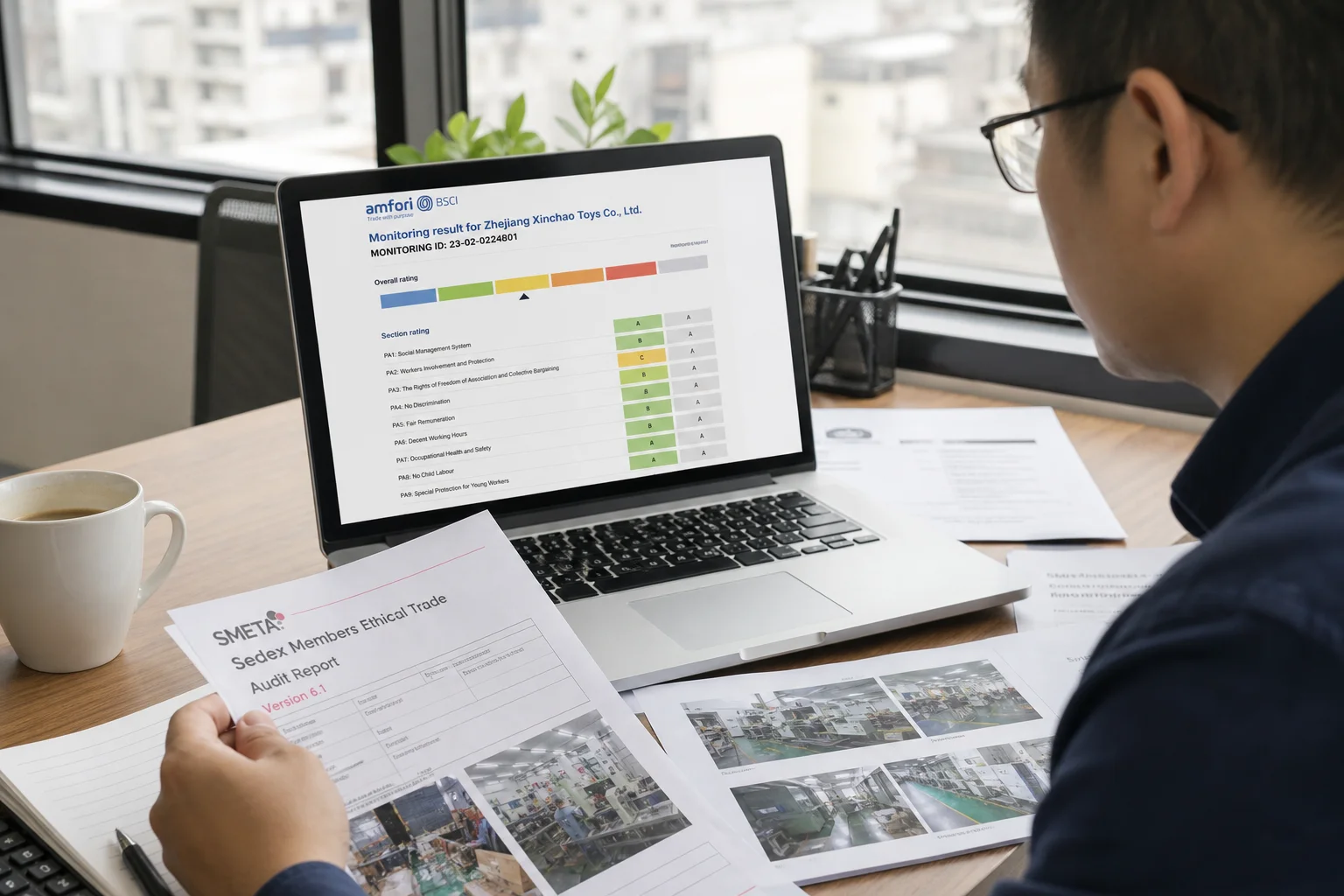
Beyond price, the factory-vs-trader distinction affects three things that procurement teams care about:
Lead time reliability: A factory controls its own production schedule. A trading company cannot. When a factory is at capacity, a trader's promised lead time collapses — you find out 2 weeks before your shipment date, not when the order is placed.
Quality resolution speed: When you find a defect, a factory can pull production records, check the loom settings, and identify the cause within hours. A trader has to relay your complaint to the mill, wait for a response, relay it back, and hope the mill takes responsibility. This cycle adds 5–10 business days to every quality issue.
Specification flexibility: Factories can adjust weave density, yarn count, or roll length within existing machine parameters. Traders cannot — they can only pass your request to the mill and wait, with no ability to negotiate on your behalf.
How to Verify: Business Licence and Address
Request the supplier's business licence (营业执照) and check the registered type: manufacturing (生产型) or trading (贸易型). Manufacturing companies register at industrial park addresses; trading companies typically register at city-centre commercial buildings. In China, verify independently at gsxt.gov.cn using the company name or registration number.
What to Ask in Your First Enquiry
Five questions that reliably separate factories from traders:
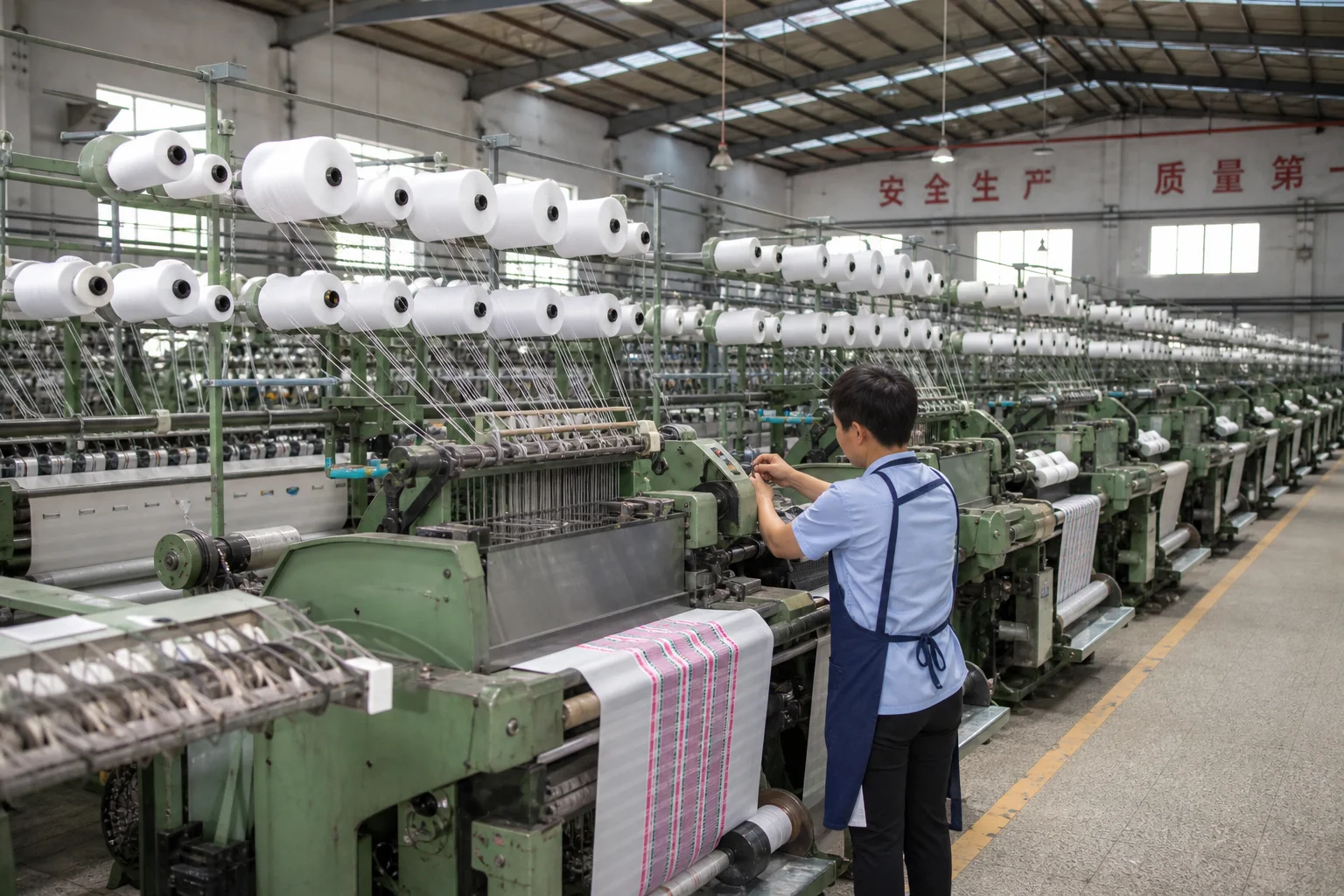
"How many looms do you currently operate?" A factory answers immediately with a specific number (e.g. "We have 120 needle looms and 40 jacquard looms"). A trader checks with "the factory" or gives a vague range.
"What is your lead time for a new colour with no existing yarn stock?" A factory gives a breakdown: yarn procurement (7–10 days) + dyeing (3–5 days) + weaving (5–7 days) + finishing (2–3 days) = 4–6 weeks. A trader says "3–4 weeks" without being able to explain the production stages.
"Can you do a live video call showing your production floor?" A factory says yes and schedules it within 48 hours. A trader delays, offers recorded footage instead, or shows a facility that turns out to be a warehouse.
"What is your MOQ for a non-standard width like 20mm?" A factory gives a specific minimum in metres and explains it is set by loom width constraints. A trader cannot explain why the MOQ is what it is.
"Are your GRS or OEKO-TEX certificates issued in your company name?" A factory's certifications name the factory. A trading company's certifications, if they have any, name the mill they source from — which means you are not buying certified goods, you are buying goods from a certified source through an uncertified intermediary.
Red Flags in Supplier Communications
Unusually short lead times: Traders sometimes promise 2–3 weeks by drawing on mill stock. Fails on custom orders or when the mill is at capacity.
Samples in plain packaging: Factory samples carry the factory's name on the roll label. Unlabelled samples or labels from a different company are trading signals.
Product range too broad: A ribbon factory makes ribbon. If your supplier also offers tissue paper, gift bags, and boxes from "the same factory," they are sourcing from multiple manufacturers.
Slow answers to technical questions: Factories have technical staff on-site — ribbon GSM, weave structure, heat resistance should be answered within hours. A 24–48 hour delay usually means the question is being relayed.
Suggested auditor is their own contact: A genuine factory gives you direct access for an audit. A trader steers you to their recommended auditor to control what you see.
When a Trading Company Is the Right Choice
Trading companies genuinely suit buyers ordering below factory MOQs (under 500–1,000m/colour), needing consolidated multi-product shipments, or in early sampling phases. The problem is not the business model — it is misrepresentation. A transparent trading company is far preferable to one that claims to be a factory and cannot resolve production problems. For buyers ordering over 5,000m/year in one ribbon type, direct factory sourcing generally outweighs the management overhead.
Frequently Asked Questions
How can I tell if a ribbon supplier is a factory or a trading company?
Request their business licence and check whether the registered type is manufacturing (生产型) or trading (贸易型). Cross-check the registered address — factories are in industrial zones, traders typically in city commercial districts. Ask for a live production-floor video call and specific loom counts; factories answer immediately, traders cannot.
Why does it matter whether my ribbon supplier is a factory or a trader?
Direct factory sourcing saves 12–25% on unit cost, cuts quality resolution time from days to hours, and gives you direct influence over production scheduling. Trading companies add a communication layer to every decision, complaint, and urgent request.
What questions should I ask to identify a trading company posing as a factory?
Ask: (1) How many looms do you operate? (2) What is your lead time for a new colour with no yarn stock? (3) Can you do a live factory video call? (4) What is your MOQ for a non-standard width and why? (5) Are your certifications issued in your company name? Factories answer all five immediately; traders stall or relay questions elsewhere.
What are the red flags that a supplier claiming to be a factory is actually a trading company?
Red flags: city-centre address on business licence; product range too broad for one factory; unusually short lead times; samples with no manufacturer label; slow answers to technical questions; certificates issued in a third party's name; suggested auditor is the supplier's own contact rather than independent access.
Is buying from a trading company always worse than buying direct from a factory?
No. For small volumes (under 500m/colour), consolidated multi-product shipments, or early sampling phases, traders serve a genuine purpose. The problem is misrepresentation — a transparent trading company is preferable to a dishonest one claiming to be a factory. For buyers ordering over 5,000m/year in a single ribbon type, the cost and quality advantages of direct factory sourcing generally outweigh the overhead.