What Is the Difference Between Single-Face and Double-Face Satin Ribbon, and Which Should I Order?
What Is the Difference Between Single-Face and Double-Face Satin Ribbon, and Which Should I Order?
If you have ever received a ribbon shipment that looked wrong once you started tying bows — the underside showing a flat, dull surface where you expected lustre — you have encountered the single-face vs double-face problem. It is one of the most common and most avoidable specification errors in ribbon procurement, and it costs brands real money in remakes and delayed launches.
This guide explains the construction difference, when each type is appropriate, and how to write a purchase order that prevents the substitution problem entirely.
How Single-Face and Double-Face Satin Are Constructed
Both types start from the same raw material — typically 100% polyester filament yarn, chosen for its consistent sheen and resistance to fading. The difference is entirely in the weave structure.
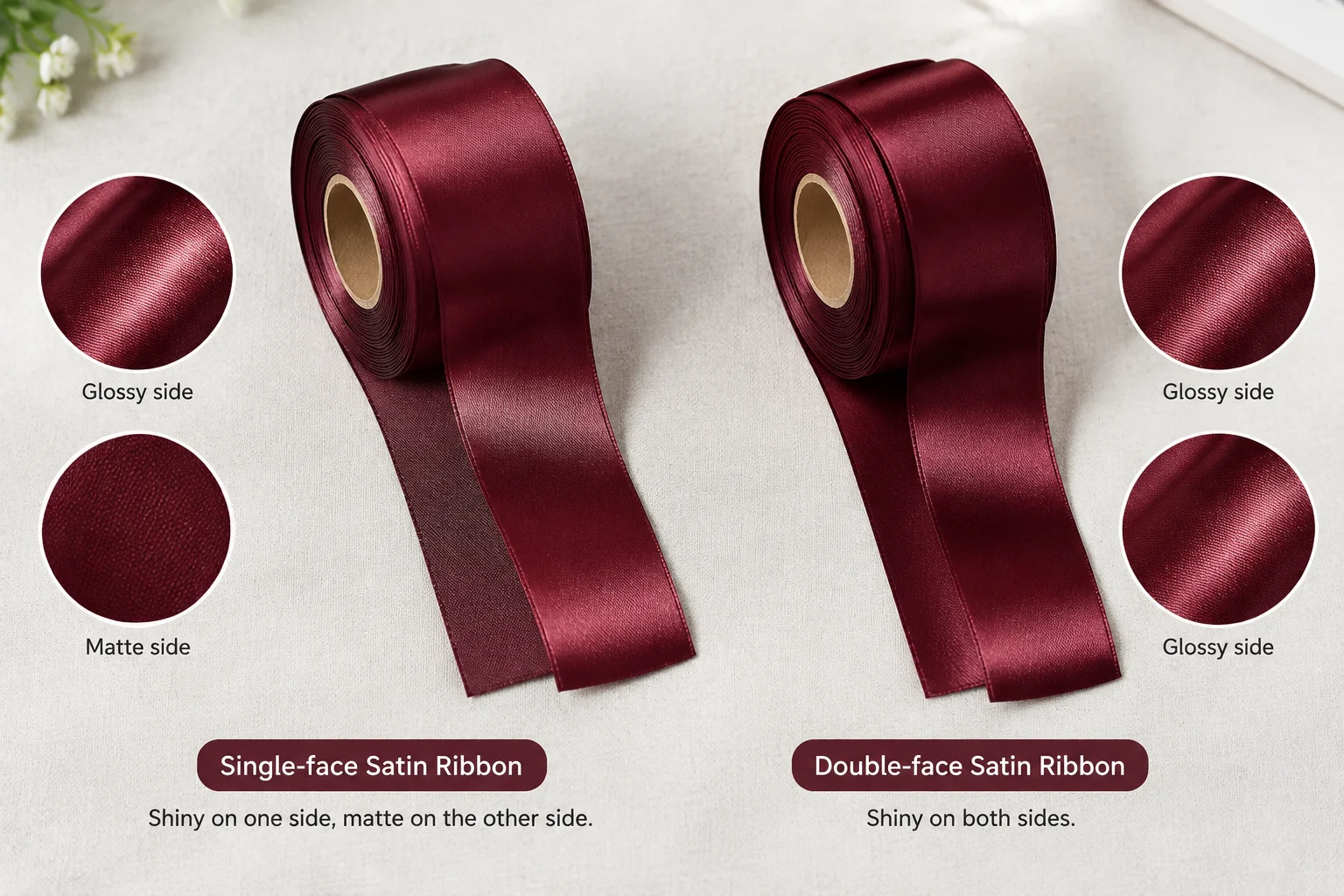
Standard satin weave works by allowing warp threads to float over multiple weft threads before interlacing. These long floats reflect light smoothly, creating the characteristic glossy surface. In single-face satin, the floats run across one face only. The reverse side shows the interlacing points clearly — it is visibly different in texture and light reflection.
Double-face satin uses a more complex loom setup where float layers are built into both faces of the fabric simultaneously. The result is a ribbon that is visually identical on both sides. Producing this requires more yarn per metre and slower loom speeds, which is why double-face ribbon costs more.
The practical implication: if you tie a loop bow with single-face ribbon, the inner loops show the dull reverse side. With double-face ribbon, every visible surface is the same lustrous finish.
Cost Difference and When It Is Worth It
According to standard mill pricing, double-face satin ribbon typically costs 18–25% more per metre than single-face in the same width, colour, and yarn specification. For a buyer ordering 10,000 metres of 38mm ribbon, this premium represents a real line-item difference.
Loop bows: Double-face required. Inner loops are clearly visible; single-face shows matte back on ~50% of bow surface.
Flat-tied ribbon, simple bow: Single-face sufficient. Reverse rarely visible when ribbon lies flat against the package.
Hanging tags and labels: Double-face required. Ribbon twists during handling.
Apparel trim: Double-face standard for lingerie and premium garments.
Automated bow machines: Check machine specs — some hide the reverse, some do not.

The Substitution Problem and How to Prevent It
The most common issue buyers encounter is receiving single-face ribbon when double-face was needed, or vice versa. This happens because:
Many catalogue descriptions use "satin ribbon" without specifying face type
Some trading companies source from multiple mills and substitute based on availability
Without a pre-production sample approval step, the substitution is not discovered until the order arrives
The fix is straightforward: be explicit in the specification. A purchase order that says "satin ribbon, 38mm, burgundy" will not reliably get you double-face ribbon. A PO that says "double-face satin ribbon, 38mm ±1mm, burgundy, Delta E ≤1.5 against approved colour standard, heat-sealed edges, 50m rolls on 40mm core" will.
Three additional safeguards worth building into your procurement process:
Request a physical sample before production: A short sample of the actual production run costs nothing to confirm and eliminates the risk of a full-order error.
Photograph your approved reference sample: Keep a physical reference and a photograph. When the shipment arrives, compare against the reference before accepting delivery.
Add face type to your supplier qualification checklist: When onboarding a new ribbon supplier, confirm in writing that they can produce double-face ribbon in your required widths and have done so for other buyers. Not all mills produce double-face ribbon at every width.
Receiving Inspection Checklist
Hold ribbon at a low angle to light — both faces should show identical sheen if double-face was specified
Fold a short length back on itself — inner and outer surfaces must match
Check edge finish — heat-sealed edges should show no loose fibres
Measure width with calliper — must be within PO tolerance
Verify roll length against label — short rolls affect cost per finished unit
If face type does not match the specification, document with photographs before accepting the shipment.
Smith Ribbon & Bow: Single-Face and Double-Face Satin
Meisida produces both types in standard widths from 6mm to 63mm, with custom widths available from 500m per colour. Batch colour consistency is Delta E ≤1.5. Lead time 4–6 weeks. GRS-certified versions available in the 2026–2027 collection. Always specify face type explicitly when ordering — our team confirms in writing before production.
Frequently Asked Questions
What is the difference between single-face and double-face satin ribbon?
Single-face satin has a glossy finish on one side only; double-face has the same lustre on both sides. The key difference is weave construction: double-face requires approximately 30–40% more yarn and costs 18–25% more per metre. Specify double-face whenever the underside of the ribbon will be visible in the finished application.
When should I specify double-face satin ribbon instead of single-face?
Specify double-face for loop bows, hanging tags, pull-ties, lingerie trim, and any application where the ribbon twists or folds and both surfaces face outward. Single-face is sufficient for flat wrapping, straight gift box ties, and machine-tied bows where only one face is visible.
Is double-face satin ribbon stronger than single-face?
Typically yes — double-face ribbon uses more yarn, which increases tensile strength and reduces edge fraying. It holds bow shapes longer under handling stress and is more resistant to machine tension on automated packaging lines.
What width options are available for single-face and double-face satin ribbon?
Both types are available in standard widths: 6mm, 10mm, 16mm, 25mm, 38mm, 50mm, and 63mm. Custom widths available from 500m per colour. Double-face in widths under 10mm may have longer lead times.
How do I specify satin ribbon face type in a purchase order?
Always write "single-face satin" or "double-face satin" explicitly — never just "satin ribbon." Include width with tolerance, yarn type, edge finish, and roll length. Approve a pre-production physical sample before committing to a full production run.