How to Store Ribbon Correctly to Prevent Yellowing, Creasing, and Colour Loss
How to Store Ribbon Correctly to Prevent Yellowing, Creasing, and Colour Loss
Ribbon stored incorrectly deteriorates faster than most buyers expect. A roll of satin ribbon that arrives in perfect condition can develop yellow edges, surface flattening, or colour shift within months if it is stored under the wrong conditions. For buyers who hold ribbon stock between seasons — or carry inventory across multiple programmes — understanding the basic storage requirements is a straightforward way to protect the investment.
The Four Main Causes of Ribbon Deterioration in Storage
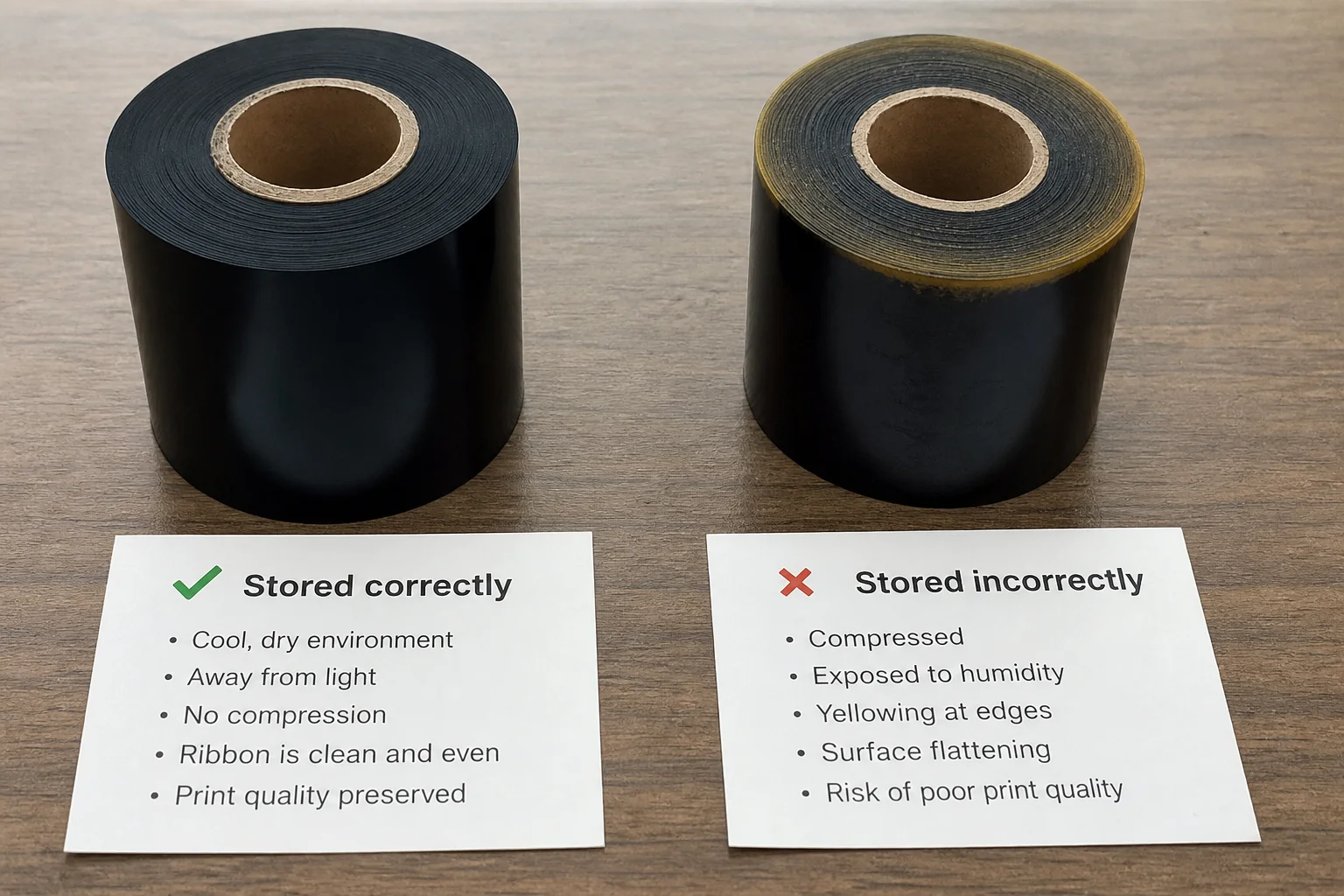
UV light exposure. This is the most common cause of colour fading in stored ribbon. Polyester ribbon is relatively UV-resistant, but all ribbon colours will shift with sustained UV exposure — especially warm tones (red, orange, burgundy) and pale tones (ivory, champagne, blush). Even indirect sunlight through a window accelerates fading over weeks. Ribbon stored in open display, near windows, or under fluorescent lighting for extended periods should be rotated regularly or covered when not in active use.
Humidity and moisture. High humidity causes ribbon to absorb moisture, which softens the weave structure and can cause the surface of satin ribbon to develop a slight bloom — a loss of the clean surface tension that produces its characteristic sheen. In severe cases, sustained humidity causes yellowing and promotes mould or mildew on natural-fibre content ribbons. Ribbon stored in basements, damp storerooms, or near water sources is particularly at risk. Target storage humidity: 40–60% relative humidity.
Compression and stacking weight. Ribbon rolls stored under heavy weight — other rolls stacked on top, boxes placed on top of ribbon rolls — develop permanent flat spots, crushed edges, and surface distortion that cannot be reversed. The outer layers of a compressed roll become permanently imprinted with the shape of whatever is pressing on them. Ribbon should always be stored so that nothing rests on top of the roll surface.
Heat. Sustained heat above approximately 35°C (95°F) — vehicles in summer, unventilated storage rooms, proximity to heating equipment — can soften the weave structure of synthetic ribbon and cause thermal deformation. For most warehouse and retail storage environments this is not a risk, but vehicles, outdoor storage, and poorly ventilated rooms in summer climates can exceed this threshold.
Correct Storage Method
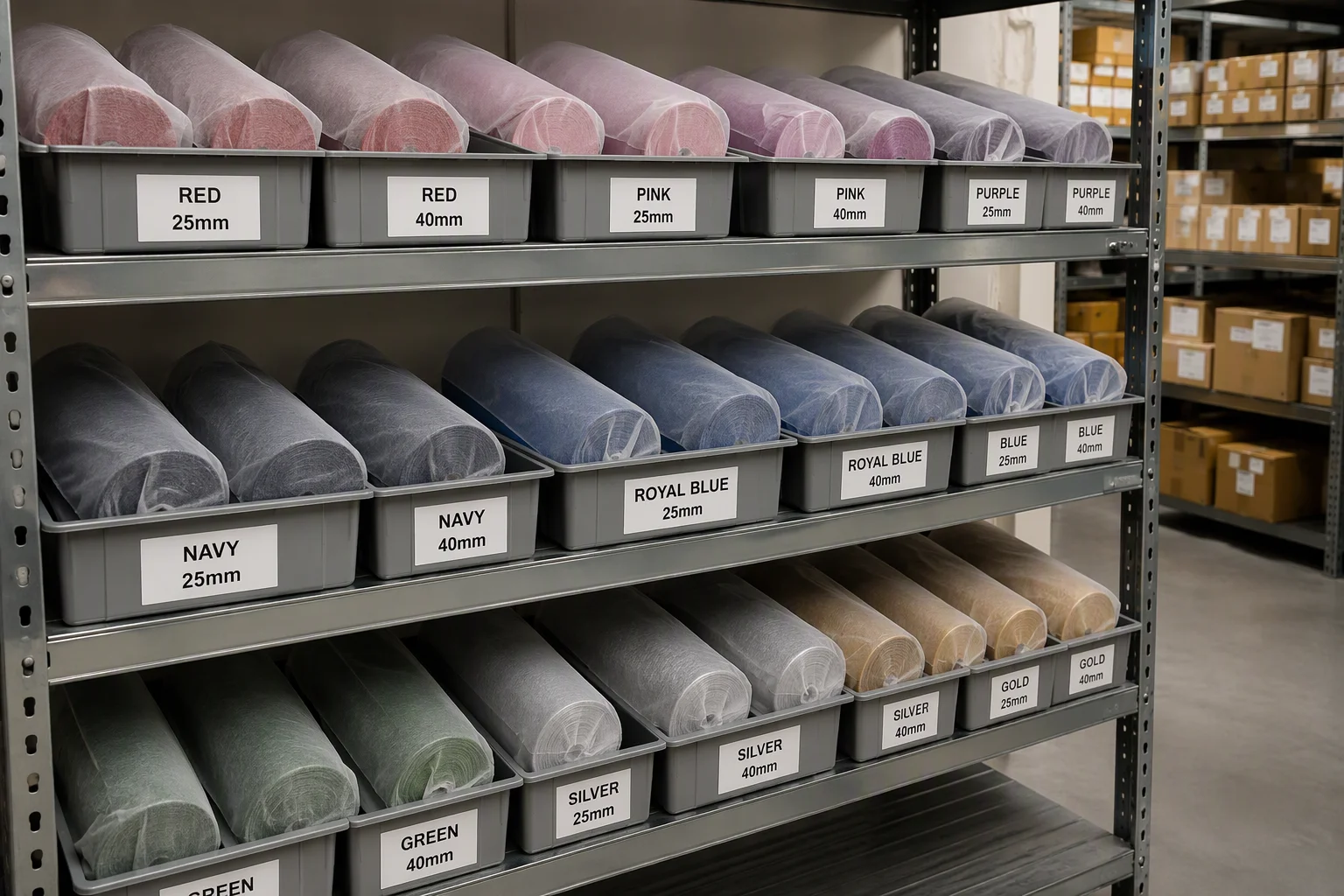
Store rolls on their side (horizontally), not standing upright. Upright storage concentrates the weight of the roll on the bottom edge and can cause edge distortion over time. Horizontal storage distributes the weight evenly around the full circumference.
Keep ribbon away from direct sunlight. This means closed cupboards, opaque storage boxes, or at minimum a fabric or paper cover over any display shelving where ribbon is stored long-term.
Maintain consistent temperature and humidity. Avoid storing ribbon directly against exterior walls in cold climates (cold wall = condensation risk), in unventilated rooms, or in spaces with wide temperature fluctuation.
Do not stack weight on top of ribbon rolls. If rolls must be stacked, use a flat board between layers to distribute weight, and limit stacking to three or four rolls high.
Rotate stock regularly. First-in, first-out is the standard approach. Older stock should be used before newer stock to prevent any single roll from sitting in storage for more than one to two seasons.
Ribbon in Transit
The same principles apply during transit. Ribbon shipped in containers during summer can experience temperatures above 50°C. Quality ribbon exporters ship ribbon in sealed polyethylene bags with silica gel moisture absorbers to protect against humidity spikes. On receiving a shipment, inspect the outermost layer of a sample roll: yellowing, colour shift, or surface changes on the exposed outer layer indicate a transit issue that should be documented before acceptance.
Frequently Asked Questions
How long can ribbon be stored before it starts to deteriorate?
Under correct storage conditions (cool, dry, away from light, not compressed), polyester ribbon can be stored for two to three years with no visible deterioration. Natural fibre ribbons (silk, cotton, rayon) are more sensitive and should ideally be used within one to two seasons. Ribbon stored in poor conditions can begin to show yellowing or surface changes within three to six months. Contact mystyleribbon.com for guidance on shelf life for specific constructions and fibre types.
Can yellowed ribbon be restored?
In most cases, no. Yellowing from UV or heat is a permanent change in the polymer that cannot be reversed by cleaning or treatment. The only practical response is to replace affected stock. This is why prevention through correct storage is more cost-effective than any recovery attempt. Contact mystyleribbon.com to discuss replacement options.
Does ribbon need to be stored differently in hot climates?
Yes. In tropical and subtropical climates, humidity control is the primary concern rather than temperature alone. Air-conditioned storage (20–25°C, 40–55% relative humidity) is the recommended standard for ribbon storage in high-humidity environments. If air conditioning is not available, sealed containers with silica gel moisture absorbers are a lower-cost alternative. Contact mystyleribbon.com for climate-specific storage guidance if your distribution environment presents particular challenges.
How should ribbon be stored on retail display?
Retail display ribbon — rolls on open shelving or spool dispensers — should be rotated every four to six weeks in window-adjacent positions, and every eight to twelve weeks in interior positions away from direct light. Keep display rolls fully wound so the protective outer wrapping (which slightly shields inner layers) is intact. Do not leave display rolls in direct sunlight. Contact mystyleribbon.com for guidance on display ribbon specifications that are more UV-resistant for exposed retail environments.
What should I look for when inspecting received ribbon for storage damage?
Check the outer two to three wraps of the roll (the most exposed layers): look for yellowing, colour shift versus the core layers, surface texture changes (flattening, blooming, loss of sheen), edge distortion or compression marks, or any unusual odour (indicating mould or chemical exposure). If the outer layers show visible damage, unwrap to check whether damage penetrates deeper before accepting the delivery. Document any findings with photographs before accepting or rejecting the goods. Contact mystyleribbon.com to discuss any quality issues on received shipments.