How Ribbon Fabric Weight Affects Bow Volume and Packaging Appearance — A Sourcing Specification Guide
How Ribbon Fabric Weight Affects Bow Volume and Packaging Appearance — A Sourcing Specification Guide
Fabric weight is one of the ribbon specifications that buyers most commonly overlook — and one that most noticeably affects the finished result. Two ribbons can have identical width, colour, and construction type, but if one is heavier, the bows they produce will look completely different. Understanding how fabric weight works and how to specify it is the difference between ordering confidently and being surprised by the delivery.
What Fabric Weight Means in Ribbon
Fabric weight in woven ribbon is expressed as grams per square metre (gsm or g/m²) — the weight of a one-metre-square sample of the ribbon fabric. A ribbon labelled "38mm, 120gsm" means a square metre of the fabric weighs 120 grams; a ribbon labelled "38mm, 80gsm" weighs only 80 grams per square metre.
In practical terms, heavier ribbon has more yarn per unit area — either more picks per centimetre, heavier yarn count, or both. This additional yarn content produces a thicker, more substantial fabric that holds its shape under its own weight, maintains crisp loop edges in a bow, and has a more opaque, rich appearance on the roll.
Lighter ribbon has less yarn content, is thinner, and is more flexible — it drapes easily and is less expensive to produce, but produces loops that are less full, less structured, and less visually substantial.
How Fabric Weight Affects Bow Volume
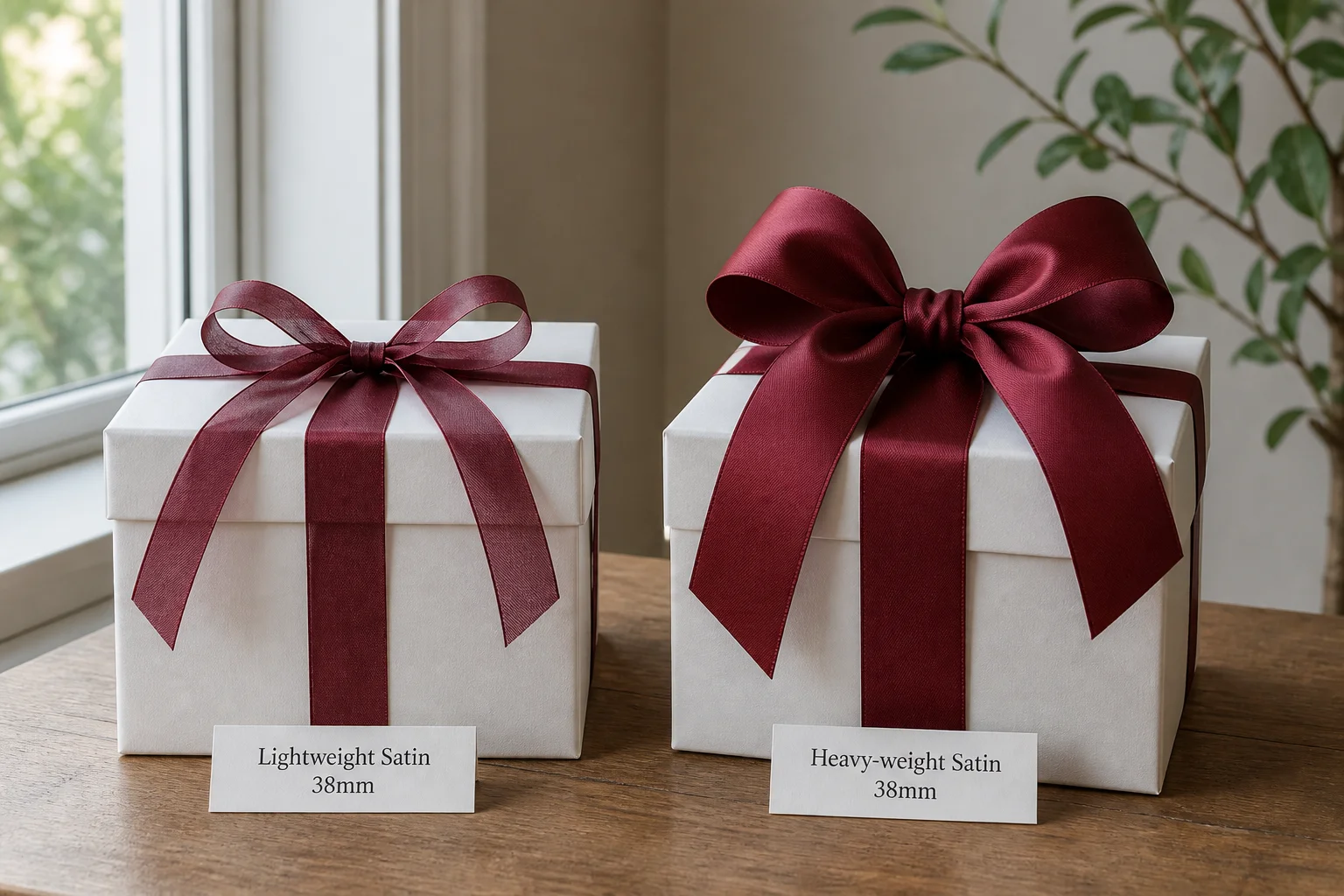
The relationship between fabric weight and bow volume is direct. A heavier ribbon produces a fuller bow because:
Loop integrity: Each loop in a bow maintains its circular cross-section under its own weight. Lighter ribbon collapses slightly inward at the loop cross-section, producing a flatter, oval-shaped loop. Heavier ribbon holds the round cross-section, which fills more visual space and looks more substantial.
Springback: Heavier ribbon has more internal structure and springs back toward its original flat form after being bent into a loop. This springback creates tension in the bow that holds the loops open and upright. Lighter ribbon drapes more passively and loops can fold down over time.
Edge definition: Heavier ribbon maintains sharper, more visible edge lines as the loop curves. These defined edges create the visual structure that makes a bow look deliberate and professional rather than soft and informal.
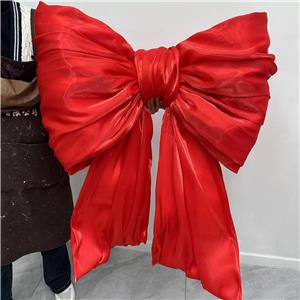
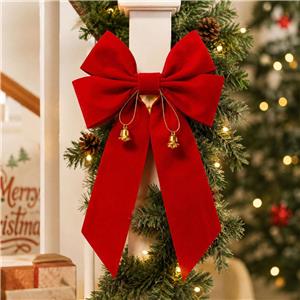
The practical difference is visible immediately. A bow made from 120gsm ribbon at 38mm will be noticeably fuller than the same bow tied with 80gsm ribbon of the same width. If your packaging requires a bow that looks rich and substantial — for premium gift ranges or luxury brand packaging — fabric weight is the specification that achieves it.
Typical Weight Ranges and What They Mean
60–80gsm: Lightweight. Economical, flexible, good for drape applications (bouquet wrapping, table decoration). Bows will be softer and less structured. Appropriate for promotional packaging where cost is the primary driver.
90–110gsm: Mid-weight. The most common range for standard retail gift packaging. Produces acceptable bows with reasonable structure. A reliable choice for most B2B seasonal programmes.
120–140gsm: Heavy-weight. Produces full, structured, visually rich bows — the specification for premium gift packaging and luxury brand programmes. Costs proportionally more due to higher yarn content.
150gsm+: Extra-heavy. Used for wide ribbons (63mm+) where additional weight is needed to keep wide loops from collapsing, and for sculptural bow installations.
Specifying Fabric Weight in Purchase Orders
When sourcing ribbon with a specific fabric weight in mind, the following steps ensure you receive what you intend:
Ask the supplier to confirm the gsm of the ribbon being quoted. Most factories can provide this figure; if a supplier cannot, treat it as a signal that the specification is not controlled.
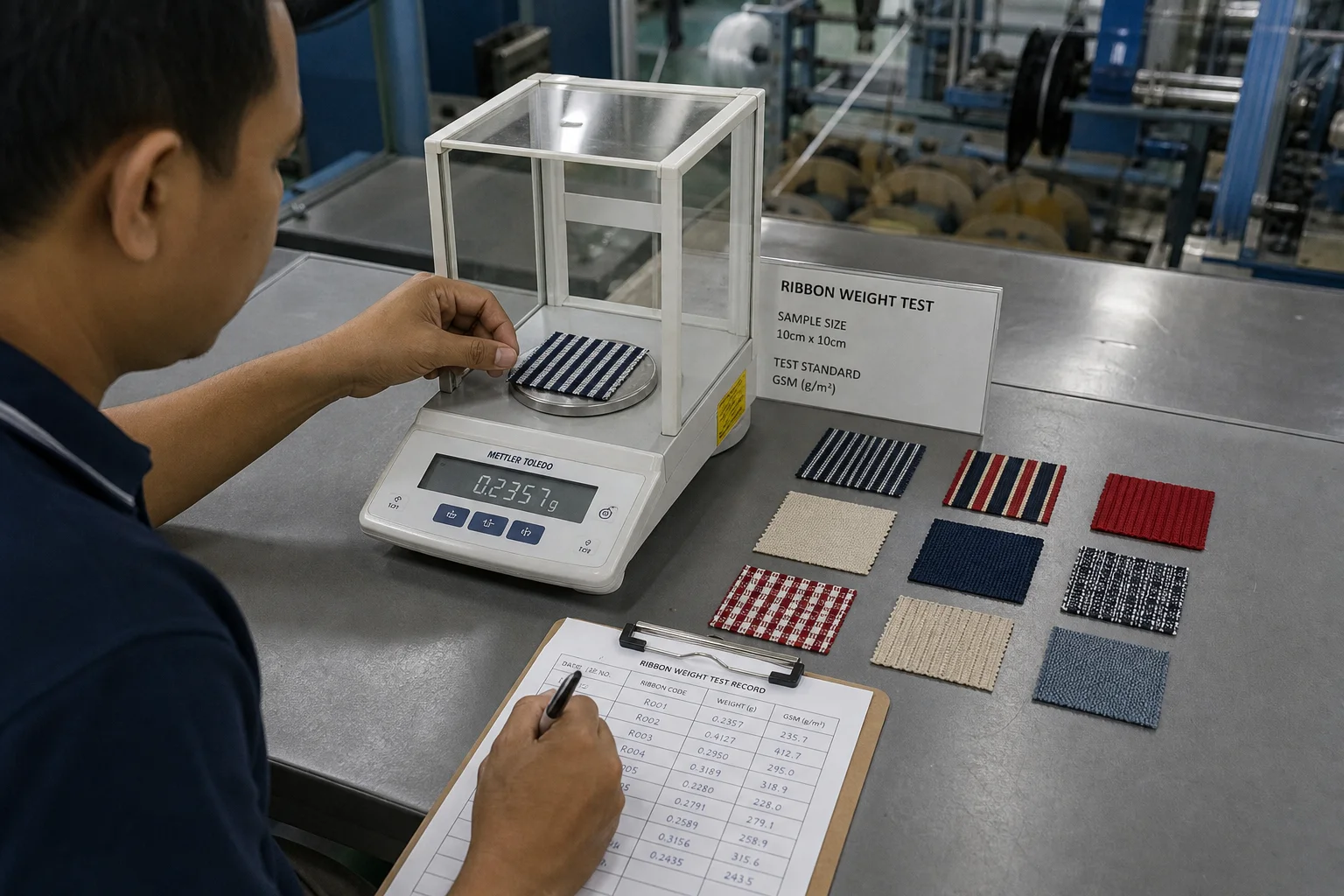
Request a physical sample and weigh it yourself. Take a 10cm × width sample, weigh it, convert to g/m²: weight (grams) ÷ (0.10 × width in metres) = gsm. A scale accurate to 0.1g is sufficient.
Include the gsm specification in your purchase order as a quality parameter, with an acceptable tolerance of ±10gsm. This gives the factory a controlled target and gives you a basis to reject ribbon that is significantly lighter than specified.
Frequently Asked Questions
Does heavier ribbon always produce better bows?
Not universally. For very narrow ribbons (16mm or less), a heavier weight can make the ribbon too stiff to tie easily, and the bow loops at that width are small enough that structure is less important than flexibility. For narrow ribbon, mid-weight (90–100gsm) is usually optimal. For ribbon 38mm and above, heavier is generally better for bow volume and appearance. Contact mystyleribbon.com to discuss the weight specification for your target width and application.
Is fabric weight the same as ribbon thickness?
Related but not identical. Heavier ribbon is usually thicker, but two ribbons of the same gsm can have different thicknesses depending on how the yarn is distributed — a tightly woven ribbon with fine yarn is denser and thinner than a loosely woven ribbon with bulkier yarn at the same gsm. For most sourcing purposes, gsm is the more useful specification than thickness, because it directly correlates with yarn content and cost. Contact mystyleribbon.com for fabric weight and thickness specifications on our satin and grosgrain ribbon ranges.
How much more does heavier ribbon cost?
Approximately 15–25% more per metre for heavy-weight (120–140gsm) versus standard-weight (90–110gsm) at the same width and construction. The difference reflects direct material cost — more yarn per metre. For programmes where bow appearance is central to brand presentation, this cost is typically well justified. Contact mystyleribbon.com for current pricing across our weight range.
Can I request a specific gsm when ordering custom ribbon?
Yes. Custom ribbon orders at Meisida can specify fabric weight as a controlled parameter, with a tolerance of ±10gsm. For repeat programmes where consistency across seasons is important, maintaining a standing fabric weight specification ensures that bows produced from year two onwards match the approved standard from year one. Contact mystyleribbon.com to discuss weight specification for your programme.
Does fabric weight affect how the ribbon photographs?
Yes, significantly. Heavier ribbon produces fuller bows with crisper edges and more light-catching surface area. In product photography the difference between standard and heavy-weight ribbon in the same bow is visible and affects perceived packaging quality. Buyers investing in professional photography should specify heavy-weight ribbon to maximise that investment. Contact mystyleribbon.com for samples in the weight range appropriate for photography-driven programmes.