What Is the Difference Between Satin Ribbon and Grosgrain Ribbon — and How Do You Choose?
What Is the Difference Between Satin Ribbon and Grosgrain Ribbon — and How Do You Choose?
Satin and grosgrain are the two most commonly ordered ribbon constructions in gift packaging and retail decoration. They are made from the same basic raw material — usually polyester — and come in the same range of widths and colours. But they look and behave very differently, and choosing the wrong one for a specific application is one of the most common mistakes in ribbon procurement.
This guide explains what distinguishes satin from grosgrain, where each performs best, and how to decide between them.
The Core Difference: Surface Structure
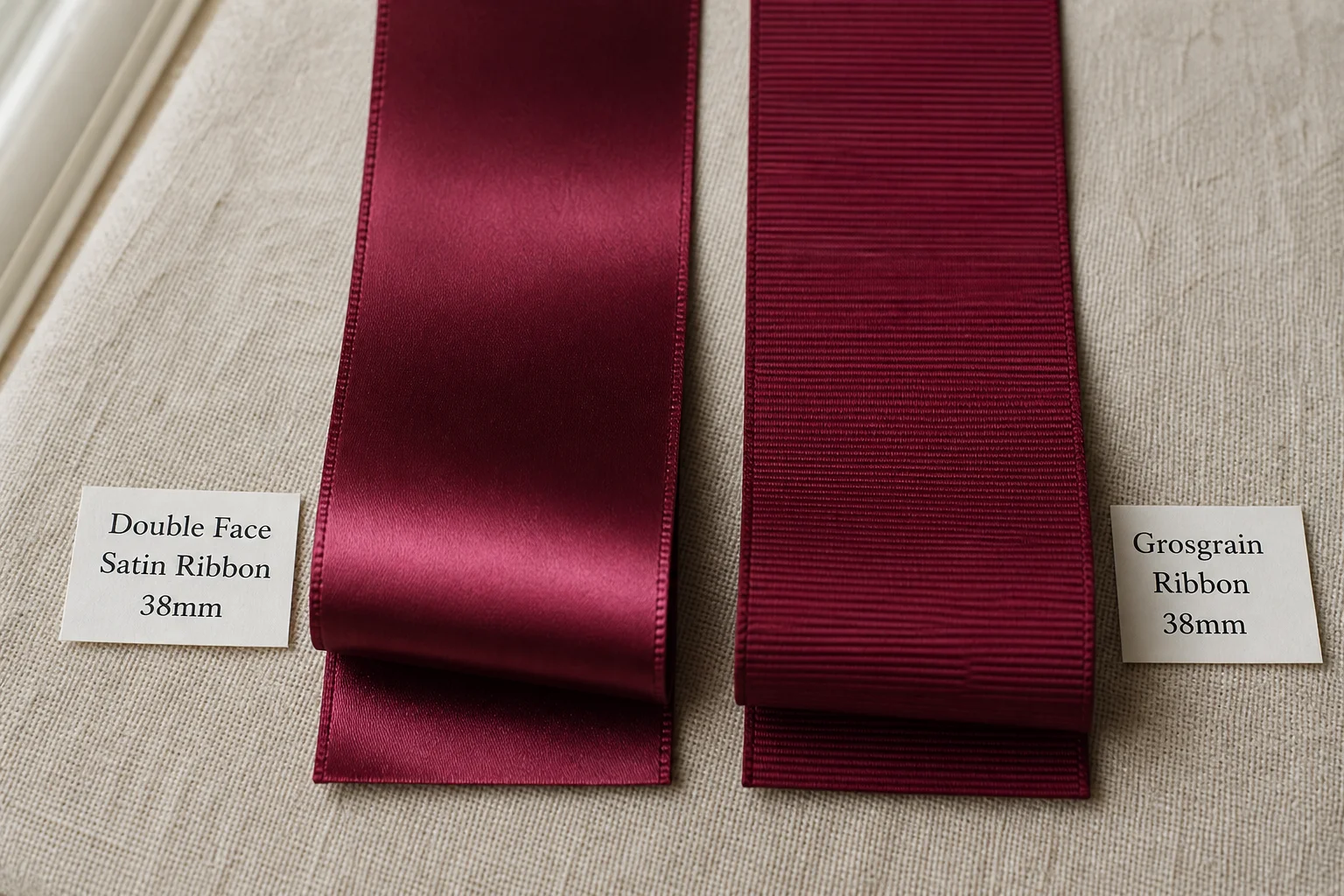
The difference between satin and grosgrain comes down to weave structure, which determines everything else about the ribbon's appearance and behaviour.
Satin is woven using a float structure — long runs of warp or weft threads pass over multiple threads before interlacing. This produces a smooth, continuous surface with minimal visible texture. The result is the characteristic high-gloss, reflective finish that satin is known for. Double-face satin has the same smooth finish on both sides; single-face satin is smooth on one side and more textured on the other.
Grosgrain is woven with a rib structure — the weft threads are heavier than the warp threads, and they interlace closely to create a series of distinct horizontal ridges across the width of the ribbon. This rib texture scatters light rather than reflecting it, giving grosgrain its characteristic matte, non-reflective surface.
How They Perform Differently in Use
The surface structure difference produces several practical differences in how the two ribbons behave:
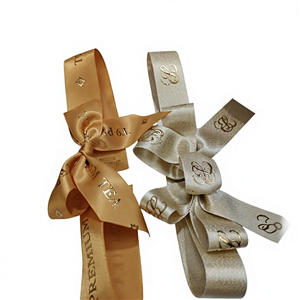
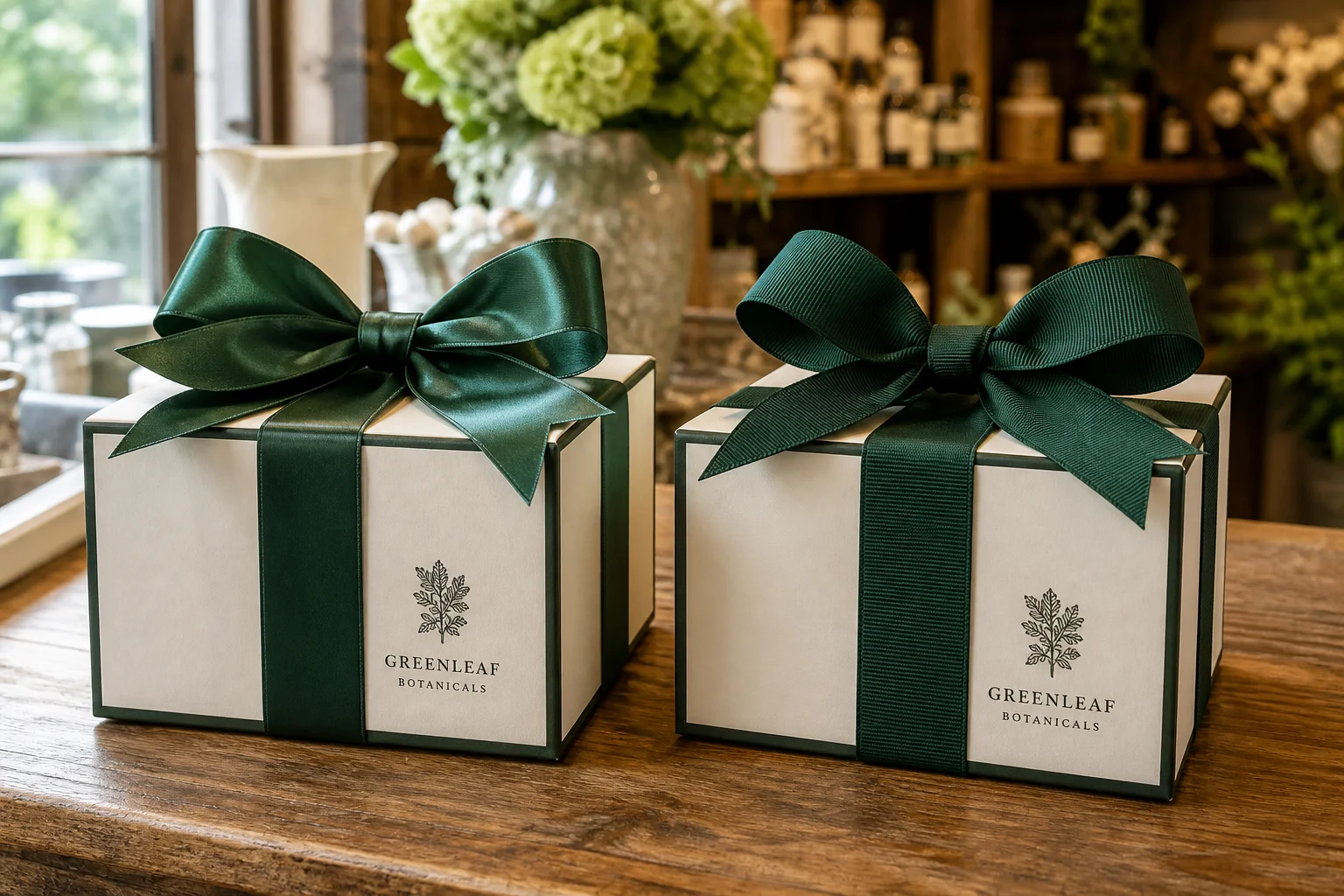
Appearance in natural light: Satin catches and reflects light, creating a visible sheen that changes as the ribbon moves. Grosgrain absorbs light more evenly and looks the same from most angles. Satin reads as more luxurious under display lighting; grosgrain reads as more structured and graphic.
Bow behaviour: Satin is softer and more fluid — it drapes and curves easily, which makes it well-suited to multi-loop bows with flowing loops. Grosgrain is stiffer due to its rib construction and holds a bow shape more rigidly, which suits tighter, more geometric bows.
Edge durability: Grosgrain's tightly woven rib edge is more resistant to fraying and wear than satin's more delicate edge. For ribbon that will be handled repeatedly or used in automated bow-making equipment, grosgrain is generally more robust.
Colour appearance: The same colour in satin and grosgrain will look different — satin appears slightly brighter because the smooth surface reflects colour more intensely. Grosgrain appears slightly deeper and more neutral. This matters when matching ribbon to brand colour standards.
Printing: Grosgrain's flat, matte surface accepts printing (thermal transfer, screen printing) more cleanly and consistently than satin's smooth reflective surface.
Which to Choose and When
Neither satin nor grosgrain is universally better — the right choice depends on the application.
Choose satin when:
The ribbon needs to read as premium or luxurious — the reflective surface communicates quality in gift packaging and high-end retail presentation
The bow design involves flowing, multi-loop loops that benefit from the ribbon's natural drape
The application is display-oriented rather than functional (the ribbon is primarily visual)
The colour needs to appear as bright and saturated as possible
Choose grosgrain when:
Durability and edge resistance matter — grosgrain handles repeated handling and automated bow production better
The design requires a clean, graphic look rather than a soft, luxurious one — grosgrain suits structured brand applications
The ribbon will be printed with a logo, text, or pattern
A matte finish is aesthetically preferable or part of the brand specification
Cost efficiency matters — grosgrain is typically slightly lower in unit cost than equivalent satin
Frequently Asked Questions
Is satin or grosgrain more expensive?
For equivalent widths and colours, satin is typically slightly higher in unit cost than grosgrain. The difference is modest — in most commercial programmes it is not the primary decision factor. The more important cost consideration is usually whether a single construction can serve all pack sizes in the programme, which reduces SKU complexity and total order management cost. Contact mystyleribbon.com for a comparative quotation for your specific specifications in both constructions.
Can I use satin and grosgrain in the same packaging programme?
Yes — many programmes do. A common approach is to use double-face satin for premium tier packaging where the reflective finish justifies the position, and grosgrain for mid-tier or promotional packaging where durability and cost efficiency are higher priorities. The key specification challenge is ensuring the colours match closely between the two constructions, since the same dye formula will produce slightly different visual results on satin versus grosgrain. Contact mystyleribbon.com to discuss colour matching across constructions for your specific programme.
Does grosgrain ribbon fray less than satin ribbon?
Yes, in general. Grosgrain's tightly woven rib edge is inherently more resistant to fraying than satin's smoother, more loosely interlaced edge. For programmes involving cutting ribbon to length, satin edges benefit from heat-cutting to seal the edge; grosgrain is more tolerant of clean cut edges without sealing. Both constructions are available with heat-cut edges from Meisida. Contact mystyleribbon.com to specify edge treatment requirements for your programme.
Which ribbon construction holds a tied bow shape better over time?
Grosgrain holds bow shape more reliably than satin in most circumstances. The rib construction gives grosgrain more structural memory — it tends to stay where it is tied rather than relaxing and drooping over time. Satin bows are more fluid and prone to loosening slightly as the smooth surfaces slide. For bows that need to hold their shape through transit, storage, and display, grosgrain is generally more reliable. Wired versions of either construction are the most shape-retentive option. Contact mystyleribbon.com to discuss wired ribbon options for shape-critical applications.
What width of satin or grosgrain ribbon works best for a standard retail gift box bow?
For a standard retail gift box (approximately 25×20×10cm), 38mm is the most versatile width for both satin and grosgrain — it produces a full, visible bow without overpowering the packaging. For smaller boxes, 25mm is more proportionate. For larger or premium boxes, 50mm or 63mm reads better. The choice between satin and grosgrain does not significantly change the optimal width for a given box size. Contact mystyleribbon.com for a width recommendation against your specific packaging dimensions.