How to Read a Ribbon Quality Test Report — What the Numbers Actually Mean for Buyers
How to Read a Ribbon Quality Test Report — What the Numbers Actually Mean for Buyers
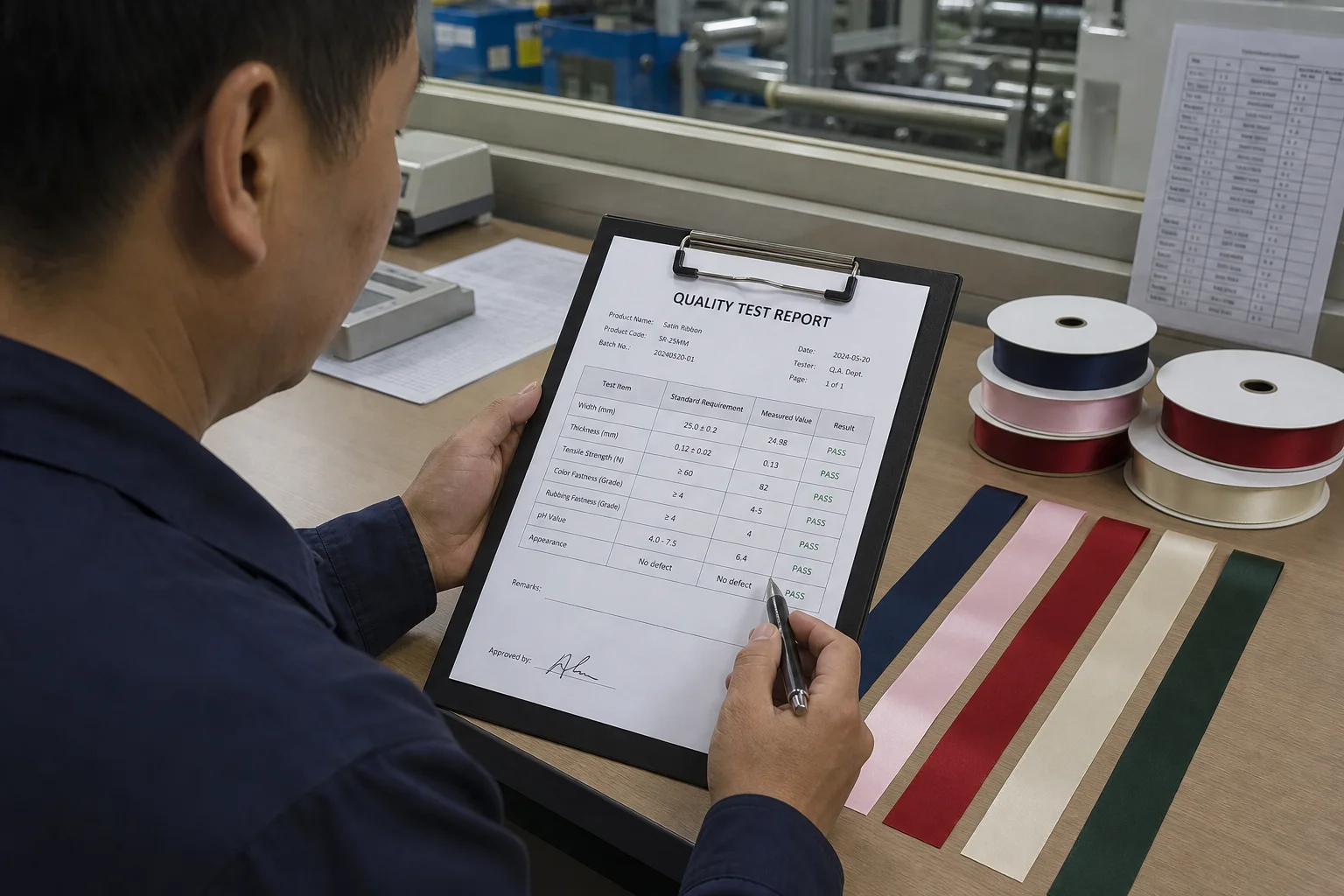
Quality test reports for ribbon and narrow woven fabric look authoritative when they arrive — columns of test items, standard references, measured values, and pass/fail stamps. But most buyers who receive them are not sure what to look for, which numbers matter for their specific application, and whether a "pass" rating actually means the ribbon will perform the way they need it to.
This guide explains the most commonly tested ribbon quality parameters, what each test measures, and what the results mean in practical terms for packaging, retail, and gifting applications.
The Four Parameters That Matter Most for Gift Packaging Ribbon
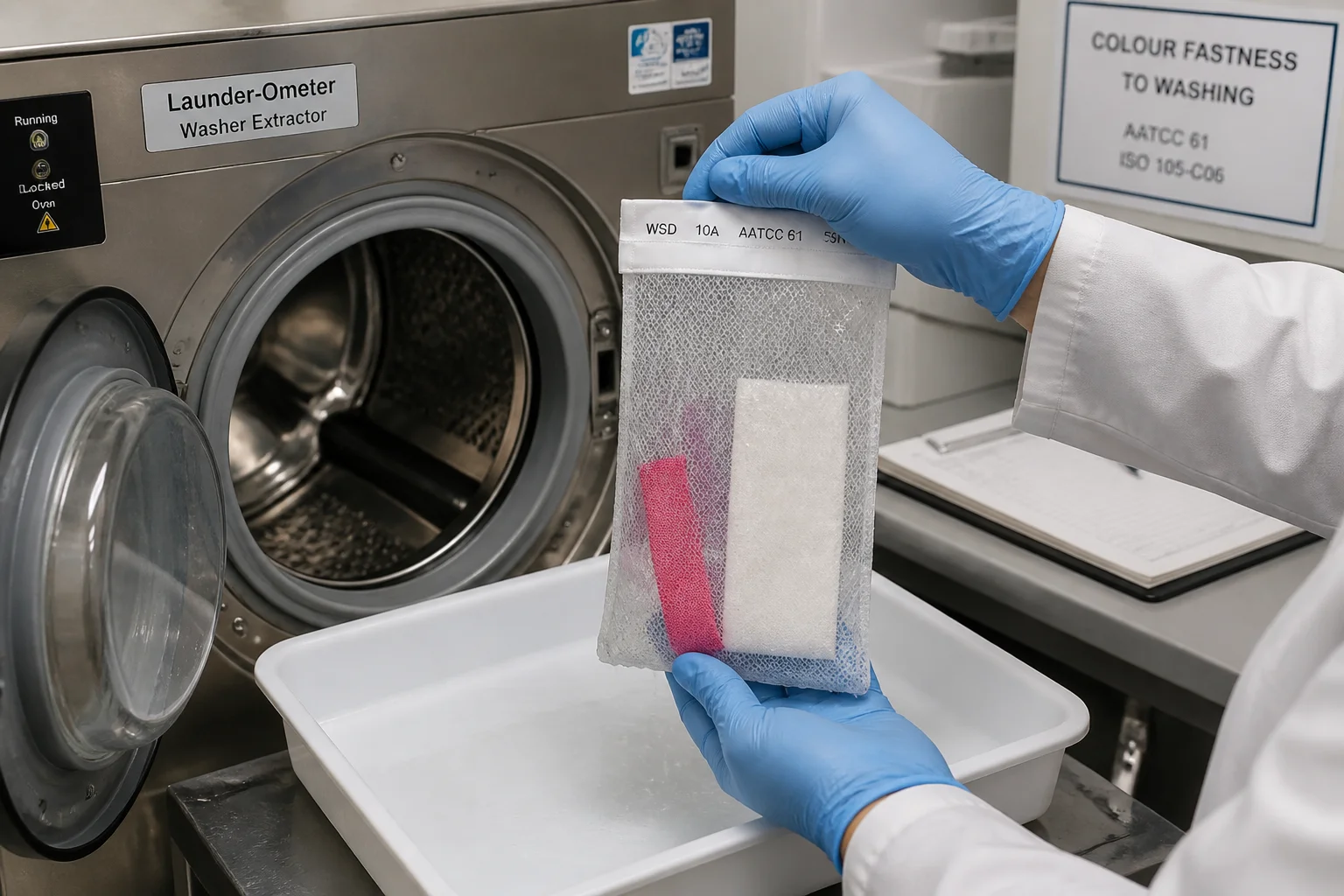
Colour fastness to washing. Measures how much colour changes or bleeds when wet-washed. Results on a 1–5 scale (5 = no change). For standard gift packaging, grade 3+ is acceptable; for ribbon that may get wet, grade 4+. A low wash fastness does not mean the ribbon fades in normal dry display use, but it does indicate the dye is not deeply set.
Colour fastness to rubbing. Measures dye transfer when the ribbon is rubbed against another surface — tested both dry and wet. Dry rubbing grade 4+ is standard for packaging applications. This matters practically when ribbon contacts tissue paper, box lining, or bare hands. Low rubbing fastness means the ribbon will mark adjacent materials.
Width tolerance. Reports often include measured width vs. specified nominal width. Standard tolerance is ±1mm for satin and grosgrain, ±2mm for velvet. A result consistently at the lower tolerance boundary — e.g. 36.8mm on a 38mm spec — passes technically but delivers slightly narrower ribbon than specified. Worth noting for precision-proportioned packaging.
Tensile strength. Rarely critical for packaging — ribbon is not load-bearing. However, very low tensile strength can indicate a loosely woven construction that may tear at the knot when a bow is pulled tight, especially relevant for automated bow-making applications.
What a Pass Stamp Does and Does Not Mean
A pass stamp means the measured result fell within the standard range specified for that test. It does not mean the ribbon will necessarily perform well in your specific application — it means it met the test standard's criteria, which may or may not be the criteria most relevant to how you are using the ribbon.
The most important question to ask when reviewing a test report is: what standard was the test run against? Standard references vary by market — European EN standards, US ASTM standards, GB standards for the Chinese market, and customer-specific standards all produce different pass/fail thresholds for the same test. A report run against a GB standard may show a pass for colour fastness at a level that would fail a stricter European standard. Confirm which standard applies to your market before accepting a test report as sufficient.
Frequently Asked Questions
Which colour fastness rating is the minimum I should accept for premium gift packaging?
For premium gift packaging in a retail or corporate context, a minimum of grade 4 for dry rubbing fastness and grade 3–4 for wash fastness is a reasonable baseline. The practical concern for premium packaging is ribbon marking the tissue paper or box lining it contacts — this is a rubbing fastness issue. A grade 3 dry rubbing result may leave faint marks on white tissue; a grade 4 will not. Contact mystyleribbon.com to request a test report showing colour fastness ratings for the specific ribbon construction and colour you are considering.
Does ribbon colour fastness vary significantly between colours?
Yes, substantially. Dark saturated colours — particularly navy, black, and deep red — tend to have lower rubbing fastness than pale or mid-toned colours because the dye loading is higher. Achieving grade 4+ rubbing fastness in deep colours requires either a different dye system or a finishing treatment, which affects cost. If your programme includes both pale and deep colours, the deep colours warrant specific fastness testing rather than assuming they meet the same standard as the pale colours. Contact mystyleribbon.com to discuss fastness performance by colour family in our ribbon range.
Can I request a test report from a specific third-party testing laboratory?
Yes — most factories can have production samples tested at accredited third-party laboratories such as SGS, Intertek, or Bureau Veritas on request. Third-party testing adds time (typically 1–2 weeks) and cost (usually passed on to the buyer), but provides independent verification that is more defensible than a factory's own in-house test results. For programmes with specific compliance requirements — retail code of conduct, sustainability claims, regulatory markets — third-party test reports are the standard. Contact mystyleribbon.com to discuss third-party testing options for your programme.
What does a pilling or abrasion resistance test tell me about ribbon quality?
Pilling and abrasion tests assess how the ribbon surface holds up to repeated physical contact — whether the surface fibres form small balls (pilling) or wear away (abrasion) with use. For single-use gift packaging ribbon, these tests are largely irrelevant. For ribbon used in permanent display, retail fixture decoration, or any application where the ribbon will be handled repeatedly over time, abrasion resistance becomes relevant. A pilling result of grade 3 or above (Martindale scale) is generally adequate for display ribbon. Contact mystyleribbon.com if your application requires extended wear performance testing.
How do I compare test reports from two different suppliers when they used different standard references?
When comparing reports run against different standards, the first step is to identify which standard each report references and whether there is a direct equivalence. For colour fastness, ISO 105 series (widely used in Europe and globally) and GB/T 3920 (Chinese standard) are broadly comparable in method and rating scale, so direct comparison is usually valid. AATCC standards (US market) use different rating criteria and are not directly comparable without conversion. If two reports use significantly different standards, request that both suppliers run the same test against a common standard — ideally ISO 105 — to produce comparable results. Contact mystyleribbon.com to discuss test standard alignment for cross-supplier comparison.