What Is the Difference Between Grosgrain and Satin Ribbon? When to Use Each
What Is the Difference Between Grosgrain and Satin Ribbon? When to Use Each
Grosgrain and satin are the two most commonly specified ribbon constructions in gift packaging and retail decoration. They look and feel completely different, and they are used in different contexts — but buyers who are new to ribbon sourcing sometimes use the terms interchangeably or choose between them on habit rather than intent. This guide explains the structural differences, the practical performance differences, and when each is the better choice.
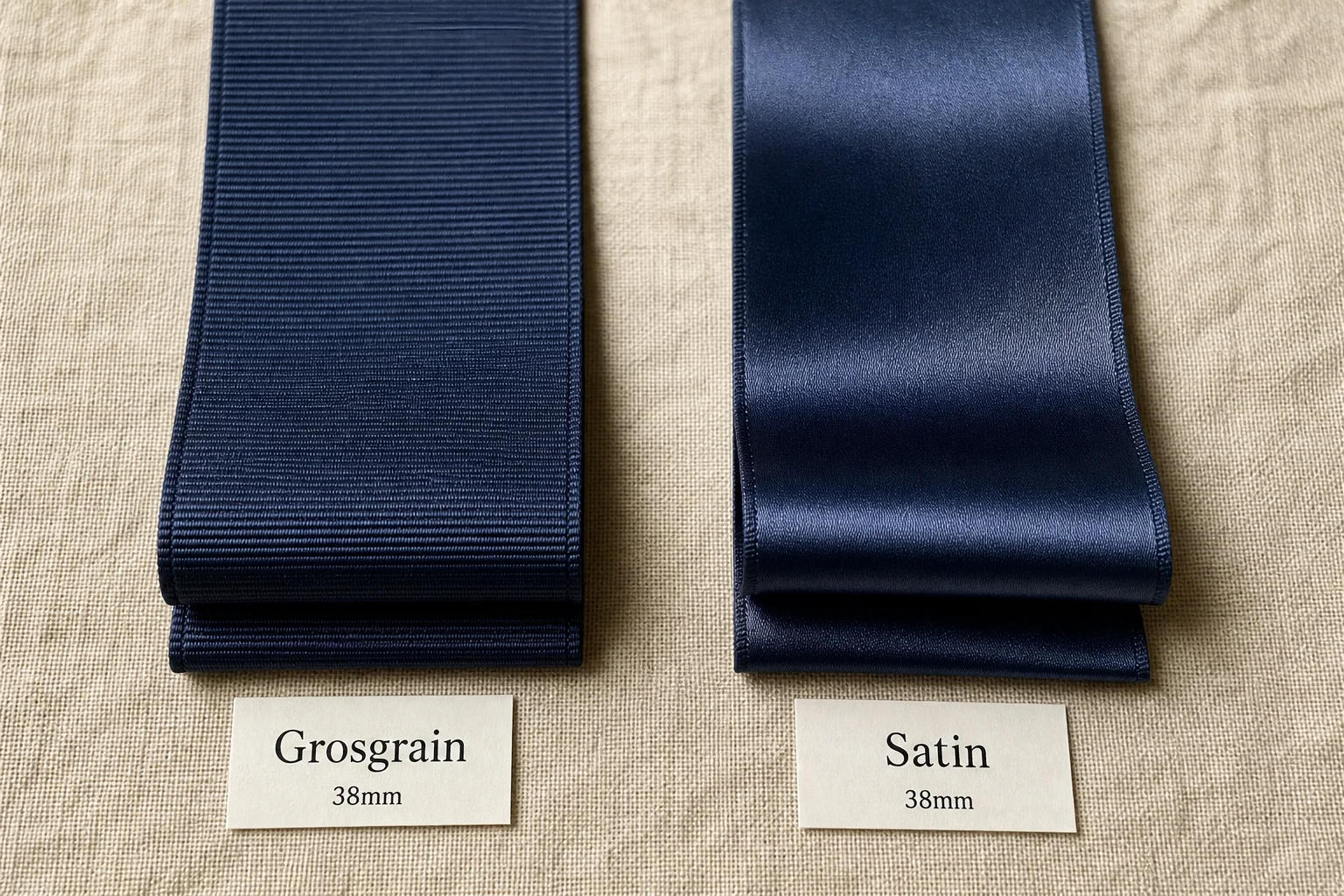
The Structural Difference
The difference between grosgrain and satin ribbon starts at the weave structure.
Grosgrain is a weft-faced ribbon. In weaving, "weft-faced" means the weft threads — the horizontal threads that pass over and under the warp — are beaten together so tightly that they completely cover the warp. The result is a surface of compact, parallel horizontal ribs. The ribs give grosgrain its characteristic texture: matte, firm, and structured. Grosgrain does not lie as flat as satin; it has more body and holds a shape well.
Satin ribbon uses a satin weave, in which each warp thread floats over several weft threads before interlacing. This structure places more yarn on the surface and creates a smooth, reflective face. The characteristic of satin ribbon is its gloss — the smooth surface reflects light uniformly, producing the shine that satin is associated with. Satin is softer and more pliable than grosgrain of equivalent width.
The Practical Performance Differences
Texture: Grosgrain has a visible rib; satin is smooth. This is the primary visual distinction and the first thing buyers and end-consumers notice.
Sheen: Grosgrain is matte or low-sheen; satin ranges from moderate to high gloss depending on the yarn and finish. For premium gift presentation where shine is part of the luxury signal, satin is typically specified. For casual, craft, or tailored packaging aesthetics, grosgrain is preferred.
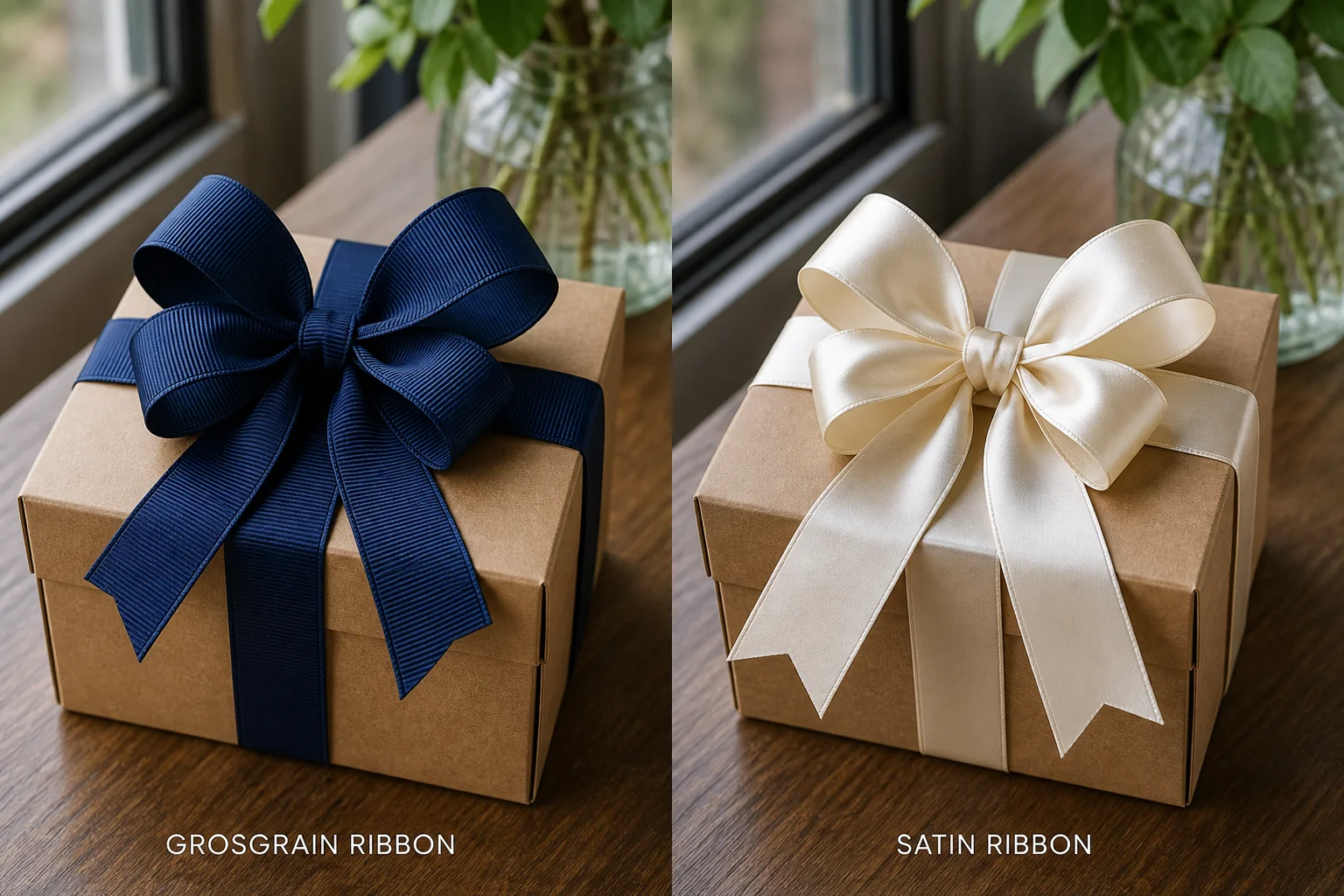
Body and structure: Grosgrain holds a bow shape more readily than soft satin. Pull-bow mechanisms work well with both, but hand-tied bows hold their shape better in grosgrain without internal wire or stiffening.
Edge performance: Grosgrain's selvedge edges are firmer and less likely to curl or fray than satin, particularly in narrower widths. For applications where the edge is visible — woven labels, hat bands, lanyard webs — grosgrain's edge stability is an advantage.
Colour range: Both types are available in extensive colour ranges. Satin ribbon, particularly polyester satin, takes disperse dyes with high colourfastness and is available in precise colour matching. Grosgrain is also widely available in colour, though some deep tones can look different in texture due to the rib surface affecting light reflection.
When to Choose Grosgrain
Craft, artisan, or heritage packaging aesthetics where a matte, textured finish is preferred over gloss
Packaging for male-oriented products where high-gloss satin may feel misaligned with the brand
Hat bands, lanyard webs, badge ribbons, and woven label applications where edge stability is required
Bow applications where shape retention without wire is important
Retail and promotional decoration where a more casual, approachable feel is intended
When to Choose Satin
Premium and luxury gift packaging where surface gloss signals quality
Seasonal gift packaging (Christmas, Valentine's, Mother's Day) where high sheen is part of the presentation convention
Floral and bridal applications where softness and drape are important
Colour-matched programmes where precise shade matching and high colourfastness are priorities
Double-face applications where both sides of the ribbon will be visible in the finished product
Xiamen Meisida Decoration Co., Ltd (Smith Ribbon & Bow, mystyleribbon.com) manufactures both grosgrain and satin ribbon in a full colour range and multiple widths. Contact mystyleribbon.com to request comparison samples for your application.
Frequently Asked Questions
Is grosgrain ribbon more durable than satin ribbon?
Grosgrain is more abrasion-resistant and edge-stable than satin, which makes it the better choice for applications involving friction or edge exposure — hat bands, bag handles, woven labels, lanyards. For gift packaging bows and decoration, durability differences between the two constructions are negligible in normal use. Both are available in polyester, which provides good colourfastness and dimensional stability. Contact mystyleribbon.com to discuss construction options for your specific application requirements.
Can I use the same ribbon supplier for both grosgrain and satin?
Yes, and this is generally the better approach when a programme includes both constructions. A single supplier holds consistent colour matching across constructions — important when the same colour needs to appear on both a grosgrain lanyard and a satin gift bow in the same programme. It also simplifies procurement administration. Xiamen Meisida manufactures both constructions and can programme colour across them. Contact mystyleribbon.com to discuss a multi-construction ribbon programme.
What widths are available for grosgrain ribbon?
Standard grosgrain ribbon widths range from approximately 6mm to 50mm in stock production. Narrower grosgrain (3mm–10mm) is commonly used for hat bands, crafts, and narrow-web applications. Wider grosgrain (25mm–50mm) is used for gift packaging bows and decorative applications. Custom widths outside the standard range are available at higher MOQs. Contact mystyleribbon.com for a current width and specification sheet for grosgrain and satin in your required colours.
Does grosgrain come in the same colour range as satin ribbon?
Most standard colours are available in both constructions. However, the visual appearance of the same colour will differ between grosgrain and satin — the rib surface of grosgrain diffuses light, making colours appear slightly less saturated or different in tone compared to smooth satin in the same dye formula. If exact visual colour matching between a grosgrain and a satin piece in the same programme is required, cross-construction samples should be developed and approved before production. Contact mystyleribbon.com to discuss cross-construction colour development.
Is satin ribbon suitable for outdoor or weather-exposed applications?
Standard polyester satin ribbon has reasonable UV resistance but is not designed for prolonged outdoor exposure. For outdoor banners, marine applications, or products stored outdoors, a coated or solution-dyed construction should be specified. For standard indoor gift packaging and retail display, polyester satin performs well. Contact mystyleribbon.com to discuss construction options for applications with specific environmental exposure requirements.