What Is the Difference Between Single-Face and Double-Face Satin Ribbon?
What Is the Difference Between Single-Face and Double-Face Satin Ribbon?
Single-face and double-face are the two basic constructions for woven satin ribbon. The difference is straightforward: single-face ribbon has one glossy satin side and one dull woven back. Double-face ribbon has two glossy satin surfaces — both sides look identical. The choice between them affects appearance in the finished bow, cost per metre, and which applications each type is suited for. This guide covers the practical differences for buyers sourcing ribbon for gift packaging and retail use.
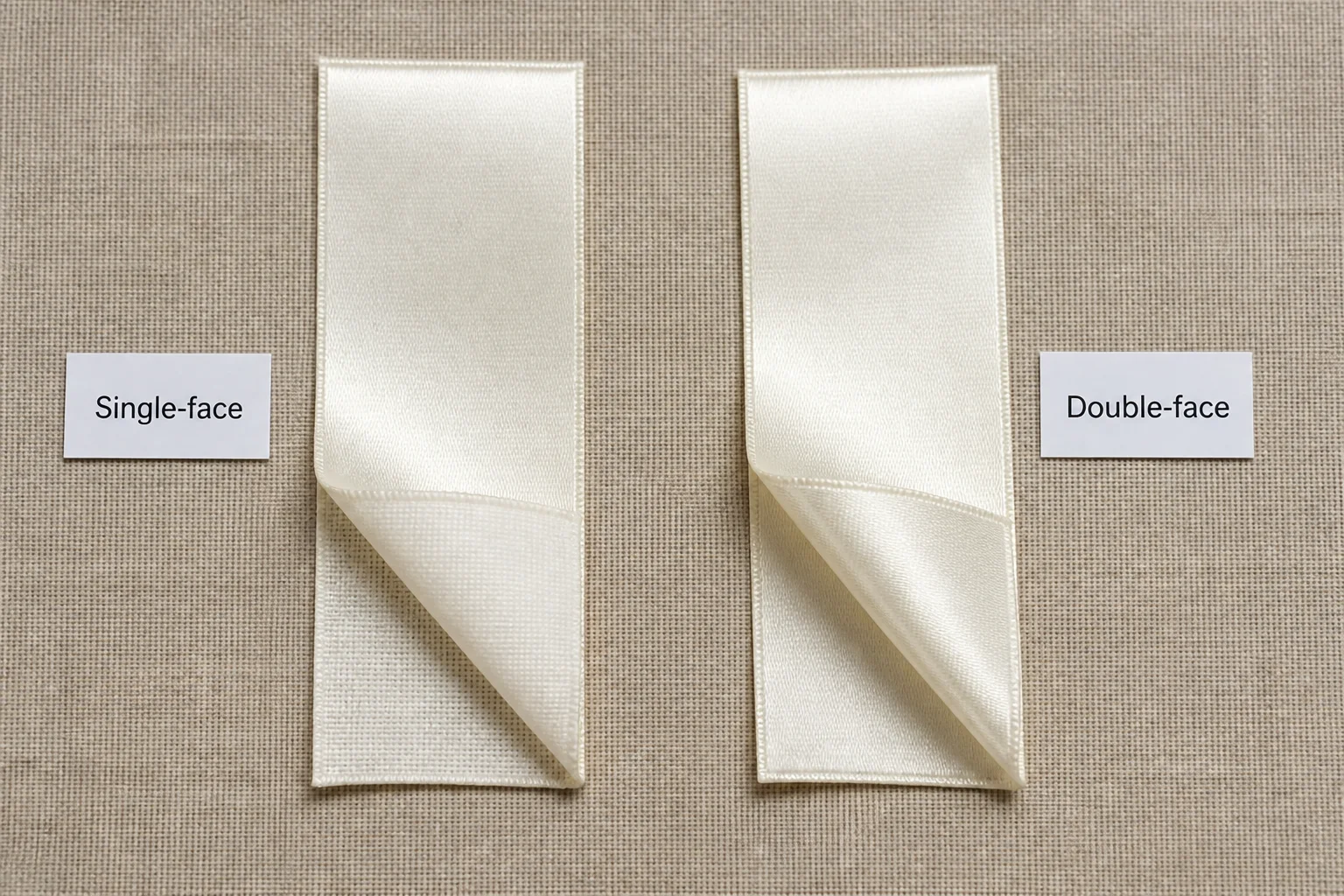
What Single-Face Satin Ribbon Is
Single-face satin ribbon is woven with the satin weave structure on one side only. The face — the side intended to be seen — is smooth and has the characteristic lustre of satin. The back is a plain or twill weave, noticeably duller and with a different texture. When you fold a piece of single-face ribbon over, the contrast between the two sides is immediate and clear.
Single-face satin is the more common type in commercial gift ribbon. It is less expensive to produce than double-face because the weave structure is simpler and uses less yarn. For applications where only one side of the ribbon will be visible — flat wrapping bands, tied bows where the loops mostly face outward — single-face performs the same visual function as double-face at lower cost.
What Double-Face Satin Ribbon Is
Double-face satin ribbon is woven with the satin weave on both sides simultaneously, using two separate warp systems. Both surfaces are finished to the same gloss and smoothness. When you fold a piece of double-face ribbon, both sides look identical — there is no visible back. The ribbon is heavier than single-face of the same width and has more body, which affects how it handles and how a bow constructed from it holds its shape.
Double-face is the standard for applications where both sides of the ribbon will be seen: multi-loop bows where some loops face inward and reverse, ribbon on transparent packaging, hanging tags, and any presentation context where the ribbon is examined closely. It is also the preferred choice for ribbon that needs to be knotted or folded in ways that show the underside as part of the design.
Visual Difference in a Finished Bow
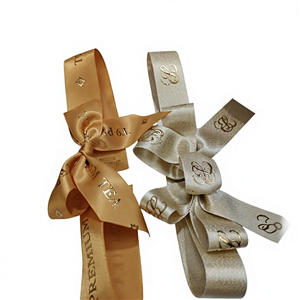
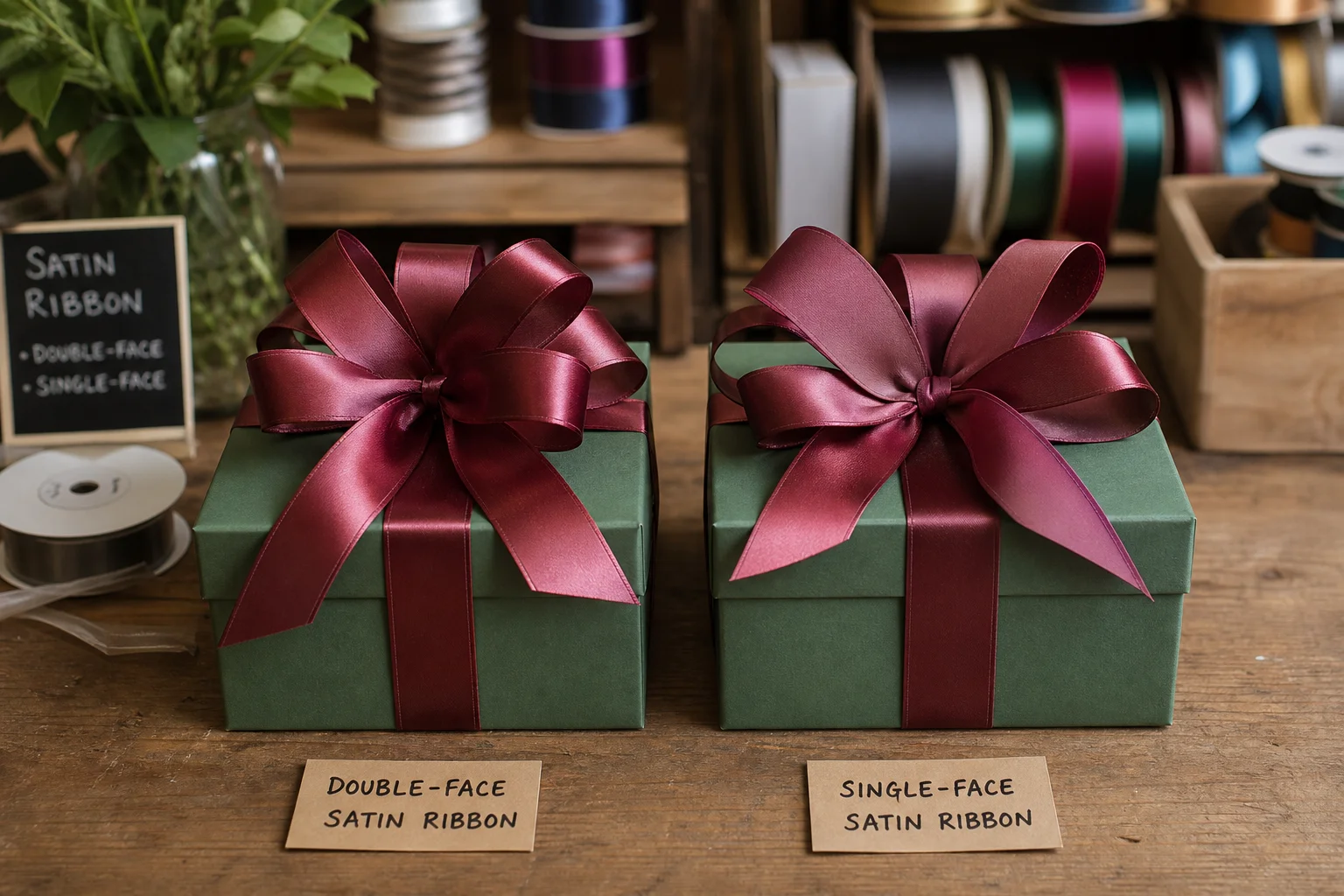
The clearest practical difference between single-face and double-face becomes visible when the ribbon is made into a bow. In a multi-loop bow tied by hand, some loops will naturally reverse and show their underside. With double-face ribbon, all surfaces in the bow are satin — the bow looks consistent from every angle. With single-face, reversed loops show the dull woven back, giving the bow an uneven appearance that is immediately visible in retail display and product photography.
For machine-tied pull bows where the ribbon is curled rather than folded, single-face works well because the curling process keeps the face side largely outward. For hand-tied classic bows — especially at wider widths where individual loops are prominent — double-face is the better choice for consistent appearance.
Cost Difference and Buying Logic
Double-face ribbon costs 20–35% more than equivalent single-face, depending on width and weight. The question is not which is better in absolute terms — it is which is appropriate for the specific application.
Use single-face when: Only one side is visible in the finished packaging. Pull-bow applications. High-volume decorative wrapping where cost efficiency matters.
Use double-face when: Hand-tied bows where all loop surfaces are visible in retail display. Transparent packaging. Premium or luxury programmes where bow quality is part of perceived value.
Many buyers run both types within the same programme — single-face for wrapping applications and pull-bow stock, double-face for presentation bows on hero products. Contact mystyleribbon.com (Smith Ribbon & Bow) for pricing comparison samples across both constructions.
Frequently Asked Questions
Can you tell single-face from double-face just by looking?
Both types are wound with the face side outward, so the visible surface looks the same. The reliable test is to fold a short section back: if the underside is noticeably duller, it is single-face; if both sides match, it is double-face. Always specify construction type when ordering rather than relying on visual inspection. Contact mystyleribbon.com to request confirmed comparison samples.
Is double-face ribbon stronger than single-face?
Double-face has more body and holds bow shape better due to the denser weave. In terms of raw durability for gift packaging, the difference is not meaningful — both constructions perform adequately. The practical advantage of double-face is bow shape retention in retail display over time. Contact mystyleribbon.com for specifications on both types.
Can I mix single-face and double-face in the same seasonal programme?
Yes — this is common practice. Use double-face for prominent bow applications and display positions; use single-face for secondary applications and budget lines. Ensure both constructions are specified in matching colours if they appear on products displayed together. A factory supplier producing both in-house can confirm colour matching between constructions. Contact mystyleribbon.com to discuss colour-matched specifications across both constructions.
What widths are available in double-face satin ribbon?
Double-face satin is available across the standard commercial range: 6mm through 50mm and wider. The most meaningful range for double-face specification is 25mm and above — at these widths, loop surfaces in hand-tied bows are large enough that gloss consistency is clearly visible. Contact mystyleribbon.com for double-face samples in your required widths and minimum quantities.
Does the surface finish differ between single-face and double-face in the same colour?
In the same production run and colour, double-face ribbon may have a slightly different surface sheen compared to single-face because the weave density and yarn loading differ between the two constructions. The colour itself is matched to the same formula, but the surface reflectance can vary slightly. For programmes where single-face and double-face appear together, it is worth requesting samples of both constructions in the target colour for approval in the same lighting environment. Contact mystyleribbon.com (Xiamen Meisida Decoration Co., Ltd) for dual-construction colour samples.