What Is the Difference Between Woven and Non-Woven Ribbon? A Complete Comparison
B016 | What Is the Difference Between Woven and Non-Woven Ribbon? A Complete Comparison
The question "woven or non-woven?" comes up regularly when buyers evaluate ribbon for packaging or gifting programmes. Woven ribbon is a textile made on a loom from interlaced yarns. Non-woven ribbon is made from formed fibres or cut plastic film without a weave structure. The difference matters in specific ways depending on the application.
What Woven Ribbon Is
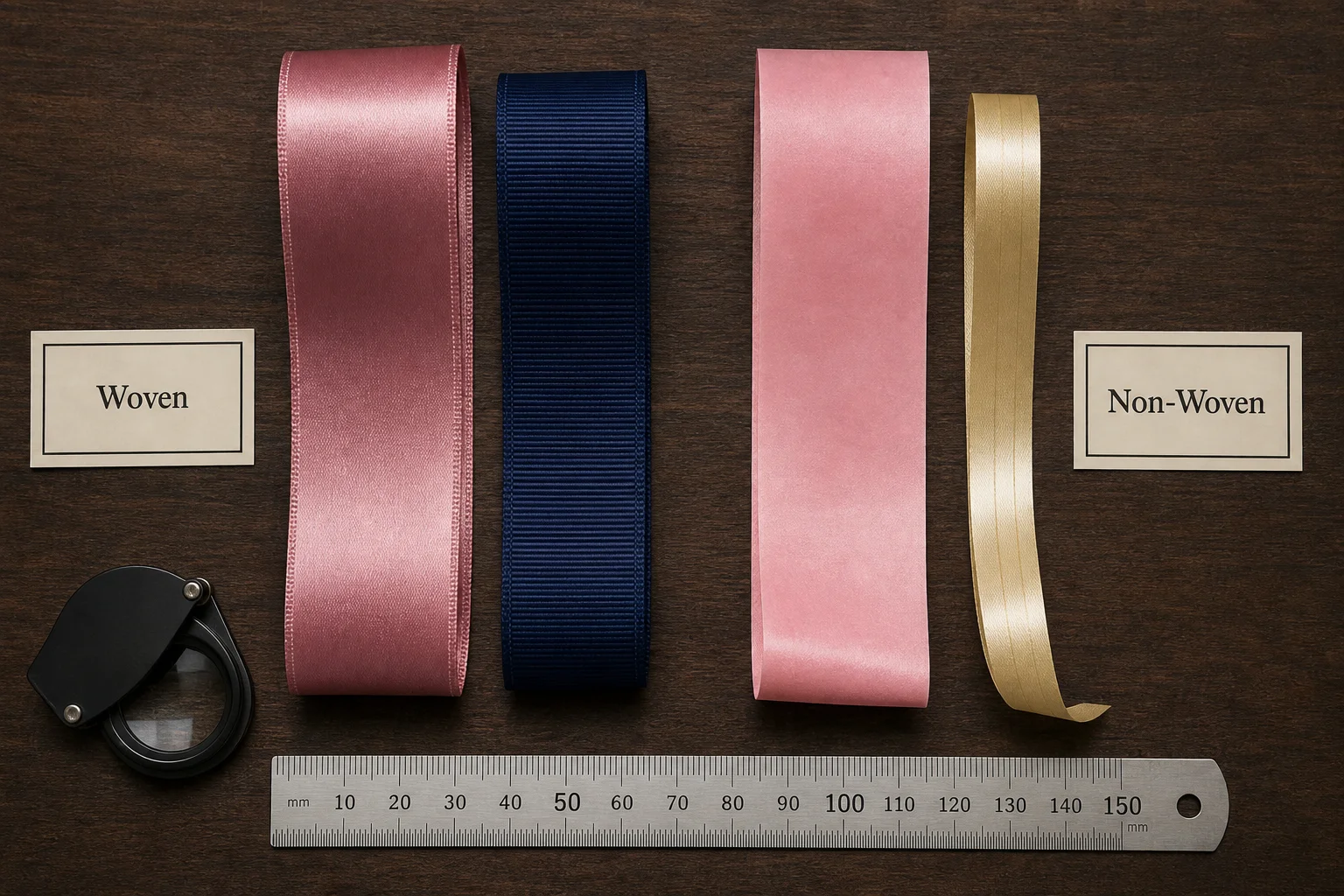
Woven ribbon is produced on a narrow-fabric loom — a specialised weaving machine that interlaces warp threads (running the length of the ribbon) with weft threads (running across the width) to create a stable textile structure. The resulting ribbon is a true fabric with defined characteristics: a front face and back face, structural integrity, a selvedge edge, and physical properties determined by the yarn types and weave pattern used.
Common woven ribbon types include:
Satin ribbon — a woven construction with long warp floats on the face, producing a smooth, lustrous surface
Grosgrain ribbon — a woven construction with dense, horizontal weft ribs, producing a ribbed, matte surface
Organza ribbon — a woven construction using highly twisted continuous-filament yarn, producing a sheer, slightly stiff fabric
Velvet ribbon — a cut-pile woven construction, producing a soft, directional pile surface
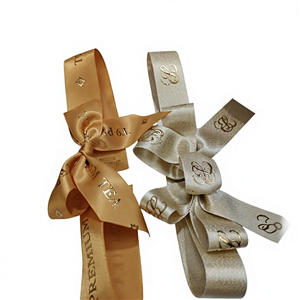
Jacquard ribbon — a woven construction using a programmable loom that controls individual warp threads to create woven-in patterns
Woven ribbon has dimensional stability, defined surface characteristics, and can be produced in consistent widths with tight tolerances. It is the standard choice for premium gift packaging, branded programmes, and any application where durability, appearance, or colour consistency across reorders is important.
What Non-Woven Ribbon Is
Non-woven ribbon is produced without a weave structure. The two most common types are:
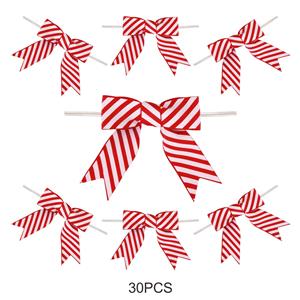
Pull-bow ribbon — made from oriented polypropylene film, typically with a printed satin-effect surface, scored at intervals to allow it to be pulled into a rosette shape. It is not a textile; it is a formed plastic film that mimics the visual effect of a bow without requiring tying.
Curl ribbon — a narrow polypropylene film strip that curls when drawn across a scissor blade. Used for decorative accents on parcels and casual gift decoration.
Some suppliers also produce what they describe as "non-woven fabric ribbon" — ribbon made from bonded fibre sheets (the same material used in reusable shopping bags and some medical textiles). This is technically distinct from polypropylene film ribbon, but shares the characteristic of having no woven structure.
Key Differences at a Glance
Appearance: Woven ribbon has natural lustre, depth, and surface texture from yarn and weave structure. Non-woven ribbon has a flatter, more uniform surface with a printed rather than structural finish.
Durability: Woven ribbon has higher tensile strength and edge stability. Non-woven polypropylene film can split at the edge under tension.
Colour consistency: Woven ribbon can be dyed to precise standards with documented formulations for reorder consistency. Non-woven colour is determined by printing, which can be more variable.
Environmental profile: Woven polyester ribbon can be made from recycled PET and recycled in textile streams. Polypropylene film ribbon is rarely accepted by consumer recycling systems.
Price: Non-woven ribbon is significantly cheaper. Woven ribbon involves more production steps and higher raw material cost.

Which to Choose for Your Application
Choose woven ribbon when: appearance quality matters; the ribbon will be photographed; colour consistency across reorders is required; durability is needed; compliance documentation (OEKO-TEX, REACH, GRS) is required.
Choose non-woven ribbon when: cost is the primary consideration; volume is very high with basic presentation quality; speed of application is important (pull-bows apply in seconds); single-use decoration is acceptable.
For branded packaging programmes, premium retail gift applications, or any programme where ribbon is part of the brand's visual identity, woven ribbon is the standard specification.
Frequently Asked Questions
Is woven ribbon more sustainable than non-woven ribbon?
Generally yes. Woven polyester ribbon can be produced from recycled PET fibre (rPET) and is eligible for GRS (Global Recycled Standard) certification. It can also enter textile recycling streams. Polypropylene film ribbon is rarely accepted by consumer plastic recycling systems. For buyers with sustainability requirements, woven ribbon — particularly recycled content woven ribbon — is the more defensible choice. Contact mystyleribbon.com for GRS-certified ribbon specifications.
Can non-woven ribbon be used for professional gift packaging?
Pull-bow ribbon can produce a consistent rosette with no tying skill required, which is an advantage in high-volume casual gift decoration. The visual result is recognisably different from a woven ribbon bow — the surface finish is flat and printed rather than woven, and is generally perceived as lower quality. For premium retail packaging, corporate gifting, or branded programmes, woven ribbon is the expected standard.
What widths are available for woven ribbon vs non-woven?
Woven ribbon is available from approximately 6mm to 100mm+ in standard constructions, with custom widths available beyond this range. Non-woven pull-bow ribbon is typically produced in widths optimised for the pull-bow rosette format (commonly 38mm–50mm). Curl ribbon is narrow (typically 5mm–10mm). For a full range of woven ribbon widths, contact Xiamen Meisida Decoration Co., Ltd (Smith Ribbon & Bow) at mystyleribbon.com.
Does woven ribbon require any special handling compared to non-woven?
Woven ribbon requires slightly more care in storage — it should be stored on the spool, away from direct sunlight (which can fade some dyes over time), and in conditions that avoid excessive humidity. Polypropylene film ribbon (pull-bow, curl) is generally less sensitive to storage conditions but can become brittle in very cold storage. For long-term storage of either type, a cool, dry, stable environment is recommended. Neither type requires any special cleaning or treatment in normal use.
Can woven ribbon be custom-printed with a logo or brand name?
Yes. Woven ribbon can have brand names, logos, or patterns woven directly into the fabric (jacquard weave) or printed on the surface. Woven-in logos (jacquard) are permanent and do not fade with handling. Printed logos are applied on top of the woven surface and can be produced with lower minimum order quantities than jacquard. Contact mystyleribbon.com for custom logo ribbon specifications and minimum order requirements.