How Meisida's New Colour Development Process Reduces Sample Round Time for B2B Buyers
How Meisida's New Colour Development Process Reduces Sample Round Time for B2B Buyers
Colour development has historically been one of the longest lead time components in custom ribbon procurement. A buyer specifies a new colour, the factory produces a dye batch, ships a physical sample, the buyer reviews it, requests an adjustment, and the cycle repeats — often across three or four rounds before approval. Each round adds two to three weeks to the project timeline.
Earlier this year, Meisida introduced a revised colour development workflow designed to reduce the number of sample rounds required before buyer approval. This article explains how the process works and what it means for buyers planning custom colour programmes.
The Problem with Traditional Colour Development
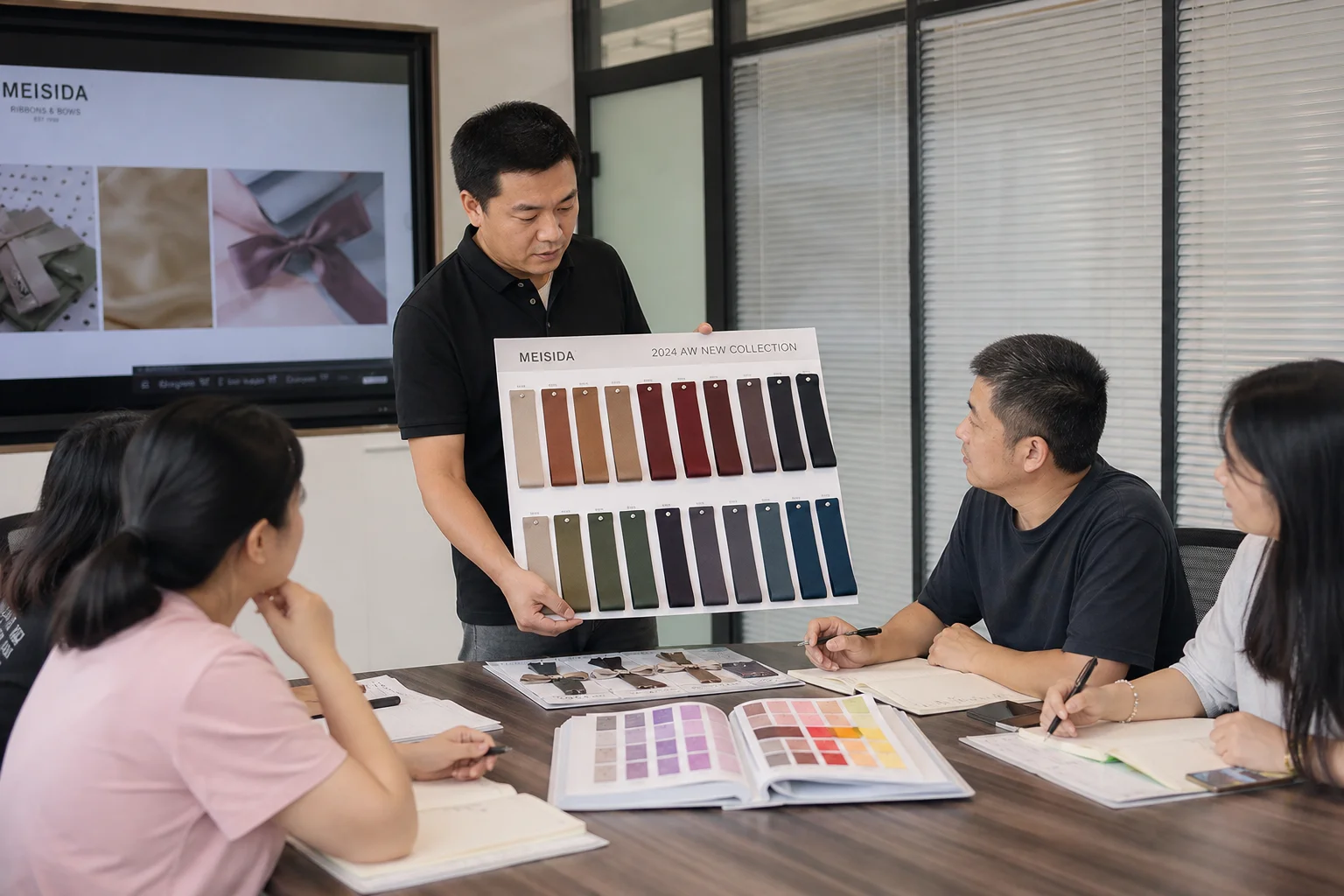
The traditional cycle: buyer sends a colour reference; factory mixes a dye formula; a trial run is produced; physical samples are shipped (7–14 days international); buyer reviews under their own lighting; adjustments are communicated verbally; the process repeats. A three-round cycle — not unusual — costs 6–8 weeks in development time before production can begin.
Several things go wrong in this cycle: colour appearance changes between factory and buyer lighting; verbal adjustment descriptions ("slightly warmer") are interpreted differently; each shipping round consumes fixed time regardless of how minor the correction needed.
What Changed in the Updated Process
The revised process introduces two structural changes that together reduce the average number of sample rounds:
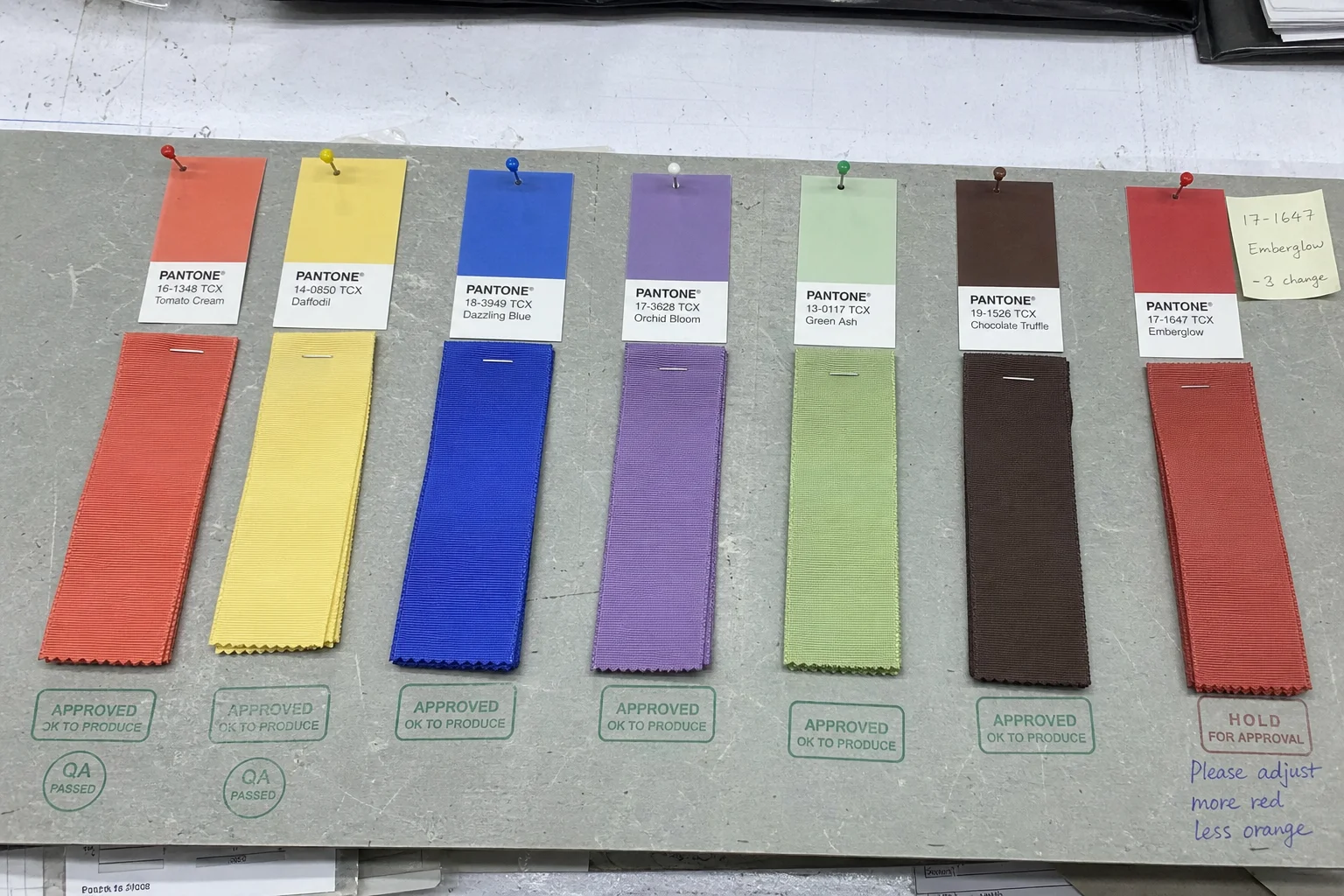
Digital colour alignment before physical sampling. Before producing a physical dye batch, the Meisida colour development team now uses a calibrated spectrophotometer reading to compare the proposed dye formula output against the buyer's reference colour. The spectrophotometer produces a ΔE (Delta E) value — a numerical measure of colour difference — that tells both parties precisely how far the proposed formula is from the target, and in which direction (more red, more green, warmer, cooler, lighter, darker).
This means that colour adjustments that previously required a physical sample round can often be resolved by formula adjustment before the first sample is shipped. The first physical sample is already much closer to the target because it has been pre-corrected digitally.
Standardised lighting specification for buyer colour review. Colour appearance is profoundly affected by the light source under which it is reviewed. The same ribbon sample can look noticeably different under daylight, tungsten, and fluorescent lighting — which is why buyer and factory can both be looking at the same sample and see it differently. Meisida now ships all colour samples with a standardised D65 daylight reference card and a brief protocol asking the buyer to review under D65 or equivalent daylight conditions. When both parties are reviewing under the same lighting standard, colour feedback is more precise and adjustment rounds are reduced.
Results from the First Year of Operation
Across colour development projects in the first twelve months, average physical sample rounds dropped from 2.8 to 1.6 per colour. For a programme with six custom colours, this means approximately 7 fewer shipping rounds — saving 7–10 weeks off the development schedule. The improvement is most pronounced when the buyer provides a measured numerical colour reference rather than a photograph or verbal description.
What This Means for Buyers Planning Custom Colour Programmes
For buyers planning custom ribbon colours, the revised process has three practical implications:
Provide a numerical colour reference. A Pantone Textile number (TCX/TPG), RAL code, or physical swatch submitted in advance enables the spectrophotometer comparison before the first sample ships. A photograph does not.
Plan for two sample rounds as the baseline. The revised process is designed for approval in one or two rounds. Budget two to be conservative; a third round is significantly less likely than before.
Review samples under daylight. Follow the D65 protocol included with samples. Reviewing under warm tungsten light can cause you to request adjustments that are unnecessary under correct conditions, reintroducing rounds the process was designed to eliminate.
To start a custom colour enquiry, visit mystyleribbon.com or contact the Meisida sales team with your colour reference, target ribbon construction, and required quantity. The team will confirm whether the colour falls within the stock range or requires development, and advise on the development timeline under the updated process.
Frequently Asked Questions
What colour reference format does Meisida require for custom colour development?
Meisida accepts Pantone Textile (TCX or TPG) numbers, RAL codes, physical swatch samples submitted by courier, or ΔE readings from a previously approved batch. Photographs and screen-shared images are accepted for initial communication but are not suitable as production references — screen colour accuracy varies too much between devices. For programmes requiring precise colour consistency across multiple seasons, maintaining a physical approved sample on file at the factory is the most reliable method. Contact mystyleribbon.com to begin a custom colour enquiry.
How many sample rounds should I budget for?
Two rounds is the planning baseline — one first sample followed by one adjustment. One round is achievable for colours with a well-defined numerical reference. Three or more rounds remain possible for unusual colour families or when the reference changes during approval. Contact mystyleribbon.com to discuss expected rounds for your targets.
Does the new process add cost?
No. The spectrophotometer alignment is part of Meisida's internal pre-production process and is not charged separately. Standard colour development fees apply as before — dye fee per new colour, credited against production orders above a defined quantity. Contact mystyleribbon.com for current terms and minimums.
Can the spectrophotometer comparison be shared before the physical sample ships?
Yes. Meisida can share the spectrophotometer report for the proposed formula before dispatch. Buyers with in-house colour measurement equipment can compare this against their reference and confirm whether to proceed. Contact mystyleribbon.com to request data sharing for your programme.
Does the revised process apply to all ribbon constructions?
Yes — the alignment and review protocol apply to all dyed constructions: satin, grosgrain, velvet, organza, across all yarn types. Smooth surfaces give more consistent spectrophotometer readings than pile surfaces, but all constructions benefit from pre-sampling alignment. Contact mystyleribbon.com for your target construction.