From Inconsistent Samples to a Reliable Programme: How a Gift Brand Solved Its Ribbon Supply Problem
A187 | From Inconsistent Samples to a Reliable Programme: How a Gift Brand Solved Its Ribbon Supply Problem
The gift brand had been running a ribbon programme for three years before they contacted us. Their signature colour — a dusty rose that appeared on every product, every seasonal collection, every gift box — had been sourced from three different suppliers over that period. Each time they switched, it was because the previous supplier had failed to hold the colour consistently across orders placed months apart. The third supplier was improving, but "improving" was not the same as solved.
What they needed was not a better sample. They had received good samples from all three suppliers. What they needed was a manufacturer who could produce the same colour reliably at scale, reorder after reorder, with documentary evidence that the production standard was being maintained.
The Problem With Multiple Suppliers
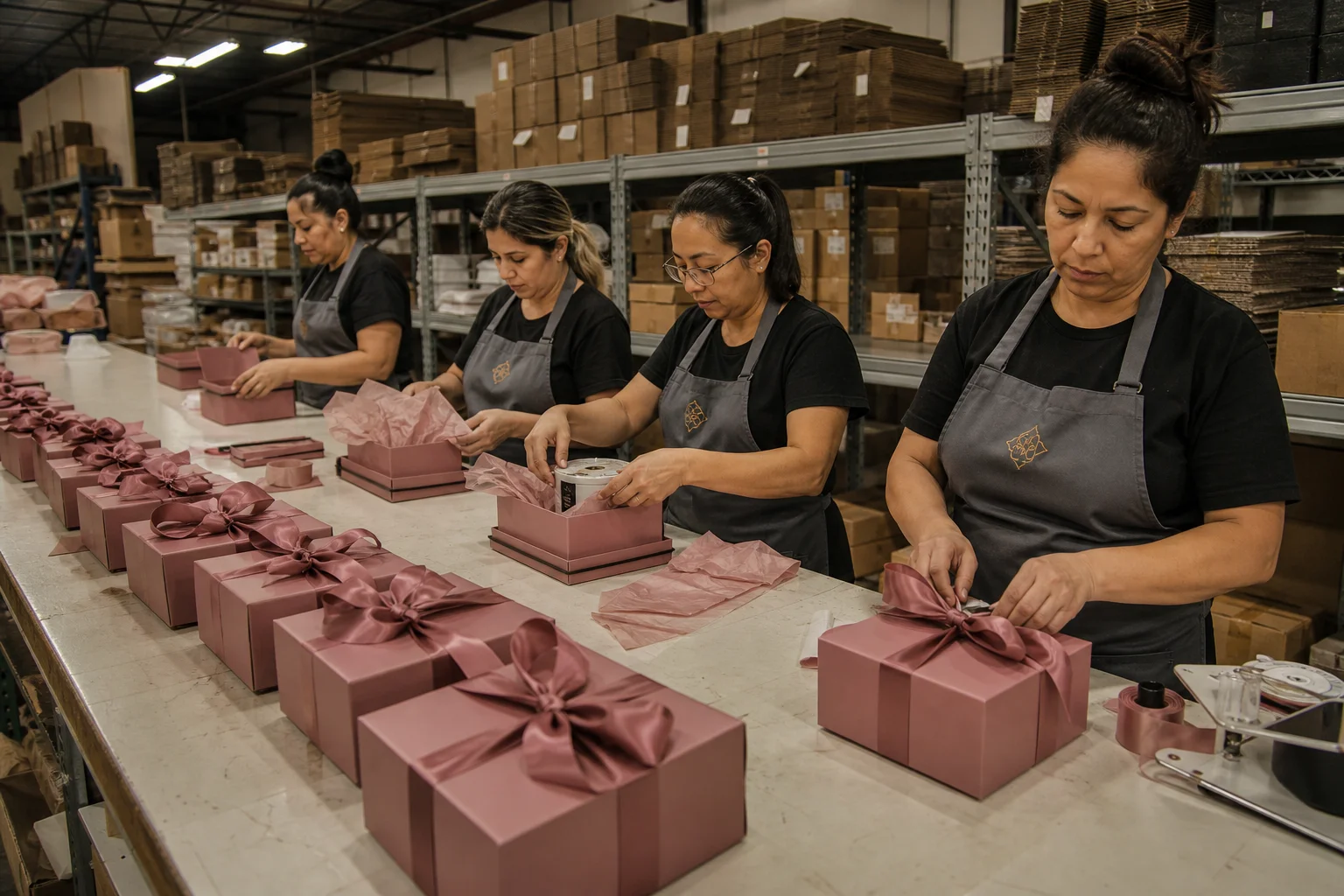
Running a ribbon programme across multiple suppliers creates a specific quality problem: colour drift. Each supplier has their own dye formulation, yarn sources, and batch-to-batch variation profile. Buyers typically get a good colour match on the first order because both sides are paying close attention. Problems emerge on order three or four, when the supplier's internal processes take over and the tight sample match gradually moves.
The gift brand's dusty rose had become a brand signature — appearing in marketing photography, website, and every product line. A colour shift of ΔE 3–4 was visible in retail displays and customer-facing content. They received complaints from wholesale accounts. The operational cost was also significant: quality holds, partial returns, and in two cases, a run of packaging that could not be used. When they tracked the total cost of ribbon-related failures over two years, it significantly exceeded the price difference between their current supplier and a manufacturer with formal colour control.
What a Managed Colour Programme Looks Like
When the gift brand came to Xiamen Meisida Decoration Co., Ltd (Smith Ribbon & Bow, mystyleribbon.com), we started with colour development, not a quote. They provided three references: their approved swatch, a roll from their best historical delivery, and a roll they considered off-spec. The delta between best and off-spec was ΔE 3.8.
We developed a formulation and produced two samples. The second was ΔE 0.6 against the reference — approved. The formulation was documented: dye compound ratios, yarn specification, bath temperature and timing parameters, filed in our colour library under the brand's reference.
The first production order delivered ΔE 0.7 against the approved sample. The second order, placed four months later with a different yarn lot, required a minor formulation adjustment — the delivered colour was ΔE 0.9. All within the agreed tolerance of ΔE < 1.5.
The Supply Chain Outcome
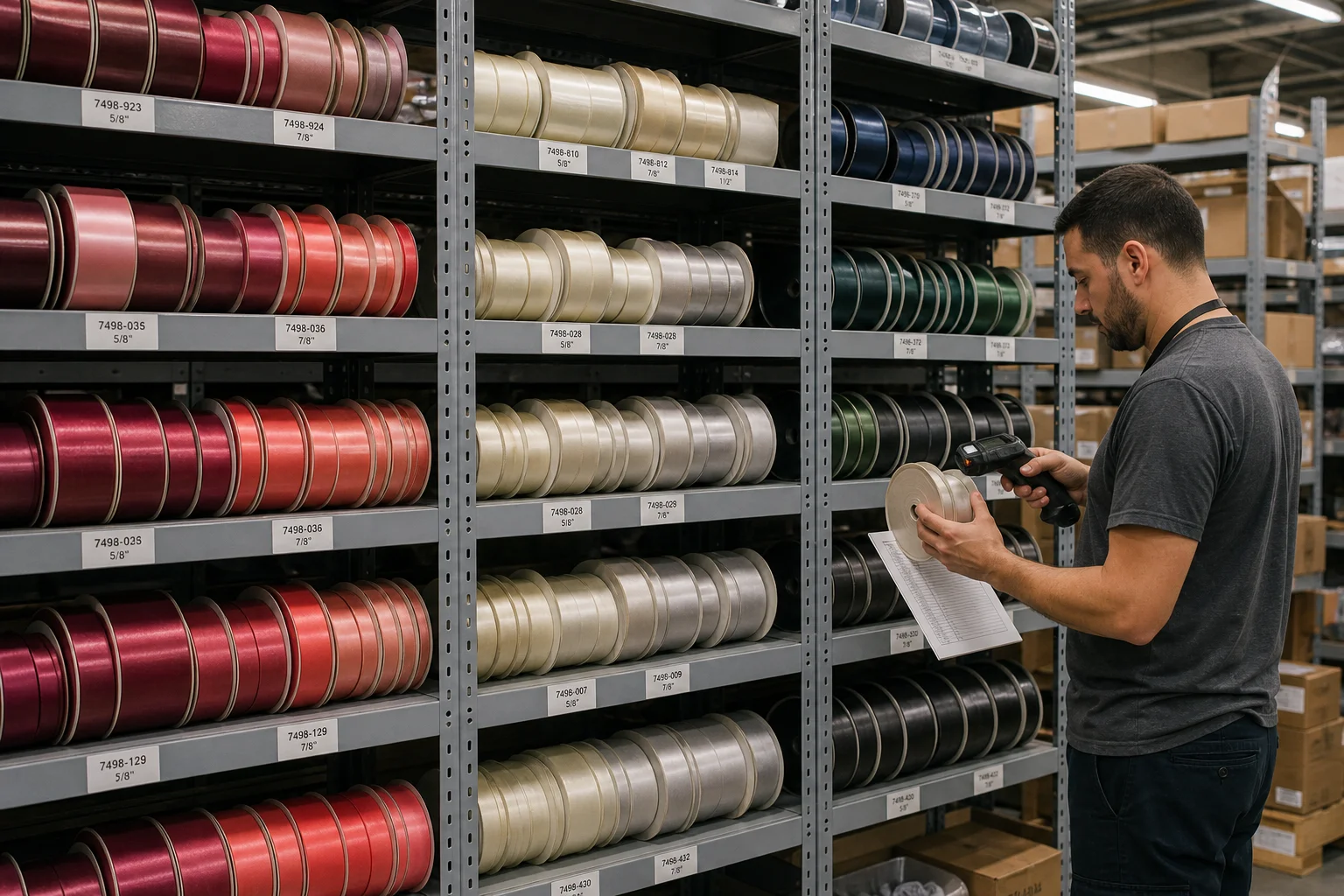
The gift brand has now been running their dusty rose programme with Meisida for fourteen months — six production orders. All six delivered within ΔE 1.5 of the approved reference. Zero quality holds, zero returns for colour reasons, zero customer complaints about inconsistency.
The programme runs on a forward booking arrangement: they confirm the next season's requirements before the previous order is delivered, allowing us to reserve capacity and yarn lots in advance. This reduced effective lead time from twelve to seven weeks.
The total cost — ribbon per metre including development — is approximately 8–10% above what they paid their previous supplier. Against the cost of two years of quality failures they had been absorbing, the difference is not a cost increase. It is the price of the problem not happening.
Frequently Asked Questions
How does Meisida handle colour development for a brand-specific ribbon colour?
Colour development starts with a reference from the buyer — a Pantone number, a physical swatch, or an approved sample from a previous supplier. We develop a dye formulation against that reference, produce an initial sample, and iterate if needed until the colour is within the agreed tolerance (typically ΔE < 1.5 against the reference under D65 illuminant). The approved formulation is documented and held in our colour library. All subsequent production orders run against the same formulation, with re-qualification when yarn lots change. Contact mystyleribbon.com to begin a colour development.
What is the minimum programme size for a custom colour at Meisida?
Custom colour development (new formulation) is practical for programmes of 500m or more per colour per order. For smaller quantities, we can often match from our existing colour library, which contains hundreds of developed and documented colours. Contact mystyleribbon.com to check whether your target colour is close to an existing library colour — this avoids development time and cost for small programmes.
How does Meisida manage colour consistency across reorders placed months apart?
Each reorder runs against the documented formulation on file. When the yarn lot changes between orders, we run a test batch before production to confirm uptake and adjust the formulation if needed. Buyers are provided with a colour confirmation sample from each production batch before the order ships. This allows the buyer to confirm the match before the full delivery arrives. Contact mystyleribbon.com for information on the sample confirmation process.
Can Meisida manage multiple ribbon colours for a coordinated packaging programme?
Yes. Multi-colour programmes are common — seasonal packaging schemes typically involve three to six colours across different product lines. Each colour gets its own formulation and library entry. Production scheduling coordinates the colours to minimise handling complexity. For programmes with seasonal colour rotations, we can manage the full colour library and advise on which new season colours require development and which are close to existing library entries. Contact mystyleribbon.com to discuss a multi-colour programme.
What documentation does Meisida provide with each ribbon delivery?
Standard delivery documentation includes: packing list with spool count and total metreage, colour batch reference, and OEKO-TEX Standard 100 certification for the material. On request, we can provide: the spectrophotometric measurement of a production sample from the delivered batch (ΔE against the reference), yarn supplier lot reference, and a production QC sign-off record. For buyers with retailer compliance requirements, contact mystyleribbon.com to confirm which documentation format is needed before the order is placed.