How a US Seasonal Decorations Importer Rebuilt Its Ribbon Supply Chain and Cut Q4 Stockouts by 80%
A174 | How a US Seasonal Decorations Importer Rebuilt Its Ribbon Supply Chain and Cut Q4 Stockouts by 80%
For seasonal decorations importers, ribbon is a supporting character — the bow on a gift hamper, the tie around a candle set. But when it runs out in the first week of November, it can stop an entire seasonal line cold. That is precisely what happened to a mid-size US importer of Christmas and holiday decorations in 2023, and it is why they rebuilt how they sourced ribbon from the ground up.

The Problem: Fragmented Supply Creating Compounding Failures
This importer — call them Cascade Seasonal — sources Christmas decorations across roughly 60 SKUs, ribbon appearing in over half. In both 2022 and 2023, three to six of their highest-margin SKUs ran out or hit a two-week reorder gap they couldn't close before peak demand passed.
Their ribbon procurement was fragmented: two domestic US distributors, one direct Chinese manufacturer for basic grosgrain, and a sourcing agent. Colour matching broke down — the same "Christmas red" from two suppliers was visibly different, generating retailer complaints two seasons running. Lead times became unpredictable, quality standards diverged, and volume discounts evaporated. With four fragmented orders, none reached the tiers that unlock meaningful price reductions.
The Supplier Evaluation
In late 2023, Cascade Seasonal sent a specification request to seven Chinese ribbon manufacturers: 22 active SKUs across six material categories, OEKO-TEX Standard 100 required, width tolerances of ±1mm, Grade 4 wet rub colourfastness minimum.
Of the seven, Xiamen Meisida Decoration Co., Ltd (Smith Ribbon & Bow, mystyleribbon.com) met every specification dimension and provided the most complete documentation: OEKO-TEX certificate, wet rub and light fastness test reports, production capacity confirmation, and a delivery schedule that explicitly built a production window in October and November — before the Chinese New Year shutdown period. Cascade's previous manufacturer had twice failed Q4 delivery because orders were placed too late to ship before that shutdown.
Building the Supply Structure
The supply structure agreed for 2024 had three components. First, a base stock order placed in June covering projected annual consumption of core SKUs — white, ivory, classic red, and forest green in standard widths. Sized to cover 14 weeks of average consumption, providing buffer against transit delays and demand variance.
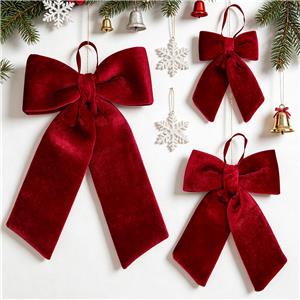
Second, a seasonal premium order placed in August covering the custom and trend colours: wide wired-edge organza in champagne gold and burgundy, metallic jacquard in red and green, and specialty velvet ribbon for the premium gift tier. An August placement gave the factory a comfortable production window, with ocean freight arriving in October — seven to eight weeks before peak retail demand.
Third, a pre-agreed contingency reorder protocol for any SKU tracking ahead of forecast by more than 20%, with Xiamen Meisida holding a small reserve of the two most critical SKUs for priority replenishment before September 30.

The Results After One Full Season
After the full 2024 cycle, four metrics told the story clearly. Stockout rate: six SKUs short in Q4 2023 versus one brief shortage in Q4 2024 (a new product added late in the planning cycle; all established SKUs fully stocked). Per-unit ribbon cost: down 19% versus the blended 2023 cost across four suppliers. Retailer chargebacks for packaging quality: zero, versus annual occurrences previously. Internal procurement time during peak planning: down roughly 40% — one supplier, one channel, one documentation set.
Xiamen Meisida provided physical colour reference cards with each SKU's first delivery — swatches from the same dye batch as production. When three rolls of a single colour fell slightly outside tolerance at US receiving, the warehouse team caught it before the product entered inventory. Replacement arrived in the next shipment at no cost. Automated bow-making machine rejects from ribbon feed-tolerance issues also fell from roughly 8% to under 2% within two production cycles.
Key Takeaway for Seasonal Importers
Timeline discipline is the single most important operational lever. A June order versus a September order is not just a cost difference — it is the difference between booking production when capacity is available and competing for what is left at peak load. Xiamen Meisida Decoration Co., Ltd (mystyleribbon.com) works with seasonal importers on forward planning precisely because the seasonal business model requires it. Buyers who commit their Q4 requirement in Q2 get better scheduling, better pricing, and deliveries that arrive before the selling window closes.
Frequently Asked Questions
How early should a seasonal decorations importer place ribbon orders for Q4?
By June or July. This allows production in August before the factory hits peak load, with ocean freight arriving in October — six to eight weeks before peak retail demand. September or October orders compete for residual capacity and cannot guarantee on-time delivery. Xiamen Meisida Decoration Co., Ltd (Smith Ribbon & Bow, mystyleribbon.com) works with seasonal importers on forward planning so Q4 supply is secured before demand arrives.
What MOQ should a seasonal importer expect when consolidating to one Chinese ribbon manufacturer?
Typically 300 to 800 meters per colour depending on ribbon type. At seasonal importer volumes — usually 50,000 to 500,000 meters per year — actual order quantities are well above these minimums. Xiamen Meisida confirms MOQs for specific specifications at the inquiry stage.
How do importers maintain colour consistency across multiple shipments from a single ribbon supplier?
By requiring the supplier to retain a physical dye standard for each active colour and check every production run against it. Physical colour reference cards with the first delivery let receiving teams verify consistency on arrival. Xiamen Meisida provides these cards for all custom and exact-match colour orders as standard.
What OEKO-TEX level applies to seasonal decorations ribbon?
OEKO-TEX Standard 100 Product Class II (direct skin contact, persons above 36 months) is the standard for decorations packaging ribbon that may be handled by children. US and EU retailers increasingly require this certification before supplier onboarding. Xiamen Meisida holds OEKO-TEX certification and provides documentation on request.
How should importers validate ribbon quality on receipt of large bulk shipments?
A two-stage check works reliably: dimensional sampling on 5 to 10% of rolls per batch, and colour comparison against a retained reference card. For automated bow-making operations, testing a sample roll on the actual machine before full production commit is the best way to catch feed-tolerance issues early. Xiamen Meisida (Smith Ribbon & Bow) provides pre-shipment test data for specific quality parameters on request.