
A170 | Case Study: Ribbon as a Packaging Element for a Fashion E-Commerce Brand Managing Returns, Repackaging and Brand Consistency at Scale
A170 | Case Study: Ribbon as a Packaging Element for a Fashion E-Commerce Brand Managing Returns, Repackaging and Brand Consistency at Scale
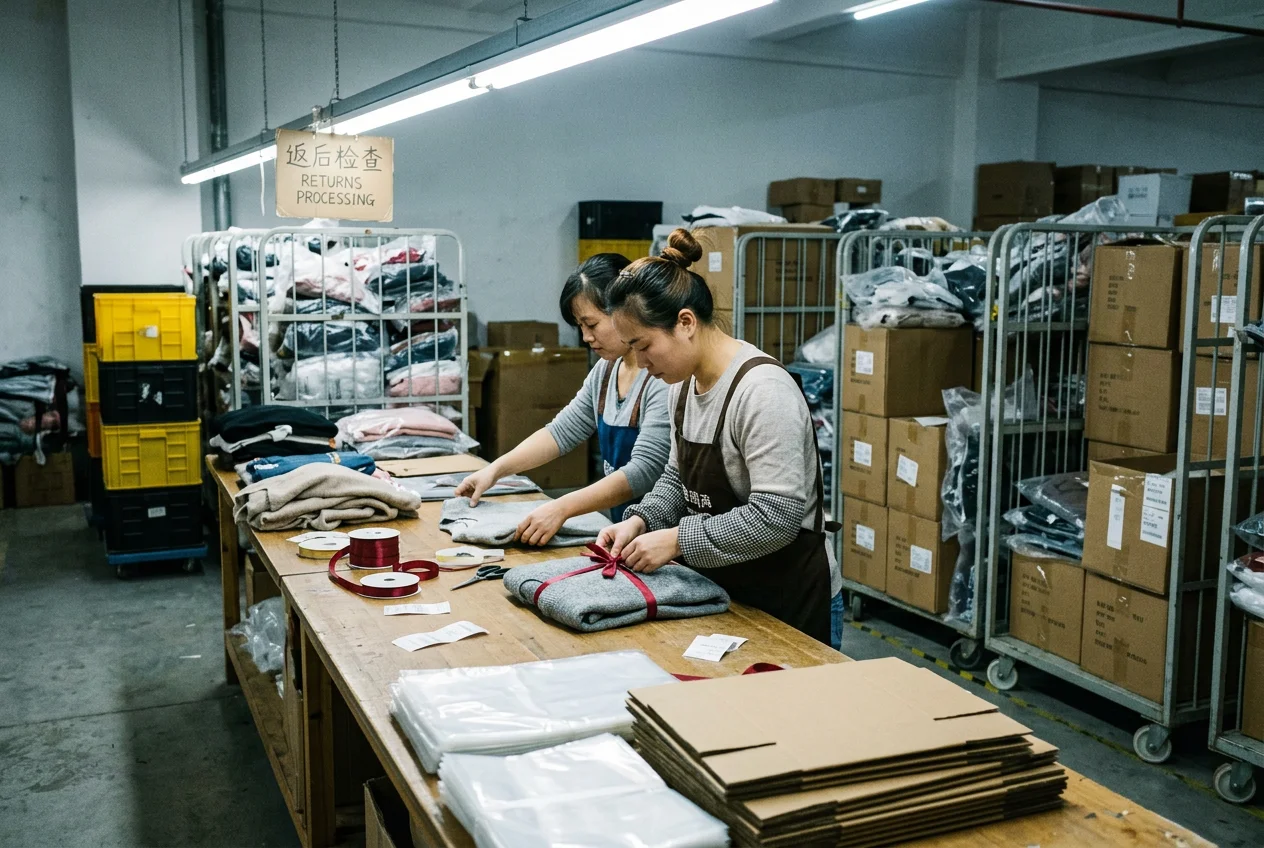
Fashion e-commerce brands use ribbon differently from most of the categories we supply into. For a gift company, ribbon is primarily decorative — the point is the bow, the presentation, the moment of opening. For a fashion brand, ribbon serves a secondary but operationally important function: it is a garment-fastening, a hang-tag-securing, and a repackaging element that has to survive not just the initial delivery but the returns process as well.
This case study covers a mid-size fashion brand selling primarily through its own website and two platform stores. They came to us with a problem that is specific to fashion e-commerce: their return rate was around eighteen percent — normal for their category — and a significant portion of the ribbon they were using was being consumed in the repackaging of returned items rather than in original outbound packaging. Their repackaging ribbon was coming from a different source than their outbound ribbon, and the shade difference was visible enough that customers occasionally noticed and mentioned it in reviews.
What the Brand Was Actually Spending on Ribbon
When we mapped out their ribbon usage, the numbers were more complex than they had realised. They had been thinking of ribbon as an outbound packaging cost — the narrow grosgrain ribbon used to tie each garment before it went into a poly bag, plus the wider ribbon used on their gift-wrapping option. They were not thinking of repackaging ribbon as a separate line, because it was being bought ad hoc from a local supplier whenever the returns team ran out.
The actual usage breakdown across a six-month period looked like this:
Outbound packaging ribbon: approximately 60% of total volume
Repackaging ribbon for returned items: approximately 28% of total volume
Gift-wrap ribbon for premium orders: approximately 12% of total volume
The repackaging ribbon was being bought at a higher per-unit cost than the outbound ribbon because it was sourced in small emergency quantities rather than planned production runs. And because it was a different product from a different supplier, the shade was slightly different — not dramatically, but enough to be visible under good light when the two ribbons were placed side by side.
The Solution

The solution was straightforward once the full picture was visible: consolidate all three ribbon uses onto a single specification, order on a planned quarterly schedule that accounts for the full volume including repackaging, and hold a standing buffer to absorb variation in the returns rate without requiring emergency purchases.
The consolidated specification was a 10mm grosgrain ribbon in the brand's primary navy colour. Getting the colour right across a single production run — consistent enough that a customer who received a repackaged item would not notice any difference from a first-delivery item — required a precise colour reference and a binding sign-off sample, which we established in the first production run.
The quarterly order volume was set at 110% of the previous quarter's actual usage, which provided a comfortable buffer without building excessive stock. Because all three uses were now drawing from the same inventory, the repackaging team no longer needed to maintain a separate supply relationship, and the emergency purchases were eliminated entirely.
Results
Per-unit ribbon cost reduced by approximately 14% through planned bulk ordering versus mixed planned and emergency purchasing.
Shade consistency complaints in customer reviews: zero in the twelve months following consolidation, versus three mentions in the six months prior.
Procurement management time for ribbon reduced significantly — from multiple purchase decisions across two suppliers to a single quarterly order from one.
Repackaging team no longer experiences ribbon shortages, which had been causing processing delays during peak return periods.
The Operational Detail That Made the Difference
One aspect of the implementation that proved more useful than expected was the returns-rate buffer calculation. Rather than ordering based on outbound volume alone, we modelled the full ribbon demand: outbound units multiplied by their return rate, multiplied by the percentage of returns that were repackaged rather than recycled or written off.
In their case: 20,000 outbound units per quarter, 18% return rate, ~70% of returns repackaged = approximately 2,520 units' worth of repackaging ribbon demand per quarter — not negligible. Adding this to outbound and gift-wrap demand gave a total ribbon requirement about 30% higher than their previous outbound-only estimate. That gap explained exactly why they had been running short on repackaging ribbon: they simply had not been accounting for it.
The quarterly order is now placed against this modelled total, with a 10% buffer. The buffer was consumed once in three quarters — during a high-return period following a sale — and absorbed it without an emergency purchase. The procurement manager described this as "the first time ribbon has not been a problem to think about," which is a reasonable definition of success for a packaging component.
Applicability to Other Fashion Brands
Any fashion e-commerce brand with a meaningful return rate likely has an untracked ribbon consumption category in their repackaging operation. Whether that represents significant cost depends on return rate and price positioning — but it is worth knowing the number before assuming it is negligible.
The brand consistency benefit — eliminating shade variation between outbound and repackaging ribbon — is relevant wherever the customer experience spans multiple touchpoints. For premium brands, even small inconsistencies matter. In this case the consistency improvement came at no additional cost: consolidation to one source reduced overall spend, making it an unusually clean win on both dimensions simultaneously.
The broader lesson from this case is about supply chain visibility. The brand had accurate numbers for their outbound packaging costs. They did not have accurate numbers for their repackaging costs, because the repackaging supply was managed reactively rather than planned. Once the full picture was visible, the consolidation was obvious — not a clever procurement strategy, just a sensible response to information they had not previously had in one place.
For fashion brands, and more broadly for any brand with a significant returns operation, it is worth auditing ribbon usage across the full order lifecycle rather than just the outbound packaging step. Repackaging ribbon is often the largest untracked variable in the ribbon supply picture, and it is frequently the source of both cost inefficiency and brand consistency problems.