
A162 | Case Study: Supplying Ribbon to a Cosmetics Subscription Box Brand Through Twelve Months of Monthly Deadlines
A162 | Case Study: Supplying Ribbon to a Cosmetics Subscription Box Brand Through Twelve Months of Monthly Deadlines
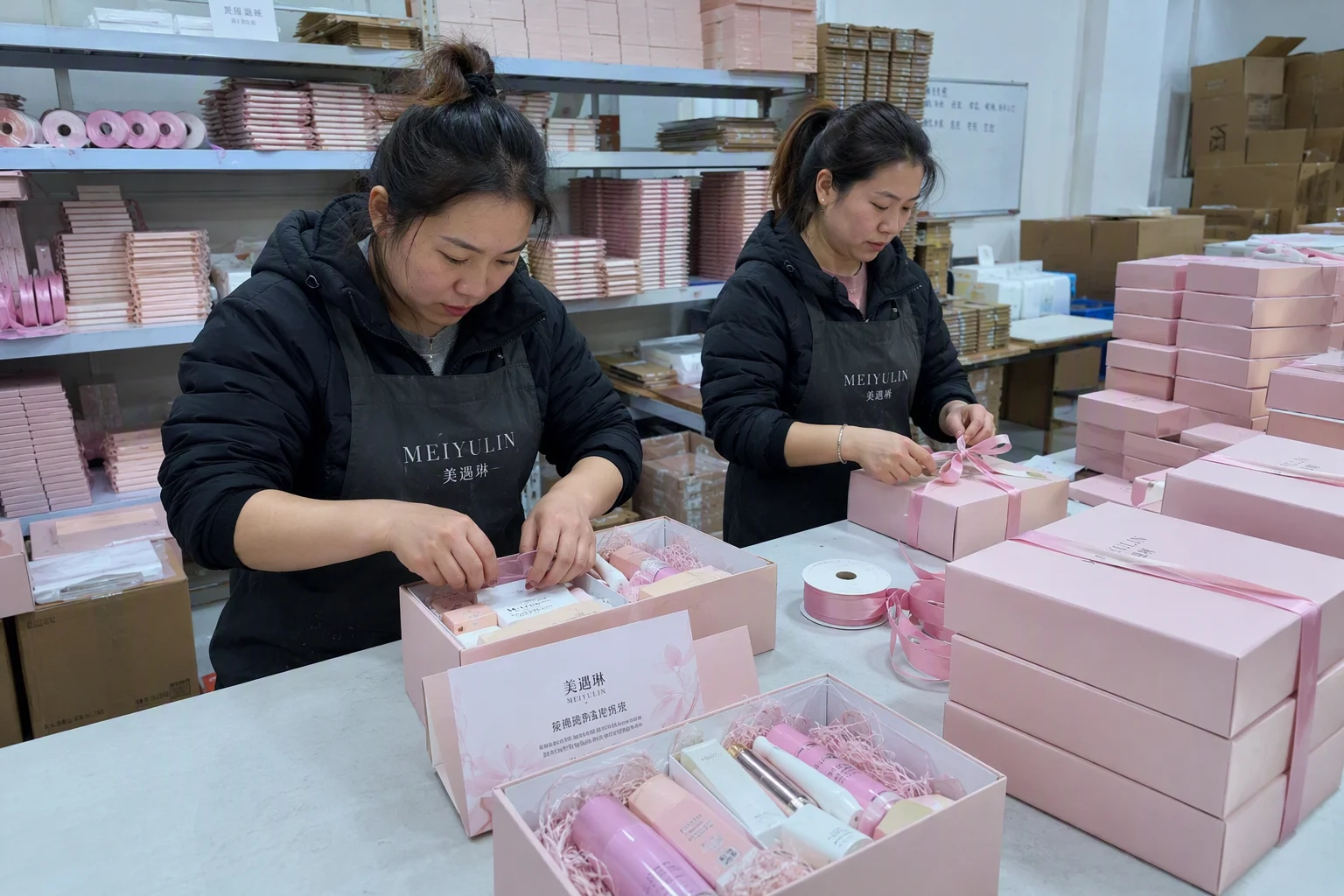
Subscription box businesses have a procurement rhythm unlike almost any other packaging customer. The deadline is absolute and monthly — the boxes ship on a specific date regardless of what happened in production that week — and the ribbon is a visible, customer-facing element that cannot be substituted at the last minute without someone noticing. If the ribbon is the wrong colour, or arrives two days late, or runs out before the last two hundred boxes are packed, the result is not just an internal problem but a customer experience failure that shows up in unboxing photos and social media posts within hours of delivery.
When this cosmetics subscription brand came to us, they had been working with a domestic supplier who had a pattern of late deliveries in the two to three days before their monthly ship date. Not every month — perhaps four times in the previous year — but four times is enough to create a situation where the packing team is scrambling and the operations manager is answering urgent messages at ten in the evening. The brand wanted a supplier who could provide reliable delivery against a fixed monthly schedule and hold enough buffer stock to cover a late call-off without disrupting the delivery date.
The Monthly Rhythm in Detail
Understanding why the previous arrangement had failed required understanding the monthly rhythm in some detail. The brand's box design used a 2 cm blush-pink double-faced satin ribbon, pre-cut to a standard length and tied in a specific bow style that was part of their brand identity. Each monthly edition went to approximately 3,500 subscribers. The ribbon call-off happened about ten days before the ship date, based on the confirmed subscriber count for that month.
The ten-day window was tight for their previous supplier, who was producing ribbon to order rather than holding stock. Any delay in their production — a machine issue, a raw material problem, a competing urgent order — compressed the window further. The late deliveries happened when the ten-day window collapsed to five or fewer days, which was not enough time for the previous supplier to recover.
Our approach was different. We proposed holding a standing stock of the blush-pink ribbon — a rolling three-month buffer quantity based on the brand's average monthly consumption — and treating the monthly call-off as a stock release rather than a production trigger. This decoupled the delivery schedule from the production schedule entirely. As long as the standing stock was maintained, the ribbon could ship within 48 hours of a call-off regardless of what was happening in the production calendar.
The Colour Consistency Requirement
Subscription box brands are particularly sensitive to colour consistency because their customers receive the box monthly and will notice if the ribbon looks different from one month to the next. Blush pink is among the more technically demanding colours in this respect — it sits at an intersection of warm pink, nude, and light peach where the exact reading of the colour varies significantly under different light sources and where small batch-to-batch variation is perceptible to an attentive eye.

We addressed this through two mechanisms. First, we produced the standing stock in larger batches than the brand's monthly consumption, which reduced the number of dye lots per year and the associated colour variation risk. A supplier producing to monthly call-offs has twelve dye lots per year; our approach reduced this to three or four annual production runs, each producing a quarter's worth of stock. Second, we maintained a sealed master reference sample that was used to check each production batch before it entered the standing stock, so that any colour deviation was caught at our end before it reached the brand.
Results After Twelve Months
Over the twelve months following the arrangement change, the brand had zero late ribbon deliveries. The call-off to delivery time averaged 36 hours, well within the ten-day window they had previously been working to. The colour consistency feedback from their customer community — which they monitored through their unboxing hashtag — showed no colour-related comments in the period, compared to two or three such comments in the previous year's posts.
The cost per metre was approximately 6 percent higher than their previous supplier's price on a unit basis, reflecting the buffer stock carrying cost built into the arrangement. The brand's operations manager characterised this as well worth the premium, noting that the four late-delivery incidents in the previous year had each required significant management time and in one case had resulted in a production overtime run that cost more than the annual price differential.
Is This Arrangement Right for Every Subscription Brand?
Not necessarily. The buffer stock model works best when a brand's monthly volumes are stable enough that holding three months of stock does not create significant obsolescence risk, and when the ribbon specification is consistent enough across months that the standing stock can be used without modification. Brands that change their ribbon colour or style frequently — seasonal editions, limited runs, collaborator launches — may find the model less suitable, since the standing stock for one specification has no value when the specification changes. For those brands, a shorter lead time production arrangement with confirmed capacity reservation may be a better fit than a buffer stock model. The right answer depends on the brand's own production model, and we discuss this with new customers before recommending a supply structure.
A buffer stock arrangement of this type requires commitment from both sides. We carry the stock and the associated working capital, which requires confidence that the brand's monthly volumes will be reasonably stable. The brand commits to calling off against the stock rather than going to spot market when a cheaper option appears. Both parties benefit from a longer-term relationship than a transactional order-by-order arrangement provides.
Minimum standing stock: typically three months of average monthly consumption
Call-off lead time: 48 hours from stock; no production trigger required
Colour standard: sealed reference sample maintained at both ends; checked on each production run
Annual production runs: three to four per year for most subscription volumes, reducing dye lot variation
Review cadence: quarterly stock level review to adjust for subscriber growth or seasonal variation