A130 | Case Study: Consolidating Ribbon and Label Supply for a Premium Apparel Brand
A130 | Case Study: Consolidating Ribbon and Label Supply for a Premium Apparel Brand
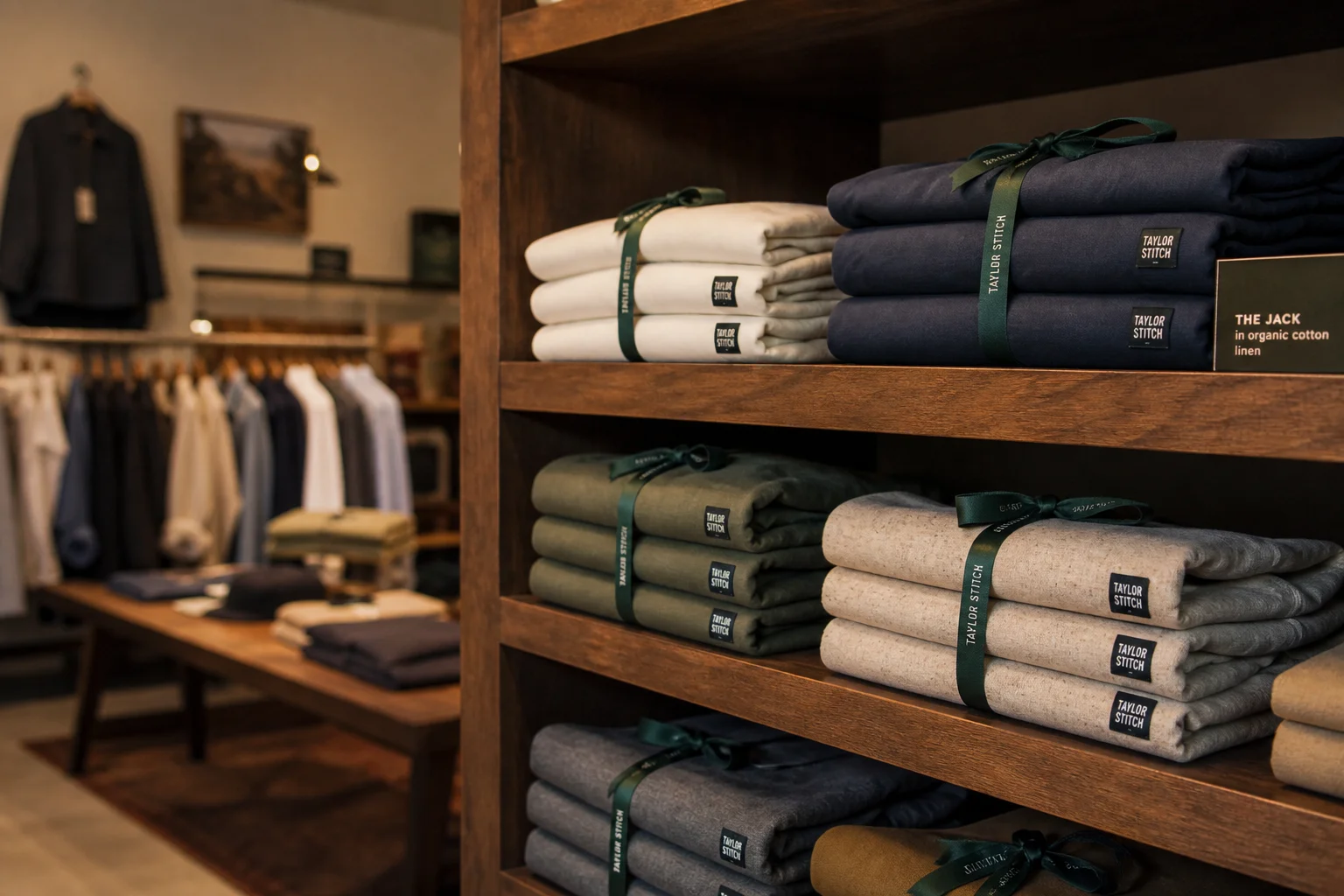
For apparel brands, ribbon is more than a finishing touch — it is often the first physical indication of quality that a customer encounters. The ribbon trim on a woven shirt, the grosgrain bow on a shoe box, the narrow tie that holds a folded garment in place on the retail floor — these details communicate brand positioning before a price tag is ever read. When a mid-market British apparel brand expanding into the premium segment came to Smith Ribbon & Bow (Xiamen Simi Ribbon & Accessories Co., Ltd.), they were not struggling with ribbon quality in isolation. They had a fragmented accessories supply chain that was creating problems all the way through to the retail floor, and ribbon was one piece of a larger puzzle that needed to come together.
The Situation: Three Suppliers, Three Standards
The brand — which we will call Alderton — had been growing steadily for six years, and their accessories supply had grown in an ad-hoc way alongside them. They sourced their woven brand labels from one supplier in South Korea, their grosgrain and satin packaging ribbons from a UK distributor who imported from various origins, and their internal garment ribbons — the small loops used for hanging and the fabric ties used on some knitwear — from a separate Chinese mill they had found through a trade show.
On paper this was manageable. In practice, it was creating three distinct problems.
First, colour drift between components. Their brand colour — a proprietary deep forest green — looked slightly different on each supplier's ribbon. A grosgrain package tie in one green next to a woven label in another, on the same garment, was visible enough that their quality director had started flagging it in production reviews. This was particularly acute in their knitwear line, where the label and the internal ties sat centimetres apart.
Second, lead time misalignment. The Korean label supplier ran on eight-week lead times. The UK distributor could turn around in two or three weeks. The Chinese mill was somewhere in between but inconsistent. Coordinating production so that all three components arrived in time for a seasonal launch had become a project management burden that absorbed disproportionate time from their production coordinator.
Third, minimum order quantities that did not match their reality. They were a growing brand, not yet at the scale where commanding low MOQs on all three supply streams was easy. They were frequently ordering more than they needed on slow-moving product lines to meet each supplier's minimums, then carrying excess stock that complicated their warehouse.
What We Proposed
When Alderton first contacted us, their brief was specifically about ribbon — they had seen our work on packaging applications and wanted to consolidate their packaging ribbon supply. As we talked, it became clear that the broader accessories picture was the real problem, and that we could address more of it than they had initially assumed.
We are not a label manufacturer, but we work with a network of woven label producers in our region who operate on compatible colour-matching systems. We proposed a coordination model: we would take the lead on colour-matching the forest green across all ribbon and trim components, and we would source the woven labels through our label partner, using the same colour reference. The brand would deal with a single point of contact for their accessories specification, and we would manage the coordination on the back end.
This is not a standard service offering — it was a practical response to a specific problem. But it is exactly the kind of arrangement that a direct manufacturer relationship makes possible, and that a distributor relationship generally does not.
The Colour Matching Process
Getting the forest green right took four swatch rounds, which is on the higher end for a standard custom colour. The difficulty was not the colour itself — forest greens are a well-trodden dyeing category — but the specific tonal relationship Alderton wanted between their ribbon and their label. They had a long-established label with a slightly warm undertone, and they wanted the ribbon to match it rather than to match a Pantone chip. That required matching to a physical reference rather than a formula, which adds rounds.
By the fourth round, both components — the grosgrain packaging ribbon and the internal garment loop — were reading as the same green under retail lighting, under natural daylight, and in product photography. Their quality director signed off without reservation. That was the outcome we were working toward, and it took four rounds to get there honestly.
The Results After One Season
After one full production season with the consolidated supply arrangement:
Supplier contacts reduced from 3 to 1 for all ribbon and trim components, with woven labels managed through the same relationship.
Colour consistency achieved across all garment and packaging ribbon applications. Their quality director removed the colour drift issue from her production review checklist.
Lead time reduced to a predictable 5–6 weeks for combined components, down from a range of 2–8 weeks across three separate supply streams. Seasonal launch planning became significantly simpler.
MOQ burden reduced by approximately 30% because total volume across all SKUs now sits in a single contract, and the tiered pricing structure is based on the aggregate rather than any single SKU.
What This Illustrates
Alderton's case is common in a specific segment of the market: growing brands that have not yet taken a systematic approach to accessories supply, and are paying for that through colour inconsistency, coordination time, and excess inventory. The fix is usually not complicated — it is consolidation and clear colour archiving — but it requires a supplier who is willing to think about the whole problem rather than just their own product line.
If you are managing ribbon and trim accessories across multiple suppliers and experiencing any of these symptoms, we are glad to have an initial conversation about your supply chain structure. We will tell you honestly what we can help with and what falls outside our capability.