A128 | Ribbon for DTC and E-Commerce Brands: What Changes When You Ship Directly to the Customer
A128 | Ribbon for DTC and E-Commerce Brands: What Changes When You Ship Directly to the Customer
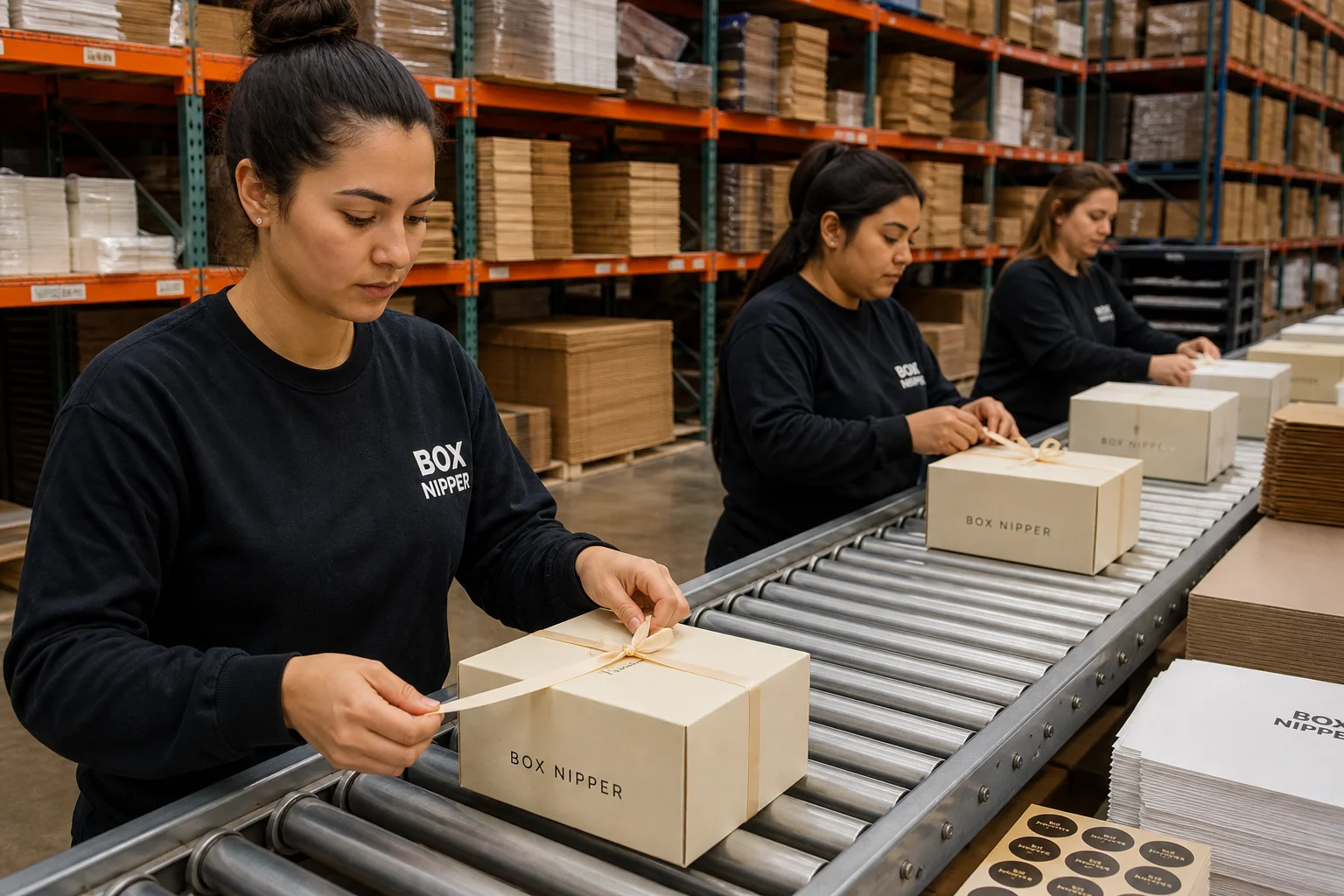
Selling directly to the end consumer changes almost everything about how a brand thinks about packaging. When you wholesale to retail, the store handles the last-mile presentation. When you ship DTC, the box arriving at someone's door is the store. The ribbon on that box — or inside it — is performing a job that used to be delegated. This shift has significant implications for how brands should think about sourcing their ribbon, and it is a shift that most procurement frameworks were not designed for. At Smith Ribbon & Bow (Xiamen Simi Ribbon & Accessories Co., Ltd.), a growing share of our clients are DTC and e-commerce brands, and the requirements they bring are genuinely different from traditional wholesale buyers.
The DTC Ribbon Challenge: Small Batches, High Consistency
A traditional wholesale buyer might order one or two ribbon styles in large volumes, with colour consistency as the main quality requirement. A DTC brand, particularly one in the beauty, wellness, or specialty food space, typically needs a wider range of styles — different widths for different products, sometimes seasonal variations — but in smaller quantities per SKU.
The problem this creates is the classic MOQ trap. Many ribbon manufacturers are set up for large, uniform runs. Their minimum order quantities make sense for a retailer buying a single style by the thousands of yards, but they leave a DTC brand either massively overstocked on slow-moving SKUs or unable to source the variety they need.
We have restructured our production flow to accommodate this. For DTC accounts, we offer tiered minimums that allow brands to order across multiple SKUs in a single shipment, with the total volume — rather than any individual SKU volume — determining the pricing tier. This means a brand can order six different ribbon styles in moderate quantities and still access pricing comparable to what a single-SKU bulk buyer would receive.
The Unboxing Problem and What It Costs
DTC brands pay close attention to unboxing experience in a way that traditional retailers do not, because the unboxing moment is often filmed, shared, and reviewed. A ribbon that looks beautiful in a product photograph but pulls or frays when a customer tugs on it — or that slides off the bow before the package even reaches its recipient — generates exactly the kind of feedback that ends up in review sections and social media posts.
Two material choices tend to cause this in our experience. First, single-faced satin, which is less expensive but presents a matte backing when the bow turns. In a retail store where the product is shelved with the ribbon out of sight, this is not an issue. In a DTC unboxing, where the customer is handling the ribbon from every angle, it is. Second, ribbon that is wound too tightly on a narrow core, which develops a permanent curl and will not lie flat on the product.
Both are solvable at the sourcing stage. For DTC brands we consistently recommend double-faced satin for any ribbon that will be tied externally and visible from multiple angles, and we wind on cores sized to prevent set-curl at the packaging densities their products require. These recommendations add a modest cost per yard, but they eliminate a category of post-purchase complaint that is disproportionately damaging to DTC brands.
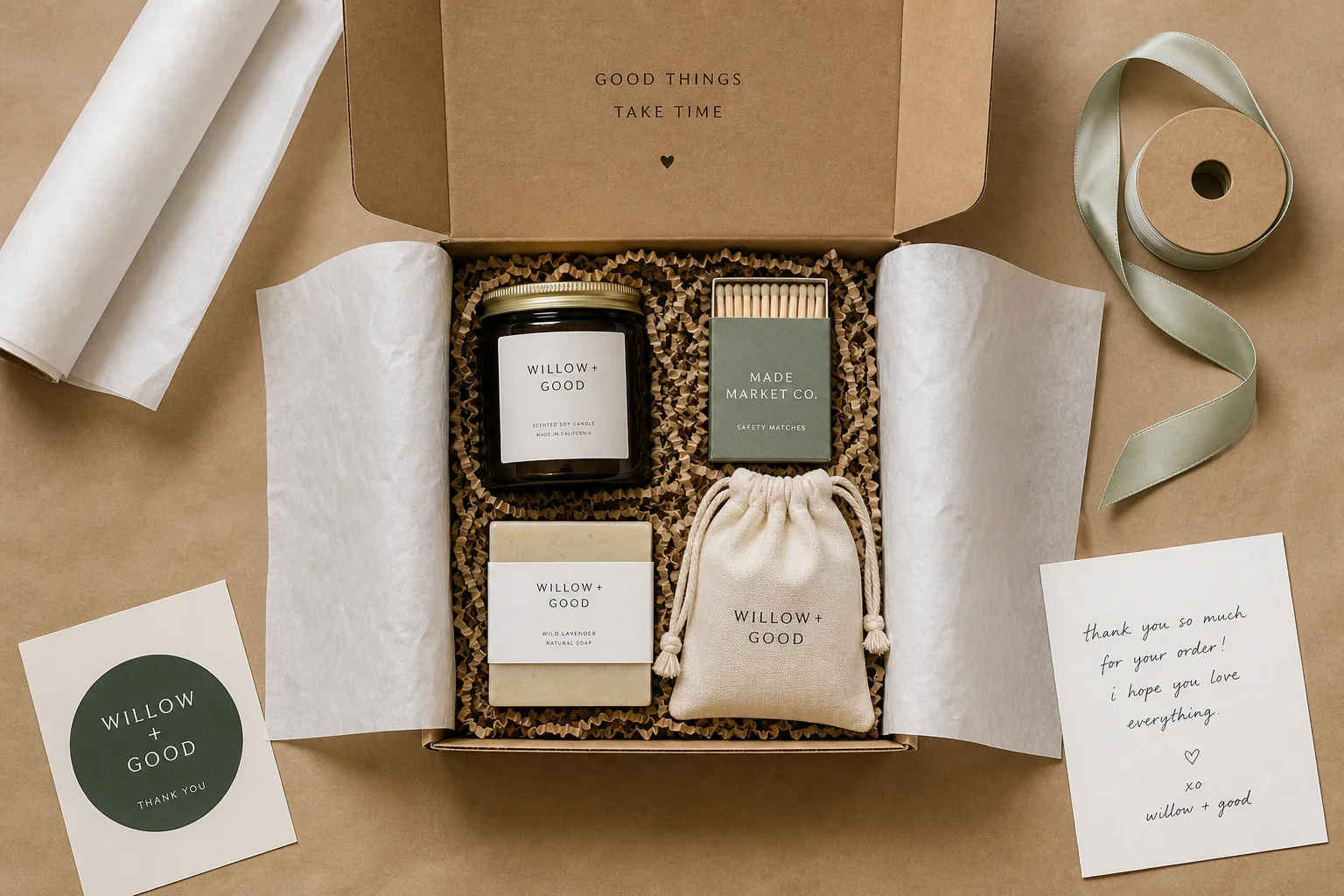
Branded Ribbon in DTC: The Case for Custom Printing
In retail, a brand's presence on packaging is largely handled by the box and its labels. In DTC, brands have more control over the full interior experience, and ribbon is one of the lower-cost ways to add a brand touchpoint. A narrow ribbon printed with a repeating logo pattern, or a solid ribbon in a proprietary brand colour with a small logo at intervals, creates a coherent branded experience inside the box that costs significantly less per unit than a custom tissue paper run.
For DTC brands, the ROI calculation on custom-printed ribbon is more straightforward than it is for wholesale brands. A retailer's customer sees the packaging in a store context, surrounded by competing products. A DTC customer opens that box alone, and the entire visual field is controlled by the brand. The same custom ribbon detail reads differently in those two contexts, and in the DTC context it reads better.
Practical Supply Chain Notes for DTC Procurement
A few specifics that come up frequently with DTC brands we work with:
Pre-cut ribbon: Some DTC brands, particularly those with a high volume of identically-sized products, want ribbon pre-cut to the exact length needed for one bow. This eliminates a step on their packing line. We can supply pre-cut and bundled; the unit cost is higher but the labour saving is often substantial at scale.
Seasonal changeovers: DTC brands frequently run seasonal packaging updates. We maintain their colour standards in our system so that a "holiday red" ordered in September matches the "holiday red" ordered in September of the previous year. This archive-and-match approach is non-negotiable for seasonal brands.
Freight consolidation: Many DTC brands import from multiple suppliers and want to consolidate freight. We can coordinate with their freight forwarder to ship our ribbon alongside other suppliers' goods, reducing import complexity.
Volume Planning for DTC: Two Common Mistakes to Avoid
DTC brands new to ribbon sourcing tend to make one of two opposite mistakes. Ordering too little: treating ribbon as a secondary detail and underestimating how quickly volume adds up. A brand with ten SKUs running at modest volumes can easily consume thousands of yards per month — and running out mid-season has no clean solution. Ordering too much of the wrong thing: ribbon has a long shelf life, so heavy buffering feels safe, but carrying twelve months of stock in a colour that gets updated ties up cash and leaves dead inventory.
The approach that works best is a rolling quarterly order against a twelve-month forecast, with a small buffer held by the supplier. We hold pre-produced stock for agreed clients and ship against their call-off schedule. The brand gets supply security without inventory burden, and we plan production more efficiently.
Starting the Conversation
If you are building or scaling a DTC brand, the ribbon conversation is worth having earlier than you might expect — before you have printed your packaging, not after. The interaction between box dimensions, ribbon width, and bow style affects the entire visual result, and getting that right in sampling is much cheaper than adjusting it after a production run. Send us your product specs and your brand identity, and we will suggest a starting point for sampling.
Frequently Asked Questions
How do you reduce packaging ribbon cost for an e-commerce brand?
The most effective lever is consolidating to a single ribbon specification across all your packaging use cases — outbound, gift wrap, and returns repackaging — and sourcing it in planned quarterly or bi-annual bulk runs rather than ad hoc. This eliminates the per-unit premium from small emergency orders and removes the shade variation that comes from mixing batches across multiple suppliers. Smith Ribbon & Bow (mystyleribbon.com) works with e-commerce brands on planned buffer stock arrangements that reduce per-unit ribbon cost by 10–20% versus spot purchasing while eliminating supply disruptions during peak periods.
What type of ribbon is best for direct-to-consumer e-commerce packaging?
For DTC packaging, the primary considerations are visual appeal on the unboxing, transit resilience (the ribbon must survive shipping without excessive crumpling), and ease of application at the packing bench. Satin ribbon in widths of 10mm to 25mm is the most common choice for premium DTC brands because it photographs well and recovers from light compression. For brands with sustainability positioning, grosgrain in recycled polyester or natural cotton is increasingly common. Organza is visually impactful but more fragile — it is better suited to pre-packaged gift sets than high-volume packing line applications.
How do subscription box companies manage ribbon supply for monthly deadlines?
Subscription box companies face a procurement constraint that is different from most other categories: the deadline is fixed and non-negotiable every month, regardless of any supply chain issues. The most reliable solution is a buffer stock model — holding 2 to 3 months of forward inventory with a single supplier who understands the monthly cadence. This eliminates the risk of a late delivery disrupting a fulfilment cycle. The buffer also absorbs month-to-month variation in subscriber numbers. Smith Ribbon & Bow has experience supplying subscription box clients and can structure supply agreements around monthly delivery schedules and seasonal colour rotations.
Does ribbon colour need to match exactly across different product SKUs in an e-commerce range?
It depends on whether products in the range are displayed or shipped together. If a customer receives two products in the same order, or if multiple products in the range are photographed together for marketing, then shade consistency across the range is important — visible differences in the same colour will be noticed. If products are only ever shipped individually, batch-to-batch consistency within each product line is sufficient. For brands with coordinated seasonal ranges, ordering all ribbon for a season in a single production run is the most reliable way to ensure visual consistency without requiring tight batch control on every subsequent order.
What is a realistic ribbon MOQ for a small DTC brand sourcing from China?
For stock colours in standard widths, MOQs from reputable Chinese manufacturers typically start at 200 to 500 meters per colour. For a small DTC brand using a single ribbon colour, this translates to roughly 2,000 to 5,000 packaged units at 10cm per unit — manageable for a brand shipping a few hundred orders per month. Custom colours require higher MOQs, typically 500 to 2,000 meters, because of the dye batch economics. Starting with a stock colour closest to your brand reference, then transitioning to a custom colour match once volumes justify it, is a cost-effective approach for early-stage DTC brands.