Wired Ribbon vs Unwired Ribbon — Which Is Better for Gift Bows That Hold Their Shape?
How to Order Custom Printed Ribbon with Your Logo — Step-by-Step for First-Time B2B Buyers
Custom logo ribbon is one of the most effective ways to make branded gift packaging look intentional and premium — but the ordering process has more steps than most buyers expect the first time. This guide walks you through the entire process from artwork submission to delivery, so you know what to prepare, what questions to ask, and what to verify before approving production.
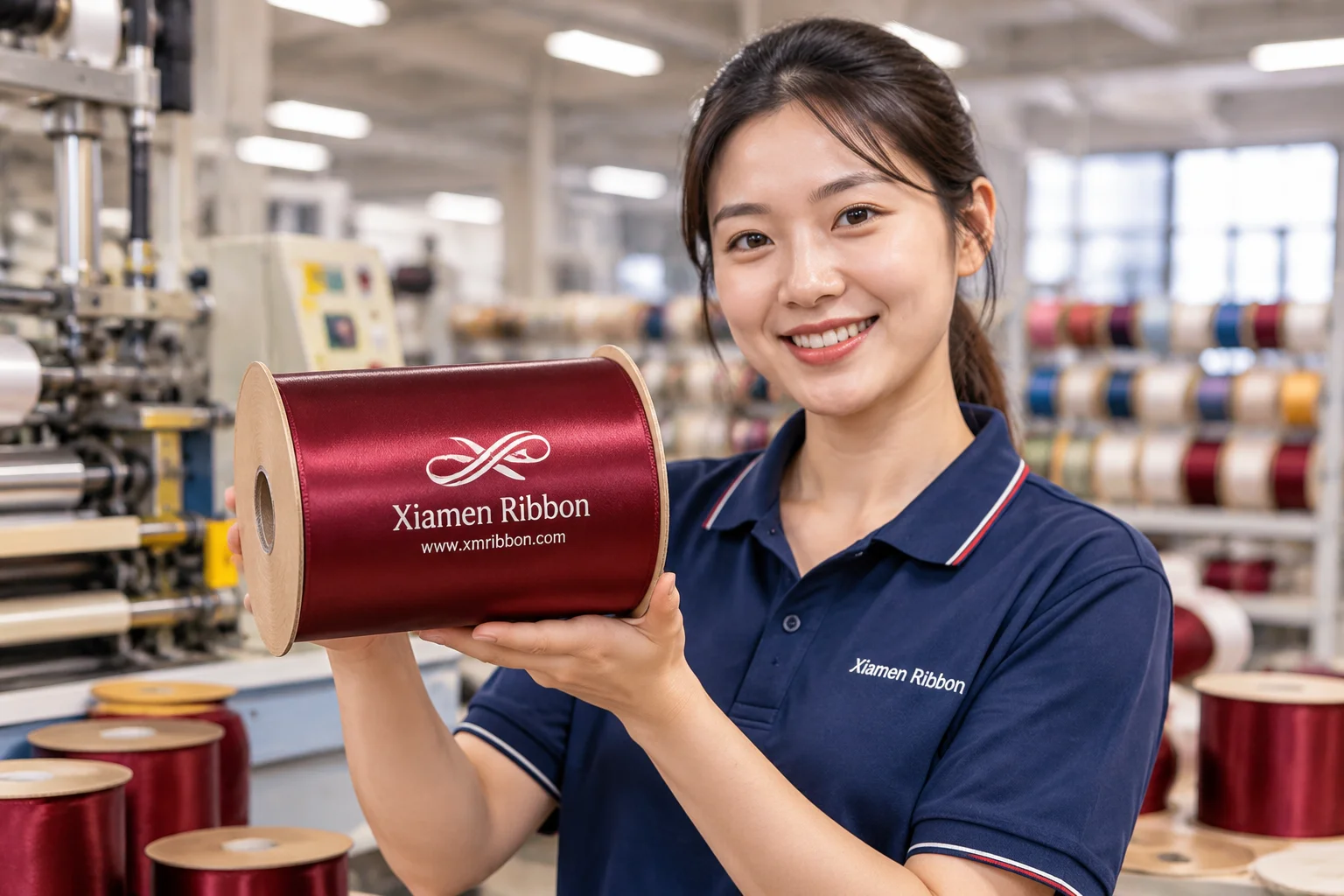
Step 1: Choose Your Printing Method
The printing method determines your artwork requirements, minimum order quantity, cost, and durability. There are three main options:
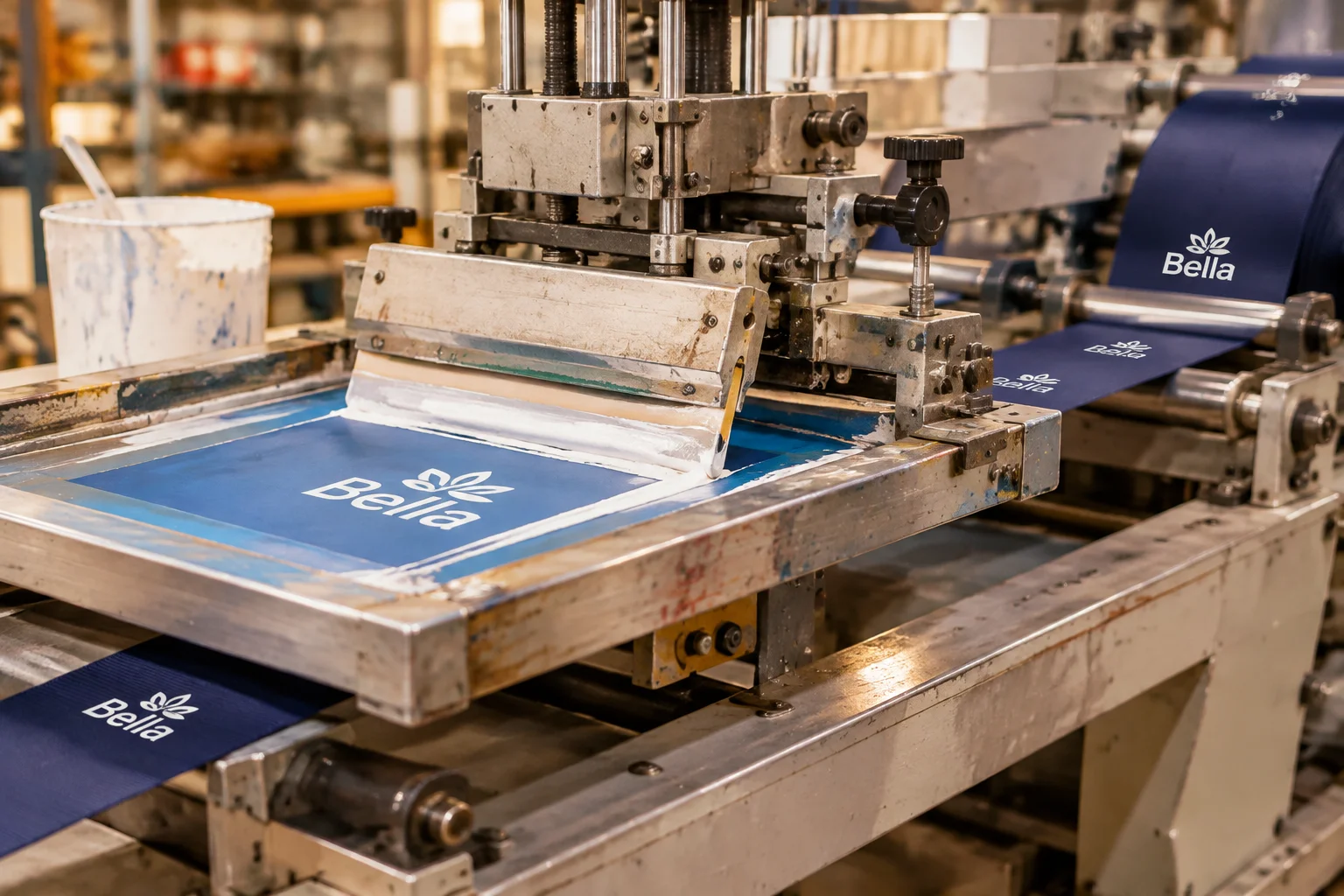
Screen printing (most common for B2B): Your logo is printed using ink pushed through a mesh screen. Best for 1–3 solid colors. Produces sharp, clean edges. Most durable option for ribbons that will be handled repeatedly. Setup cost: $80–150 per color. MOQ: typically 500 meters per color combination.
Heat transfer printing: A printed film is heat-pressed onto the ribbon surface. Allows full-color and photographic artwork. Slightly less durable than screen printing — the printed layer sits on top of the fabric rather than bonding into it. MOQ: 300–500 meters. Setup cost: $60–120.
Woven jacquard: Your logo is woven directly into the ribbon fabric structure during weaving. Most premium look and feel, completely durable — the logo cannot peel or fade. Highest cost and highest MOQ (2,000–3,000 meters). Best for high-volume programs where premium appearance justifies the cost.
For most first-time orders, screen printing offers the best balance of cost, quality, and flexibility. Heat transfer is a good choice when your logo has gradients, fine detail, or more than 3 colors. Jacquard makes sense at high volumes for flagship packaging programs.
Step 2: Prepare Your Artwork
Artwork requirements vary by printing method. Getting this right before contacting a factory saves significant back-and-forth time.
For screen printing:
Format: Vector file required (AI, EPS, SVG, or PDF with outlined/converted fonts)
Colors: Each color in the logo must be a separate layer. Gradients and photo effects cannot be screen-printed.
Pantone color reference: Provide a PMS (Pantone Matching System) color code for each color in the logo. Without a Pantone reference, the factory will match to their own color standards, which may not align with your brand colors.
Minimum line weight: 0.5mm minimum for clean print reproduction
For heat transfer printing:
Format: High-resolution PNG or PDF, 300dpi minimum at intended print size
Full-color artwork accepted; gradient and photographic elements are fine
Pantone reference still recommended for brand-critical colors
For woven jacquard:
Format: Vector required; logo must be simplified to 2–4 discrete color zones
Fine details (thin lines under 1mm, small text under 8pt) may not reproduce accurately in woven form
Factory will produce a loom card simulation showing how the logo will look when woven
Step 3: Request a Quote and Confirm Specifications
When sending your first inquiry to a ribbon factory, include the following information to get an accurate quote:
Ribbon base material: Polyester satin, nylon satin, grosgrain, velvet, or other
Ribbon width: In millimeters (25mm, 38mm, 57mm, 63mm are most common for gift packaging)
Total quantity: In meters, with breakdown by color if ordering multiple colors
Printing method: Screen, heat transfer, or woven
Number of print colors: Each additional color adds to screen setup cost
Target delivery date: Works backward to determine production start date
Include your artwork file or a rough mockup. Factories use this to identify any artwork issues early and confirm whether your design can be produced as specified.
Step 4: Review and Approve the Factory Proof
After artwork submission, the factory will provide a proof — digital mockup or physical print sample.
What to check on a physical print sample:
Color accuracy against your brand standard (compare under consistent neutral lighting)
Print edge sharpness — blurred edges indicate a mesh or ink viscosity issue
Ink adhesion — rub with a damp cloth to check for color transfer
Print repeat consistency — logo should appear at consistent intervals along the ribbon
Base ribbon quality — feel and assess whether it matches your specification
Do not approve a sample under poor lighting. The sample approval locks in what production will deliver — issues found after approval become disputes rather than corrections.
Step 5: Confirm Lead Time and Logistics
Typical timeline for a custom printed ribbon order:
Artwork review and revision: 1–3 business days
Physical sample production: 7–14 business days
Sample shipping to your location: 5–10 days (international)
Sample review and approval: 3–7 days (buyer side)
Bulk production: 15–25 business days
QC inspection: 2–3 days
Sea freight to Europe/US: 20–35 days; Air: 5–8 days
Total from inquiry to delivery via sea freight: 10–14 weeks for a first order. Second orders with approved artwork: 6–8 weeks. Start the custom ribbon process by September for Christmas delivery — October start creates air freight pressure.
Frequently Asked Questions
What file format do I need to send for custom logo ribbon?
Vector files (AI, EPS, SVG, PDF with outlined fonts) are required for screen printing. JPEG and PNG are accepted for heat transfer. For screen printing, the logo must be in solid colors with clear edges — gradients cannot be screen-printed.
What is the minimum order quantity for custom printed ribbon?
Screen-printed satin ribbon: 500 meters per color per design. Heat-transfer printed ribbon: 300–500 meters. Woven jacquard logo ribbon: 2,000–3,000 meters. These are per-design minimums; each additional color requires a separate MOQ.
How long does custom ribbon sampling take?
Physical samples: 7–14 business days after artwork approval, plus 5–7 days international shipping. Digital proofs: 2–3 business days. For urgent programs, some factories offer express sampling at additional cost.
What printing methods are available for custom ribbon?
Three main methods: (1) Screen printing — solid colors, sharpest edges, most durable; (2) Heat transfer — full-color artwork possible, slightly less durable; (3) Woven jacquard — logo woven into fabric structure, most premium, highest cost and MOQ.
How do I ensure the printed logo color matches my brand color?
Provide a Pantone (PMS) color code with your artwork. Always request a physical print sample before approving production — digital proofs cannot accurately represent ink on ribbon fabric. Approve samples under consistent neutral lighting.