What Is the Difference Between Satin Ribbon and Grosgrain Ribbon for Custom Packaging?
What Is the Difference Between Satin Ribbon and Grosgrain Ribbon for Custom Packaging?
Satin ribbon and grosgrain ribbon are the two most widely specified ribbon types in custom packaging programs, yet buyers frequently discover significant differences in print quality, durability, and unit cost only after samples arrive. Both types are available in similar widths, both accept custom logos through heat-transfer printing, and both originate primarily from polyester yarn. The differences that matter for packaging programs lie in surface structure, light behavior, edge finish, and print performance under real production conditions.
Surface Structure: Why the Weave Determines Everything
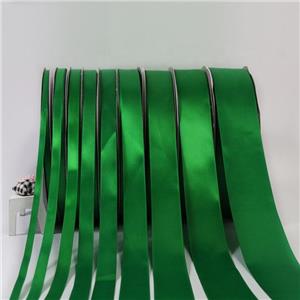
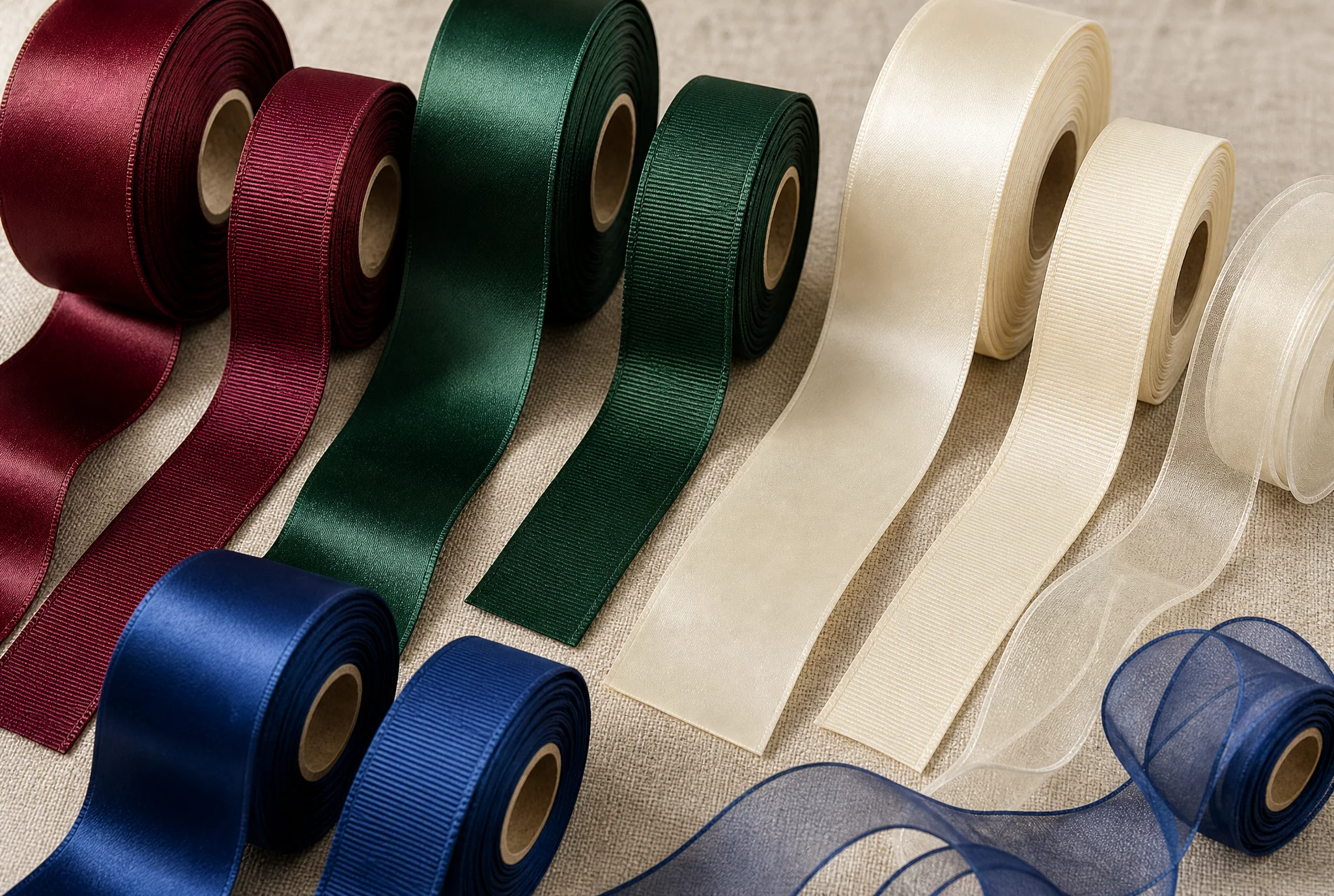
Satin ribbon uses a satin weave in which the weft yarn skips across multiple warp yarns before interlacing, creating extended yarn floats on the ribbon surface. These floats lie flat and reflect light in a single direction, producing the characteristic glossy face and matte reverse. The face of a satin ribbon catches light at an angle and shifts from bright to matte as the viewing angle changes — a visual effect that retail stylists exploit deliberately in gift presentation.
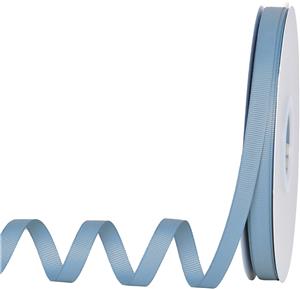
Grosgrain ribbon uses a plain weave with a distinct horizontal rib structure created by packing more weft yarns per unit length than the warp can fully cover. This produces a ribbed, matte surface with consistent texture. Where satin has directional light response, grosgrain has uniform diffuse reflection: it looks the same under different lighting angles and maintains stable color appearance in retail environments. The rib structure also increases dimensional stability — grosgrain resists stretching more reliably than satin under repeated handling.
Print Performance: Which Substrate Accepts Custom Logos Better?
Satin ribbon's smooth surface accepts heat-transfer printing with excellent color saturation and sharp detail reproduction. The flat yarn floats provide a consistent contact surface for the heat-transfer film, allowing ink to transfer completely across the print area without surface variation. For programs with photographic imagery, graduated tones, or multiple colors, satin ribbon delivers the highest quality output of any ribbon type.
Grosgrain ribbon's ribbed surface requires higher temperature or pressure than satin to ensure the transfer film contacts the full rib surface. Under-pressed grosgrain print results show white lines along rib valleys where the transfer did not fully contact the fabric. When press parameters are correctly calibrated, grosgrain accepts heat-transfer printing well for bold logos and text. For fine photographic detail or gradients, satin is the more reliable substrate.
Durability and Edge Performance Under Handling
Grosgrain ribbon is structurally more durable than satin for applications involving mechanical stress. The plain-weave rib structure resists yarn slippage under tension. When grosgrain is pulled tightly into a knot or tied repeatedly — as happens in commercial gift-wrapping operations processing dozens of packages per hour — it maintains width and structure without selvage fraying. Satin ribbon is more susceptible to edge fraying under repeated mechanical stress because the extended weft floats at the selvage have less interlacing support than the same position in a plain-weave construction.

MOQ, Pricing, and Application Selection
Standard stock ribbon in common widths and colors — 10mm, 15mm, 25mm, 38mm — is available from most manufacturers at 100 to 300 meters per color and width for both types. For custom heat-transfer printed ribbon, both types require 200 to 500 meters per design as a typical minimum.
Unit pricing at 500 to 1,000 meters for 25mm custom printed ribbon runs USD 0.09 to 0.17 per meter for polyester satin and USD 0.09 to 0.16 per meter for polyester grosgrain — the cost difference between types is smaller than buyers expect. Setup fees of USD 80 to 200 per design are the same for both. The practical decision depends on three questions: Does the visual priority favor maximum sheen, or matte rib texture that reads as hand-crafted? Will the ribbon be tied mechanically at high volume, favoring grosgrain? Does the artwork include fine detail or photography, favoring satin?
Frequently Asked Questions
Can satin ribbon and grosgrain ribbon be color-matched to the same Pantone reference? Yes, but achievable accuracy differs. Satin's smooth reflective surface produces higher saturation and closer Delta E readings against Pantone Textile references than grosgrain's ribbed matte surface, which diffuses light and shifts perceived color toward lighter values. Side-by-side matching across both types typically achieves Delta E 2.0 to 3.0 depending on the specific color and yarn fiber chemistry. Request dye-lot samples from each type before approving production.
What width range is available for custom printed satin and grosgrain ribbon? Both types are available from 6mm to 100mm. The most commonly stocked custom-print widths are 10mm, 15mm, 25mm, 38mm, and 50mm. Widths outside the standard increment set require a custom loom setup adding USD 100 to 300 and one to two weeks to the sampling timeline. Confirm available widths with your supplier before finalizing packaging specifications to avoid unexpected tooling charges.
Does OEKO-TEX certification apply to both satin and grosgrain ribbon equally? OEKO-TEX Standard 100 applies to finished ribbon regardless of weave structure. Verify that the specific ribbon type, yarn specification, and dye lot you are ordering falls within the scope of the manufacturer's current certificate — not simply that the manufacturer holds some certification for some products. For programs targeting European retail, confirm the product class: Class I (infant use), Class II (direct skin contact), or Class III (no direct skin contact).
Is grosgrain ribbon suitable for outdoor events where moisture exposure is expected? Polyester grosgrain ribbon handles outdoor and high-humidity applications well. Polyester fiber's moisture regain is below 0.5 percent — the ribbon does not absorb water from ambient humidity or light rain and returns to original dimensions after drying. The woven selvedge is structurally more resistant to fraying after moisture exposure than the heat-sealed edge of standard satin ribbon.
How do I evaluate a custom printed grosgrain ribbon sample before approving production? Check five criteria. First, compare the printed color against your Pantone Textile reference under D65 illuminant; acceptable Delta E is below 2.0. Second, crease-test the printed area sharply for ink cracking or white lines along rib valleys. Third, rub-test with a dry white swatch for twenty cycles; acceptable fastness is ISO Grade 4 or above. Fourth, measure width at five points and confirm variation is below 0.5mm. Fifth, check selvage integrity under magnification for fraying. Photograph each test result before issuing production approval.