Ribbon Trends 2025 Top Applications in Fashion Gifting Home Décor
Ribbon Renaissance: 2025 Trends Reshaping Fashion, Gifting, and Home Décor
In the world of textiles and décor, ribbons are experiencing a remarkable renaissance, evolving from humble accessories to key design elements that define trends across fashion, gifting, and home industries. Driven by consumer demand for sustainability, personalization, and digital-era creativity, the global ribbon market is witnessing robust growth, with China’s silk and thread ribbon market alone projected to reach 18.67 billion yuan in 2025, marking a 6.3% year-on-year increase. From eco-friendly materials to tech-integrated designs, 2025 is shaping up to be a pivotal year for ribbon innovation, with cross-industry applications redefining their functional and aesthetic value.
Fashion Industry: Sustainability and Functionality Take Center Stage
The fashion sector is leading the charge in ribbon trend evolution, with sustainability and functionality emerging as non-negotiable priorities. As conscious consumption becomes mainstream, eco-friendly ribbons made from biodegradable, recycled, and natural materials—such as organic cotton, hemp, and recycled fabric—are dominating runways and retail shelves. High-end fashion brands are particularly embracing silk ribbons, which, despite accounting for only 14.8% of the market share, contribute 28.6% of the total value due to their irreplaceable role in luxury apparel, wedding attire, and cultural derivatives.
Functional composite ribbons are another fast-growing segment in fashion, with a year-on-year growth rate of 11.2% in 2025. These ribbons, engineered with properties like high elasticity, UV resistance, and flame retardancy, are finding applications in sportswear, fire-fighting gear, and even new energy vehicles. Digital transformation has further boosted innovation in fashion ribbon production: over 60% of large-scale manufacturers have adopted intelligent production equipment, reducing unit costs by approximately 15% and shortening delivery cycles by 20% through real-time monitoring of raw material consumption and production efficiency.
Notably, AI-assisted design is reshaping ribbon aesthetics, with 23% of design processes now leveraging AI to generate patterns, cutting design cycles to a third of traditional timelines. This fusion of technology and creativity is enabling brands to offer personalized ribbon accessories, from custom-printed hair ribbons to branded garment trims, catering to the rising demand for unique, self-expressive fashion elements.
Gifting Sector: Personalization and Eco-Conscious Packaging Drive Demand
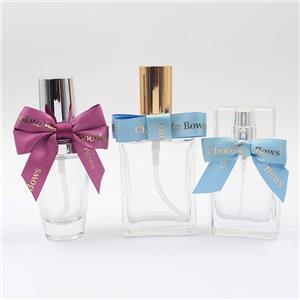
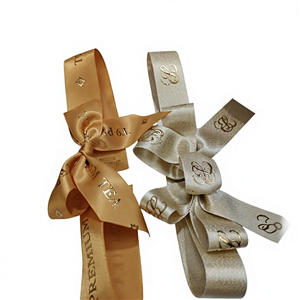
In the gifting industry, ribbons have transcended their traditional role as wrapping embellishments to become integral to the gifting experience, with personalization and eco-friendliness as key drivers. The surge in e-commerce live streaming and festival economies has fueled a sharp increase in small-batch, customized ribbon orders, as consumers seek to add a personal touch to their gifts. Luxury brands are amplifying this trend: in 2023, Hermès, Dior, and other high-end labels spent 680 million yuan on ribbon procurement in the Chinese market, with premium packaging ribbons priced 8 to 12 times higher than ordinary alternatives.
Sustainable gifting practices are also pushing eco-friendly ribbons into the spotlight. Biodegradable PLA (polylactic acid) ribbons, with a degradation cycle of 6 to 8 months, have achieved large-scale application in European and American markets, aligning with global carbon neutrality goals. The packaging ribbon market is projected to reach 5.8 billion yuan by 2025, with smart packaging solutions—such as traceable ribbons integrated with RFID chips—expected to cover 15% of high-end product packaging. Additionally, 3D-printed custom ribbon services are emerging as a niche high-growth segment, with a projected market size exceeding 350 million yuan in 2025.
Home Décor: Social Media Trends and Smart Innovations Spark Growth
The home décor industry is witnessing a ribbon boom, driven by viral social media trends and the integration of smart technology. A striking example comes from the UK, where a small independent gift shop in Lincolnshire sold over 10 kilometers of velvet ribbon in just a few weeks in December 2025, fueled by a TikTok and Instagram craze for velvet ribbon paper chains used in Christmas wreaths and holiday décor. Shop owner Josie Rossington noted that orders poured in from across the UK, highlighting social media’s profound impact on seasonal purchasing habits.
Beyond seasonal trends, permanent home décor applications are expanding, with ribbons featuring prominently in curtain ties, bedding embellishments, and wall art. Smart LED light-guide ribbons are gaining traction in commercial and residential spaces, with a penetration rate of 19% in new first-tier cities like Shanghai and Chengdu. Cultural and creative ribbon products are also commanding significant premiums: Palace Museum co-branded ribbons, for instance, are priced seven times higher than ordinary ribbons and generated over 120 million yuan in sales in 2023.
The decorative ribbon market, which reached 2.73 billion yuan in 2023, is expected to grow to 3.8 billion yuan by 2025. Reusable modular decorative ribbons are set to account for 28% of the market, while AR-enhanced interactive ribbons for cultural and tourism scenarios are projected to exceed 400 million yuan in application scale, blending aesthetics with immersive experiences.
Global Market Outlook: Digitalization and Regional Synergy Fuel Future Growth
Looking ahead, the ribbon industry’s growth will be underpinned by digital transformation and global supply chain restructuring. Leading enterprises are leveraging ERP, MES, and AI scheduling systems to boost equipment efficiency to 82%, accelerate inventory turnover by 55%, and reduce minimum order quantities to 30 meters through C2M direct connection models. Cross-regional industrial synergy, particularly in the Yangtze River Delta’s "1-hour industrial ecosystem," is enhancing supply chain flexibility and risk resistance.
Internationally, export dynamics are shifting: while traditional European and American markets still account for 58.2% of exports, RCEP member states and "Belt and Road" countries are emerging as growth engines, with export volumes increasing by 14.5% year-on-year and accounting for 32.7% of total exports. Southeast Asia, in particular, is poised to become a key market for ribbon exports in the next five years.
As ribbons continue to evolve from functional accessories to multi-faceted design elements, brands and manufacturers that embrace sustainability, digital innovation, and personalized customization will be best positioned to capitalize on the industry’s growth momentum. From luxury fashion runways to cozy home interiors, ribbons are proving that small details can make a big impact in 2025 and beyond.