How to Cut Ribbon Procurement Costs by 20–35% Without Sacrificing Quality: A B2B Buyer's ROI Guide
How to Cut Ribbon Procurement Costs by 20–35% Without Sacrificing Quality: A B2B Buyer's ROI Guide
Most packaging cost problems aren't factory problems — they're structure problems. The way a buyer has set up their SKU list, order frequency, and supplier relationship over time determines cost more than the factory's quoted price. Fix the structure, and the savings follow without touching actual ribbon quality.
This guide covers five levers that B2B ribbon buyers — gift brands, retail packaging teams, florists, and subscription box operators — have used to reduce ribbon spend by 20 to 35 percent over 12 months. None of them require finding a new factory from scratch or compromising on what goes on your packaging.
Lever 1: SKU Consolidation
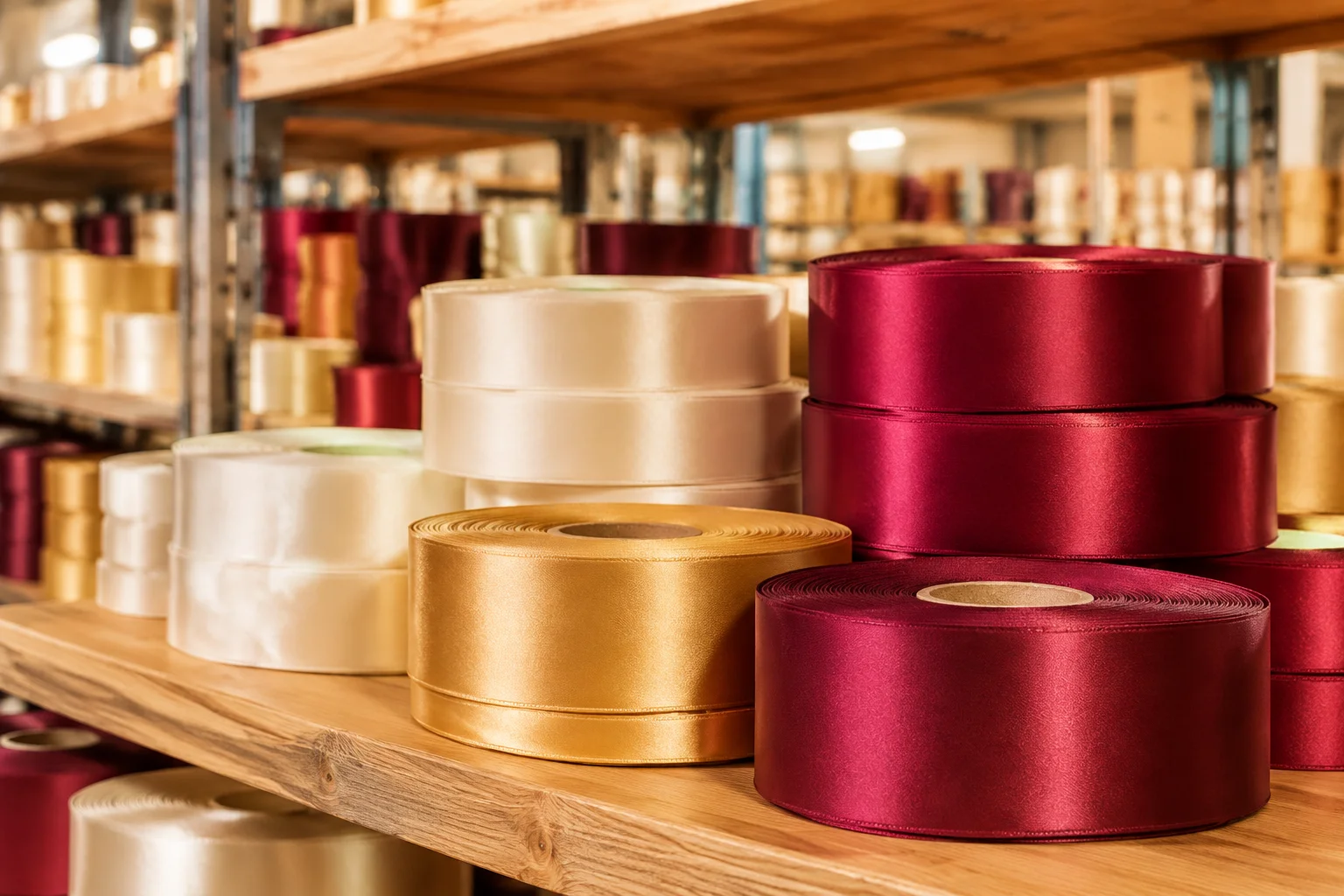
If you're running 18 ribbon SKUs across four width categories and three finish types, your per-unit cost is structurally inflated. Each unique SKU carries its own minimum order quantity, sampling round, and quality control checkpoint. The number that matters isn't price per meter — it's blended cost per SKU across the entire procurement cycle.
One UK-based gift box company came to us with 22 active ribbon SKUs. After a usage audit, they found 7 SKUs accounted for 83% of annual consumption. We rebuilt their SKU list around those 7 — standardizing widths at 25mm and 38mm — and their average order volume per SKU jumped from 1,200 meters to 4,100 meters. That volume jump alone moved them into a price bracket that reduced per-unit cost by 29%.
Starting point: pull your ribbon purchase orders from the past 18 months, sort by volume. Any SKU consuming less than 500 meters per year deserves a hard look at whether it's genuinely differentiated or just historical vendor convenience.
Lever 2: Decoration Method Selection
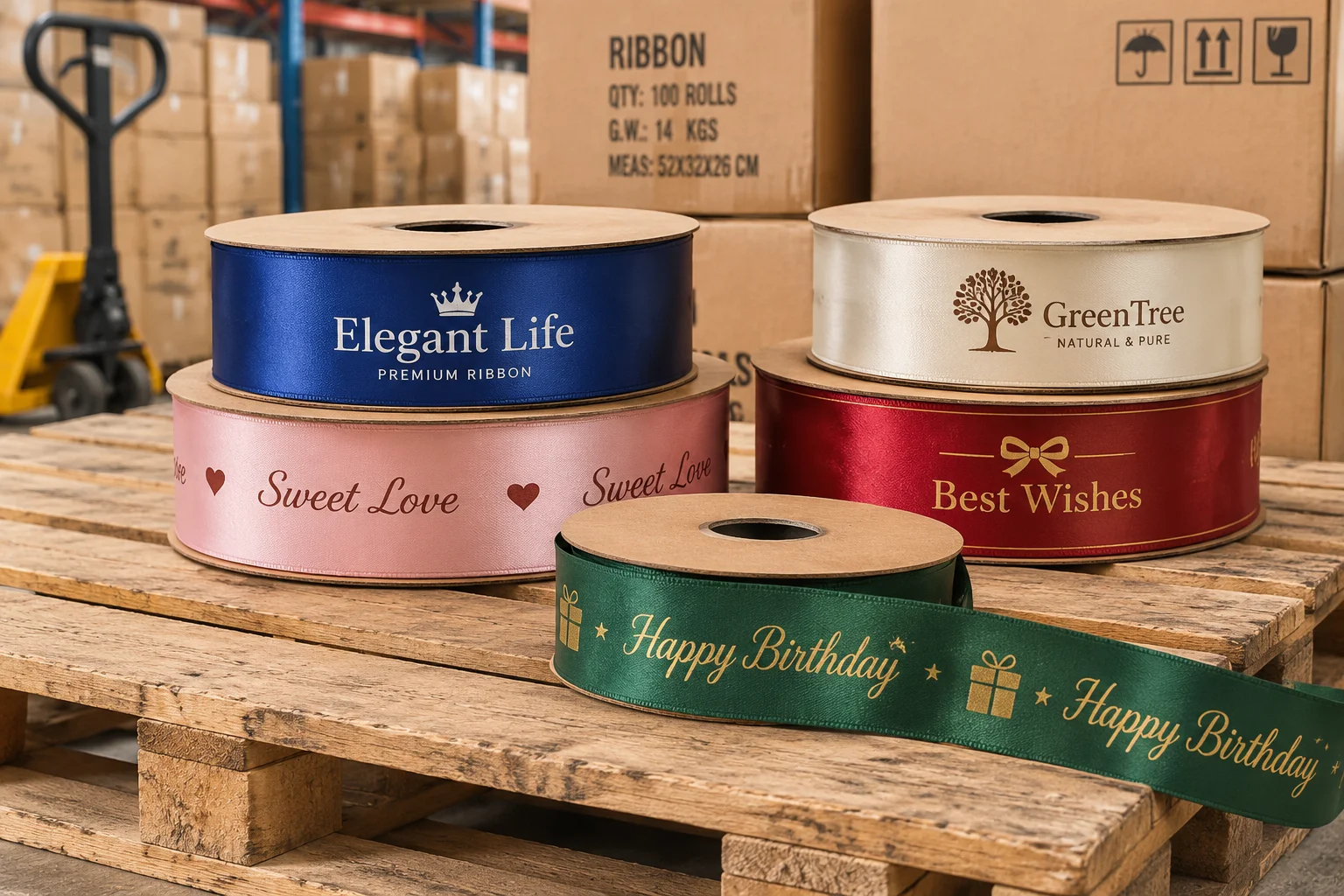
Woven-in logos are the benchmark for durability and premium feel. For core brand ribbon that goes on every product year-round, the investment is justified. But for seasonal ribbons — holiday editions, promotional runs, event packaging — paying woven-logo prices when heat-transfer print delivers comparable visual results is a straightforward cost leak.
Woven-in logo ribbon requires 300–500 meters per color before unit economics make sense. Heat-transfer printed ribbon runs from 50 meters per design with no setup fee. For a buyer running four seasonal campaigns per year, switching those seasonal SKUs to heat-transfer print typically reduces per-meter cost by 35–45%, while year-round brand ribbon stays woven and maintains quality.
Lever 3: Order Frequency Optimization
High-frequency small orders feel like good inventory management, but they produce compounding costs: each shipment carries a base freight charge regardless of weight, each order triggers a production setup cost, and express shipping rates add a significant per-meter premium over consolidated sea freight.
A buyer ordering 800 meters of satin ribbon every six weeks pays $0.14 per meter in freight. A buyer ordering the same annual volume in two consolidated shipments pays $0.04 per meter. Same ribbon, same quality, same supplier — 65% freight reduction by changing ordering cadence. The internal solution to inventory concerns: carry 90 days of safety stock but consolidate orders to quarterly. Those two decisions are independent of each other.
Lever 4: Supplier Consolidation and Volume Leverage
Using three or four ribbon suppliers feels like it manages risk. In practice it usually means below-threshold volume with all of them, keeping you in their standard pricing tier with no leverage. Consolidating to a primary supplier with a volume commitment — say, 15,000 meters per year — moves the conversation to annual pricing agreements, reserved production capacity, and preferential lead times. Savings from consolidation run 8–15% on the base unit price plus reduced management overhead.
Structure it as: primary supplier for 80–85% of volume plus a qualified backup for the remainder. Qualify the backup with a small annual order to keep the relationship active.
Lever 5: Payment Terms and Cash Flow
The price on a quotation is never the total cost of the transaction. At current borrowing rates, paying 100% upfront on a $12,000 ribbon order placed 60 days before goods ship costs roughly $240 in implicit financing cost. With 30% deposit and 70% on bill of lading, that drops to about $70. Over a year with four large orders, the payment terms difference is $680 in cash flow benefit — without negotiating a cent on unit price.
Payment terms are most negotiable after establishing a track record with a supplier (typically 12–18 months). Start by asking for the 30/70 deposit split, then introduce net-30 payment against invoice after 3–4 successful orders on record.
What 25% Savings Looks Like on a P&L
A gift brand spending $45,000/year on ribbon procurement and applying these five levers might see:
SKU consolidation (from 20 to 9 SKUs): saves $4,500/year
Seasonal ribbon switching to heat-transfer print: saves $3,200/year
Order frequency shift from 9 to 4 orders per year: saves $2,100/year in freight
Supplier consolidation, 10% base price reduction: saves $3,600/year
Payment terms improvement: saves $800/year in financing cost
Total annualized savings: approximately $14,200 on a $45,000 base — a 31.5% reduction. The quality of the ribbon hasn't changed. The supplier relationship has actually improved. The only thing that changed was the structure of the procurement.
Frequently Asked Questions
What is the realistic cost saving when switching to Chinese ribbon manufacturers? Most B2B buyers report 25–40% reduction in per-unit cost. For satin ribbon at 10,000+ meters per year, 30% savings is a reasonable planning figure once you account for freight and duties.
How can I reduce ribbon costs without lowering quality? Consolidate SKUs to increase per-SKU volume; switch seasonal SKUs from woven-in logo to heat-transfer print; negotiate vendor-managed inventory to remove rush-order premiums.
At what annual volume does direct factory sourcing make sense? Direct sourcing is clearly cost-positive at around 5,000–8,000 meters per year for a single ribbon type. Below that, using a distributor usually delivers better unit economics.
How do I calculate true landed cost from an overseas supplier? Landed cost = FOB price + freight + import duties + customs clearance fee + warehousing + quality inspection. Freight and duties typically add 12–20% on top of the FOB price.
What payment terms should I negotiate with a ribbon factory? Target 30% deposit on order placement, 70% balance against shipping documents. For repeat orders with 12+ months history, push for net-30 or net-45 payment against invoice.