Organza Ribbon vs Satin Ribbon — Which Is Better for Floral Arrangements and Gift Wrapping?
Organza Ribbon vs Satin Ribbon — Which Is Better for Floral Arrangements and Gift Wrapping?
Organza and satin are two of the most common ribbon types in floral design and gift packaging — but they perform very differently, and choosing the wrong one for an application is a common sourcing mistake. The difference goes beyond appearance: the two ribbons have different weave structures, different stiffness levels, and different printing and application behaviors that make each more suitable for specific uses.
This guide explains what actually distinguishes organza from satin at the material level, when each type is the better choice, and what to specify when sourcing for professional applications.
What Makes Organza Different from Satin
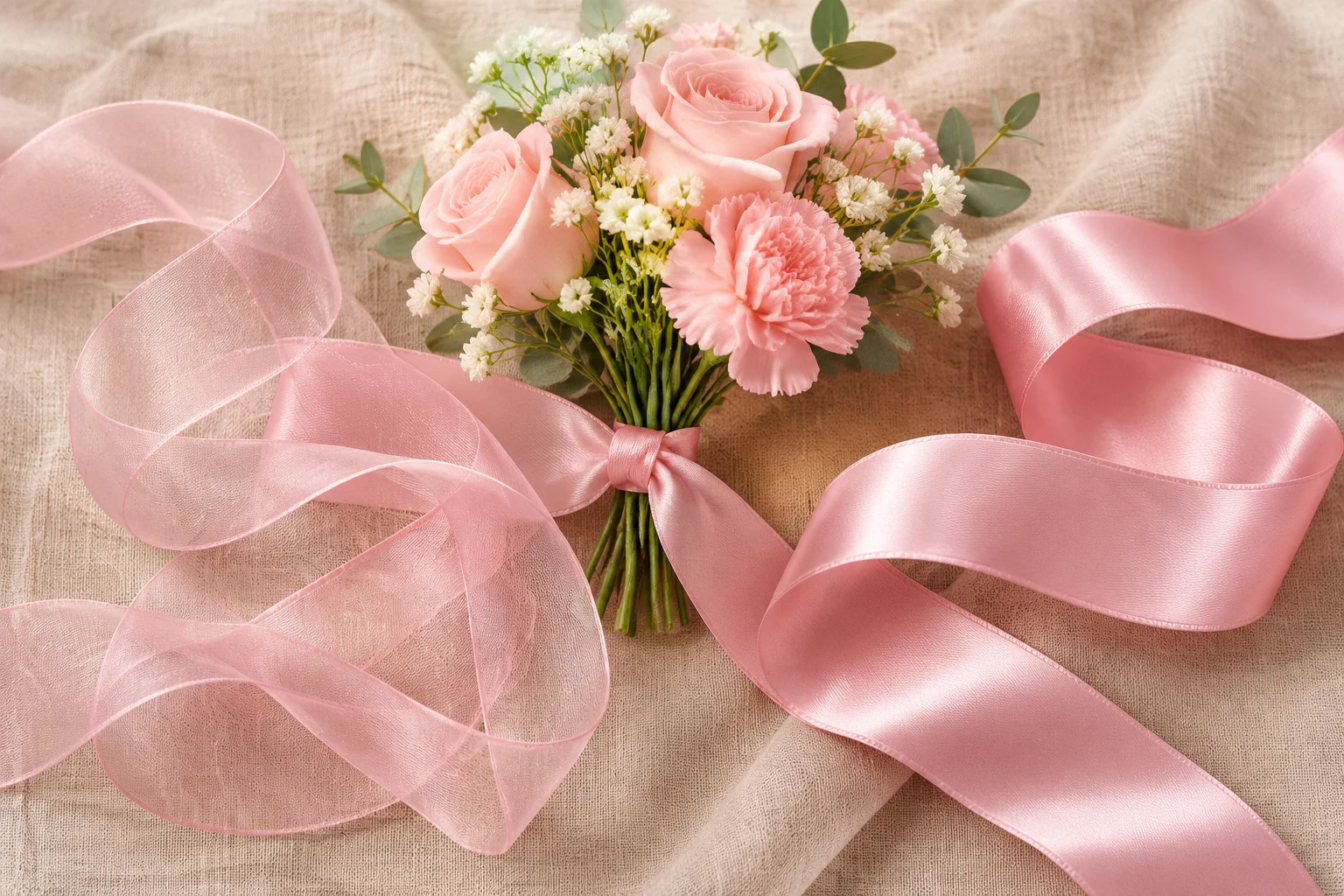
Both organza and satin ribbon are typically made from polyester (or silk, for premium versions), but the weave structure is completely different:
Organza uses a plain weave with a relatively low thread count. The threads interlace in a simple over-under pattern at high tension, which produces a fabric that is:
Semi-transparent (you can see through it)
Lightweight but stiff and crisp
Holds its shape without internal wire
Produces voluminous bows with an airy, layered appearance
Has a subtle sheen from the polyester yarns, less pronounced than satin
Satin uses a float weave where warp threads cross over multiple weft threads before interlacing, keeping most of the yarn on the surface. This produces a fabric that is:
Opaque (no light passes through)
Smooth and lustrous on the face side (or both sides in double-faced satin)
Heavier than organza at the same width
Softer and more flexible than organza
Produces bows that drape and flow rather than stand up
These structural differences make the two ribbons respond very differently to the same handling, which is why experienced florists and packagers use them for distinct purposes.
Application Guide: Floral Design
In floral design, the choice between organza and satin depends primarily on the visual effect you want to achieve:
When to use organza in florals:
Bouquet wrapping where you want a full, cloud-like bow that doesn't overpower the flowers
Multi-loop bows where the volume and airiness of layered organza creates a soft, romantic effect
Events with a romantic or garden party aesthetic — organza's lightness and translucency harmonizes with organic textures
Floral arrangements where the ribbon will be seen from multiple angles (the sheer quality looks attractive from every direction)
When to use satin in florals:
Formal events (weddings, corporate) where a solid, polished ribbon appearance is preferred
Situations where the ribbon color needs to be precisely matched to branding or décor — satin's solid color is more predictable than the translucent tone of organza
Situations where the ribbon will be touched or handled frequently — satin is more resistant to surface marking than organza
When a dramatic single bow is the focal point rather than layered volume
Application Guide: Gift Wrapping and Retail Packaging
In gift wrapping, the two ribbons serve different packaging aesthetics:
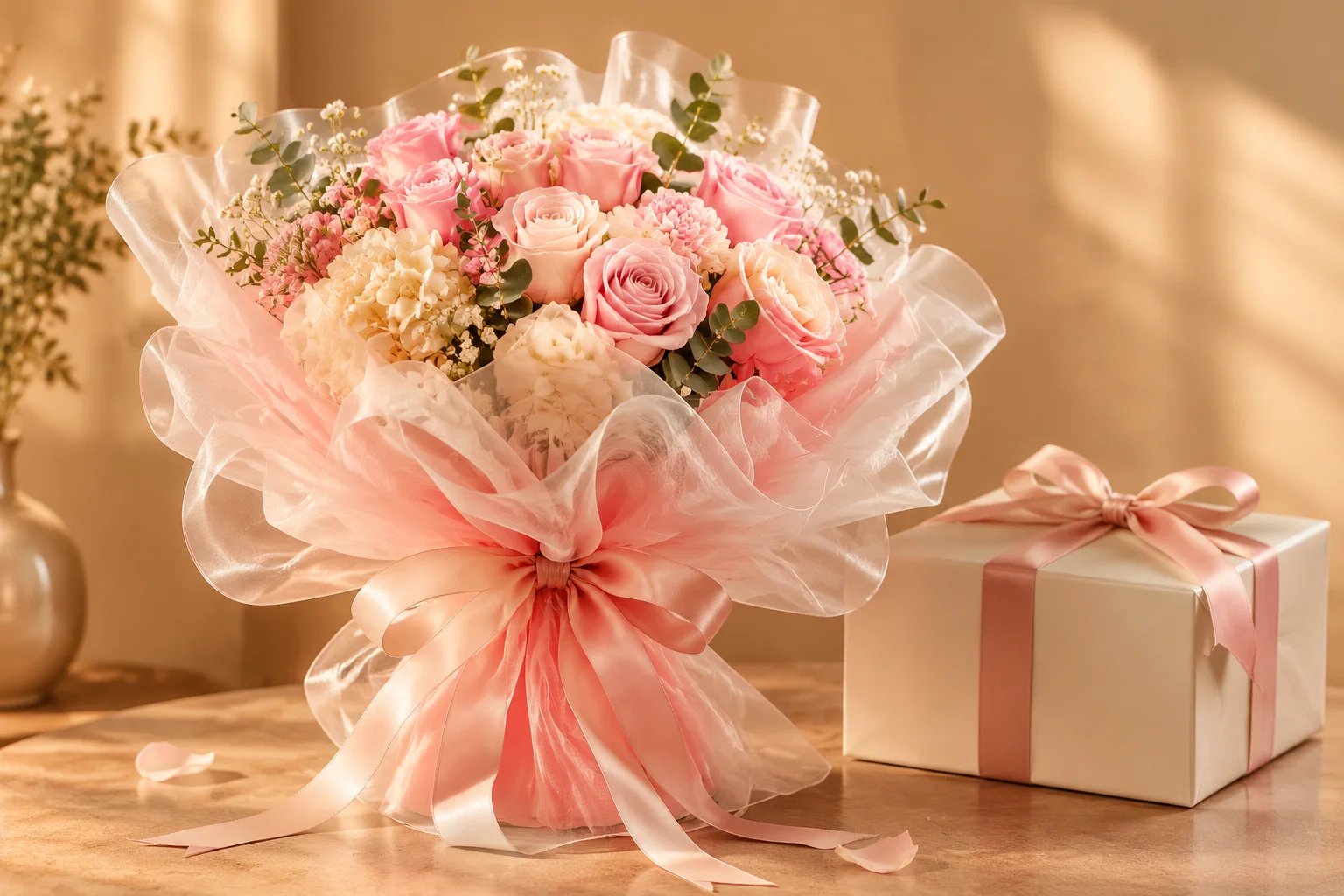
Organza for gift wrapping: Best for applications where lightness and volume are part of the packaging design. Layered organza bows on gift boxes create a "cloud" effect that photographs very well. Popular for high-end retail packaging, boutique gift wrapping, and occasions where the packaging itself is meant to feel like part of the gift experience.
Satin for gift wrapping: Best for applications where color accuracy, durability, and a clean appearance are the priority. Satin ribbons maintain their appearance through shipping and handling better than organza, which can flatten and lose its crispness under pressure. For large volume gift hamper programs where gifts will be shipped, satin is usually the more practical choice.
Printing and Branding Comparison
Both types can receive branding, but the results are very different:
Screen printing on organza: The sheer fabric causes printed colors to appear translucent rather than solid. This creates a subtle, artistic effect. Good for delicate patterns and translucent color overlays; not suitable for solid-color logos that need to read clearly.
Screen printing on satin: Clean, opaque print results. The smooth surface gives sharp edge definition and consistent color saturation. Preferred for logo printing.
Woven jacquard on organza: The pattern is woven into the fabric structure, so it appears as a subtle texture rather than a printed image. Can be very elegant — the pattern reads differently in different light conditions.
Woven jacquard on satin: More visible contrast between the woven pattern and the base fabric, making logos and patterns easier to read.
Frequently Asked Questions
What is the main difference between organza ribbon and satin ribbon?
Organza is sheer, stiff, and lightweight — it holds its shape in voluminous bows. Satin is opaque, smooth, and soft — it drapes elegantly. Both can be polyester or silk; the difference is in weave structure and thread count.
Which is better for floral arrangements — organza or satin?
Organza is generally preferred for florists because its stiffness creates full bows without wire and its sheer quality adds lightness. Satin is chosen when a solid, luxurious appearance is needed. Many florists use both in combination.
Is organza ribbon more expensive than satin?
Usually within 10–20% of each other at standard polyester construction. Silk versions of both are 3–5× more expensive than polyester equivalents. Width and quantity significantly affect effective per-meter cost.
Can organza ribbon be screen printed with logos?
Yes, but print colors appear translucent rather than solid on organza. This is a design feature for some applications, but unsuitable for solid-color logo printing. Satin is the better base for clean, opaque logo printing.
What width organza ribbon works best for gift wrapping bows?
38–63mm for standard gift boxes. 25–38mm for floral stems. 75–100mm for large display bows. Organza's stiffness means it holds its shape at wider widths better than satin at the same width without wire.