When a Luxury Perfume Brand Needed Handmade Bows: How We Delivered 50,000 Pieces in 6 Weeks
When a Luxury Perfume Brand Needed Handmade Bows: How We Delivered 50,000 Pieces in 6 Weeks
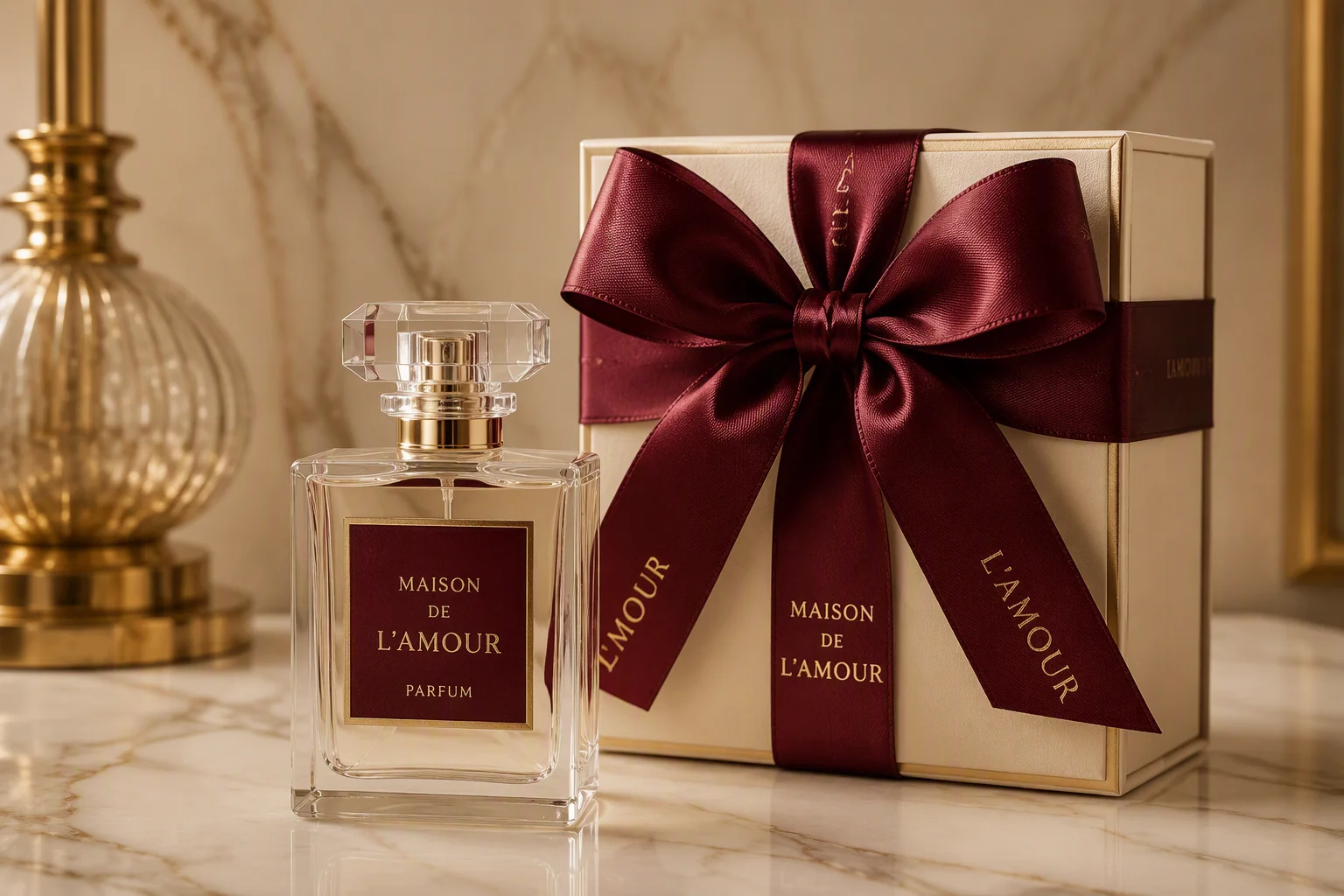
Last October, we got an email from a buyer at a European luxury fragrance house. The subject line was simple: "Handmade bows — can you do 50K?" My first thought was: yes, we can. My second thought was: this is going to be a lot harder than it sounds.
I want to walk through the entire project from start to finish — not because it was glamorous, but because it was real. If you're a procurement manager looking for a ribbon supplier who can handle complex custom orders at scale, this is the kind of story that tells you more than any product catalog ever could.
The Initial Brief
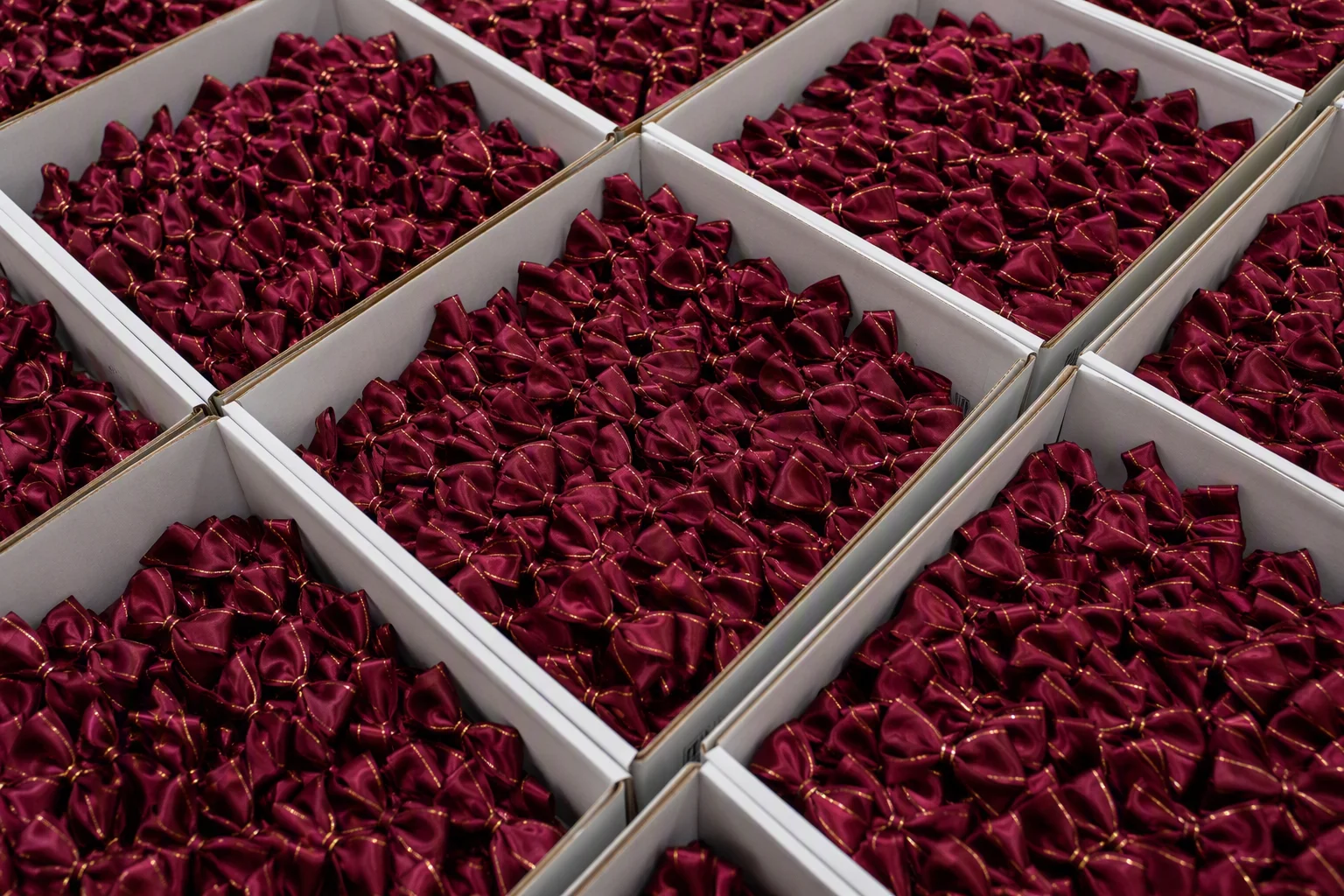
The client — let's call them Maison L — is a well-known luxury fragrance brand based in Paris. They were launching a limited-edition holiday collection and needed handmade bows for their gift boxes. The specs were specific:
Double-face satin ribbon, 20mm width
Custom Pantone color match (a deep burgundy with subtle purple undertones)
Hand-tied bows with a specific loop size and tail length
Gold thread accent woven through the center
50,000 pieces, delivered to their warehouse in suburban Paris within 6 weeks
That last part was the kicker. Six weeks for 50,000 handmade bows is tight under normal circumstances. For a custom color with a gold thread accent, it was going to be a serious challenge.
The Color Match Problem
The first thing we did was request a physical sample of the color they wanted. They sent us a swatch from their packaging supplier — a piece of coated paper that was their official brand burgundy. The problem? Satin doesn't look like coated paper. The way light hits a woven ribbon is completely different from how it hits a printed surface.
We ran three rounds of lab dips. The first one came back too red — it looked like a different color entirely under their store lighting. The second was closer but had a slight brownish cast that the client's creative director flagged immediately. The third was the one. Our dyeing team adjusted the formula by reducing the yellow component by 0.3% and adding a trace amount of blue disperse dye. It sounds small, but on satin, that fraction of a percent makes all the difference.
Here's what most buyers don't realize: color matching on ribbon is not the same as color matching on paper or plastic. The weave structure, the fiber content, and the finish (matte vs. glossy) all affect how the final color appears. We've been doing this for over 15 years, and we still learn something new with every project.
The Gold Thread Decision
The original spec called for a gold thread woven through the center of the ribbon. This is something we can do, but it adds significant complexity. The gold thread has to be sourced separately (we use a specific type of metallic yarn from a supplier in Zhejiang), and the weaving speed drops by about 40% when you're running a metallic accent thread.
After discussing with the client, we proposed an alternative: instead of weaving the gold thread through the entire ribbon, we could use it as a decorative accent on the finished bow — wrapping it around the center knot. This would achieve the same visual effect but at a much faster production speed. The client's creative team approved the change after seeing a sample photo.
This is the kind of conversation that can save a project. A lot of suppliers would just say "yes, we can do it" and then struggle to meet the deadline. We prefer to be upfront about what's realistic and propose alternatives that still hit the creative vision.
Production: The Numbers
Once we locked in the color and the design, we had 4.5 weeks left for production. Here's how we broke it down:
Week 1: Dyeing the yarn (2,000 kg of polyester yarn in the custom burgundy)
Week 2: Weaving the ribbon (we ran three looms 24 hours a day, producing about 8,000 meters per day)
Weeks 3-4: Hand-tying the bows (we brought in 30 additional workers from our partner workshop and trained them on the specific bow pattern)
Week 5: Quality inspection and packaging (each bow was individually checked for loop symmetry, tail length, and gold thread placement)
Week 6: Shipping (air freight to Paris, with customs clearance handled by our logistics partner)
The hand-tying was the biggest bottleneck. Each bow takes about 45 seconds for an experienced worker to tie correctly. At 50,000 pieces, that's over 600 hours of labor. We split the work across two shifts, running 12 hours a day, and still had to bring in those extra workers to hit the numbers.
Quality Control: What We Caught
During the inspection phase, we rejected about 3% of the bows. The main issues were:
Loop asymmetry (one loop was slightly larger than the other)
Tail length variation (more than 2mm deviation from the spec)
Gold thread placement off-center
Fraying at the cut ends (we switched to heat-cutting mid-production to eliminate this)
Three percent doesn't sound like much, but for a luxury brand, even one imperfect bow in a gift box is unacceptable. We overproduced by 5% specifically to account for rejects, so the final delivery quantity was still 50,000 pieces.
One thing I'm proud of: the client's quality team did their own inspection when the shipment arrived in Paris. They reported a defect rate of less than 0.5%. That's well below the industry standard for handmade ribbon products, which typically runs 2-5%.
Shipping and Logistics
Shipping 50,000 handmade bows sounds like a lot, but the actual volume was surprisingly compact. Each bow was individually placed in a small protective sleeve, and they were packed in cartons of 500. The total shipment was 100 cartons, which fit on two pallets.
We used air freight because of the tight deadline. The cost was about $3,200 for the shipment, which the client had already budgeted for. We coordinated with our freight forwarder to ensure all the customs documentation was prepared in advance — the HS code for handmade ribbon bows (6308.00) doesn't require any special import licenses in the EU, but the commercial invoice needs to be very precise about the materials and construction method.
One thing that almost went wrong: French customs flagged the shipment for a random inspection, which delayed delivery by 18 hours. We had built in a 48-hour buffer, so the bows still arrived at the client's warehouse a full day before their deadline. But it was a reminder that when you're shipping internationally, you should always plan for the unexpected.
What the Client Said
After the holiday season, the buyer sent us a follow-up email. The collection had sold out in three weeks — faster than any of their previous holiday launches. They attributed part of the success to the packaging, which featured our bows prominently in their marketing materials.
They've since placed a second order for their spring collection (30,000 pieces, same specs but in a different color), and we're in discussions about a year-round supply agreement.
Lessons for Procurement Teams
If you're a buyer considering a custom ribbon project, here are the things I wish every client knew before they reach out:
1. Start early. Six weeks was tight for this project. Eight to ten weeks would have been much more comfortable. If you're doing a custom color, budget at least two weeks just for lab dips and color approval.
2. Be specific about your use case. "Burgundy" means different things on different materials. Send us a physical sample of what you're trying to match, and tell us what lighting conditions the product will be displayed under. It makes a huge difference.
3. Ask about alternatives. The gold thread decision saved us a week of production time. If your supplier suggests a different approach, hear them out. They might know something you don't about how the final product will look and perform.
4. Budget for overproduction. We always recommend producing 5-10% more than the order quantity. Handmade products have natural variation, and it's better to have a few extra than to come up short.
5. Think about logistics early. The shipping method you choose affects your total cost and timeline. Air freight is fast but expensive; sea freight is cheaper but takes 4-6 weeks. We can help you figure out the best option for your specific situation.
Why This Matters
At the end of the day, the ribbon on a gift box might seem like a small detail. But for a luxury brand, every detail matters. The bow is the first thing a customer sees when they open the box. It sets the tone for the entire unboxing experience. And when it's done right — when the color is perfect, the loops are symmetrical, and the gold thread catches the light just so — it elevates the entire product.
That's what we do at Smith Ribbon & Bow. We don't just make ribbon. We help brands create moments. And if you've got a project that needs that kind of attention to detail, we'd love to hear from you.