How Do You Choose Between Printed Ribbon and Woven Ribbon for Custom Orders? A Buyer's Comparison Guide
How Do You Choose Between Printed Ribbon and Woven Ribbon for Custom Orders? A Buyer's Comparison Guide
When sourcing custom ribbon for brand packaging, retail display, or seasonal promotion, one of the first decisions is whether to use printed ribbon or woven jacquard ribbon. Both deliver a custom branded result, but they differ substantially in cost structure, design flexibility, production timeline, and durability — differences that matter depending on your project requirements.
This guide walks through how the two technologies work, where each performs best, and how to match the choice to your actual project parameters rather than defaulting to one type out of habit or hearsay.
How Printed Ribbon Works
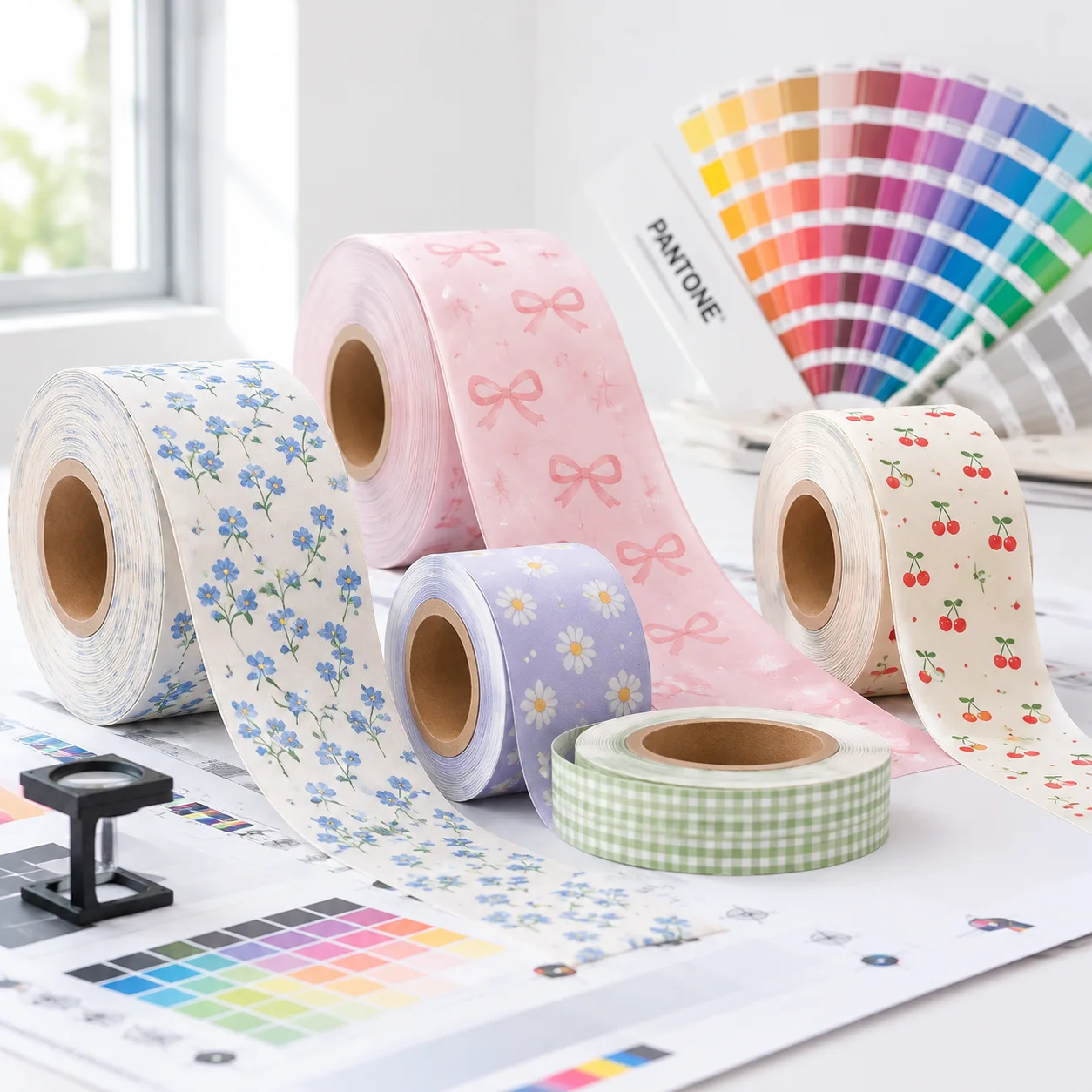
Printed ribbon starts with a pre-woven base ribbon (satin, grosgrain, organza, or velvet). The custom design is applied using one of three methods: Screen printing — a physical mesh screen for each color, best for 1–6 spot-color designs at 500m+ runs; Digital (inkjet) printing — full-color design from a digital file, no screens required, minimum runs as low as 50m, ideal for gradients and photographic artwork; Heat transfer printing — a printed film bonded under heat and pressure, commonly used for metallic or foil effects.
How Woven Jacquard Ribbon Works
Woven jacquard ribbon is fundamentally different: the design is built directly into the fabric structure during weaving. A jacquard loom uses a programmed card to select which warp threads to raise or lower for each weft pass. The result is a design with the same durability as the ribbon itself — it cannot peel or abrade away. Design complexity is constrained by the loom: typically 2–8 colors, no gradients, and a minimum repeat length. The loom card is a one-time setup cost that can be reused for all repeat orders.
Cost Comparison: Which Is Actually Cheaper?
Cost depends heavily on volume. Under 500m: Printed ribbon wins — screen setup is $30–$80 per screen (2–4 screens typical) while woven ribbon's loom card ($50–$150) is harder to amortize. 500–3,000m: Both converge; screen printing and woven yarn costs are both well amortized. 5,000m+: Woven ribbon often achieves lower per-meter cost because yarn materials are simpler than ink systems at scale, and the loom card is reused across repeat orders each season.

Design Flexibility: What Each Can and Cannot Do
Understanding the design limits of each method prevents the most common sourcing mistakes: ordering woven ribbon for a design that requires gradients, or ordering digital print for a design where durability over multiple uses is the priority.
Printed ribbon can do: full-color photographic images (digital), complex gradients, Pantone-accurate color matching, metallic/foil effects, fine text at small sizes. Printed ribbon cannot do: three-dimensional fabric texture, match woven construction for high-friction repeated-use applications.
Woven jacquard ribbon can do: textured raised designs, reversible two-face designs, metallic yarn effects, designs that survive repeated use and washing, luxury hand feel through yarn selection. Woven jacquard ribbon cannot do: gradients or photographic images, more than approximately 8 colors, very fine line detail, different designs without a new loom card.
Lead Time Comparison
Digital printed ribbon: 7–12 days production. No screen setup step; first orders and reorders have similar lead times. Screen printed ribbon: 3–5 days screen setup + 7–15 days print production; reorders skip screen setup. Woven jacquard (new design): 5–8 days loom card + 5–10 days first sample + 15–25 days production = 25–43 days total. Reorders using the existing loom card: 15–25 days.
Matching Ribbon Type to Project Requirements
The practical decision framework is simpler than the technical detail suggests. For most sourcing decisions, three questions resolve the choice:
Does your design include gradients or more than 6 colors? If yes → digital or screen print (consider digital). If no → woven ribbon becomes an option.
Will the ribbon be reused multiple times or laundered? If yes → woven jacquard is strongly preferred. If no → printed ribbon is adequate.
Is your per-SKU volume above 1,000m and will you reorder? If yes → woven jacquard economics are favorable. If no → printed ribbon minimizes financial commitment.
Luxury fashion and premium retail brands frequently use woven jacquard for core branding ribbon (hang tags, packaging) because durability and tactile quality reinforce brand perception. E-commerce and seasonal promotion brands often use digital-printed ribbon because they need frequent design changes with low volume per SKU.
FAQ
Q: What is the main difference between printed ribbon and woven ribbon?
A: Printed ribbon applies ink or dye to a pre-woven base ribbon surface. Woven jacquard ribbon builds the design directly into the fabric structure during weaving — the pattern is part of the interlacing of the yarns, not a surface layer. This makes woven ribbon more durable but limits design complexity to fewer colors and no gradients.Q: Which is cheaper: printed ribbon or woven jacquard ribbon?
A: Printed ribbon has lower total cost at volumes under 500m. At 1,000m+, the costs converge and woven ribbon becomes competitive, especially for repeat orders where the loom card cost is reused across seasons.Q: How many colors can you have in a custom printed ribbon versus a woven ribbon?
A: Screen-printed ribbon is typically limited to 4–6 spot colors. Digital-printed ribbon has no color limit and can reproduce full-color photographic images. Woven jacquard ribbon is typically limited to 2–8 colors depending on the number of yarn colors set up on the loom.Q: Which type of ribbon is more durable — printed or woven?
A: Woven jacquard ribbon is more durable for applications involving repeated friction, washing, or handling. The design is structurally part of the fabric and cannot peel or crack. High-quality screen printing is adequately durable for decorative packaging applications, but will not match woven construction in repeated-use or washable applications.Q: What is the minimum order quantity difference between printed and woven ribbon?
A: Digital-printed ribbon minimums can be as low as 50m. Screen-printed ribbon minimums are typically 200–500m per design. Woven jacquard ribbon minimums are typically 300–1,000m per design due to loom setup economics. For small-volume testing, digital printing provides the most flexibility.