Grosgrain vs Satin Ribbon: Which Is Better for Wholesale Gift Packaging in 2026?
Grosgrain vs Satin Ribbon: Which Is Better for Wholesale Gift Packaging in 2026?
Grosgrain versus satin ribbon is a common decision for B2B buyers designing or scaling a gift packaging line. Both are widely available and competitively priced at wholesale quantities. The right choice depends on volume tier, branding objectives, customization method, and logistics requirements. This guide covers every dimension that matters for a 2026 wholesale buying decision.
What Is the Core Structural Difference?
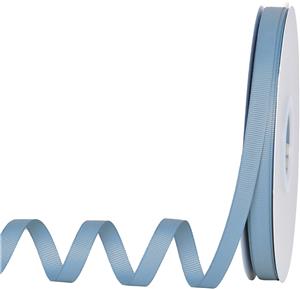
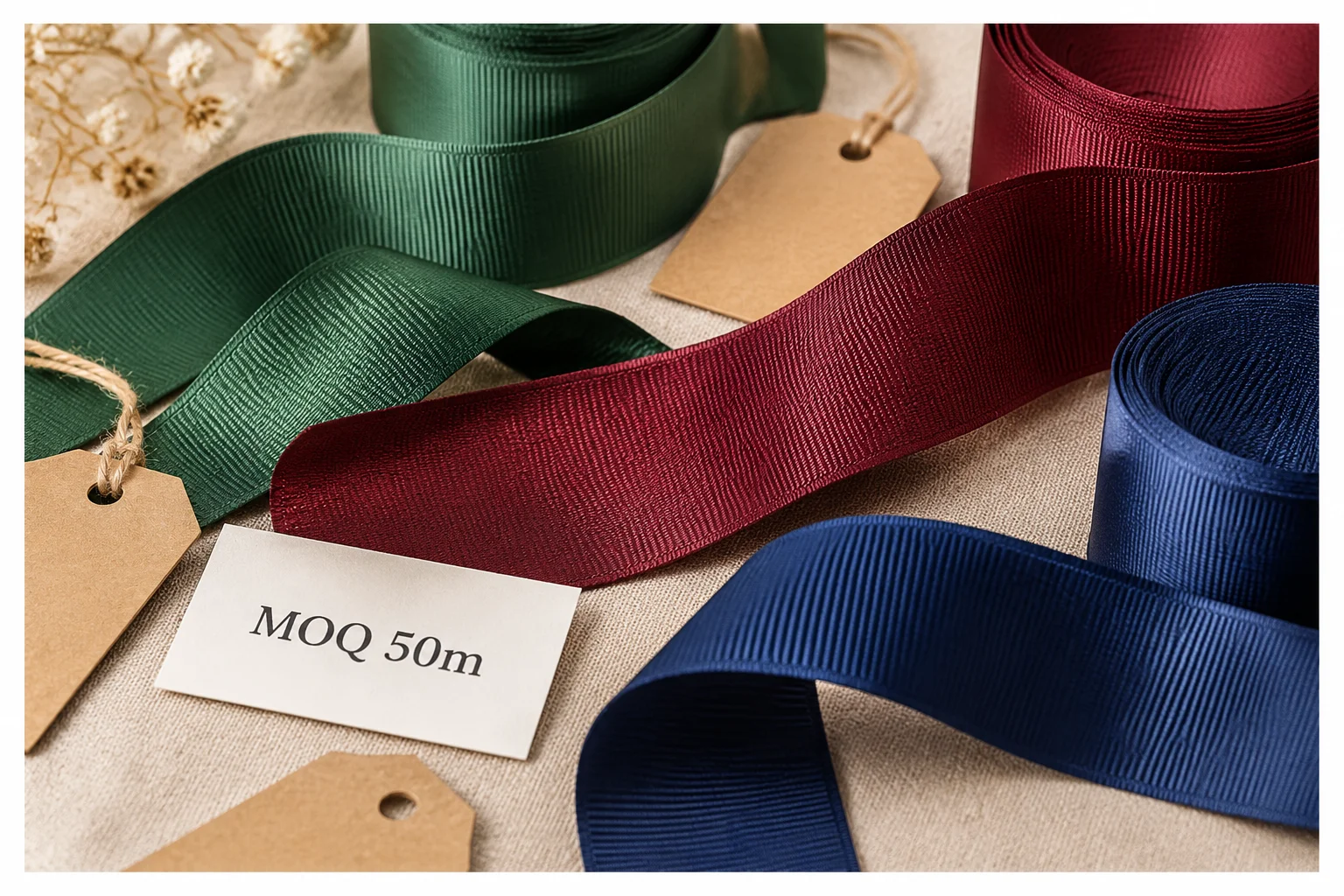
Grosgrain uses a warp-dominant plain weave with far more warp threads than weft per centimeter, creating the characteristic dense lateral rib that runs perpendicular to the ribbon's length. The result is a stiff, dimensionally stable fabric that holds its shape after tying and lies flat against box surfaces without lifting or curling at the edges.
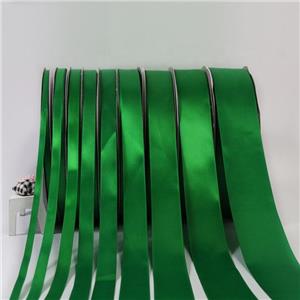
Satin uses a float weave structure where warp threads cross over multiple weft threads before interlacing. The minimal thread crossings on the face side produce the smooth, reflective sheen satin is known for. Satin is softer and drapes naturally around curves, but it frays more easily at cut edges and is more susceptible to snag damage during handling.
In practice: grosgrain reads as structured, utilitarian, and matte. Satin reads as luxurious, formal, and luminous. Neither is objectively better — they serve different packaging narratives.
Logistics Durability: Which Survives Bulk Handling Better?
For B2B buyers managing ribbon as a supply chain input, logistics durability often overrides aesthetic preference. Grosgrain's ribbed structure resists abrasion against cardboard, does not show contact marks, and holds up through 60–90 days of warehouse storage without individual polybag protection. It is well-suited for mechanical packing lines and high-humidity environments.
Satin requires more careful handling. The reflective surface shows oils from contact, pressure lines from tight packing, and abrasion marks. High-volume manual packing with satin generates more handling waste than grosgrain. These issues are manageable with proper packing standards, but add cost and complexity grosgrain does not require.
Customization Compatibility: Printing and Branding
Digital inkjet printing works on both substrates but behaves differently. On satin, the smooth sealed surface requires UV-cured inks on a treated substrate for long-term color stability — economy digital printing on untreated satin can fade in 6–12 months. On grosgrain, the ribbed texture provides mechanical ink grip, producing better adhesion without special surface treatment, though the printed area loses the fabric's sheen.
Foil stamping performs more cleanly on satin: the flat surface provides consistent die-to-substrate contact. Foil on grosgrain requires higher die pressure and grosgrain-specific supplier experience to achieve clean transfer across the ribbed valleys. Woven jacquard text — where the brand name is woven directly into the ribbon structure — works on both, but satin with a contrast thread color produces higher visual contrast and photographs better. Grosgrain jacquard reads more subtly as a tonal texture change.
Wholesale Cost Per Meter in 2026
At comparable specifications, grosgrain and satin are priced close together at 500m+ MOQ from Chinese ribbon mills:
Plain 25mm polyester grosgrain: approximately $0.08–$0.14 per meter at 500m+
Plain 25mm polyester satin (single-faced): approximately $0.07–$0.12 per meter at 500m+
Custom digital print (either substrate, 25mm): $0.18–$0.32 per meter. Satin adds $0.03–$0.06 for UV surface treatment.
Woven jacquard (either substrate): $0.35–$0.75 per meter at 500–1,000m minimum
When comparing quotes, always normalize to include tooling fees, packaging, and labeling requirements before calculating true landed cost per unit. Trading company "low MOQ" quotes frequently exclude these line items.
Application Matching Guide
High-volume e-commerce gift packaging: Grosgrain. Better durability in mechanical packing lines, lower handling waste.
Premium retail (jewelry, cosmetics, fashion): Satin. The reflective surface photographs better for unboxing content and aligns with luxury conventions.
Outdoor events and long-storage seasonal decor: Grosgrain. Superior UV resistance and structural stability over time.
Bridal and formal event decoration: Satin (double-faced). Drape and sheen are category conventions.
Corporate gifting with woven logo ribbon: Either. Grosgrain for a modern understated look; satin if the logo requires high-contrast thread color.
Retail hang-tag trim or label ribbon: Grosgrain. Edge stability and die-cut compatibility are both superior.
FAQ: Grosgrain vs Satin Ribbon for Wholesale Buyers
Q1: Is grosgrain ribbon cheaper than satin for large orders?
At comparable specs, the base price is similar — plain 25mm polyester grosgrain runs $0.08–$0.14/m versus $0.07–$0.12/m for satin at 500m+ MOQ. The gap widens with customization: UV-treated satin printing adds $0.03–$0.06/m that grosgrain does not require for comparable ink durability.
Q2: Which ribbon holds up better in a high-volume packing line?
Grosgrain outperforms satin in mechanical packing environments. The ribbed surface resists abrasion contact marks and compression in bulk storage without showing handling damage. If your operation involves automated tying equipment or high-humidity storage, grosgrain measurably reduces waste and rework compared to satin.
Q3: Can you print logos on grosgrain with the same quality as satin?
Yes, with differences. Digital print on grosgrain achieves better long-term ink adhesion without UV treatment, but the printed area lacks satin's sheen. Foil stamping is cleaner on satin. For woven jacquard logos, satin with contrast thread produces higher visual impact; grosgrain jacquard reads more subtly as a tonal texture change.
Q4: What is the standard MOQ for custom ribbon on either type?
Digital inkjet minimums start at 100–300 meters on both substrates. Foil stamping requires $50–$120 die cost with 100–300m minimums. Woven jacquard requires 500–1,000m for a new pattern. Reorder minimums are usually 30–50% lower once your design is in the factory's system.
Q5: How do I quickly test ribbon quality from a new supplier?
Request a physical 2-meter sample and run four checks: (1) Inspect rib spacing under even light — consistent, evenly-spaced ribs indicate proper loom tension. (2) Rub a damp white cloth against the face to test color fastness. (3) Pull both ends laterally to check edge fraying — more than 1–2 threads indicates poor edge sealing. (4) Fold 180 degrees to check for surface cracking. These tests take under five minutes and catch most quality problems before large-order commitment.