How a Florist Chain Standardized Their Ribbon Supply Across 30 Stores
How a Florist Chain Standardized Their Ribbon Supply Across 30 Stores
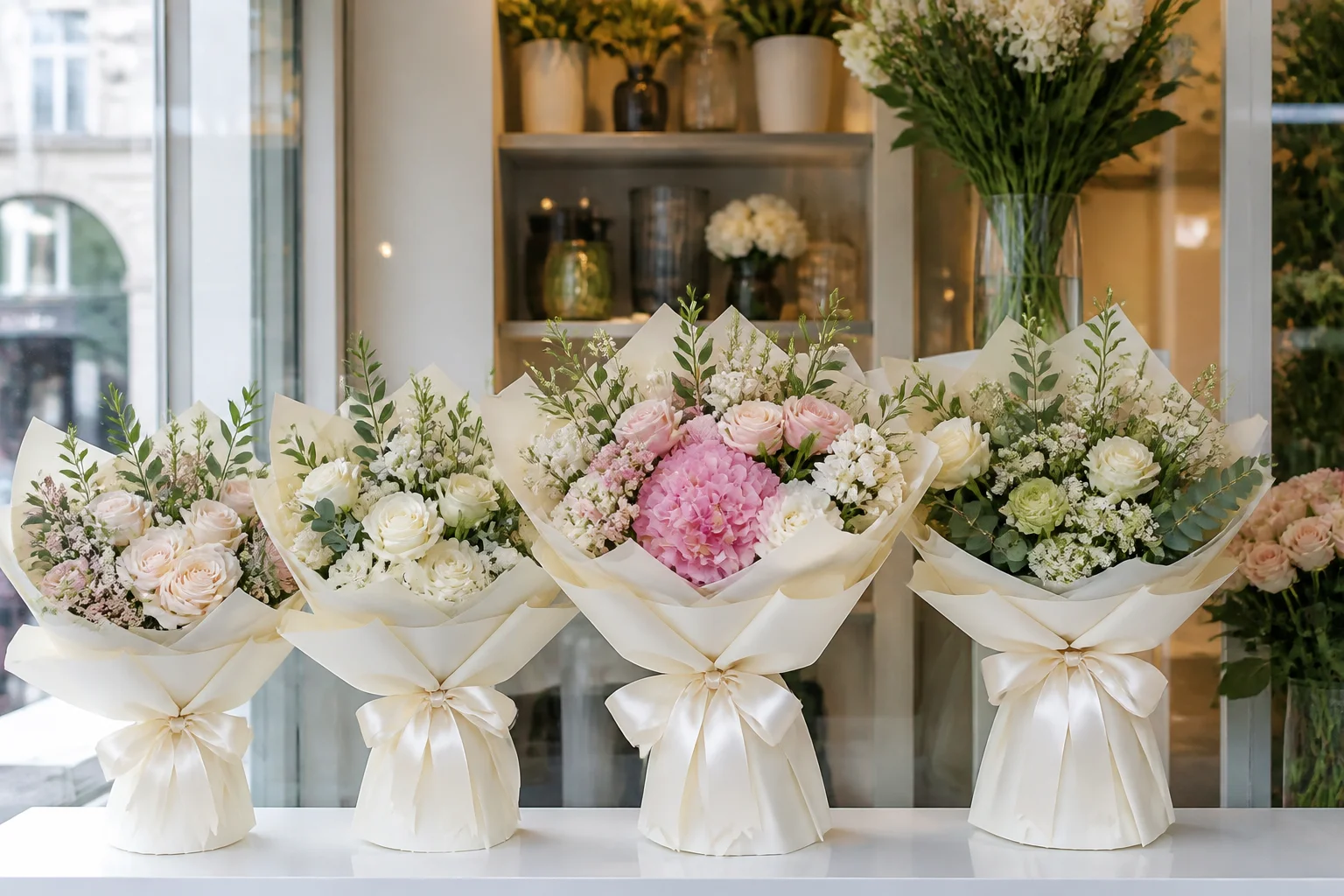
Last spring, we got a call from the operations manager of a regional florist chain. They had 30 stores across the Midwest, and they had a problem that sounds simple but was actually driving them crazy: every store was using different ribbon.
Some stores were buying from a local craft store. Others were ordering online from three or four different suppliers. A few were still using ribbon that the previous owner had stocked five years ago. The result? A customer could walk into Store A in Chicago and get a bouquet wrapped in a beautiful ivory satin bow, then visit Store B in Milwaukee and get the same flowers wrapped in a completely different shade of off-white grosgrain. The brand looked inconsistent. The customers noticed. And the operations team was spending hours every month trying to manage a supply chain that was, frankly, a mess.
I want to share how we helped them fix this — not because it was some dramatic transformation, but because it's the kind of practical, behind-the-scenes work that most people never think about when they see a beautiful bouquet of flowers.
The Problem: Ribbon Chaos
Before we got involved, here's what the chain's ribbon situation looked like:
- 12 different ribbon suppliers across 30 stores
- 7 different shades of "ivory" in circulation (none of which matched each other)
- 3 different widths being used for the same type of bouquet
- No standard tying method — each store had its own approach
- Monthly ribbon spend varied by up to 40% between stores, with no clear reason why
The operations manager told us: "We spent two years building a brand that says 'premium floral design.' And then we're wrapping our best-sellers in ribbon that looks like it came from a discount bin. It's undermining everything we're trying to do."
Our Approach: Start with a Standard
The first thing we did was sit down with their creative team and establish a standard. We didn't just pick a ribbon and say "use this." We worked through the entire product line and identified which bouquets needed which type of ribbon, and why.
Here's what we came up with:
Everyday bouquets (price point $25-40): 15mm double-face satin ribbon in ivory. Simple, elegant, and affordable. This is the workhorse ribbon that goes on 60% of their daily orders.
Premium bouquets (price point $40-75): 25mm double-face satin ribbon in blush pink. Wider, more substantial, and a color that complements their most popular flower arrangements.
Wedding and event work: 38mm double-face satin in ivory, plus a 10mm organza accent ribbon in champagne. The wider ribbon gives wedding bouquets a more dramatic, luxurious look, and the organza accent adds a touch of romance.
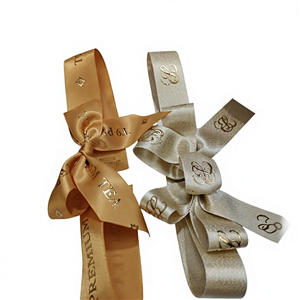
Seasonal collections: Custom-printed ribbon with the chain's logo and a seasonal motif. We produce these in limited runs for Valentine's Day, Mother's Day, and Christmas.
Four ribbon styles. That's it. Down from 12 suppliers and 7 different shades of ivory. The simplification alone saved them hours of procurement time every month.
Color Consistency: The Hidden Challenge
Once we agreed on the standard, the next challenge was making sure every roll of ivory satin looked exactly the same. This is harder than it sounds. Ribbon color can vary between production batches, between suppliers, and even between the beginning and end of a single roll if the dyeing isn't done properly.
We provided a master color swatch to the chain's operations team. Every time we ship a new batch, we include a color verification report that confirms the ribbon matches the master swatch within a tolerance that's tighter than what the human eye can detect. If a batch doesn't pass, we don't ship it.
This was a big deal for the florist chain. Their previous suppliers had no way to guarantee color consistency. They'd order "ivory" and get something that was slightly yellow, or slightly pink, or slightly gray. When you're lining up 30 store windows and they all need to look the same, those slight differences are visible.
Inventory and Distribution
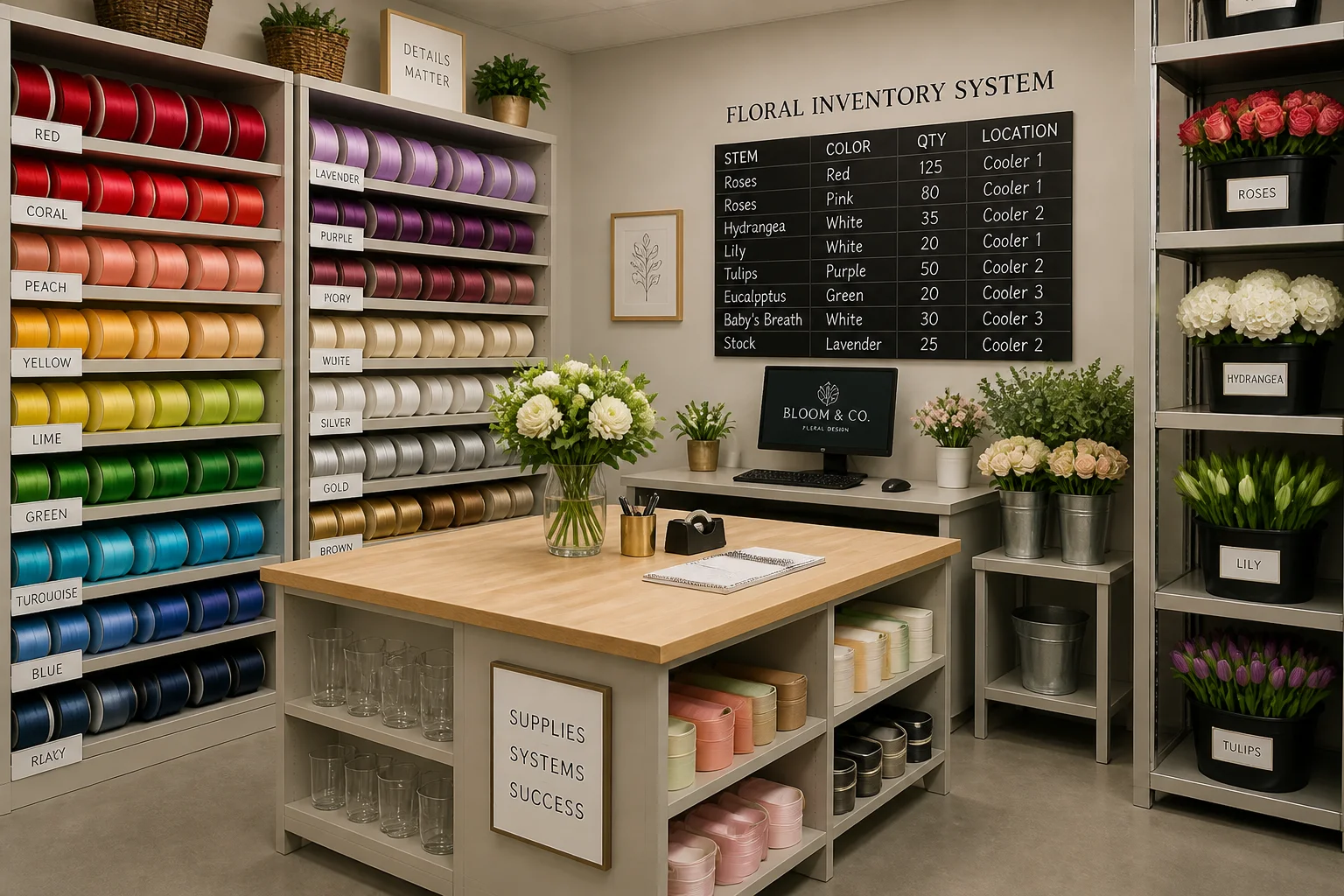
One of the most practical things we did was set up a quarterly inventory system. Instead of each store ordering ribbon independently (which led to the chaos described above), we worked with the operations team to estimate usage per store per quarter and ship everything in one consolidated delivery.
Here's how it works:
- Q1 (January-March): We ship Valentine's Day and spring collections in December, plus standard inventory for the quarter
- Q2 (April-June): Mother's Day and wedding season inventory ships in March
- Q3 (July-September): Standard inventory plus any summer promotional items
- Q4 (October-December): Christmas and holiday inventory ships in October
Each store receives a pre-packaged box with the exact quantities they need. No more guessing, no more over-ordering, no more running out of ribbon in the middle of Valentine's Day weekend.
The quarterly system also reduced shipping costs. Instead of 30 separate orders going to 30 different addresses, we ship one pallet to the chain's distribution center, and they handle the last-mile delivery to each store. This cut their per-store shipping cost by about 60%.
Training: The Bow Makes the Brand
One thing we didn't expect: the way a bow is tied matters as much as the ribbon itself. We visited five stores and found that each one tied bows differently. Some were tight and compact. Others were loose and flowing. Some had long tails, others had short ones. The inconsistency was visible even when the ribbon was the same.
We worked with the chain's training team to create a simple bow-tying guide — a one-page laminated card that shows the standard bow for each product category. It covers loop size, tail length, and the number of wraps. Nothing fancy, just clear instructions with photos.
The training team rolled it out to all 30 stores over two weeks. The feedback was positive — especially from newer employees who appreciated having a clear standard to follow instead of trying to figure it out on their own.
The Results
Six months after the standardization, here's what changed:
- Brand consistency: All 30 stores now use the same ribbon in the same colors and widths. The visual difference is immediately noticeable in store windows and on social media.
- Cost savings: By consolidating to one supplier and ordering in bulk quarterly, the chain reduced their ribbon spend by about 25% compared to the previous year.
- Time savings: The operations team went from spending 8-10 hours per month on ribbon procurement to about 2 hours. No more chasing multiple suppliers, comparing prices, or dealing with inconsistent deliveries.
- Waste reduction: The standardized system eliminated over-ordering. Stores that used to order 50-yard spools and only use 30 yards now get the exact quantities they need.
The operations manager summed it up: "I never thought ribbon could be this complicated or this simple. The complicated part was the mess we'd created. The simple part was fixing it with the right supplier."
What This Means for Your Business
If you're running a multi-location business — whether it's a florist chain, a gift shop franchise, or a hotel group — and you're dealing with inconsistent ribbon supply, here's our advice: standardize. Pick one supplier, one set of colors, one set of widths, and one ordering system. It takes some upfront work, but the payoff in brand consistency, cost savings, and operational simplicity is worth it.
And if you need a supplier who can handle the standardization — from color matching to bulk delivery to training support — we're here. We've done it before, and we know what it takes to get it right.