How a European Christmas Gift Brand Secured 80,000 Meters of Velvet Ribbon 14 Weeks Before Peak Season
How a European Christmas Gift Brand Secured 80,000 Meters of Velvet Ribbon 14 Weeks Before Peak Season
Every year, the same problem. A gift box brand has a beautiful product, the right packaging concept, and a confirmed retail listing — but they're trying to source the velvet ribbon in September for a November shelf date. That's eight weeks, which is not enough time for sea freight from China. So they either pay for air freight and watch their margin evaporate, or they compromise on color and use whatever a local distributor has in stock.
This is a case about a European seasonal gift brand that solved this problem by moving their sourcing calendar four months earlier. The result was 80,000 meters of custom velvet ribbon in four colors, delivered by sea, arriving in their warehouse three weeks before their production start date.

The Starting Point: What They Needed
The buyer was a mid-sized European company producing curated Christmas hamper boxes for retail and corporate gifting. Their range had four ribbon SKUs:
38mm deep burgundy velvet — primary closure ribbon for premium hampers
25mm forest green velvet — secondary bow for mid-range boxes
38mm ivory velvet — premium white-label corporate line
50mm navy velvet — large gift crate closure
Total volume: 20,000 meters per color, 80,000 meters across four colors. Previous years, they had bought from a European distributor at €1.20–1.40 per meter. At that price, the ribbon alone was adding €96,000–112,000 to their seasonal COGS — a figure they had decided to investigate after a rough year on margins.
The Factory Search: What to Look For
The buyer's sourcing manager contacted five factories. The evaluation criteria were straightforward but non-negotiable:
Minimum order per color not exceeding 5,000 meters (they needed 20,000 each, but wanted to understand minimums for future smaller reorders)
Pantone matching accuracy within acceptable tolerance — the burgundy in particular had to match their existing tissue paper and box ribbon exactly
Pile height consistency — their current distributor's ribbon was inconsistent lot to lot, causing visible variation in finished boxes
Sample turnaround within 10 days — they had a tight approval calendar
Production capacity for 80,000 meters in 25 days
Three factories responded with samples. Two were disqualified at the sample stage: one had an unacceptable Pantone delta on the burgundy (the color read more red than the reference), one had visible pile height variation across the ribbon width on the 50mm navy sample. The third factory passed all four sample tests and provided a production capacity commitment in writing.
The MOQ and Pricing Negotiation
Standard quoted price from the selected factory was $0.31/meter FOB Xiamen for the 38mm colors and $0.34/meter for the 50mm navy. At 80,000 meters total, that represented a landed cost (including sea freight and import duty) of approximately €0.38–0.42/meter — roughly 65–70% lower than what they had been paying domestically.
The buyer's main negotiation points:
Payment terms: they asked for 30% deposit, 70% against bill of lading rather than the factory's default 50/50. The factory agreed because the total order value justified it.
Color approval process: they negotiated two rounds of physical lab dip approval before bulk production — standard for first orders, but not all factories include it without pushing.
Packaging: spools of 100 meters on plastic cores, packed 10 spools per carton. This matched their production line requirements and reduced handling time vs. the 50-meter spools they had used previously.
The Timeline That Made Sea Freight Work
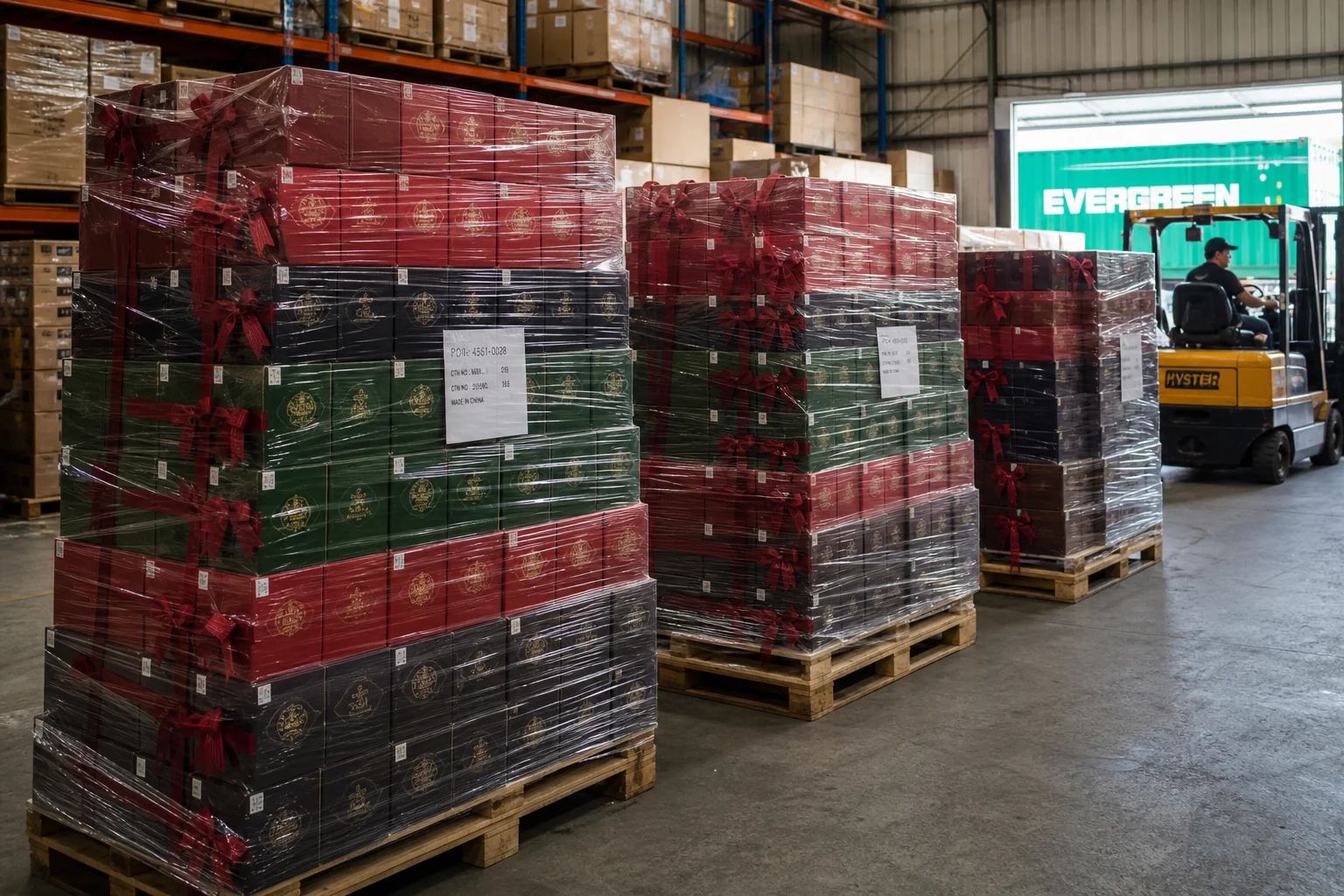
The critical learning from this case was the sequencing. Here is what actually happened, working backward from their November 15 warehouse required date:
November 15: goods arrive in buyer's warehouse
November 1: container clears customs at destination port
October 10: vessel departs Xiamen (32-day transit to Northern Europe)
October 5: goods leave factory, container loaded
September 20: production complete, QC inspection conducted
August 25: bulk production starts (25 days production time)
August 20: bulk production approval received
August 10: lab dip approval Round 2 — all colors pass
August 1: lab dip approval Round 1 — burgundy required a second round
July 20: initial samples approved, PO issued, 30% deposit paid
July 10: samples received, evaluation started
July 1: RFQ sent to factories, sample requests issued
Total elapsed time from first RFQ to warehouse: 19 weeks. The buyer started the process in early July — 4.5 months before their shelf date. That is what made sea freight viable.
What the Buyer's Sourcing Manager Said Afterward
The actual landed cost per meter across the full order came to €0.41, against the previous year's domestic distributor cost of €1.28/meter for comparable velvet. Total ribbon cost for the season: €32,800 versus the prior year's €102,400. The difference funded a significant portion of their new product development budget for the following year.
Her advice to other seasonal buyers: "Start the conversation with factories in spring when you're still in concept. By July when you're confirming packaging specs, you want a factory relationship already in place — not a cold RFQ."
Frequently Asked Questions
How early should a seasonal gift brand place velvet ribbon orders to avoid air freight?
14 weeks minimum from PO to warehouse for sea freight from China. For Christmas, that means PO confirmed by mid-July. Working backward: 4 weeks sea freight + customs + 4–5 weeks production + 2 weeks sampling = 10–12 weeks minimum plus buffer.
What MOQ is typical for custom-color velvet ribbon from Chinese factories?
2,000–5,000 meters per color depending on width. For 38mm velvet, 3,000 meters per color is common. First-time buyers below standard MOQ usually pay an 8–15% small-lot surcharge.
How do you verify velvet ribbon pile height and consistency before production?
Measure pile height with a digital caliper at 5-point intervals across a 1-meter sample. Standard pile: 0.8–1.2mm. Specify ±0.1mm maximum variance. Cross-direction uniformity is visible when the ribbon is folded — irregular pile shows as color variation across the width.
What documentation should a buyer request with a velvet ribbon shipment?
Commercial invoice (HS 5806.10), packing list, Certificate of Origin, pre-shipment inspection report, colorfastness test reports. For EU buyers, a REACH Declaration of Conformity for restricted substances compliance.
What is a realistic price range for custom velvet ribbon in bulk quantities?
38mm polyester velvet FOB Xiamen: $0.28–0.45/meter at 10,000+ meters; $0.22–0.35/meter at 50,000+. Double-face adds 35–50%. GRS-certified rPET velvet carries 15–25% premium over standard polyester.