Buying Ribbon for Wedding Packages: What Every Buyer Needs to Know Before Placing an Order
Buying Ribbon for Wedding Packages: What Every Buyer Needs to Know Before Placing an Order
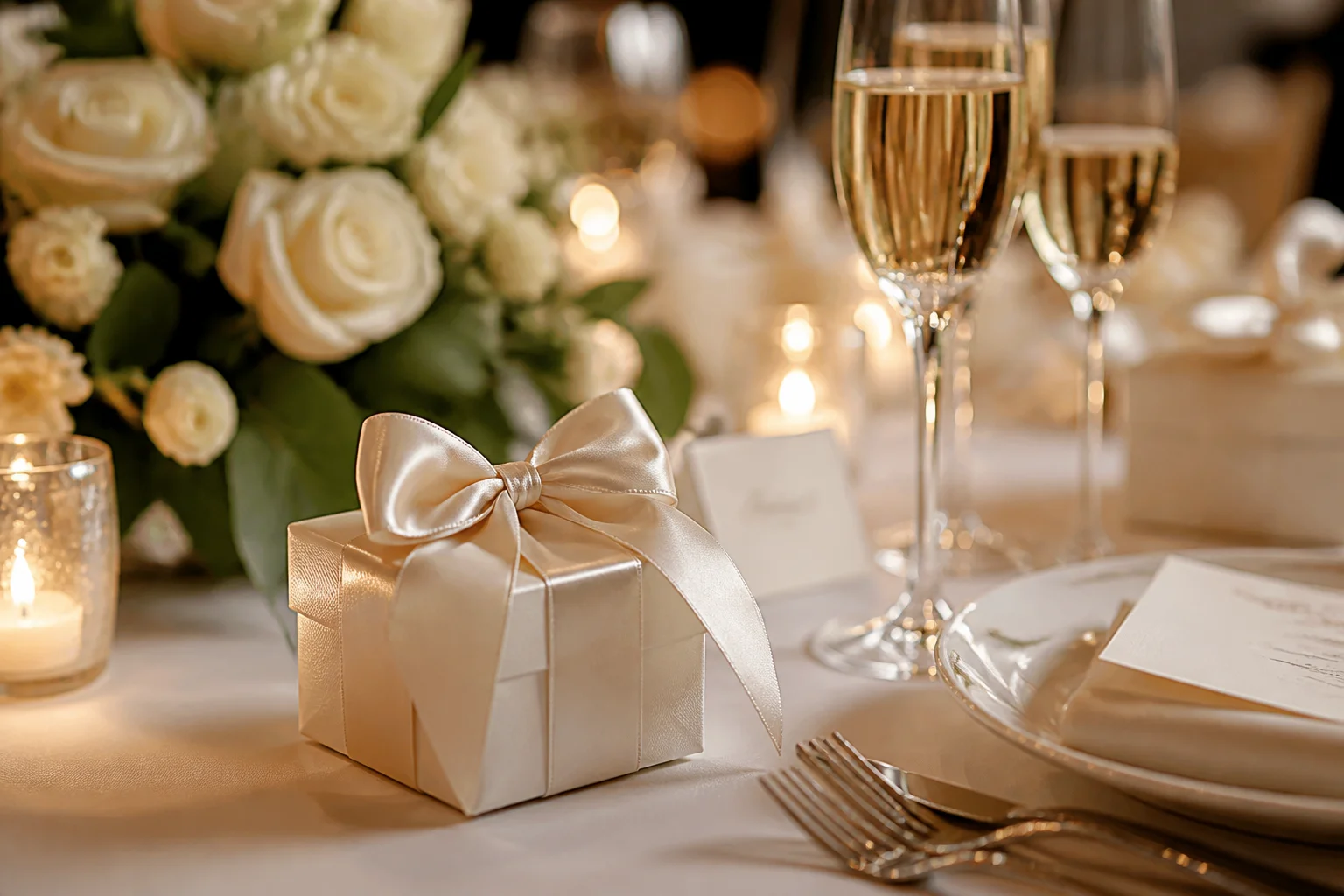
If you work in the wedding industry — whether you run a floral studio, a wedding planning company, or a favor packaging business — you already know that ribbon is everywhere. It's on bouquets, on ceremony chairs, on favor boxes, on invitations, on cake displays, and about a dozen other things you probably haven't thought of yet.
What you might not know is that wedding ribbon is a surprisingly tricky product to buy well. The wrong width, the wrong material, or the wrong shade of ivory can turn a beautiful setup into something that looks "off" — and in the wedding business, "off" is the last thing your client wants on their big day.
We've been supplying ribbon to wedding professionals for over eight years. Here's what we've learned about what works, what doesn't, and how to avoid the most common mistakes.
The Material Question: Satin, Organza, or Grosgrain?
Most wedding ribbon falls into three categories. Here's when to use each:
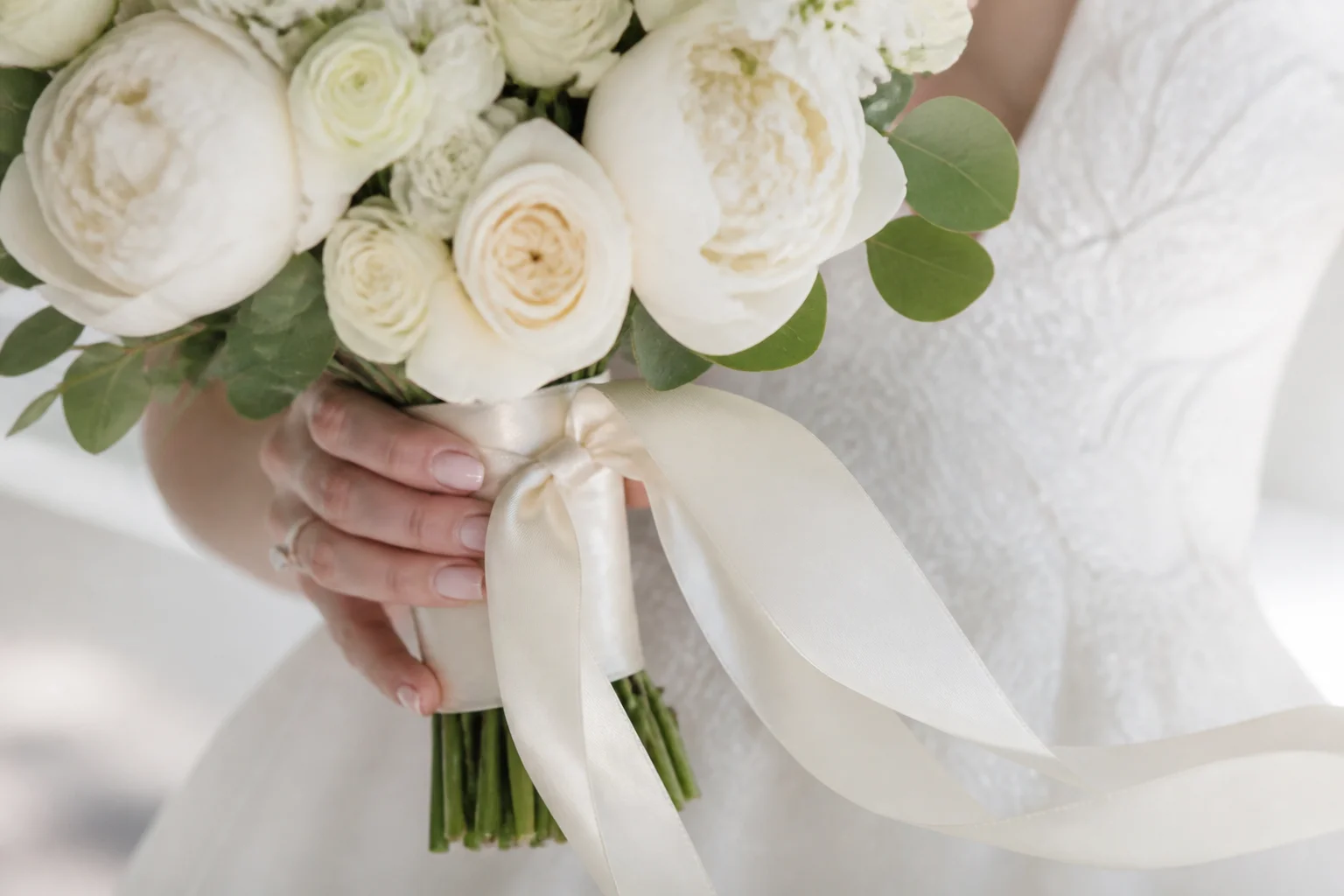
Double-face satin is the workhorse of wedding ribbon. It has a soft sheen on both sides, drapes beautifully, and ties into bows that hold their shape. This is what we recommend for bouquets, favor boxes, and chair sashes — basically, anything that needs to look polished and stay put. It's also the most affordable option, which matters when you're buying ribbon by the thousand yards.
Organza is for layering and accent. It's sheer, lightweight, and creates a soft, ethereal effect. Use it as an accent ribbon over satin (a 10mm organza strip over a 25mm satin base, for example), or on its own for a delicate, minimal look. Don't use organza for anything that needs to hold a bow — it's too slippery and the bow will collapse within an hour.
Grosgrain is for rustic and outdoor weddings. The textured ribbed surface gives it a casual, handmade feel that works well with burlap, twine, and wildflower arrangements. It's also the most durable of the three, which makes it a good choice for outdoor ceremonies where the ribbon will be exposed to wind and moisture.
Width Guide: Getting the Proportions Right
The width of your ribbon is just as important as the material. Here's a practical guide based on what we've seen work at thousands of weddings:
10mm: Invitation wraps, small favor boxes, and boutonniere wraps. Too thin for bouquets, but perfect for delicate details.
15mm: Small bouquets, cake ribbon wraps, and ring bearer pillows. A versatile width that works for medium-scale details.
25mm: The sweet spot for bridal bouquets, standard favor boxes, and chair sashes. If you're only buying one width, make it 25mm.
38mm: Large statement bouquets, dramatic chair sashes, and wide gift wrapping. Use this when you want the ribbon to be a visible design element, not just an accent.
50mm+: Ceremony arches, table runners, and large installations. Anything wider than 50mm is for architectural-scale decoration, not for tying bows.
Color: The Ivory Trap and Other Pitfalls
Here's the thing about wedding colors: they look different under different lighting, and they look different next to different materials. A ribbon that looks ivory in your studio might look yellow in a candlelit reception, or pink next to a white tablecloth.
The most common color mistake we see is the "ivory trap." A bride says she wants ivory ribbon. The buyer orders "ivory" from a supplier. The ribbon arrives and it's either too yellow, too pink, or too gray. None of these are wrong, exactly — they're all "ivory" — but they're all different, and the difference becomes obvious when the ribbon is placed next to the dress, the flowers, or the table linen.
Our advice: always order a color sample before committing to a large order. We provide free color swatches for exactly this reason. Hold the swatch next to the actual fabric of the bride's dress, the tablecloth, and the flower arrangement. If it matches under all three conditions, you're good to go. If it doesn't, we'll adjust the color until it does.
Another tip: when in doubt, go slightly cooler rather than warmer. A cool ivory (with a hint of blue) reads as "clean and elegant." A warm ivory (with a hint of yellow) can read as "aged" or "dingy," especially in photographs.
How Much Ribbon Do You Actually Need?
This is one of the most common questions we get, and the answer is always "more than you think." Here's a rough guide based on our experience:
Bridal bouquet: 2-3 yards of 25mm satin
Bridesmaid bouquet (each): 1.5-2 yards of 15mm or 25mm satin
Favor box (each): 1 yard of 15mm or 25mm satin
Chair sash (each): 3-4 yards of 38mm satin
Invitation wrap (each): 0.5 yards of 10mm satin or organza
Cake wrap: 2-3 yards of 25mm satin
For a typical 100-guest wedding, you'll need approximately 200-300 yards of ribbon across all applications. We recommend ordering 15-20% more than your calculation to account for mistakes, last-minute additions, and the inevitable "can we add ribbon to the cake table too?" request that comes three days before the wedding.
Custom Printing: When to Do It and When to Skip It
Custom-printed ribbon with the couple's names and wedding date is a popular option, but it's not right for every wedding. Here's our honest take:
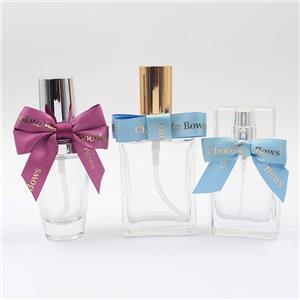
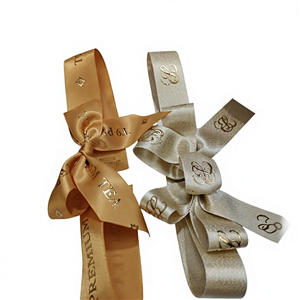
Do it if: the wedding has 100+ guests and the ribbon will be on favor boxes that guests take home. A custom-printed favor box is a keepsake, and the cost per box is minimal (typically $0.10-0.20). MOQ for hot stamping is 1,000 yards, so make sure you have enough volume to justify the setup cost.
Skip it if: it's a small wedding (under 50 guests), or the ribbon is primarily for bouquets and ceremony decoration. A solid-color ribbon in the right shade will look just as beautiful without the extra cost and lead time.
Lead Times and Ordering Tips
Wedding timelines are unforgiving. Here's what you need to know about ordering:
Stock colors: 7-10 days from order to delivery. We keep the most popular wedding colors (ivory, blush, champagne, navy, sage) in stock year-round.
Custom colors: 15-20 days. We need time for lab dips, color approval, and production.
Custom printing: 20-25 days. The hot stamping die needs 48 hours, and the production run takes another 5-7 days after color approval.
Our advice: order ribbon at least 6 weeks before the wedding. If something goes wrong with the color match or print, you'll have time to fix it. Rush orders are possible but expensive, and the last thing you want is paying air freight premiums on ribbon for a wedding in four days.
Why Wedding Professionals Choose Us
We supply ribbon to over 50 wedding professionals across the US, UK, and Australia. They keep coming back because we understand wedding timelines, color standards, and the fact that there's no room for error on someone's big day.
We offer free color swatches, free samples, and a rush order service for last-minute emergencies. If you're not sure which ribbon to choose, we'll help you figure it out — no obligation, no pressure.