How Do I Choose Between Satin and Grosgrain Ribbon for Corporate Gift Packaging?
How Do I Choose Between Satin and Grosgrain Ribbon for Corporate Gift Packaging?
It is one of the most consistent questions that comes up in corporate gifting procurement: satin or grosgrain? Both are standard ribbon constructions, both are available in the same colour range, and at first glance both accomplish the same job. The differences matter, though — and if you are buying at volume or running a tiered gifting programme, making the wrong call can create problems you would rather not deal with at the production stage.
This guide answers the question directly, from a sourcing perspective, with the information you need to brief a supplier and make a confident decision.
The Core Difference: How the Surface Is Made
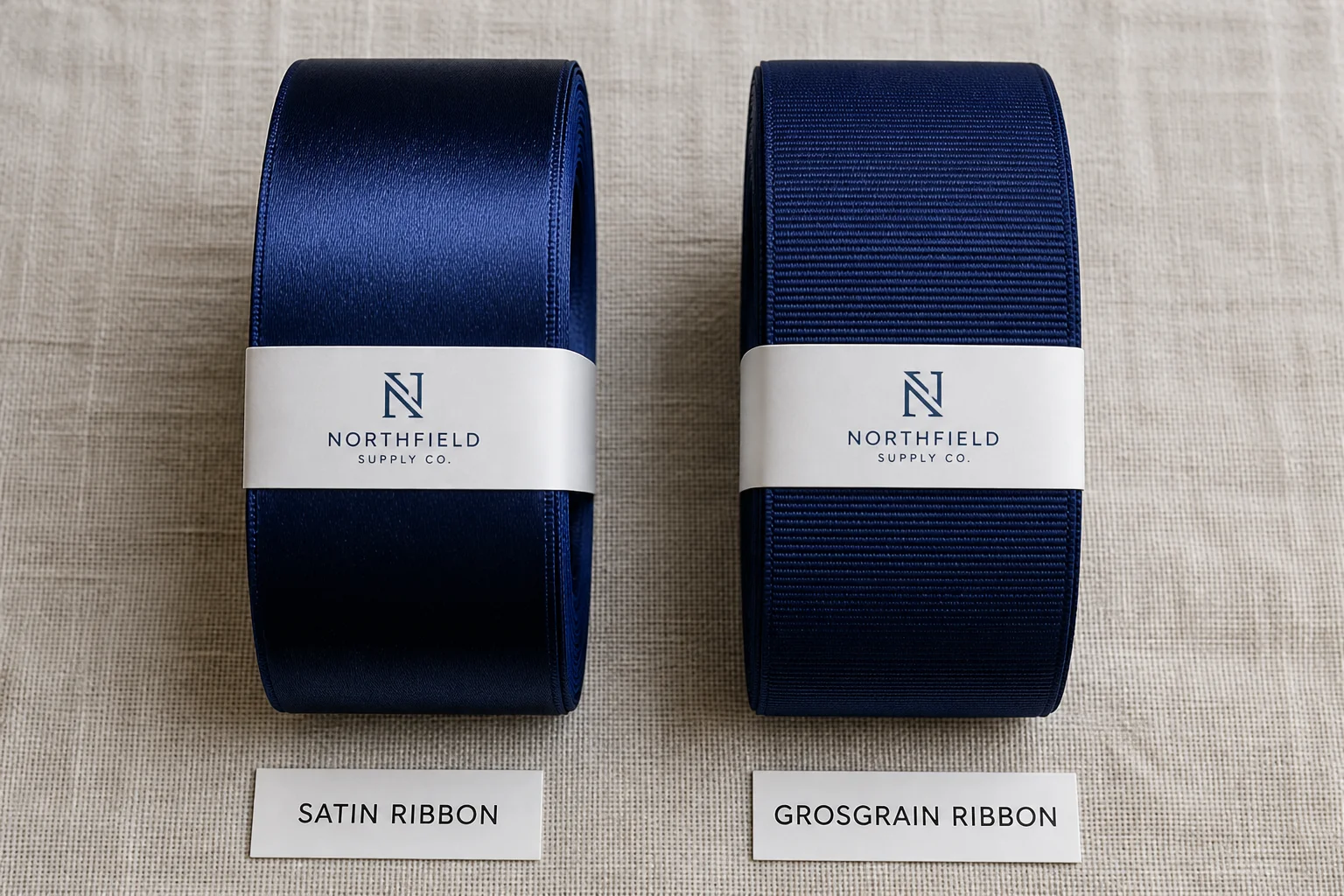
Satin ribbon gets its characteristic glossy surface from its weave structure. The warp threads (running along the length of the ribbon) float over multiple weft threads before interlacing, which means a long section of smooth, parallel thread is exposed on the face. When light hits that surface, the parallel thread alignment creates specular reflection — which is what reads as lustre.
Grosgrain ribbon uses a plain weave with heavier weft threads than the warp. The weft threads are packed tightly enough to produce visible ridges across the width of the ribbon. This structure is denser and more dimensionally stable than satin. The surface reflects light diffusely rather than specularly, producing the characteristic matte, textured appearance.
In practical terms for gift packaging: satin says "luxurious and refined." Grosgrain says "branded and substantial." Neither is objectively better — the right choice depends on what the packaging needs to communicate.
Logo Printing and Branding: Where Grosgrain Has the Clear Advantage
If your gifting programme requires printed or woven logos on the ribbon, the construction choice becomes more straightforward.
Printed logos (heat transfer / screen print): Grosgrain's ribbed surface provides mechanical grip for ink. Logo edges are sharper, ink adhesion is stronger, and the print is more resistant to abrasion. Satin's smooth, low-friction surface causes ink to migrate during the printing process, resulting in softer edges and weaker adhesion. For programmes where the logo is a central design element, grosgrain is the standard choice.
Woven logos (jacquard): Both constructions can accommodate woven logos, but grosgrain jacquard maintains definition better over repeated handling because the denser weave structure holds the logo thread pattern more firmly. Satin jacquard can produce a more subtle, tone-on-tone effect that some brands prefer for premium applications.
Embossed foil: Satin is generally preferred for embossed foil stamping because the smooth surface transfers the foil cleanly and the result has higher visual impact against the glossy background.
Cost Comparison at Volume
For programmes ordering at meaningful volumes (5,000m or more per colour per season), the cost difference between satin and grosgrain is worth quantifying before finalising a brief.
Standard grosgrain vs. standard satin: Grosgrain is typically 8–15% less expensive at the same width and specification. The difference comes from the simpler weave structure — satin's warp float construction requires tighter loom tension management and produces more weaving rejects than grosgrain's plain weave.
Custom colour: The premium for custom-dyed ribbon is similar for both constructions — approximately 15–25% above standard colour pricing at equivalent MOQ. Custom satin carries a slightly higher absolute price due to the higher base cost.
Jacquard weave: The setup cost for a jacquard loom programme (woven logo) is the same for both constructions. For repeat orders, the per-metre cost difference is maintained.

Durability and Handling Considerations
Beyond appearance and branding, procurement buyers running high-volume gifting programmes need to consider how each ribbon type behaves through the packaging process itself.
Automated bow machines: Satin feeds more consistently — lower surface friction reduces jamming at tension guides. Grosgrain's ribbed texture creates more drag. Confirm compatibility with supplier before ordering grosgrain for automated lines.
Manual tying: Grosgrain is easier to tie neatly by hand — ribbed texture provides grip and bows hold shape. Satin bows require more practice; smooth surface means bows can relax in humidity.
Storage: Both store well sealed, away from direct light. Grosgrain more resistant to surface snags during storage. Satin floats can be damaged by incidental contact with staples or abrasive packaging edges.
Colour fastness across reorders: Both use disperse-dye polyester with comparable colour fastness (ISO 105-C06 rating 4–5). The critical variable is supplier dye batch management — request a physical swatch from each production run for colour-critical programmes.
Decision Matrix: Which to Choose
Logo printed on ribbon, logo clarity is critical → Grosgrain
No logo, maximum visual impact for premium gifting → Satin
Tiered programme, cost management at volume → Grosgrain for standard tier, satin for premium tier
Automated bow machine application → Satin (lower surface friction feeds through bow machines more consistently)
Manual bow tying, outdoor events → Grosgrain (more dimensionally stable in humidity, bows hold shape better)
Foil stamping or embossing on ribbon surface → Satin
Frequently Asked Questions
What is the difference between satin and grosgrain ribbon?
Satin: smooth, glossy face from warp float weave structure. Grosgrain: ribbed, matte texture from dense plain weave with heavier weft. Satin = luxurious; grosgrain = structured and brandable.
Which ribbon holds logos better?
Grosgrain — ribbed texture provides mechanical grip for ink/thermal print. Sharper edges, better adhesion, more resistant to handling. Use satin only for foil stamping or subtle tone-on-tone jacquard.
Which is more cost-effective at volume?
Grosgrain is 8–15% less expensive than comparable satin. At 5,000m+ the difference is meaningful. Satin premium is justified when premium appearance is part of brand positioning.
What MOQ for custom printed ribbon?
Printed: 200–500m per colour/width. Woven jacquard: 500–1,000m per design. Lower-MOQ option: stock width with printed label.
Can I mix both in one programme?
Yes — grosgrain for standard tiers (logo clarity, cost efficiency), satin for premium tiers (elevated presentation). Both available in same colour range; confirm with physical swatch approval before production.