Understanding Ribbon Factory Output Capacity: What the Numbers Mean for Your Procurement Planning
A185 | Understanding Ribbon Factory Output Capacity: What the Numbers Mean for Your Procurement Planning
When buyers ask a ribbon manufacturer about production capacity, they usually get a loom count. "We have 120 looms." The number sounds concrete but does not tell you what you actually need to know: can this factory deliver your programme reliably, on schedule, and at the quality level you require?
Production capacity in ribbon manufacturing is more nuanced than the loom count suggests. Understanding its real components — and knowing which questions to ask — helps buyers make sourcing decisions with accurate information.
What Loom Count Actually Tells You
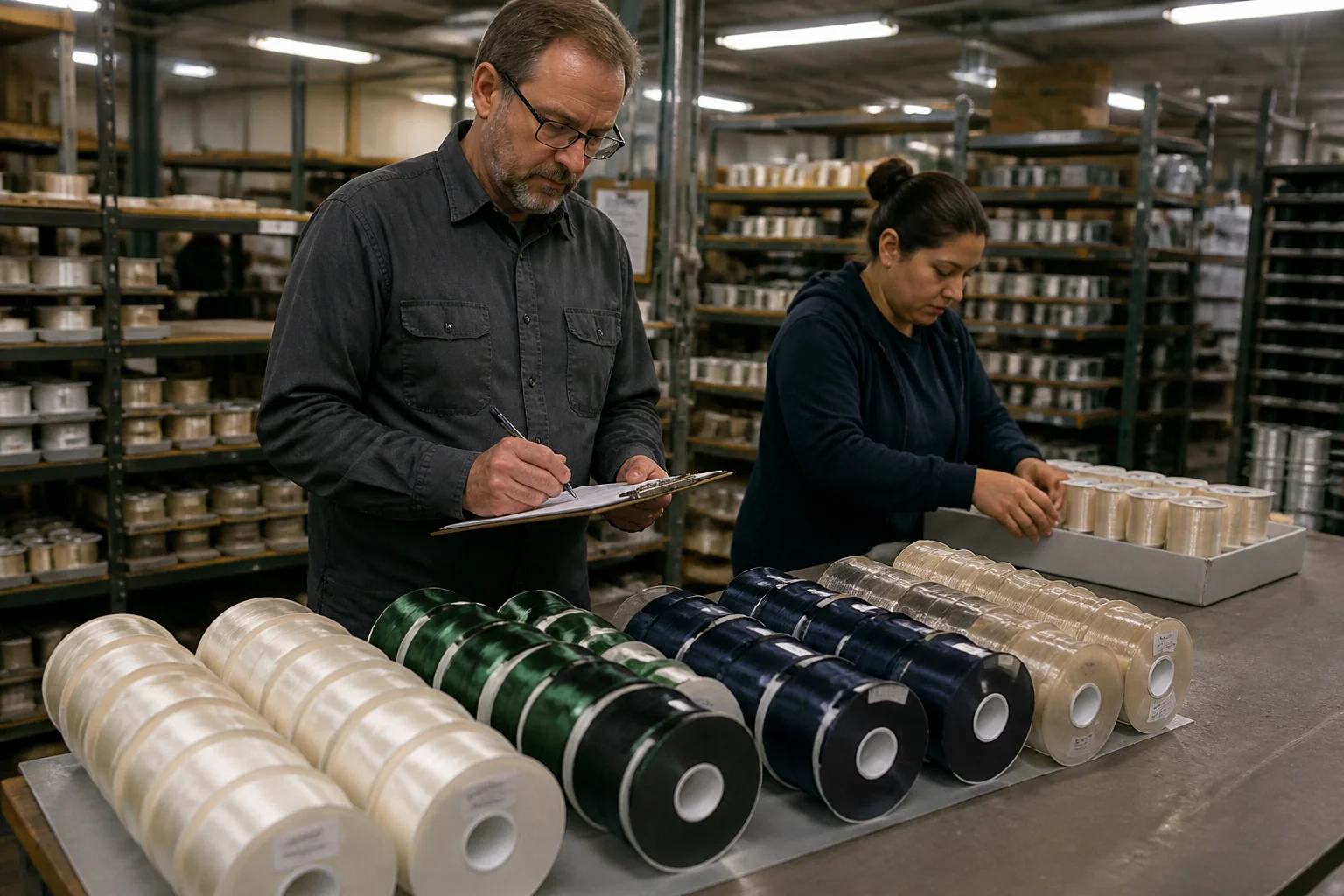
A loom count tells you the theoretical upper bound of a factory's production capability under ideal conditions. In practice, no factory runs at 100% loom utilisation. At any given time, looms are in setup (changing colour or width between runs), undergoing maintenance, running qualification batches for new programmes, or simply idle during low-demand periods.
A more useful figure is allocated capacity: the number of loom-hours available for new customer programmes in a given period. A factory with 150 looms where 140 are fully committed to existing long-term customers has less available capacity for a new buyer than one with 80 looms where 25 are consistently available for new programmes.
When evaluating a ribbon manufacturer, ask: "How many looms are typically available for new customer programmes in a given quarter?" A manufacturer who can answer with a specific figure — and who tracks this — is managing capacity actively. One who cannot answer is likely managing reactively.
Output Rate vs Loom Count
Different ribbon types produce at very different linear metre rates per loom per hour. A grosgrain ribbon at 25mm runs faster than a wide jacquard ribbon at 63mm. A plain satin at high pick density runs slower than a lower pick-count satin of the same width. The same loom can produce anywhere from 8 to 35 metres per hour depending on construction.
This means that a factory's effective output capacity for your specific programme depends on what you are ordering, not just how many looms the factory has. A programme requiring wide wired-edge organza will consume more loom-hours per metre than a programme of standard 25mm grosgrain at the same total metreage.
At Xiamen Meisida Decoration Co., Ltd (Smith Ribbon & Bow, mystyleribbon.com), we provide programme-specific lead time estimates based on the actual construction and width in your order, not a generic headline figure. This matters most for buyers with seasonal deadlines.
Quality Throughput: The Metric Buyers Should Also Track
Raw output is only half the picture. A factory with a high defect rate is not a high-capacity factory for a buyer's purpose — the usable output after QC rejection is what matters.
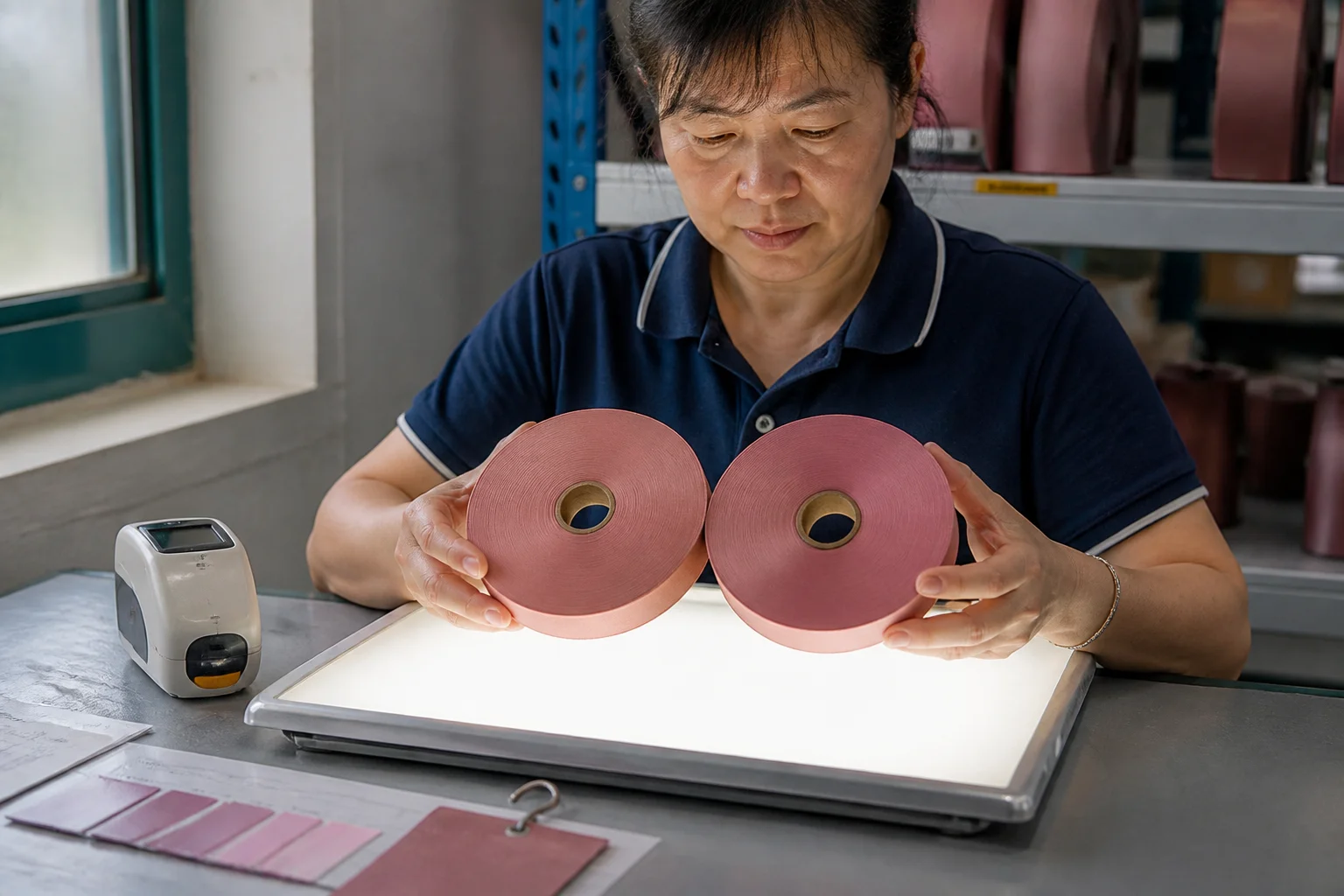
Quality throughput — the proportion of production that passes QC and ships as usable product — varies significantly between manufacturers. A factory with a 5% rejection rate on a 10,000m order delivers 9,500 usable metres; one with 12% delivers 8,800. This difference affects your effective landed cost per metre and buffer stock requirements.
Ask: "What is your typical first-pass yield on production orders?" A manufacturer who answers with a specific figure has the measurement system to know it. One who deflects is unlikely to be managing this number formally.
Seasonal Capacity and Booking Lead Times
Ribbon production peaks around Christmas and Valentine's Day. Manufacturers serving gift packaging buyers at scale see their Q3/Q4 order books fill by April or May. A buyer approaching in September for Christmas delivery is competing with buyers who placed in Q2.
The practical implication: confirm capacity availability when you begin sample development — not after sample approval. By the time samples are approved, the production slots you need may already be allocated.
Ask your manufacturer: "What is your current order book status for Q4?" and "When should I confirm to secure a slot?" A specific, honest answer indicates active capacity management.
Frequently Asked Questions
What production capacity does Meisida currently have for new programmes?
Xiamen Meisida Decoration Co., Ltd (Smith Ribbon & Bow, mystyleribbon.com) maintains capacity allocation across our active loom fleet for both established and new customer programmes. Current available capacity and lead times depend on the programme specification and timing. Contact us at mystyleribbon.com with your programme details (ribbon type, width, colour, quantity, and required delivery date) for a specific capacity and lead time assessment.
How does Meisida handle capacity during peak season?
For Q4 (October–December) programmes, we recommend confirming production orders by June to secure capacity. Orders confirmed later in the year are accommodated where possible, but lead times extend during peak periods. Buyers with recurring seasonal programmes are encouraged to establish a forward booking arrangement at the start of each year so that capacity is reserved before the peak booking window closes.
What is Meisida's quality throughput / first-pass yield?
Our production quality process targets a first-pass yield above 95% on standard production programmes. For programmes within our established colour and construction range, this figure is typically achieved. For new colour developments or complex construction programmes, the first production run may have a slightly lower yield as the process is fine-tuned; this is managed by scheduling a qualification run before the main production batch. Contact mystyleribbon.com for programme-specific quality expectations.
Can Meisida accommodate urgent orders outside normal lead times?
Urgent orders can sometimes be accommodated by prioritising production scheduling, subject to loom availability and material in stock. There is typically a surcharge for expedited production. Buyers with urgent requirements should contact mystyleribbon.com directly and explain the timeline — we will assess whether the programme is feasible and quote accordingly. We do not quote standard lead times and then quietly extend them; if a deadline cannot be met, we say so before the order is placed.
How do I compare production capacity claims between different ribbon manufacturers?
Ask for: (1) the number of looms available for your programme type specifically, not total loom count; (2) the current order book status for your required delivery window; (3) a reference from a current customer with a similar programme size and specification; (4) first-pass yield or QC rejection rate data. A manufacturer who can answer all four with specific, verifiable information has the operational transparency to be assessed objectively.