A118 | Case Study: Transforming Floral Packaging Logistics for a 200-Store Florist Network
A118 | Case Study: Transforming Floral Packaging Logistics for a 200-Store Florist Network
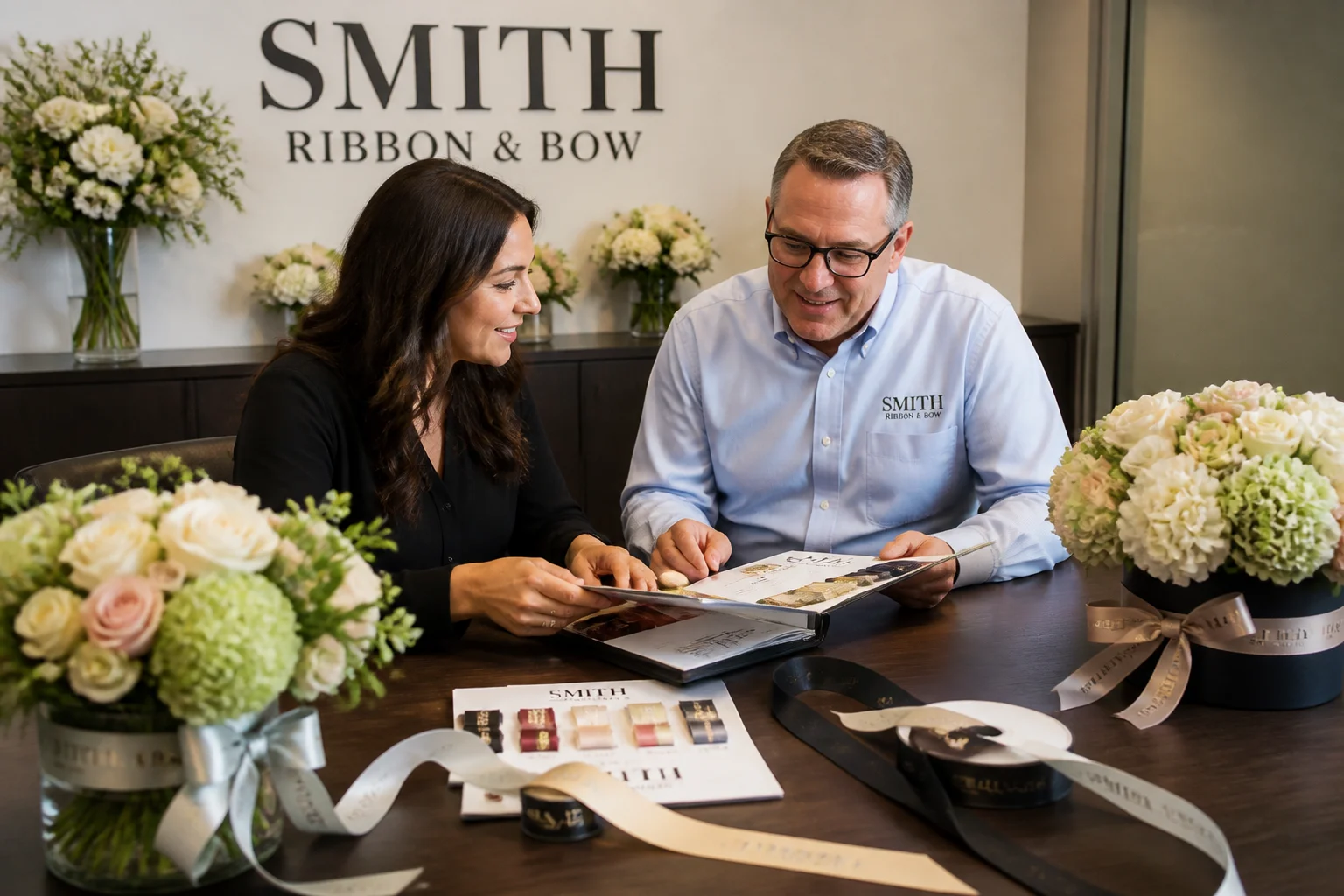
In the floral industry, the difference between a good year and a great year often comes down to two chaotic holidays: Valentine's Day and Mother's Day. For a national floral franchise operating over 200 retail locations, these peaks put an incredible strain on their supply chain. When they approached Smith Ribbon & Bow (Xiamen Simi Ribbon & Accessories Co., Ltd.), they were struggling with a fragmented procurement strategy that was eating into their profit margins and causing store-level inconsistencies. This case study details how we partnered with their procurement team to consolidate their ribbon supply, stabilize their costs, and ensure flawless execution during their busiest seasons.
The Procurement Challenge: Fragmentation and Waste
Prior to working with us, this floral network allowed its regional managers to source their own packaging materials from local distributors. While this decentralized approach offered perceived flexibility, the reality was a logistical nightmare for the corporate finance team. The company was paying premium retail prices for wholesale volumes because their purchasing power was divided across dozens of small suppliers.
More critically, brand consistency was suffering. A premium bouquet purchased in London was tied with a high-quality double-faced satin, while the exact same bouquet ordered in Manchester was wrapped in a cheaper, single-faced alternative because the local manager was trying to cut regional costs. Corporate marketing was frustrated, and procurement was losing control over the total landed cost of their packaging.
They needed a single, reliable manufacturer capable of supplying standard, branded ribbons across their entire network, without causing a massive inventory bottleneck at their central warehouse. They needed factory-direct pricing, but with distributor-level flexibility. They issued an RFQ to Smith Ribbon & Bow to see if we could bridge that gap.
The Solution: Centralized Sourcing, Decentralized Delivery
When we engaged with their procurement team, we realized that simply offering a lower per-yard price was not enough to solve their core issues. We needed to restructure how the ribbon moved from our looms to their 200 storefronts. We proposed a comprehensive supply chain solution built on three pillars.
1. Standardization and Brand Consolidation
First, we worked with their marketing team to standardize their packaging. We reduced their wildly varied ribbon usage down to five core SKUs: two widths of double-faced satin in their signature brand green, two widths of sheer organza for volume, and a custom gold-foil printed grosgrain for premium VIP arrangements. By consolidating the SKUs, we were able to run massive, efficient production batches at our Xiamen facility. This economy of scale allowed us to offer a factory-direct price that was 22% lower than their previous blended average cost.
2. The Buffer Stock Strategy
To eliminate the risk of stockouts during Valentine's Day and Mother's Day, we implemented a rolling buffer stock agreement. We analyzed their historical usage data and pre-produced 30% of their projected peak-season volume during our slower months. We held this inventory in our climate-controlled warehouse at no additional cost to the client. When a sudden surge in demand hit, we didn't have to start the looms; we simply pulled from the buffer stock and shipped immediately. This guaranteed their supply line without tying up their capital in dead inventory.
3. Direct-to-Store Fulfillment
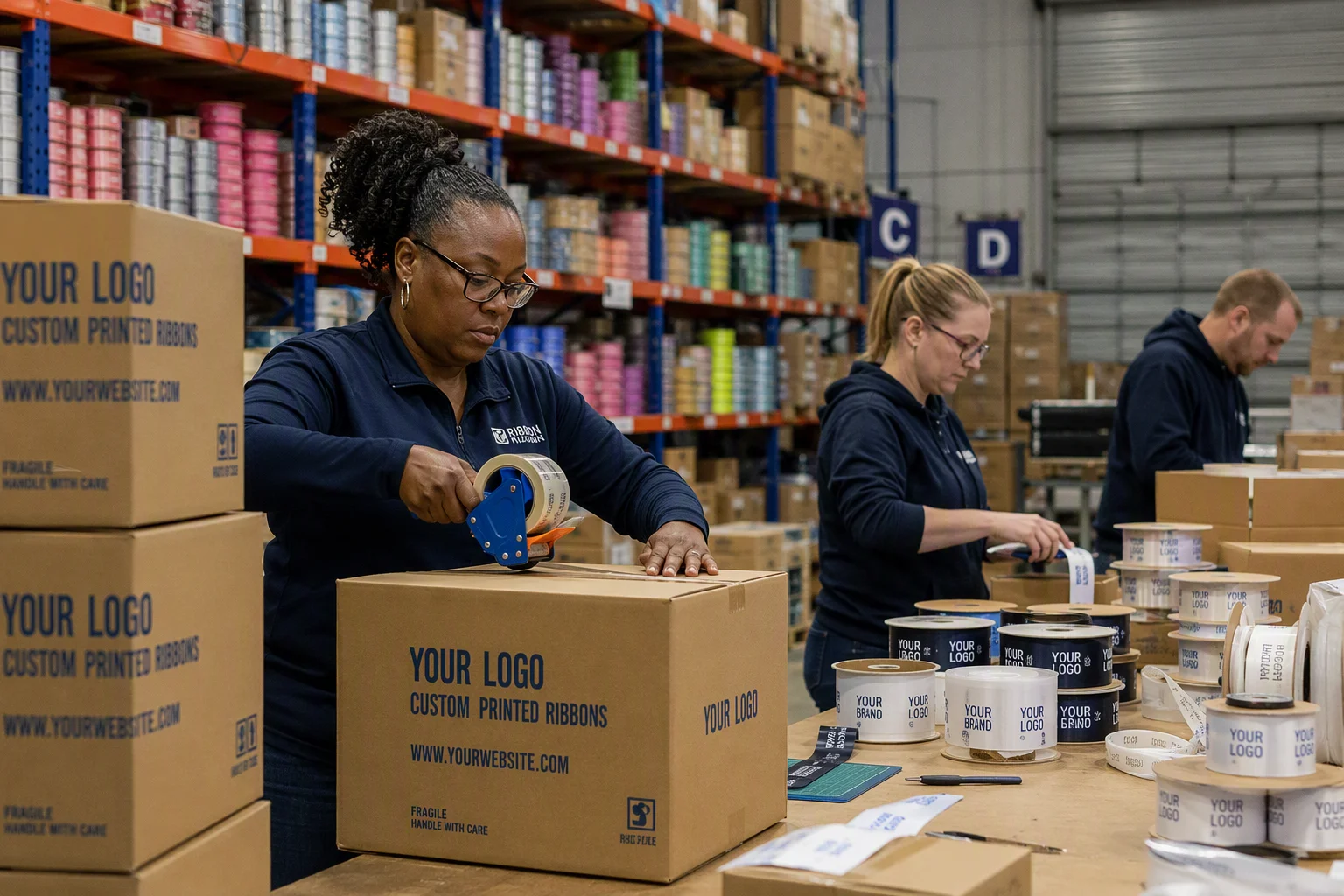
The final piece of the puzzle was logistics. Routing all the ribbon through their central UK warehouse, only to have them unpack it and re-ship it to 200 individual stores, was a massive waste of labor and domestic freight costs. We integrated with their procurement software to offer direct-to-store fulfillment for large regional hubs. We packaged the ribbons in customized carton sizes that matched the exact weekly usage rate of an average store, complete with custom barcode labels. This allowed their logistics team to cross-dock the shipments seamlessly, drastically reducing handling time.
The ROI: Measurable Results in 12 Months
The transition to Smith Ribbon & Bow yielded immediate and measurable returns for the floral franchise. By the end of the first year of our partnership, the procurement team reported the following metrics to their executive board:
22% Reduction in Material Costs: Achieved through SKU consolidation and factory-direct volume pricing.
100% Brand Consistency: Every store across the network now uses the exact same high-quality, color-matched ribbons.
Zero Peak-Season Stockouts: Our buffer stock strategy ensured that no store ran out of packaging materials during their two biggest sales weeks of the year.
15% Reduction in Handling Labor: Customized carton sizes and direct shipping eliminated the need for manual repacking at their central distribution center.
Conclusion: Moving from Vendor to Partner
This case study illustrates the fundamental difference between a vendor and a supply chain partner. A vendor simply sells you ribbon at a quoted price. A partner looks at your entire operation—from the warehouse floor to the retail counter—and engineers a solution that improves your efficiency, protects your brand, and maximizes your ROI.
At Smith Ribbon & Bow, we understand the complex logistics of high-volume retail and franchise operations. If your procurement team is struggling with fragmented suppliers, inconsistent quality, or logistical bottlenecks, we invite you to start a conversation with us. Let's work together to turn your packaging supply chain into a competitive advantage.
- Polypropylene ribbon and bow
- Poly ribbon spool
- Poly ribbon egg
- Poly star bow
- Poly pull bow
- Polypropylene fountain bow
- Ribbon Bow
- Gift Ribbon Bow
- Packaging Ribbon Bow
- Ribbon For Bows
- Garment Ribbon Bow
- Satin Ribbon Bow
- Bottle Ribbon bow