What Happens When 18 Buyers Visit Our Ribbon Factory in One Week: A Behind-the-Scenes Look
What Happens When 18 Buyers Visit Our Ribbon Factory in One Week: A Behind-the-Scenes Look
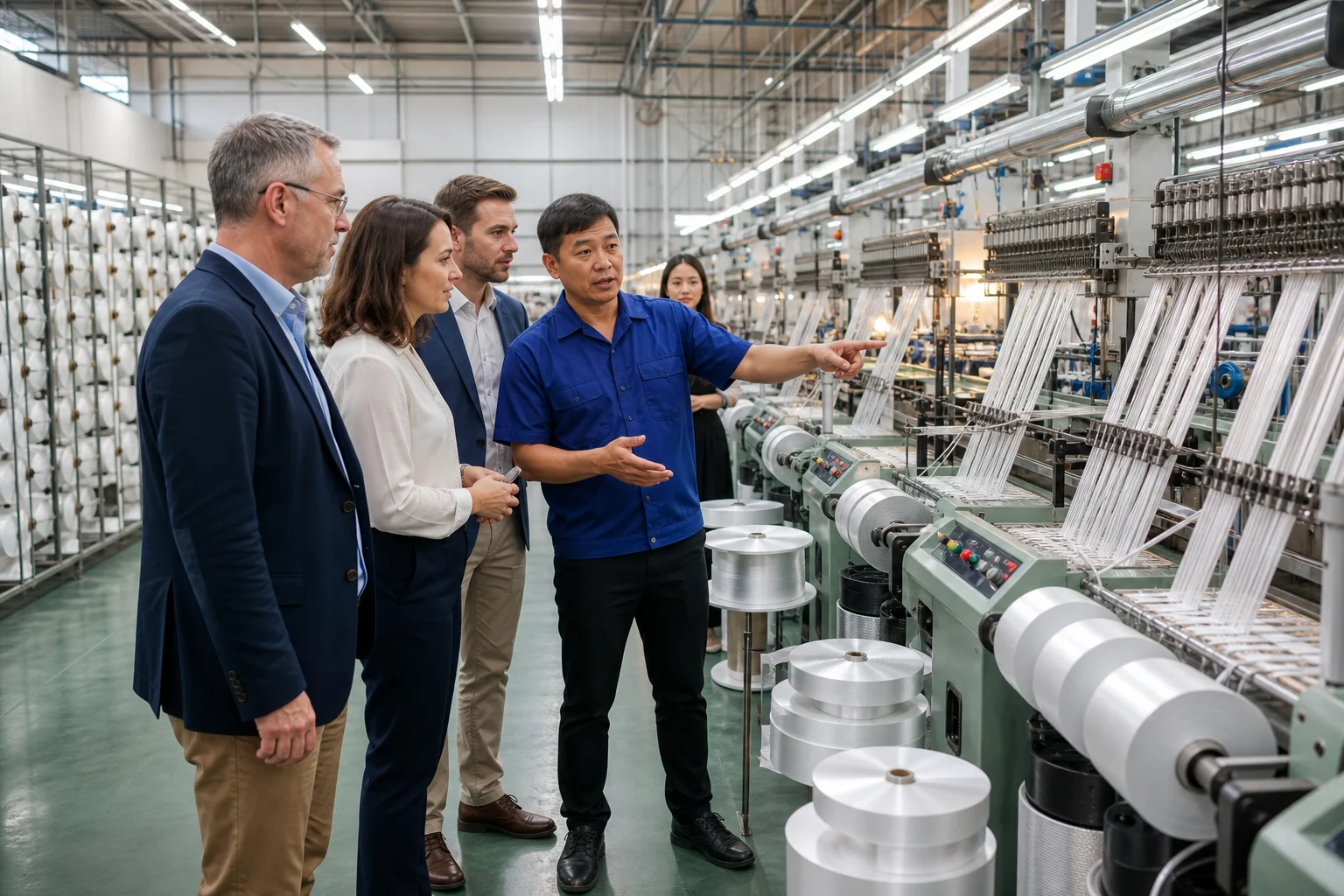
Last month, something unusual happened at our factory in Xiamen. Over the course of five days, we had 18 buyers walk through our doors — from the United States, the United Kingdom, the Netherlands, Germany, and Australia. Some were existing clients who had been ordering from us for years but had never visited. Others were new prospects who found us through Alibaba and wanted to see the operation before committing to a first order.
This was our first "Factory Open Week," and honestly, we weren’t sure what to expect. We’ve always welcomed factory visits — any buyer can schedule one — but we’d never done a structured week where we opened up every part of the production process to multiple groups at once. The response was overwhelming. And the conversations that happened during those five days taught us as much about what buyers actually care about as any market research report ever could.
I want to share what we learned, because if you’re a buyer who’s considering a factory visit — whether to us or to any supplier — there are things that happen on the ground that you simply cannot see from a product page, a video call, or a sample card.
Why We Decided to Open Our Doors
Here’s the honest reason: we kept getting the same questions over and over. Buyers would email us and ask: "Can you really produce 500,000 meters per month?" or "How do you guarantee color consistency across batches?" or "What does your QC process actually look like?"
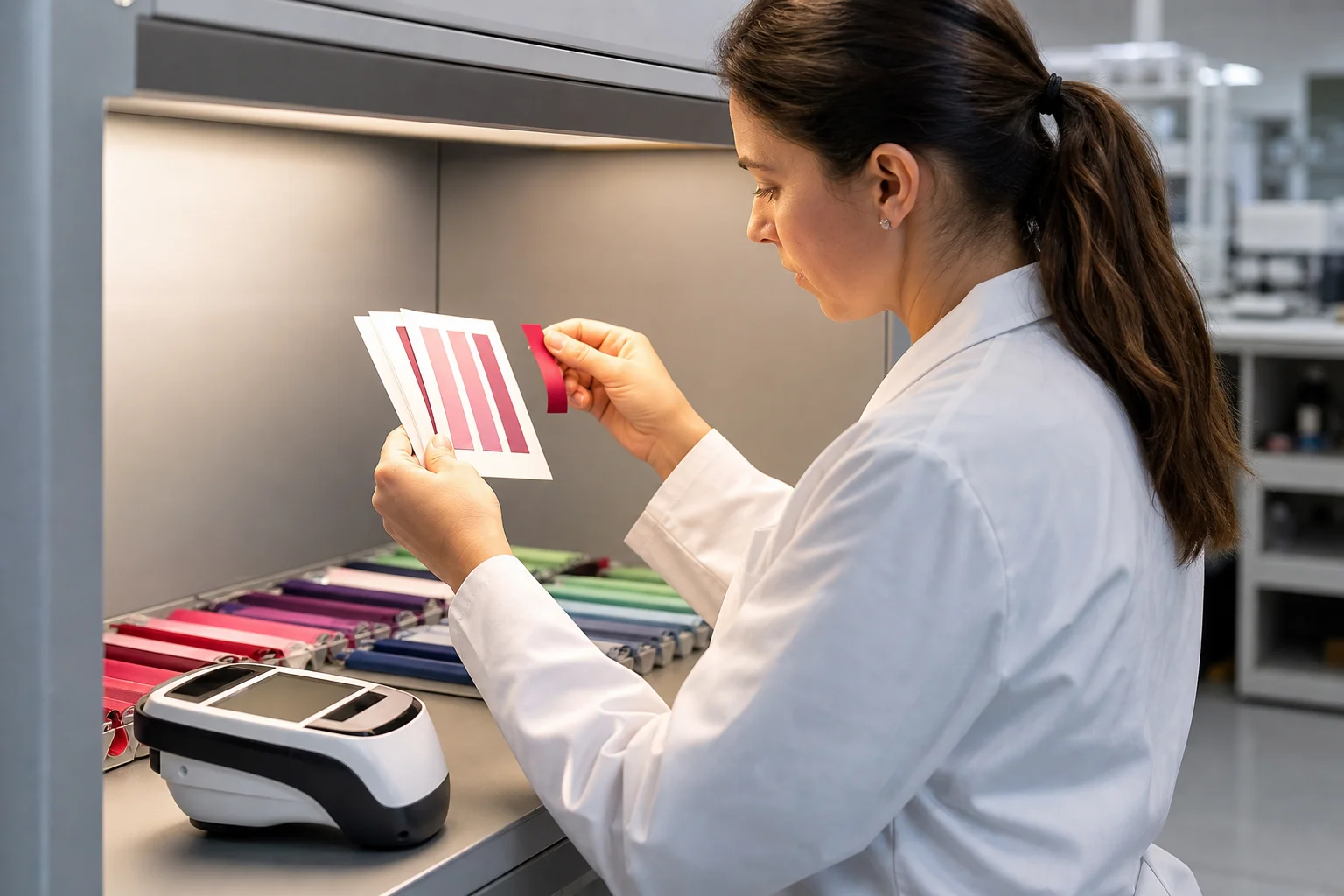
We’d answer with photos, videos, and process descriptions. But there’s a limit to what a photo can convey. A photo of a QC inspector checking ribbon color under a D65 light box tells you that we have the equipment. Watching that inspector pull a sample, compare it against a locked reference swatch, and flag a 0.3 ΔE deviation — that tells you something different. It tells you the process is real, not staged.
So we decided to stop trying to prove ourselves through documents and just let people see for themselves.
We sent invitations to our top 50 active accounts and posted the event on our Alibaba storefront. We offered to cover local hotel costs for the first 20 respondents. We planned the week around five stations: greige weaving, dyeing and color matching, printing and finishing, QC and testing, and packaging and logistics. Each group would spend a full day walking through all five stations with a dedicated guide.
Station 1: Greige Weaving — Where the Ribbon Actually Starts
Most buyers have never seen a ribbon loom in operation. They imagine something like a fabric weaving machine, but smaller. The reality is more specific. Our factory uses 48 rapier looms that produce base ribbon — what we call "greige" — 24 hours a day, 6 days a week. Each loom runs at 280 picks per minute and produces a single width of ribbon continuously.
When the buyers walked onto the weaving floor, the first thing they noticed was the noise. Not industrial noise — these are modern machines — but the rhythmic, steady sound of 48 looms running in sync. The floor supervisor, Mr. Chen, has been with us for 14 years. He explained the process in the simplest terms: "The yarn goes in, the ribbon comes out. But the quality of the yarn determines the quality of the ribbon."
This is something most buyers don’t think about. They focus on the printed logo, the color, the finish. But the base ribbon — the material, the density, the weave structure — is what determines whether the final product feels luxurious or cheap. We use 20D and 30D polyester yarn for our satin ribbon, which produces a tighter weave with a higher sheen than the 50D yarn that many factories use. The difference is invisible on a screen but immediately obvious when you hold the two ribbons side by side.
One buyer from the UK, who sources ribbon for a luxury department store chain, picked up a sample of our 20D satin and a sample of 50D satin from another supplier that he had brought with him. He ran both through his fingers and said: "I can feel the difference. This one is smoother. It has more weight." That’s the 20D. The tighter weave gives it a denser hand feel and a more reflective surface.
We also showed the buyers our yarn storage area. We maintain a stock of 200+ yarn colors in our warehouse, which means we can start weaving greige for most custom orders within 24 hours of confirmation. Buyers who have worked with suppliers who don’t control their own weaving are familiar with the "waiting for greige" delay — sometimes 2 to 3 weeks. When you own the looms, that delay disappears.
Station 2: Dyeing and Color Matching — The Science That Buyers Rarely See
This was the station where buyers spent the most time. Color is the single biggest source of disputes between buyers and ribbon suppliers. "The color doesn’t match" is the most common complaint in the industry, and it’s usually caused by a gap between what the buyer expects and what the supplier can deliver.
Our color lab has three pieces of equipment that most buyers have never seen in person:
The spectrophotometer. This device measures the exact color of a sample and expresses it as a numerical value. We use it to measure the ΔE (color difference) between the reference standard and the production sample. Our SafeDye™ process targets ΔE < 0.5, which means the color difference is invisible to the human eye. But the spectrophotometer doesn’t just measure the final result — it measures color at every stage of the dyeing process, allowing us to make real-time adjustments before the color drifts too far.
The D65 light box. Colors look different under different lighting conditions. A ribbon that matches perfectly under office fluorescent lights might look different under natural daylight or under retail store lighting. Our light box simulates three standard lighting conditions — D65 (daylight), TL84 (retail store), and A-source (tungsten) — and we verify every batch under all three before approving it for production.
The physical color archive. This is the most analog tool in our lab, and it’s also the most important. For every client, we archive a physical ribbon swatch of their approved color. Not a digital file — a real piece of ribbon. Digital files shift across screens. A Pantone code is a reference, but the actual ribbon under actual light is the truth. When a client places a reorder, we match against the archived swatch, not against a digital file.
One buyer from the Netherlands, who works with a premium gift brand, told us that he had been working with a supplier for three years and had never seen a color lab. "They just send me a photo and say ’this matches.’ But the photo always looks different on my screen than on theirs." He said seeing the spectrophotometer and the light box in operation gave him a level of confidence that no email exchange ever could.
Station 3: Printing and Finishing — Where the Logo Comes to Life
Custom printing is where most of the technical questions come from, and it’s also where the most visual impact happens. We walked the buyers through our three printing methods: screen printing, heat transfer, and hot stamping.
The screen printing demonstration was the most popular. We set up a live print run with a client’s logo — a simple two-color design for a chocolate brand. The buyers watched as the operator loaded the screen, aligned the ribbon, and ran the first test print. The first piece was compared against the approved artwork. The color was slightly off — too warm. The operator adjusted the ink formula and ran a second test. This one matched. Only then did the production run begin.
This "first-piece approval" process is standard in our factory, but it’s not standard everywhere. Many factories skip it to save time, especially on repeat orders. The result is a production run that might look fine at the start but drifts as the run progresses. By the time the entire batch is printed, the color at the beginning and the color at the end might be noticeably different.
We also showed the buyers our hot stamping process — gold foil and silver foil on dark ribbon. This is one of our most requested finishes, and it’s one of the hardest to get right. The foil needs to adhere completely without flaking, and the stamping pressure needs to be precise — too light and the foil doesn’t transfer, too heavy and the ribbon surface gets damaged. Our operators have an average of 8 years of experience on the stamping machines, and the difference between an experienced operator and a new one is visible in the consistency of the foil finish.
After printing, the ribbon goes through heat setting and finishing. The heat setting process bonds the ink to the fiber and ensures the ribbon lies flat without curling. We showed the buyers the difference between heat-set ribbon and non-heat-set ribbon — the non-heat-set ribbon has a slight wave at the edges that makes it look unfinished. It’s a small detail, but it’s the kind of detail that matters when the ribbon is being used on a premium product.
Station 4: QC and Testing — The Part That Surprised Everyone
If I had to pick one station that changed the most minds, it was this one. Most buyers assume that QC means someone looks at the ribbon at the end and says "looks good." The reality is more structured than that.
Our QC process has four checkpoints:
Raw material inspection. Before any yarn enters the weaving floor, we check the yarn lot for consistency in thickness, tensile strength, and color. If a yarn lot fails, it goes back to the supplier. This is the first and most important checkpoint, because a defect in the yarn will propagate through every stage of production.
In-process inspection. During weaving, we pull samples every 2 hours to check for density, width consistency, and surface defects. During dyeing, we pull samples every 30 minutes to check for color drift. During printing, we pull samples every 100 meters to check for registration accuracy and color consistency.
Final inspection. After the ribbon is finished, we do a 100% visual inspection on the inspection table. Every roll is unrolled and examined under standard lighting. Any defect — a color spot, a misprint, a surface irregularity — is marked and the affected section is cut out.
Testing. We test for colorfastness (wash test and rub test), dimensional stability (does the ribbon shrink or stretch after washing?), and, for GRS-certified products, recycled content verification.
The testing lab was where the buyers spent the most time asking questions. One buyer from Germany, who sources ribbon for a major department store, asked to see the rub test. Our technician took a printed ribbon sample, placed it in the crockmeter, and ran 50 cycles. Then he compared the tested area against the untested area and against the white cotton fabric used in the test. The result: no visible color transfer. The buyer photographed the test and said he would use it in his next supplier qualification report.
Another buyer, from Australia, asked about our GRS certification. He was specifically interested in the chain of custody documentation — could we provide traceability from the recycled fiber input to the finished ribbon? We showed him our GRS audit file, which includes supplier certificates, input/output reconciliation records, and the most recent third-party audit report. He said he had been asking other suppliers for this documentation for months and had never received a complete set. "Most suppliers say they have GRS but can’t show me the paper trail. You just showed me the whole thing in 10 minutes."
Station 5: Packaging and Logistics — The Last Mile
The final station was the packaging and shipping area. This is where the ribbon goes from a finished product to a shipment-ready package, and it’s where many small but important decisions happen.
We showed the buyers our packaging options: standard OPP bag packaging, custom label packaging, paper card wrapping, and bulk spool packaging. For buyers who are producing ribbon for gift box applications, the packaging is part of the product — if the ribbon arrives crushed or tangled, it can’t be used immediately and needs to be re-rolled, which adds time and cost.
Our standard packaging for spool ribbon includes a cardboard core that prevents the ribbon from collapsing, an OPP bag that protects against moisture and dust, and a label that includes the product code, color name, width, and length. For custom orders, we can add branded labels, custom core printing, or individual gift-ready packaging.
We also showed the buyers our shipping process. We ship from Xiamen, which has direct sea freight routes to Los Angeles, Rotterdam, and Sydney. Air freight from Xiamen to the US East Coast takes 5-7 days. Sea freight to Rotterdam takes 28-32 days. We maintain relationships with three freight forwarders, which gives us flexibility on pricing and scheduling.
One buyer from the US asked about DDP shipping. "Can you handle customs clearance and delivery to my warehouse door?" We showed him our DDP shipping records — we’ve shipped DDP to buyers in the US, UK, Germany, and Australia. The key is accurate HS code classification and proper documentation. We’ve been doing this long enough that we know the common customs issues for ribbon in each major market and can proactively address them.
What the Buyers Told Us
At the end of each visit, we sat down with the buyers and asked: "What surprised you the most?" Here are the three most common answers:
"I didn’t expect you to control the entire process." Many buyers assumed we were a trading company that sourced ribbon from various factories. Seeing the looms, the dyeing vats, the printing machines, and the QC lab in one facility changed their understanding of what we do. When you control the entire chain from yarn to finished ribbon, you can guarantee consistency in a way that a trading company simply cannot.
"The color lab was the most impressive part." Buyers who have experienced color issues with previous suppliers were particularly impressed by the color lab. The combination of spectrophotometer measurements, multi-light verification, and physical color archiving gave them a level of confidence that they hadn’t experienced before.
"I wish I had visited sooner." This was the most common comment. Several buyers said they had been ordering from us for 1-2 years without visiting, and that the visit had changed their relationship with our company from "a supplier I buy from" to "a partner I trust." That’s a meaningful shift, and it’s not something that can be achieved through emails and video calls alone.
Should You Visit Your Ribbon Supplier?
If you’re a buyer who’s evaluating a new ribbon supplier — or re-evaluating an existing one — here’s our honest advice: visit the factory. Not because we want you to visit us specifically (though you’re always welcome), but because a factory visit tells you things that no document, no video, and no sample can.
When you visit, pay attention to three things:
Process consistency. Does the factory run the same process every time, or does it depend on who’s operating the machine that day? Consistency comes from documented processes and trained operators, not from individual skill.
Quality culture. Does the QC team have real authority to stop production if they find a defect? Or does production always take priority? In our factory, QC can stop any production run at any time. If you visit a factory where QC is a rubber stamp, you’ll see it in the way the inspectors interact with the production team.
Transparency. Does the factory show you everything, or do they only show you the clean rooms? We opened our entire factory — including the areas that aren’t photogenic — because we believe that trust comes from transparency. If a supplier only wants to show you the showroom and the finished product, ask yourself what they’re not showing you.
Our Next Factory Open Week
Based on the response to our first Factory Open Week, we’re planning the next one for October 2026, timed to coincide with the Canton Fair. If you’re attending the Canton Fair and want to visit our factory in Xiamen — it’s a 1-hour flight from Guangzhou — we’ll arrange transportation, accommodation, and a full-day factory tour.
You’ll see the looms, the dyeing, the printing, the QC lab, and the packaging. You’ll meet the people who make your ribbon. And you’ll leave with a level of confidence that no amount of email correspondence can provide.
Contact us at admin@msdribbon.com to reserve a spot. We cap each day at 4 visitors to ensure everyone gets a thorough, unhurried experience.
Smith Ribbon & Bow | Xiamen Meisida Decoration Co., Ltd.
GRS-Certified Ribbon Manufacturer | SafeDye™ Color Control Technology
Xiamen, China · 18 Years of Ribbon Manufacturing